Jonah 1
I tnalù dwata · Tap a verse to see its cross-references.
About this book
About Jonah
- Jonah, whose name means “a dove,” was the son of Amittai of Gath-hepher and a prophet of Israel. Easton's Bible Dictionary (1897) holds that he wrote the book himself. His ministry is placed very early in the reign of Jeroboam II: he was contemporary with Hosea and Amos, or possibly earlier, and so may have been the oldest of the prophets whose writings survive.Sources: Jonah · Amittai · Easton: Jonah, Book of
- The book professes to tell what actually happened to the prophet. Some critics have read it as a parable or allegory rather than history, because miracle is so prominent and the form is narrative rather than prophecy, or because they deny miracles altogether. Easton's Bible Dictionary (1897) instead treats it as history, attaching great weight to the mention of Jonah in Matthew 12:39-40 and Luke 11:29.Sources: Easton: Jonah, Book of
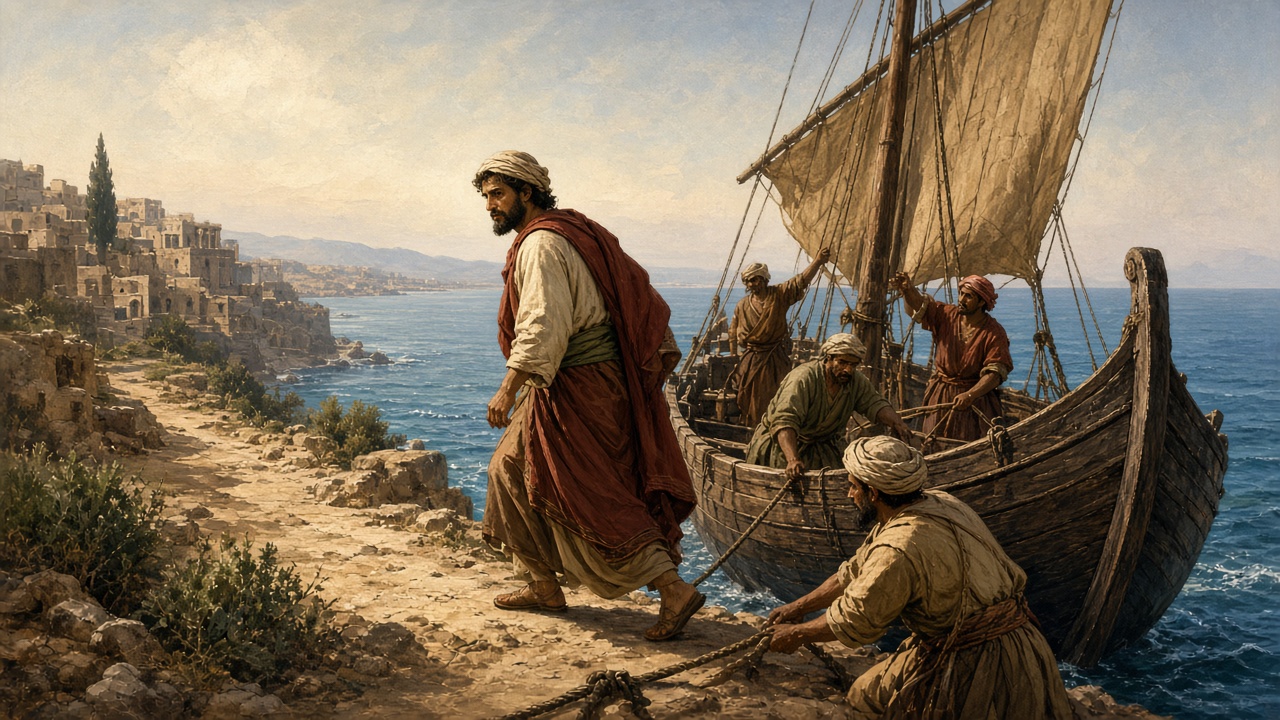
- Jonah was commissioned to go to Nineveh, described as a great and populous city and the flourishing capital of the Assyrian empire, but he sailed from Joppa, Judea's chief seaport, to flee toward Tarshish. Where Tarshish lay is disputed: some place it in the east, on the Indian coast, some identify it with Carthage, and Easton's dictionary takes it to be a Phoenician port in Spain.Sources: Easton: Jonah, Book of · Nineveh · Joppa · Tarshish
- Easton's outline has four movements: the divine commission, disobedience, and punishment; Jonah's prayer and deliverance; a second commission, the Ninevites' repentance, and God's sparing mercy; and Jonah's anger at that mercy, followed by a rebuke. The same dictionary notes that Nineveh was spared for more than a century after his mission.Sources: Easton: Jonah, Book of
- As a prophet of Israel, Jonah foretold the restoration of the kingdom's ancient borders. A biographical note presents him both as a missionary to Nineveh and as a type of the Son of man. The book of Nahum is taken up almost entirely with denunciations of that city, and Zephaniah also predicts its destruction.Sources: Jonah · Nineveh
Notes written with AI assistance from open sources (Theographic Bible Metadata, CC BY-SA 4.0; Easton’s Bible Dictionary, public domain) and reviewed before publishing.
I là kimen Dyona Dwata i Amu
1Na satu duh nun man Dwata i Amu di ku Dyona i tingà lagi Amitay, manan, 2“Mdà ge salu ditù di bong syudad Ninibi, na tulenam di dad to tagadègu i kdee dad sasè mgimòla.”
3Kabay én baling gusalu Dyona di Sfén, i banwe too mawag di Ninibi, du nilan Dwata i Amu. Salu kenen funa di banwe Dyofa, na déén gumiten i satu aweng fan mdà salu di Sfén. Na di kbayadan i flétin, myak kenen di aweng gagin di dad mebe i aweng, na maweng salu di Sfén, du nilan Dwata i Amu.
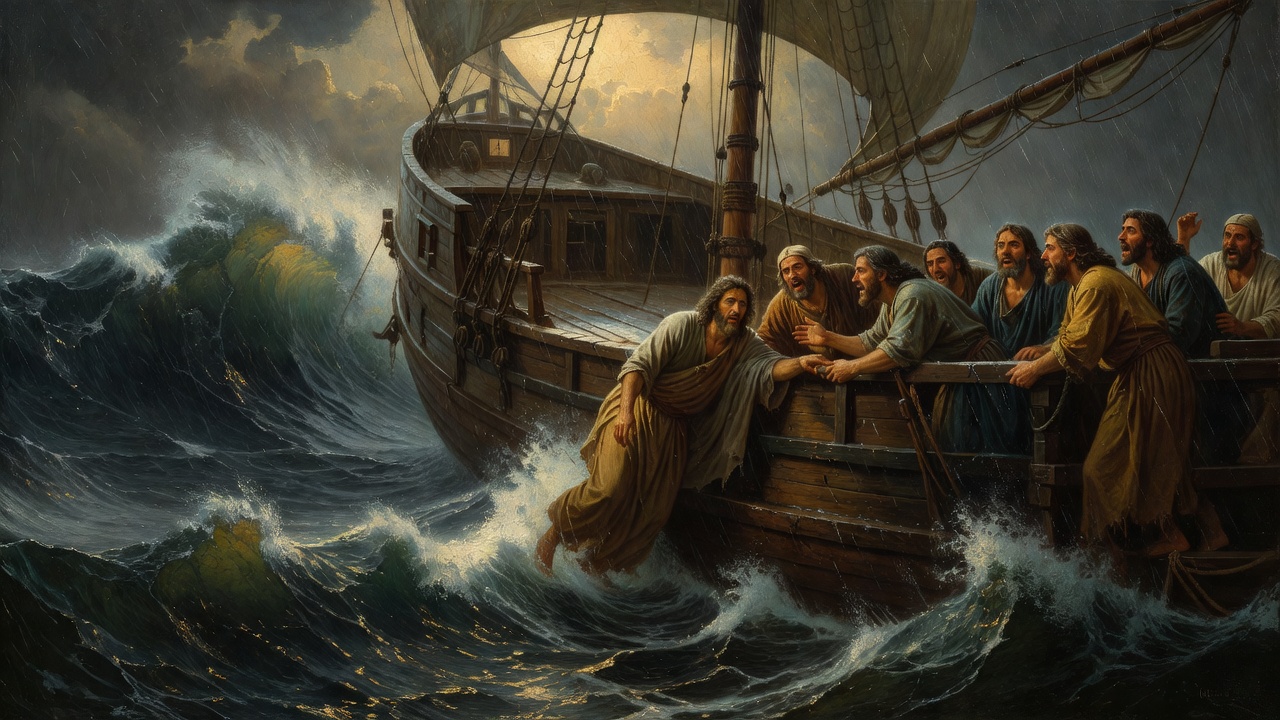
4Kabay febe Dwata i Amu i bong mgal nus di tah i mahin, na du kel i bong sasè mahin fan malbà i aweng. 5Na i dad to mebe i aweng ani, too ale likò. Taman kat satu dale tamlo mni tabeng di dad dwatala.
Na batla i dad lulenla di mahin, du fye beg magwà blat i aweng.
Kabay di kyak Dyona salu kenen ditù di lam i aweng na milè, na di bang ani tatoo kudang. 6Na i kafitan i mebe i aweng, mnaul di lam, na mukat ku Dyona, manan, “Tan i kagkudangam, bong sasè i mahin ani. Mték ge, na fnim tabeng di dwatam, ken kandon ito na là ito gafles mati.”
7Na sanman i dademe mebe i aweng, manla, “Neyeito sa kun ku simto i gumdà i bong sasè mkel di gito.” Na fagu di kasbunut gadèla Dyona gumdà i sasè mkel di dale.
8Taman snalekla Dyona, manla, “Tulenam gami tan i nimoam duen nun kaflayammi ani? Tan i duenam dini? Tan i banwe gumdaam? Na tan bung to ge?” 9Na tnimelan ale, manan, “Deg sa to Hibru, na i fnangamfùgu Dwata i Amu, i Dwata di langit, i mimò i mahin na tanà.” 10Na tulenan dale fa gablà di kilan i Dwata i Amu.
Kaklingela i gman Dyona too ale likò, na manla, “Tay ge, too sasè i nimoam.” 11Na baling matnù i kalbang i lwek, taman snalekla Dyona, manla, “Tan i kibòmi ge, du fye fanak i mahin.” 12Na man Dyona, “Batyu agu ditù di mahin, na manak kadang i mahin, du gadègu mdà di sasè nimògu gakuf gamu di ksasè mahin ani.”
13Kabay balingla too fangal kamwa fye gafat ale di kilil mahin, bay làla gagan dun, du too mgal fa i lwek na i nus.
14Na kafnge ani, tamlo ale di glut Dwata, manla, “E Dwata i Amu, kandom gami. Nangam ku gami i gumlém salà kadang di kfati i to ani, du ise gami salà, du ge Dwata i Amu tamgimoam i knayeam.”
15Na kafnge én, batla Dyona di mahin, na manak sa.
16Na ani gumdà i bong klikòla di Dwata i Amu, taman damsù ale na nun dad fakangla di kenen.
17Na di kagbatla ku Dyona ditù di mahin, tanun fatlagad Dwata i Amu bong nalaf du faflo ku Dyona. Na tlu butang i klo Dyona di lam tien i nalaf.
Did you know?
Jonah Flees from the Lord
- Jonah, the son of Amittai from Gath-hepher, is also recorded in 2 Kings 14:25 as a prophet active in the northern kingdom of Israel during the reign of Jeroboam II. God instructed him to travel east to Nineveh, the prominent and populous capital of the Assyrian empire, to preach against its wickedness.Sources: Jonah · Amittai · Nineveh · the Bible text itself
- Rather than traveling northeast overland to Nineveh, Jonah journeyed down to the Mediterranean seaport of Joppa to board a ship for Tarshish. Tarshish is traditionally identified as a Phoenician trading port located far to the west in southern Spain, representing the exact opposite direction.Sources: Joppa · Tarshish · the Bible text itself
- The sailors aboard the cargo ship came from polytheistic backgrounds, each calling out to his own deity during the violent tempest. After throwing the ship's cargo overboard to lighten the vessel, they turned to the ancient practice of casting lots to determine who was responsible for the calamity.Sources: the Bible text itself
Notes written with AI assistance from open sources (Theographic Bible Metadata, CC BY-SA 4.0; Easton’s Bible Dictionary, public domain) and reviewed before publishing.
Places in this chapter
Only places identified with high confidence are shown (90% or more according to the scholarly sources compiled by OpenBible). Period map: DARE (Digital Atlas of the Roman Empire), CC BY 4.0; modern map: © OpenStreetMap contributors; places: OpenBible.info (CC BY 4.0).
Credits and license for this translation
I tnalù dwata
New Testament in Blaan, Sarangani
copyright © 1998 Wycliffe Bible Translators, Inc.
Language: Sarangani Blaan (Blaan, Sarangani)
Translation by: Wycliffe Bible Translators
Contributor: Wycliffe Bible Translators, Inc.
Copyright Information
© 1998, Wycliffe Bible Translators, Inc. All rights reserved.
This translation text is made available to you under the
terms of the Creative Commons License: Attribution-Noncommercial-No Derivative Works.
( http://creativecommons.org/licenses/by-nc-nd/3.0/ )
In addition, you have permission to port the text to different file formats, as long as you
do not change any of the text or punctuation of the Bible.
You may share, copy, distribute, transmit, and extract portions
or quotations from this work, provided that you include the above copyright
information:
You must give Attribution to the work.
You do not sell this work for a profit.
You do not make any derivative works that change any of the actual words or punctuation of the Scriptures.
Permissions beyond the scope of this license may be
available if you contact
us with your request.
The New Testament
in Blaan, Sarangani
© 1998, Wycliffe Bible Translators, Inc. All rights reserved.
This translation is made available to you under the terms of the
Creative Commons Attribution-Noncommercial-No Derivatives license 4.0.
You may share and redistribute this Bible translation or extracts from it in any format, provided that:
You include the above copyright and source information.
You do not sell this work for a profit.
You do not change any of the words or punctuation of the Scriptures.
Pictures included with Scriptures and other documents on this site are licensed just for use with those Scriptures and documents.
For other uses, please contact the respective copyright owners.
2015-03-17
Source: http://ebible.org/bps/ · eBible.org