Jonas 1
I tnalù dwata · Toque num versículo para ver as referências cruzadas.
Sobre este livro
Sobre Jonas
- Jonas, cujo nome significa “uma pomba”, era filho de Amitai, de Gate-Hefer, e profeta de Israel. O Easton's Bible Dictionary (1897) sustenta que ele mesmo escreveu o livro. Seu ministério é situado bem no início do reinado de Jeroboão II: foi contemporâneo de Oseias e Amós, ou possivelmente anterior, e assim pode ter sido o mais antigo dos profetas cujos escritos se conservam.Fontes: Jonah · Amittai · Easton: Jonah, Book of
- O livro se apresenta como o relato do que de fato aconteceu ao profeta. Alguns críticos o leram como parábola ou alegoria, e não como história, porque o milagre ocupa lugar tão grande e a forma é narrativa, não profética, ou porque negam os milagres por completo. O Easton's Bible Dictionary (1897), ao contrário, o trata como história e dá grande peso à menção de Jonas em Mateus 12:39-40 e Lucas 11:29.Fontes: Easton: Jonah, Book of
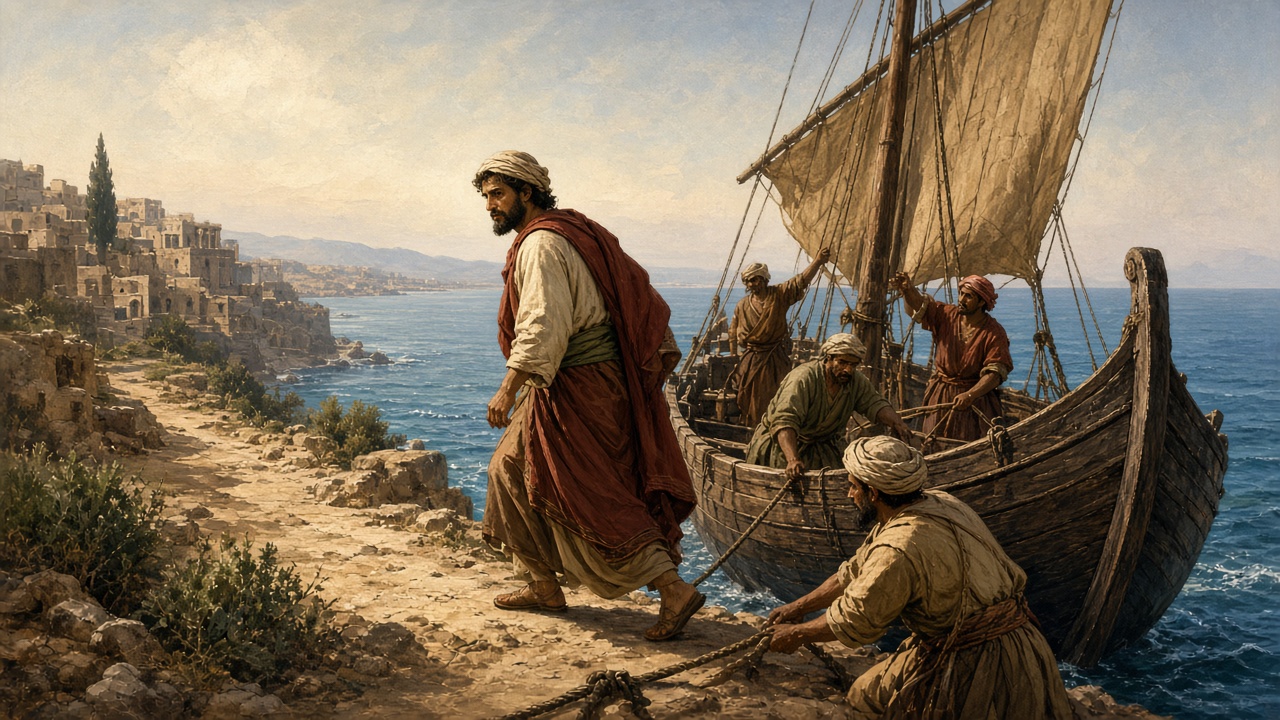
- Jonas recebeu o encargo de ir a Nínive, descrita como cidade grande e populosa e florescente capital do império assírio, mas embarcou em Jope, o principal porto marítimo de Judá, para fugir em direção a Társis. A localização de Társis é disputada: alguns a situam no Oriente, na costa da Índia, outros a identificam com Cartago, e o dicionário de Easton a entende como um porto fenício na Espanha.Fontes: Easton: Jonah, Book of · Nineveh · Joppa · Tarshish
- O esboço de Easton tem quatro movimentos: o encargo divino, a desobediência e o castigo; a oração de Jonas e seu livramento; um segundo encargo, o arrependimento dos ninivitas e a misericórdia de Deus que os poupou; e a ira de Jonas diante dessa misericórdia, seguida de uma repreensão. O mesmo dicionário observa que Nínive foi poupada por mais de um século depois da missão dele.Fontes: Easton: Jonah, Book of
- Como profeta de Israel, Jonas anunciou a restauração das antigas fronteiras do reino. Uma nota biográfica o apresenta tanto como missionário enviado a Nínive quanto como tipo do Filho do homem. O livro de Naum é ocupado quase inteiramente por denúncias contra essa cidade, e Sofonias também prediz a sua destruição.Fontes: Jonah · Nineveh
Notas escritas com auxílio de IA a partir de fontes abertas (Theographic Bible Metadata, CC BY-SA 4.0; Easton’s Bible Dictionary, domínio público) e revisadas antes de publicar.
I là kimen Dyona Dwata i Amu
1Na satu duh nun man Dwata i Amu di ku Dyona i tingà lagi Amitay, manan, 2“Mdà ge salu ditù di bong syudad Ninibi, na tulenam di dad to tagadègu i kdee dad sasè mgimòla.”
3Kabay én baling gusalu Dyona di Sfén, i banwe too mawag di Ninibi, du nilan Dwata i Amu. Salu kenen funa di banwe Dyofa, na déén gumiten i satu aweng fan mdà salu di Sfén. Na di kbayadan i flétin, myak kenen di aweng gagin di dad mebe i aweng, na maweng salu di Sfén, du nilan Dwata i Amu.
4Kabay febe Dwata i Amu i bong mgal nus di tah i mahin, na du kel i bong sasè mahin fan malbà i aweng. 5Na i dad to mebe i aweng ani, too ale likò. Taman kat satu dale tamlo mni tabeng di dad dwatala.
Na batla i dad lulenla di mahin, du fye beg magwà blat i aweng.
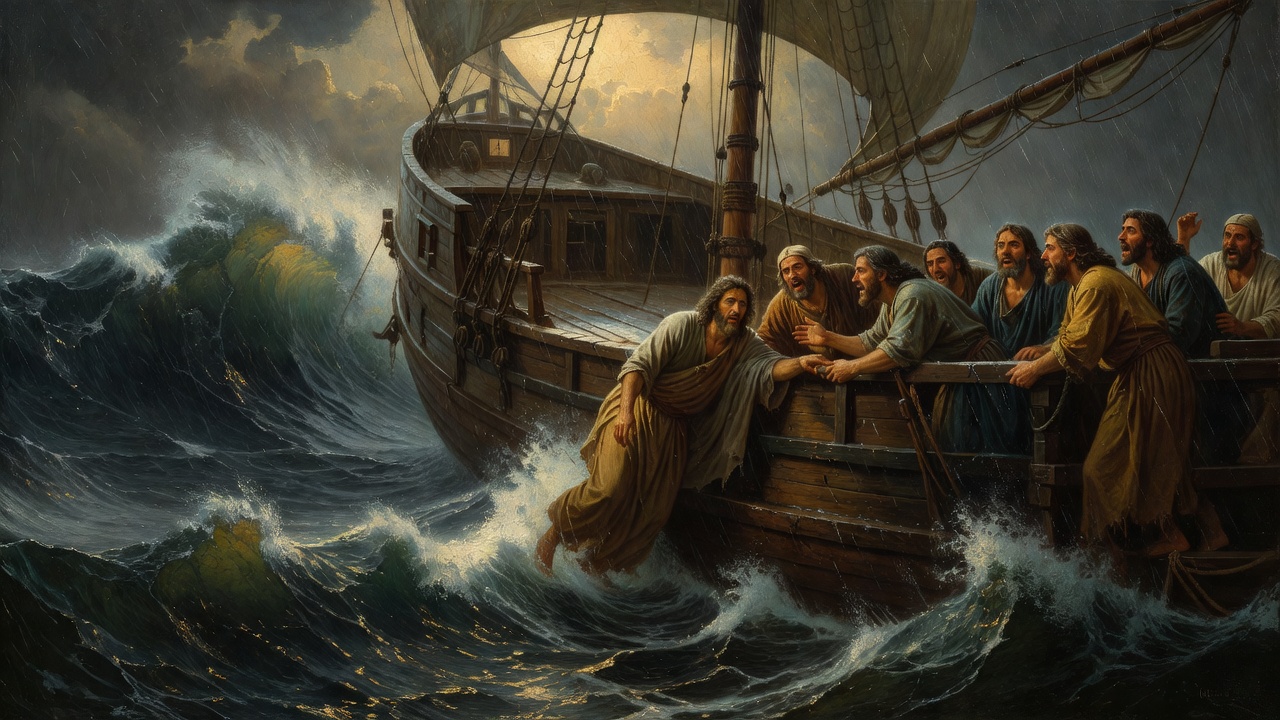
Kabay di kyak Dyona salu kenen ditù di lam i aweng na milè, na di bang ani tatoo kudang. 6Na i kafitan i mebe i aweng, mnaul di lam, na mukat ku Dyona, manan, “Tan i kagkudangam, bong sasè i mahin ani. Mték ge, na fnim tabeng di dwatam, ken kandon ito na là ito gafles mati.”
7Na sanman i dademe mebe i aweng, manla, “Neyeito sa kun ku simto i gumdà i bong sasè mkel di gito.” Na fagu di kasbunut gadèla Dyona gumdà i sasè mkel di dale.
8Taman snalekla Dyona, manla, “Tulenam gami tan i nimoam duen nun kaflayammi ani? Tan i duenam dini? Tan i banwe gumdaam? Na tan bung to ge?” 9Na tnimelan ale, manan, “Deg sa to Hibru, na i fnangamfùgu Dwata i Amu, i Dwata di langit, i mimò i mahin na tanà.” 10Na tulenan dale fa gablà di kilan i Dwata i Amu.
Kaklingela i gman Dyona too ale likò, na manla, “Tay ge, too sasè i nimoam.” 11Na baling matnù i kalbang i lwek, taman snalekla Dyona, manla, “Tan i kibòmi ge, du fye fanak i mahin.” 12Na man Dyona, “Batyu agu ditù di mahin, na manak kadang i mahin, du gadègu mdà di sasè nimògu gakuf gamu di ksasè mahin ani.”
13Kabay balingla too fangal kamwa fye gafat ale di kilil mahin, bay làla gagan dun, du too mgal fa i lwek na i nus.
14Na kafnge ani, tamlo ale di glut Dwata, manla, “E Dwata i Amu, kandom gami. Nangam ku gami i gumlém salà kadang di kfati i to ani, du ise gami salà, du ge Dwata i Amu tamgimoam i knayeam.”
15Na kafnge én, batla Dyona di mahin, na manak sa.
16Na ani gumdà i bong klikòla di Dwata i Amu, taman damsù ale na nun dad fakangla di kenen.
17Na di kagbatla ku Dyona ditù di mahin, tanun fatlagad Dwata i Amu bong nalaf du faflo ku Dyona. Na tlu butang i klo Dyona di lam tien i nalaf.
Você sabia?
Jonas foge do Senhor
- Jonas, filho de Amitai e natural de Gate-Héfer, também é mencionado em 2 Reis 14:25 como profeta em Israel durante o reinado de Jeroboão II. Deus lhe ordenou que viajasse para o leste até Nínive, a florescente e populosa capital do Império Assírio, para adverti-la de sua maldade.Fontes: Jonah · Amittai · Nineveh · o próprio texto bíblico
- Em vez de viajar por terra em direção ao nordeste até Nínive, Jonas desceu ao porto de Jope, no Mediterrâneo, para embarcar rumo a Társis. Társis é tradicionalmente identificada como um porto fenício no extremo ocidente, no sul da Espanha, a direção exatamente oposta.Fontes: Joppa · Tarshish · o próprio texto bíblico
- Os marinheiros a bordo do navio comercial tinham origens politeístas e clamavam cada um ao seu próprio deus durante a violenta tempestade. Depois de lançarem a carga ao mar para aliviar a embarcação, recorreram ao antigo costume de lançar sortes para descobrir quem era o responsável pela calamidade.Fontes: o próprio texto bíblico
Notas escritas com auxílio de IA a partir de fontes abertas (Theographic Bible Metadata, CC BY-SA 4.0; Easton’s Bible Dictionary, domínio público) e revisadas antes de publicar.
Lugares deste capítulo
Só aparecem lugares com identificação de alta confiança (90% ou mais segundo as fontes acadêmicas reunidas pelo OpenBible). Mapa da época: DARE (Digital Atlas of the Roman Empire), CC BY 4.0; mapa atual: © colaboradores do OpenStreetMap; lugares: OpenBible.info (CC BY 4.0).
Créditos e licença desta tradução
I tnalù dwata
New Testament in Blaan, Sarangani
copyright © 1998 Wycliffe Bible Translators, Inc.
Language: Sarangani Blaan (Blaan, Sarangani)
Translation by: Wycliffe Bible Translators
Contributor: Wycliffe Bible Translators, Inc.
Copyright Information
© 1998, Wycliffe Bible Translators, Inc. All rights reserved.
This translation text is made available to you under the
terms of the Creative Commons License: Attribution-Noncommercial-No Derivative Works.
( http://creativecommons.org/licenses/by-nc-nd/3.0/ )
In addition, you have permission to port the text to different file formats, as long as you
do not change any of the text or punctuation of the Bible.
You may share, copy, distribute, transmit, and extract portions
or quotations from this work, provided that you include the above copyright
information:
You must give Attribution to the work.
You do not sell this work for a profit.
You do not make any derivative works that change any of the actual words or punctuation of the Scriptures.
Permissions beyond the scope of this license may be
available if you contact
us with your request.
The New Testament
in Blaan, Sarangani
© 1998, Wycliffe Bible Translators, Inc. All rights reserved.
This translation is made available to you under the terms of the
Creative Commons Attribution-Noncommercial-No Derivatives license 4.0.
You may share and redistribute this Bible translation or extracts from it in any format, provided that:
You include the above copyright and source information.
You do not sell this work for a profit.
You do not change any of the words or punctuation of the Scriptures.
Pictures included with Scriptures and other documents on this site are licensed just for use with those Scriptures and documents.
For other uses, please contact the respective copyright owners.
2015-03-17
Fonte: http://ebible.org/bps/ · eBible.org