Exodus 11
I tnalù dwata · Tap a verse to see its cross-references.
I kfati i dad ngà lagi sangal twege
1Na tagman Dwata i Amu, di ku Mosis, “Febegu kadang di ku Faraon na di dad to Idyif i satu fa kaflayam. Na di kafnge én, falohan gamu lamwà dini. Hae, falwaan kadang i kdeeyu di banwe én. 2Taman manam di dad bel Israél, i kdeela mni di dademela saldan i dad kas nimò mdà di salafì na blawen.” 3Dwata i Amu tamimò i kfagu, fye nafè dad bel Israél i dad to Idyif. Na Mosis too mdengeg di kite i dad ganlal Faraon na di kite i dad to Idyif.
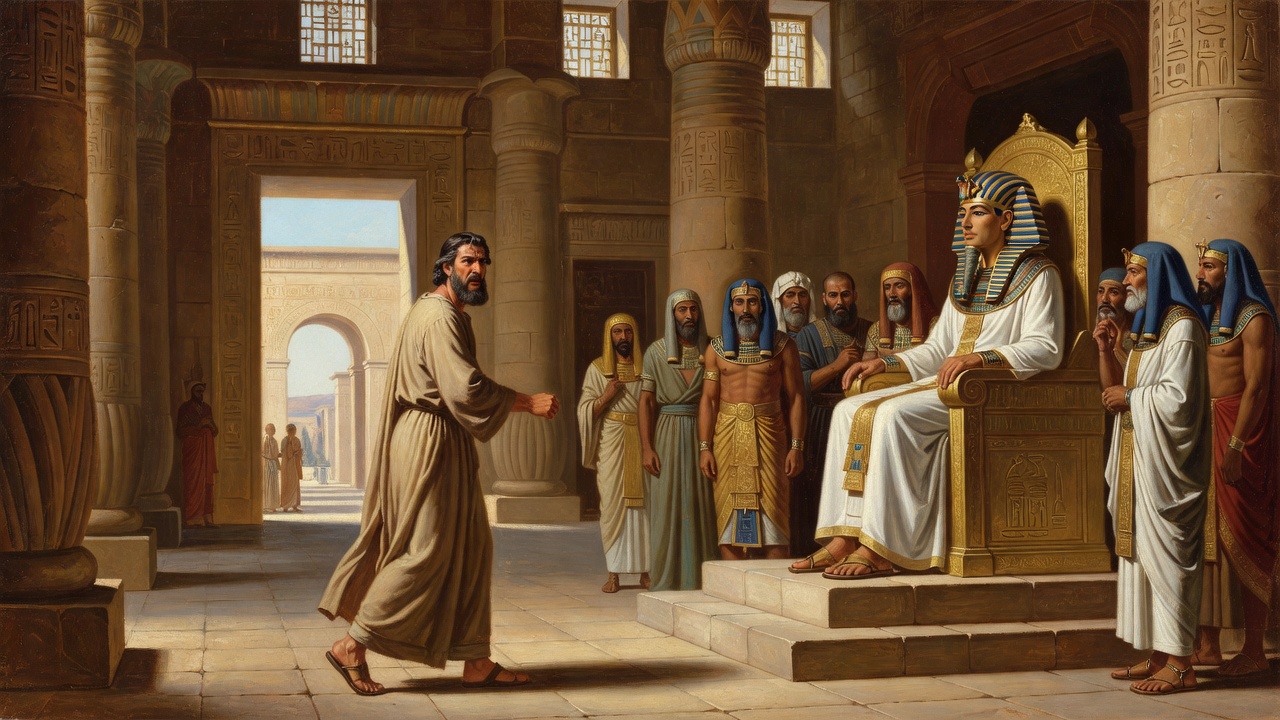
4Na di là fa mdà Mosis di muna Faraon, nun fa manan di kenen, “Ani i gman Dwata i Amu. Satu butang, di tngà butang, magu agu di klamang Idyif. 5Na di butang én, mati i kdee dad ngà lagi sangal twege di Idyif, mdà di tingà lagi sangal twege Faraon, i tamlas moon kenen kdatahan, kel di tingà lagi sangal twege i kdee dad to mdanà gambet i libun gmiling. Na balù i kdee dad lmanaf i sangal twege mati. 6Na kadang i sè klanu i dad to, linge i kdee dad to di klamang Idyif, na là ale fa lmen mlinge salngad ani, na là ale lêman mlinge klanu salngad ani. 7Kabay i dad bel Israél làgu fakuf kadang di kaflayam ani. Landè fanlayam di dale balù i dad lmanaf landè mati, fye gadeam là salngad kibògu i dad to Idyif na i dad bel Israél. 8Na kadang i kdee dad ganlalam ani, salu di deg na lkuad ale, du fakdo ale di deg, na manla kadang, ‘Tabyà, lamwà ge di banwemi ani, na faginam i dad to gal mlalò ge.’ Én man i dad ganlalam kadang, na kafnge én mdà agu di banwe ani.” Di klo Mosis talù ani, too sè i kaflabean, taman mdà kenen tmagak i harì.
9Tagman Dwata i Amu, di ku Mosis, “Là flinge ge i harì, du fye nun fa dad tnikeng nimògu dini di banwe Idyif.” 10Na balù nimò Mosis na Aron i kdee tnikeng, mdà di Dwata, fgal Dwata i Amu i ulu Faraon, na laan faloh lamwà i dad bel Israél di banwen.
Did you know?
One More Plague before the Exodus
- Easton's Bible Dictionary (1897) says the pharaoh of the Exodus was probably Menephtah I, the fourteenth son of Rameses II and the eldest of the sons who survived, but it also says it is still a question whether he or Seti II was that king; some favor Seti II. The same entry says that pharaoh lived at Zoan, where his interviews with Moses and Aaron took place. This chapter ends as Moses, hot with anger, leaves Pharaoh's presence.Sources: Pharaoh (of the Exodus) · the Bible text itself
- Easton's Bible Dictionary (1897) says Jacob and his sons went down to Egypt probably about 350 years before Moses was born, and that the king gave them the best of the land, Goshen, to live in. In this chapter Israelite men and women alike are told to ask their neighbors for articles of silver and gold, and the account says the LORD gave the people favor in the sight of the Egyptians.Sources: Moses · the Bible text itself
- An event listing dates the start of the Exodus from Egypt to 1490 BC. In this chapter the LORD tells Moses that after one more plague Pharaoh will let the people leave and will drive them out completely.Sources: Exodus from Egypt · the Bible text itself
Notes written with AI assistance from open sources (Theographic Bible Metadata, CC BY-SA 4.0; Easton’s Bible Dictionary, public domain) and reviewed before publishing.
Places in this chapter
Only places identified with high confidence are shown (90% or more according to the scholarly sources compiled by OpenBible). Period map: DARE (Digital Atlas of the Roman Empire), CC BY 4.0; modern map: © OpenStreetMap contributors; places: OpenBible.info (CC BY 4.0).
Credits and license for this translation
I tnalù dwata
New Testament in Blaan, Sarangani
copyright © 1998 Wycliffe Bible Translators, Inc.
Language: Sarangani Blaan (Blaan, Sarangani)
Translation by: Wycliffe Bible Translators
Contributor: Wycliffe Bible Translators, Inc.
Copyright Information
© 1998, Wycliffe Bible Translators, Inc. All rights reserved.
This translation text is made available to you under the
terms of the Creative Commons License: Attribution-Noncommercial-No Derivative Works.
( http://creativecommons.org/licenses/by-nc-nd/3.0/ )
In addition, you have permission to port the text to different file formats, as long as you
do not change any of the text or punctuation of the Bible.
You may share, copy, distribute, transmit, and extract portions
or quotations from this work, provided that you include the above copyright
information:
You must give Attribution to the work.
You do not sell this work for a profit.
You do not make any derivative works that change any of the actual words or punctuation of the Scriptures.
Permissions beyond the scope of this license may be
available if you contact
us with your request.
The New Testament
in Blaan, Sarangani
© 1998, Wycliffe Bible Translators, Inc. All rights reserved.
This translation is made available to you under the terms of the
Creative Commons Attribution-Noncommercial-No Derivatives license 4.0.
You may share and redistribute this Bible translation or extracts from it in any format, provided that:
You include the above copyright and source information.
You do not sell this work for a profit.
You do not change any of the words or punctuation of the Scriptures.
Pictures included with Scriptures and other documents on this site are licensed just for use with those Scriptures and documents.
For other uses, please contact the respective copyright owners.
2015-03-17
Source: http://ebible.org/bps/ · eBible.org