Exodus 10
I tnalù dwata · Tap a verse to see its cross-references.
Febe Dwata mlabung tlangas di Idyif
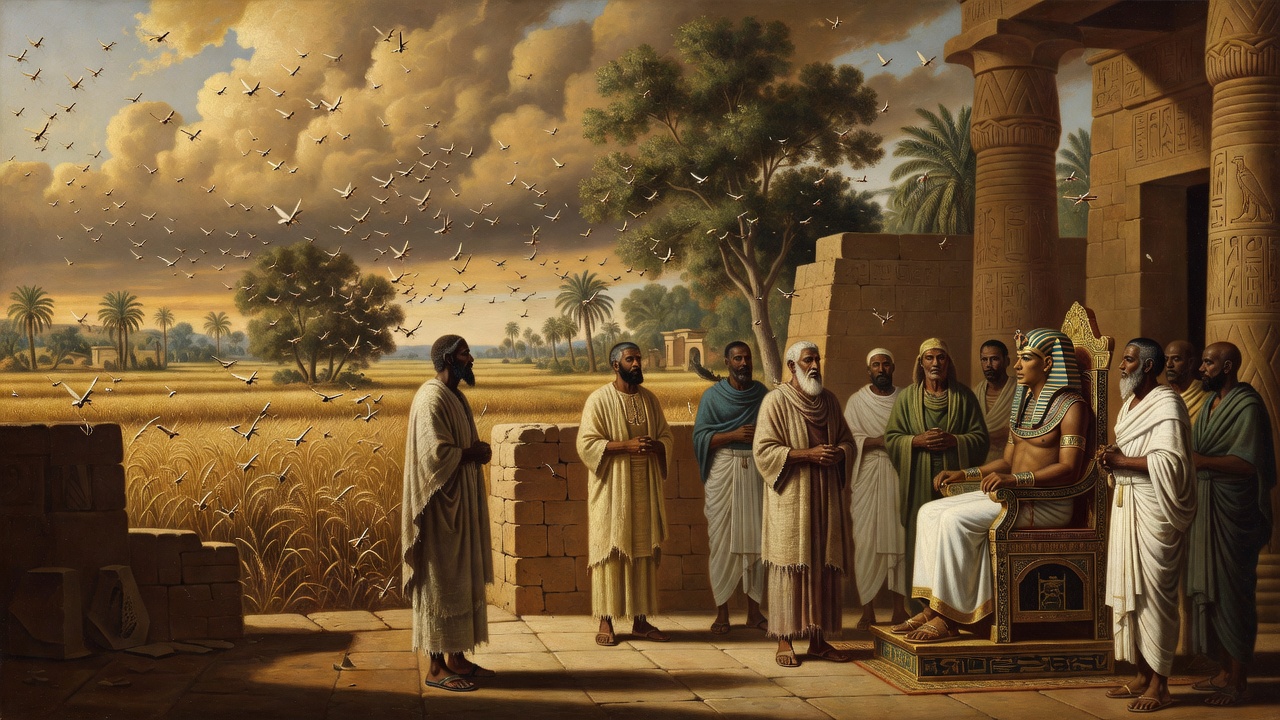
1Na man Dwata i Amu di ku Mosis, “Lêman ge salu di harì. Tafgalgu i ulun na i dad ulu i dad ganlalan, du fye nun fa dad tnikeng nimògu, du fitegu di dale. 2Nimògu ani, du fye satu duh, gtulenyu di dad ngàyu na dad fùyu ku tan i kibògu mlayam i dad to Idyif, fagu di dad tnikeng mgimògu di munala. Na i kdeeyu kadang gmadè Agu Dwata i Amu.”
3Taman salu Mosis na Aron ku Faraon na manla di kenen, manla, “Ani man Dwata i Amu, i Dwata fnangamfù dad to Hibru, manan, ‘Tay sa, bong klom là fdanà i ktom di deg. Faloham i dad togu lamwà di banwe ani, du fye fakay ale mangamfù di dagu. 4Ku fadlug ge kamlen i dad togu na laam ale faloh lamwà, fayah fkelgu i mlabung tlangas dini di banwem ani. 5Là teen kadang i tanà, du maglimunla, du too dee ale. Knaanla i kdee i là malmo mdà di ulen lbatù, gakuf i dad kdee kayuyu. 6Too fnò kadang dad gumnèyu, i dad gumnè i dad ganlalam, na i dad gumnè i kdee dad to Idyif. Landè fa lmen teen i dad màyu, na balù dad muna toyu, i dee tlangas salngad ani mdà di knèla dini di banwe ani kel ani.’ ” Ani gine gman Mosis di ku Faraon. Na di kmanan ani mdà kenen na tnagakan Faraon.
7Di kdà Mosis, man i dad ganlal Faraon di kenen, manla, “Tan i klo Mosis kè smamuk gito? Faloham i dad bel Israél lamwà, du fye fakay ale mangamfù di Dwata i Amu, i Dwatala. Laam kè teen tamalmo i banweito ani?”
8Kaklinge Faraon i gman i dad ganlalan ani, fngén Mosis na Aron. Na manan di dale, “Mdà gamu na mangamfù gamu di Dwata i Amu, i Dwatayu. Kabay simto di gamu lamwà kadang?”
9Tmimel Mosis, manan, “Kdeemi lamwà, dad ngàmi, na dad tuami, na dad bilibilimi, dad kambingmi, na dad bakami, du mimò gami i fista, du dmayen na damsù gami di Dwata i Amu.”
10Man Faraon di kenen, “Smafà agu di Dwata i Amu, làgu faloh i dad libun na i dad ngàyu magin lamwà, du too mbangal di deg i fan gamu mimò samuk. 11Na là fakay! Falohgu alò dad lagi lamwà, du mangamfù di Dwata i Amu, du ani fniyu di deg.” Kagtalù Faraon, falwaan Mosis na Aron di munan.
12Na man Dwata i Amu di ku Mosis, “Lêmanam kayang i sigalam salu di banwe Idyif ani, du fye salu dad tlangas dini na knaanla i kdee là malmo mdà di lbatù ulen.”
13Taman mimen Mosis Dwata, na kayangan i tugadan, na fbal Dwata i Amu i bong mgal nus, mdà di gumsut i duh, tayud i duh na tayud i butang. Di kaflafusan tanebe i nus i dad tlangas. 14Bong mlabung dad tlangas salu ditù na mdaf kdee di klamang banwe Idyif. Na là fa lmen teen i dad to i kalbong dee tlangas salngad ani, na talàla lêman teen salngad ani. 15Tì msafang i klamang tanà kel di ktoo fitam tlangas. Knaanla i kdee dad là malmo di ulen lbatù, i gdè lamnok di dad nligo na i dad bunge i dad kayu. Na landè gdè dad mlunu doon di dad kayu demen i dad fule di banwe Idyif.
16Na gasil fngé Faraon Mosis na Aron, na manan di dale, “Gamsalà agu di Dwata i Amu, i Dwatayu, na balù di gamu. 17Tabyà, lêmanyu nlifet i salàgu, na dmasal gamu di Dwata i Amu, i Dwata fnangamfùyu, fye nwean i too blat kaflayam ani.”
18Taman tnagak Mosis Faraon na dmasal ale, du mni tabeng di Dwata i Amu. 19Na fanlinge Dwata i Amu i dasalan. Taman fbalan lêman i bong mgal nus, bay fdu di gusdaf i duh, na falisan i dad tlangas di Fulè Mahin. Na talandè balù satu gdè tlangas di klamang Idyif. 20Kabay fgal Dwata i Amu i ulu Faraon, na laan faloh lamwà di banwen i dad bel Israél.
Fkifu Dwata i Amu i banwe Idyif
21Na lêman talù Dwata i Amu di ku Mosis, manan, “Kayangam i sigalam salu di langit, na febegu too kakifu di klamang Idyif ani. I kakifu i febegu too mgat.” 22Mimen Mosis Dwata, taman kayangan i sigalan salu di langit na mbaling too kmifu i klamang Idyif, kel di tlu duh. 23Là site baweh i dad to Idyif, na landè galwà di gumnèla, du too kifu. Kabay too malwa di gumnè i dad bel Israél.
24Kafnge én, fngé Faraon Mosis, na manan di kenen, “Lamwà gamu di banwe ani, du mangamfù gamu di Dwata i Amu, na balù i dad libun na i dad ngàyu faginyu. Bay, i dad kambingyu, i dad bilibiliyu, na i dad bakayu i tagakyu dini.”
25Kabay tmimel Mosis, manan, “Là fakay, du ku én, ge sa i mlé gami i dad lmanaf i dsùmi na snakufmi, du blémi di Dwata i Amu, i Dwata fnangamfùmi. 26Taman là fakay ku làmi nebe i kdee dad lmanafmi, na balù satu làmi tnagak. Satu duenan, du i dad dsùmi di Dwata i Amu, i Dwata fnangamfùmi, làmi fa gadè ku i tan dad lmanaf fadsù Dwata gami, du silangmi gadè di kakelmi ditù.”
27Kabay fgal Dwata i Amu i ulu Faraon, na laan ale faloh lamwà di banwe én. 28Balingan man di ku Mosis, “Fawag ge di munagu. Nang ge lêman salu di munagu, du ku lêmanta ge teen dini, fafatita ge.” 29Na tmimel Mosis, manan, “I knayeam nimengu. Hae, là agu lêman samfulê di ge.”
Did you know?
Locusts and Darkness in Egypt
- The conversations in this chapter are among the interviews that one reference places at Zoan, the residence of the Pharaoh of the Exodus. That reference identifies him as probably Menephtah I, the fourteenth and eldest surviving son of Rameses II, while noting that it is still a question whether Seti II or his father Menephtah was that Pharaoh.Sources: Pharaoh (of the Exodus) · the Bible text itself
- When Pharaoh asked that the locusts be removed, a very strong west wind carried them into the Red Sea, and not a single locust remained in Egypt. That sea extends about 1,400 miles along the west coast of Arabia and separates Asia from Africa; at Ras Mohammed, about 200 miles from its northern end, it divides into the Gulf of Suez on the west and the Aelanitic Gulf, now the Bahr el-Akabah, on the east.Sources: Red Sea · the Bible text itself
- Aaron went with Moses whenever the two stood before Pharaoh. He was the eldest son of Amram and Jochebed, born in Egypt three years before Moses, and he had been sent to meet his brother and cooperate with him in bringing about the Exodus.Sources: Aaron · the Bible text itself
Notes written with AI assistance from open sources (Theographic Bible Metadata, CC BY-SA 4.0; Easton’s Bible Dictionary, public domain) and reviewed before publishing.
Places in this chapter
Only places identified with high confidence are shown (90% or more according to the scholarly sources compiled by OpenBible). Period map: DARE (Digital Atlas of the Roman Empire), CC BY 4.0; modern map: © OpenStreetMap contributors; places: OpenBible.info (CC BY 4.0).
Credits and license for this translation
I tnalù dwata
New Testament in Blaan, Sarangani
copyright © 1998 Wycliffe Bible Translators, Inc.
Language: Sarangani Blaan (Blaan, Sarangani)
Translation by: Wycliffe Bible Translators
Contributor: Wycliffe Bible Translators, Inc.
Copyright Information
© 1998, Wycliffe Bible Translators, Inc. All rights reserved.
This translation text is made available to you under the
terms of the Creative Commons License: Attribution-Noncommercial-No Derivative Works.
( http://creativecommons.org/licenses/by-nc-nd/3.0/ )
In addition, you have permission to port the text to different file formats, as long as you
do not change any of the text or punctuation of the Bible.
You may share, copy, distribute, transmit, and extract portions
or quotations from this work, provided that you include the above copyright
information:
You must give Attribution to the work.
You do not sell this work for a profit.
You do not make any derivative works that change any of the actual words or punctuation of the Scriptures.
Permissions beyond the scope of this license may be
available if you contact
us with your request.
The New Testament
in Blaan, Sarangani
© 1998, Wycliffe Bible Translators, Inc. All rights reserved.
This translation is made available to you under the terms of the
Creative Commons Attribution-Noncommercial-No Derivatives license 4.0.
You may share and redistribute this Bible translation or extracts from it in any format, provided that:
You include the above copyright and source information.
You do not sell this work for a profit.
You do not change any of the words or punctuation of the Scriptures.
Pictures included with Scriptures and other documents on this site are licensed just for use with those Scriptures and documents.
For other uses, please contact the respective copyright owners.
2015-03-17
Source: http://ebible.org/bps/ · eBible.org