Éxodo 11
I tnalù dwata · Toca un versículo para ver sus referencias cruzadas.
I kfati i dad ngà lagi sangal twege
1Na tagman Dwata i Amu, di ku Mosis, “Febegu kadang di ku Faraon na di dad to Idyif i satu fa kaflayam. Na di kafnge én, falohan gamu lamwà dini. Hae, falwaan kadang i kdeeyu di banwe én. 2Taman manam di dad bel Israél, i kdeela mni di dademela saldan i dad kas nimò mdà di salafì na blawen.” 3Dwata i Amu tamimò i kfagu, fye nafè dad bel Israél i dad to Idyif. Na Mosis too mdengeg di kite i dad ganlal Faraon na di kite i dad to Idyif.
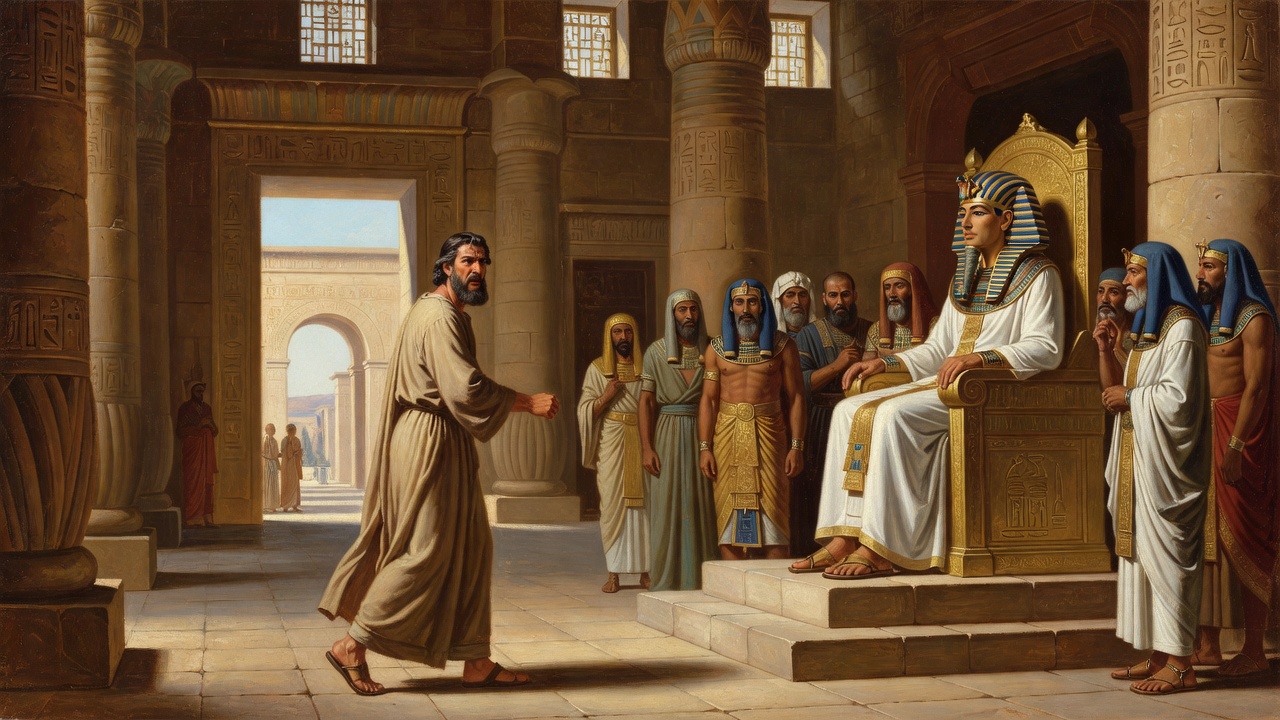
4Na di là fa mdà Mosis di muna Faraon, nun fa manan di kenen, “Ani i gman Dwata i Amu. Satu butang, di tngà butang, magu agu di klamang Idyif. 5Na di butang én, mati i kdee dad ngà lagi sangal twege di Idyif, mdà di tingà lagi sangal twege Faraon, i tamlas moon kenen kdatahan, kel di tingà lagi sangal twege i kdee dad to mdanà gambet i libun gmiling. Na balù i kdee dad lmanaf i sangal twege mati. 6Na kadang i sè klanu i dad to, linge i kdee dad to di klamang Idyif, na là ale fa lmen mlinge salngad ani, na là ale lêman mlinge klanu salngad ani. 7Kabay i dad bel Israél làgu fakuf kadang di kaflayam ani. Landè fanlayam di dale balù i dad lmanaf landè mati, fye gadeam là salngad kibògu i dad to Idyif na i dad bel Israél. 8Na kadang i kdee dad ganlalam ani, salu di deg na lkuad ale, du fakdo ale di deg, na manla kadang, ‘Tabyà, lamwà ge di banwemi ani, na faginam i dad to gal mlalò ge.’ Én man i dad ganlalam kadang, na kafnge én mdà agu di banwe ani.” Di klo Mosis talù ani, too sè i kaflabean, taman mdà kenen tmagak i harì.
9Tagman Dwata i Amu, di ku Mosis, “Là flinge ge i harì, du fye nun fa dad tnikeng nimògu dini di banwe Idyif.” 10Na balù nimò Mosis na Aron i kdee tnikeng, mdà di Dwata, fgal Dwata i Amu i ulu Faraon, na laan faloh lamwà i dad bel Israél di banwen.
¿Sabías que…?
Una plaga más antes del Éxodo
- El Easton's Bible Dictionary (1897) dice que el faraón del Éxodo fue probablemente Menephtah I, el decimocuarto hijo de Rameses II y el mayor de los hijos que sobrevivieron, pero también señala que aún es una cuestión si él o Seti II fue ese rey; algunos se inclinan por Seti II. La misma entrada dice que ese faraón residía en Zoán, donde tuvieron lugar sus entrevistas con Moisés y Aarón. Este capítulo termina con Moisés, ardiendo de ira, saliendo de la presencia del faraón.Fuentes: Pharaoh (of the Exodus) · el propio texto bíblico
- El Easton's Bible Dictionary (1897) afirma que Jacob y sus hijos bajaron a Egipto probablemente unos 350 años antes del nacimiento de Moisés, y que el rey les dio lo mejor de la tierra, Gosén, para habitar. En este capítulo se indica a los hombres y a las mujeres de Israel que pidan a sus vecinos artículos de plata y de oro, y el relato dice que el SEÑOR concedió al pueblo favor ante los egipcios.Fuentes: Moses · el propio texto bíblico
- Un registro de eventos fecha el inicio del Éxodo de Egipto en 1490 a. C. En este capítulo, el SEÑOR dice a Moisés que, después de una plaga más, el faraón dejará salir al pueblo y lo expulsará por completo.Fuentes: Exodus from Egypt · el propio texto bíblico
Notas escritas con ayuda de IA a partir de fuentes abiertas (Theographic Bible Metadata, CC BY-SA 4.0; Easton’s Bible Dictionary, dominio público) y revisadas antes de publicarse.
Lugares de este capítulo
Solo aparecen lugares identificados con alta confianza (90 % o más según las fuentes académicas reunidas por OpenBible). Mapa de la época: DARE (Digital Atlas of the Roman Empire), CC BY 4.0; mapa actual: © colaboradores de OpenStreetMap; lugares: OpenBible.info (CC BY 4.0).
Créditos y licencia de esta traducción
I tnalù dwata
New Testament in Blaan, Sarangani
copyright © 1998 Wycliffe Bible Translators, Inc.
Language: Sarangani Blaan (Blaan, Sarangani)
Translation by: Wycliffe Bible Translators
Contributor: Wycliffe Bible Translators, Inc.
Copyright Information
© 1998, Wycliffe Bible Translators, Inc. All rights reserved.
This translation text is made available to you under the
terms of the Creative Commons License: Attribution-Noncommercial-No Derivative Works.
( http://creativecommons.org/licenses/by-nc-nd/3.0/ )
In addition, you have permission to port the text to different file formats, as long as you
do not change any of the text or punctuation of the Bible.
You may share, copy, distribute, transmit, and extract portions
or quotations from this work, provided that you include the above copyright
information:
You must give Attribution to the work.
You do not sell this work for a profit.
You do not make any derivative works that change any of the actual words or punctuation of the Scriptures.
Permissions beyond the scope of this license may be
available if you contact
us with your request.
The New Testament
in Blaan, Sarangani
© 1998, Wycliffe Bible Translators, Inc. All rights reserved.
This translation is made available to you under the terms of the
Creative Commons Attribution-Noncommercial-No Derivatives license 4.0.
You may share and redistribute this Bible translation or extracts from it in any format, provided that:
You include the above copyright and source information.
You do not sell this work for a profit.
You do not change any of the words or punctuation of the Scriptures.
Pictures included with Scriptures and other documents on this site are licensed just for use with those Scriptures and documents.
For other uses, please contact the respective copyright owners.
2015-03-17
Fuente: http://ebible.org/bps/ · eBible.org