Êxodo 11
I tnalù dwata · Toque num versículo para ver as referências cruzadas.
I kfati i dad ngà lagi sangal twege
1Na tagman Dwata i Amu, di ku Mosis, “Febegu kadang di ku Faraon na di dad to Idyif i satu fa kaflayam. Na di kafnge én, falohan gamu lamwà dini. Hae, falwaan kadang i kdeeyu di banwe én. 2Taman manam di dad bel Israél, i kdeela mni di dademela saldan i dad kas nimò mdà di salafì na blawen.” 3Dwata i Amu tamimò i kfagu, fye nafè dad bel Israél i dad to Idyif. Na Mosis too mdengeg di kite i dad ganlal Faraon na di kite i dad to Idyif.
4Na di là fa mdà Mosis di muna Faraon, nun fa manan di kenen, “Ani i gman Dwata i Amu. Satu butang, di tngà butang, magu agu di klamang Idyif. 5Na di butang én, mati i kdee dad ngà lagi sangal twege di Idyif, mdà di tingà lagi sangal twege Faraon, i tamlas moon kenen kdatahan, kel di tingà lagi sangal twege i kdee dad to mdanà gambet i libun gmiling. Na balù i kdee dad lmanaf i sangal twege mati. 6Na kadang i sè klanu i dad to, linge i kdee dad to di klamang Idyif, na là ale fa lmen mlinge salngad ani, na là ale lêman mlinge klanu salngad ani. 7Kabay i dad bel Israél làgu fakuf kadang di kaflayam ani. Landè fanlayam di dale balù i dad lmanaf landè mati, fye gadeam là salngad kibògu i dad to Idyif na i dad bel Israél. 8Na kadang i kdee dad ganlalam ani, salu di deg na lkuad ale, du fakdo ale di deg, na manla kadang, ‘Tabyà, lamwà ge di banwemi ani, na faginam i dad to gal mlalò ge.’ Én man i dad ganlalam kadang, na kafnge én mdà agu di banwe ani.” Di klo Mosis talù ani, too sè i kaflabean, taman mdà kenen tmagak i harì.
9Tagman Dwata i Amu, di ku Mosis, “Là flinge ge i harì, du fye nun fa dad tnikeng nimògu dini di banwe Idyif.” 10Na balù nimò Mosis na Aron i kdee tnikeng, mdà di Dwata, fgal Dwata i Amu i ulu Faraon, na laan faloh lamwà i dad bel Israél di banwen.
Você sabia?
Mais uma praga antes do Êxodo
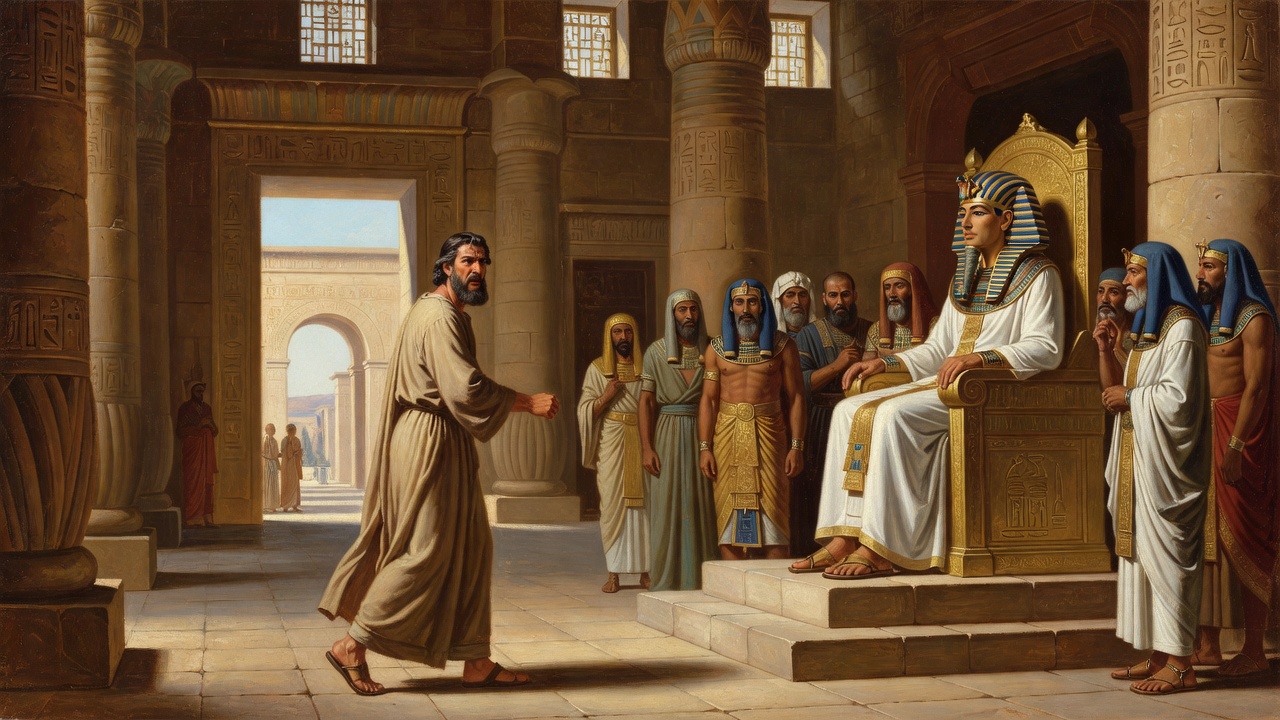
- O Easton's Bible Dictionary (1897) diz que o faraó do Êxodo foi provavelmente Menephtah I, o décimo quarto filho de Rameses II e o mais velho dos filhos que sobreviveram, mas também afirma que ainda é uma questão se ele ou Seti II foi esse rei; alguns favorecem Seti II. O mesmo verbete diz que esse faraó residia em Zoã, onde ocorreram suas entrevistas com Moisés e Arão. Este capítulo termina com Moisés, ardendo de ira, saindo da presença do faraó.Fontes: Pharaoh (of the Exodus) · o próprio texto bíblico
- O Easton's Bible Dictionary (1897) afirma que Jacó e seus filhos desceram ao Egito provavelmente cerca de 350 anos antes do nascimento de Moisés, e que o rei lhes deu o melhor da terra, Gósen, para habitar. Neste capítulo, homens e mulheres de Israel devem pedir aos vizinhos objetos de prata e de ouro, e o relato diz que o SENHOR concedeu ao povo favor diante dos egípcios.Fontes: Moses · o próprio texto bíblico
- Um registro de eventos data o início do Êxodo do Egito em 1490 a.C. Neste capítulo, o SENHOR diz a Moisés que, depois de mais uma praga, o faraó deixará o povo partir e o expulsará por completo.Fontes: Exodus from Egypt · o próprio texto bíblico
Notas escritas com auxílio de IA a partir de fontes abertas (Theographic Bible Metadata, CC BY-SA 4.0; Easton’s Bible Dictionary, domínio público) e revisadas antes de publicar.
Lugares deste capítulo
Só aparecem lugares com identificação de alta confiança (90% ou mais segundo as fontes acadêmicas reunidas pelo OpenBible). Mapa da época: DARE (Digital Atlas of the Roman Empire), CC BY 4.0; mapa atual: © colaboradores do OpenStreetMap; lugares: OpenBible.info (CC BY 4.0).
Créditos e licença desta tradução
I tnalù dwata
New Testament in Blaan, Sarangani
copyright © 1998 Wycliffe Bible Translators, Inc.
Language: Sarangani Blaan (Blaan, Sarangani)
Translation by: Wycliffe Bible Translators
Contributor: Wycliffe Bible Translators, Inc.
Copyright Information
© 1998, Wycliffe Bible Translators, Inc. All rights reserved.
This translation text is made available to you under the
terms of the Creative Commons License: Attribution-Noncommercial-No Derivative Works.
( http://creativecommons.org/licenses/by-nc-nd/3.0/ )
In addition, you have permission to port the text to different file formats, as long as you
do not change any of the text or punctuation of the Bible.
You may share, copy, distribute, transmit, and extract portions
or quotations from this work, provided that you include the above copyright
information:
You must give Attribution to the work.
You do not sell this work for a profit.
You do not make any derivative works that change any of the actual words or punctuation of the Scriptures.
Permissions beyond the scope of this license may be
available if you contact
us with your request.
The New Testament
in Blaan, Sarangani
© 1998, Wycliffe Bible Translators, Inc. All rights reserved.
This translation is made available to you under the terms of the
Creative Commons Attribution-Noncommercial-No Derivatives license 4.0.
You may share and redistribute this Bible translation or extracts from it in any format, provided that:
You include the above copyright and source information.
You do not sell this work for a profit.
You do not change any of the words or punctuation of the Scriptures.
Pictures included with Scriptures and other documents on this site are licensed just for use with those Scriptures and documents.
For other uses, please contact the respective copyright owners.
2015-03-17
Fonte: http://ebible.org/bps/ · eBible.org