Zechariah 9
Awajún [Aguaruna] · Tap a verse to see its cross-references.
About this book
About Zechariah
- Easton's Bible Dictionary (1897) presents Zechariah as a prophet of Judah, the eleventh of the twelve minor prophets, and, like Ezekiel, of priestly descent. He calls himself the son of Berechiah, while Ezra calls him the son of Iddo, whom Easton identifies as his grandfather. Easton dates the start of his prophetic work to the second year of Darius, 520 B.C., about sixteen years after the first company returned from exile, and notes that he was a contemporary of Haggai.Sources: Easton: Zechariah · Zechariah
- Zechariah addressed people who had returned from exile. Zerubbabel, also known by the Persian name Sheshbazzar, led the first returning company and, in the second year after the return, built an altar and laid the temple foundation on the ruins of the house destroyed by Nebuchadnezzar. Joshua, son of Jozadak, was high priest under Zerubbabel, and Easton says the night visions were meant to console these returned exiles and stir up hope.Sources: Easton: Zechariah · Zerubbabel · Joshua
- Easton divides the book into two parts, chapters 1-8 and chapters 9-14. The first opens with a preface recalling the nation's past as a solemn warning, then eight visions in a single night and the symbolic crowning of Joshua; chapters 7 and 8, given two years later, answer whether mourning for the city's destruction should continue and encourage the people with the assurance of God's presence and blessing. The second part bears no date. Easton thinks a considerable interval separates it from the first and describes its two burdens as God's dealings down to the Advent and as glory, final conflict, and triumph in what he calls the latter day.Sources: Easton: Zechariah
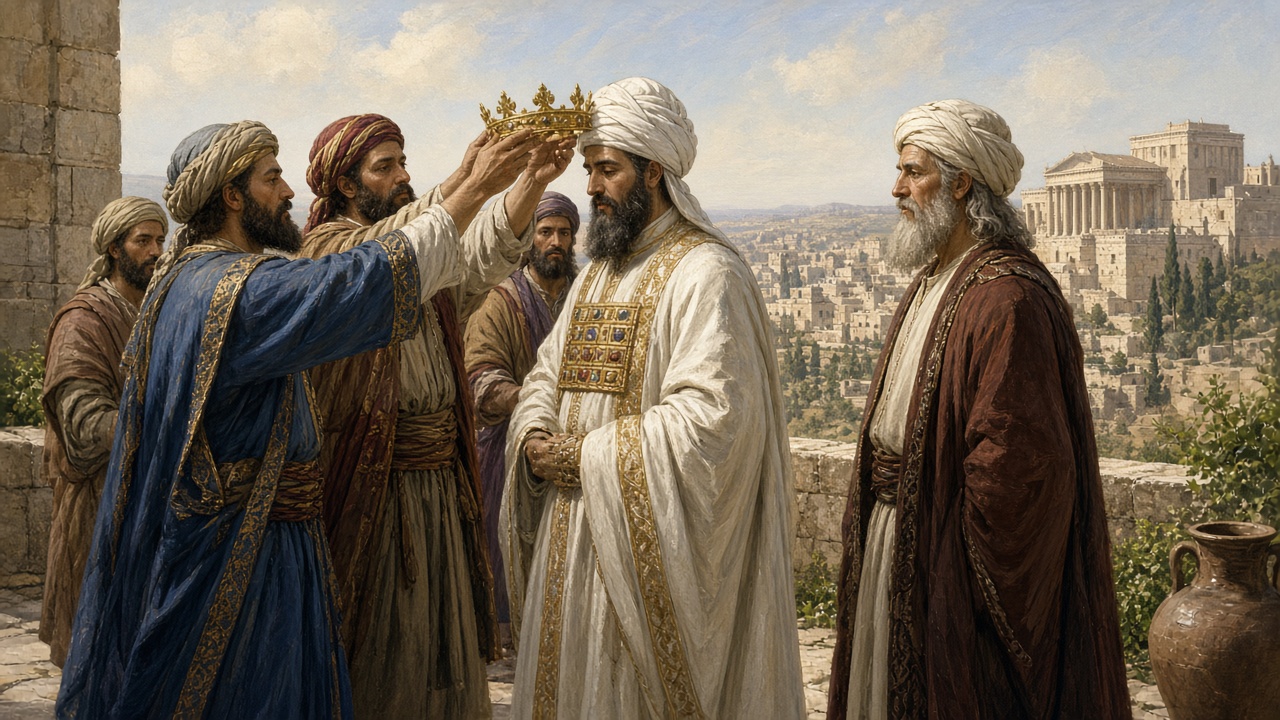
- Easton explains the name Zechariah as meaning that Jehovah is renowned or remembered. A notable scene is the symbolic crowning of Joshua; Easton reads it as showing how the kingdoms of the world become the kingdom of God's Christ. Helem, named in Zechariah 6:10, is identified as one who returned from Babylon.Sources: Easton: Zechariah · Helem · Joshua
Notes written with AI assistance from open sources (Theographic Bible Metadata, CC BY-SA 4.0; Easton’s Bible Dictionary, public domain) and reviewed before publishing.
Israel aents aidaun apuji atin pachisa etsegkamu
9¡Yaakat Jerusalégnumia aidautigmek shiig aneastajum!
¡Shiig aneakjum kantamatajum!
¡Amina apujum burro tsakatnum entsatkau minitjamui!
Imanchauch wajakin, pegkejam, pegkegchaun takachu,
amina yaimpak depetmitkagmaktatus minawai.
10Efraín wegantu aidaun carroji aidaunak,
flecha akenka nagkimtai aidaujai ashí tsaiktatui,
dutikak Jerusalégnumia caballo aidaunashkam ijinattawai.
Israel nugkanmak ashí depetmaktatui,
nunik ashí tikich aents aidaush agkan batsamsatnume titatui.
Tuja niig nayants jinagbau aina imanui nagkamas,
namak Eufratesa aatus ashí nugkanum inamjatnai,
nii inabaujig nagkatkauk achatnai.
Apajuí niina aentsji aidaun yainka ataktu inantaitin
11Tuke Pujuu chichaak:
“Jerusalégkah, wi amejai numpai chichaman
umikuitag nuna betek umiakun,
yumigmat taimu yumi atsaig ashí
jinaajum chimpigjum nunak jiijan uwemtijattajime.
12Achija yajuakam tikich nugkanum batsatutigmek
yaakat shiig peeja umikbauwa nuwi waketjattagme.
Yamaik atum waitiajum nuna nagkaesau,
pegkegnum yumigsattajime,
nuadui shiig aneasjum batsamsattajume.
13Judá wegantu aidauk arcojai betek,
tuja Israel wegantu aidauk flechajai betek,
tuja Jerusalégnak puyagjai betek awajsattajai,
dutikan ditajai griego aents aidaunak ijinattajai”, tawai.
14Tuke Pujuu ditan jetektajum tusa titata nunak,
dita nagki akenbaujig peemjai betek agtinai,
Apajuí kachun umpuag tsumujinia dasenum pachitkau wetinai.
15Tuke Pujuu ashí senchigtina nunú
niina aentsji aidaunak kuitamkatnai,
dutikamu asag dita shiwaaji aidaunak depetuk
najakag ashí amukagtinai.
Aatus depetmakaju asag, shiig aneenak
altar ukatkatasa numpa tsapanum aimka jutaya
imatika aimak vinon umuinak nampejag shiig aneenak pampainiagtinai.
16Nunú tsawan jegakuig, mina aentsug aidaunak,
uwija kuitamin uwigjin ayamjina numamtuk
wi ayamjukan uwemtikjatnaitjai,
dutika ai dita nugken waketug batsamsag
kaya pegkeg winchamtin juki atsejutai najanamu winchantuwama iman agtinai.
17¡Yajauwajah, nuwauch aidau,
uchi datsauch aidau shiig yuwawag senchigtin
shiig aneas dakunkut juju nugkanum batsatbau!
Did you know?
Judgment on Nations and the Coming Peaceful King
- The oracle describes Tyre amassing silver like dust and gold like dirt before its fortifications and wealth are cast into the sea. Historically, Tyre was a dominant Phoenician coastal city whose merchants navigated the Mediterranean and gathered immense commercial wealth from distant colonies into its storehouses.Sources: Tyre · the Bible text itself
- Zechariah foretells judgment upon Philistine coastal cities including Gaza, Ashkelon, Ashdod, and Ekron, but notes that Ekron would become like a clan in Judah. Ekron was the northernmost of the five major Philistine cities and long stood as a distinct neighboring power before this prophetic vision of assimilation.Sources: Ekron · the Bible text itself
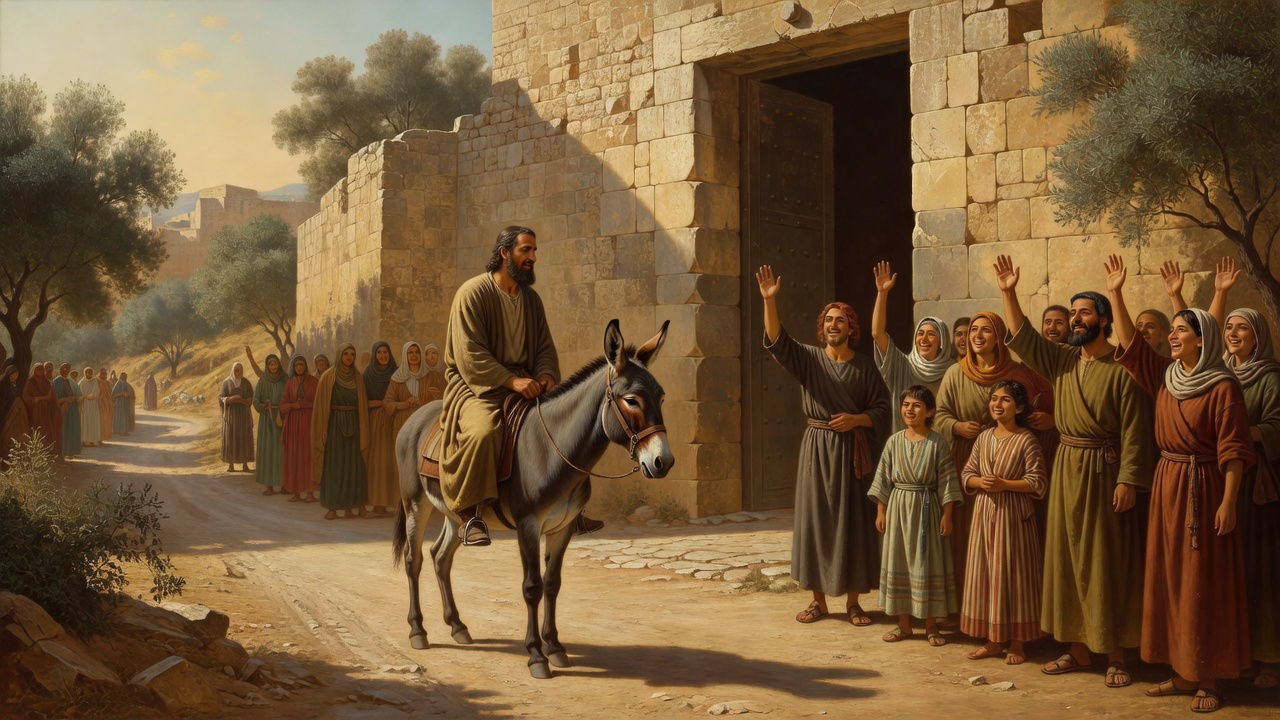
- The text calls the Daughter of Zion to celebrate the arrival of a righteous king who rides a young donkey and disarms the war chariots and horses of Ephraim and Jerusalem. Zion was the fortified southeastern hill of Jerusalem where David built his citadel, representing the royal center of the nation.Sources: Zion · the Bible text itself
Notes written with AI assistance from open sources (Theographic Bible Metadata, CC BY-SA 4.0; Easton’s Bible Dictionary, public domain) and reviewed before publishing.
Places in this chapter
- Aram · 33.511, 36.306 · verse 1
- Damascus · 33.511, 36.306 · verses 1, 2
- Hamath · Today: Hama · 35.136, 36.750 · verse 2
- Sidon · Today: Sandikli archaeological site in Sidon · 33.561, 35.372 · verse 2
- Tyre · 33.271, 35.196 · verses 2, 3, 4, 5
- Ashkelon · Today: Tel Ashkelon · 31.664, 34.546 · verse 5
- Ekron · Today: Tel Miqne · 31.777, 34.852 · verses 5, 7
- Gaza · Today: Tell Harube · 31.504, 34.464 · verse 5
- Ashdod · Today: Tel Ashdod · 31.757, 34.658 · verse 6
- Philistia · 31.664, 34.546 · verse 6
- Jerusalem · 31.777, 35.234 · verses 9, 10
- Zion · Today: Jerusalem · 31.777, 35.234 · verses 9, 13
- Euphrates · Today: Euphrates River · 31.004, 47.442 · verse 10
- Greece · 37.972, 23.727 · verse 13
Only places identified with high confidence are shown (90% or more according to the scholarly sources compiled by OpenBible). Period map: DARE (Digital Atlas of the Roman Empire), CC BY 4.0; modern map: © OpenStreetMap contributors; places: OpenBible.info (CC BY 4.0).
Credits and license for this translation
Awajún [Aguaruna]
Aguaruna: Awajún [Aguaruna] (Bible)
copyright © 2020 Wycliffe Bible Translators, Inc.
Language: Aguaruna
Translation by: Wycliffe Bible Translators
Contributor: Wycliffe Bible Translators, Inc.
Aguaruna
agr
Peru
Copyright Information
© 2008, Wycliffe Bible Translators, Inc. All rights reserved.
This translation text is made available to you under the
terms of the Creative Commons License: Attribution-Noncommercial-No Derivative Works.
( http://creativecommons.org/licenses/by-nc-nd/3.0/ )
In addition, you have permission to port the text to different file formats, as long as you
do not change any of the text or punctuation of the Bible.
You may share, copy, distribute, transmit, and extract portions
or quotations from this work, provided that you include the above copyright
information:
You must give Attribution to the work.
You do not sell this work for a profit.
You do not make any derivative works that change any of the actual words or punctuation of the Scriptures.
Permissions beyond the scope of this license may be
available if you contact
us with your request.
The New Testament
in Aguaruna
This translation is made available to you under the terms of the
Creative Commons Attribution-Noncommercial-No Derivatives license 4.0.
You may share and redistribute this Bible translation or extracts from it in any format, provided that:
You include the above copyright and source information.
You do not sell this work for a profit.
You do not change any of the words or punctuation of the Scriptures.
Pictures included with Scriptures and other documents on this site are licensed just for use with those Scriptures and documents.
For other uses, please contact the respective copyright owners.
2025-04-26
Source: http://ebible.org/agr/ · eBible.org