Apocalipse 1
Berean Standard Bible · Toque num versículo para ver as referências cruzadas.
Sobre este livro
Sobre o Apocalipse
- O Easton's Bible Dictionary (1897) identifica o autor como o apóstolo João, cujo nome aparece quatro vezes no livro (1:1, 4, 9; 22:8). O mesmo verbete diz que a data costuma ser fixada em 96 d.C., sob Domiciano, enquanto alguns defendem 68 ou 69 d.C., sob Nero. Os que favorecem a data mais tardia apelam ao padre da Igreja Irineu, que recebera informações sobre o livro de pessoas que tinham visto João cara a cara, e que afirmou que o Apocalipse “foi visto não faz muito tempo”.Fontes: Easton: Revelation, Book of
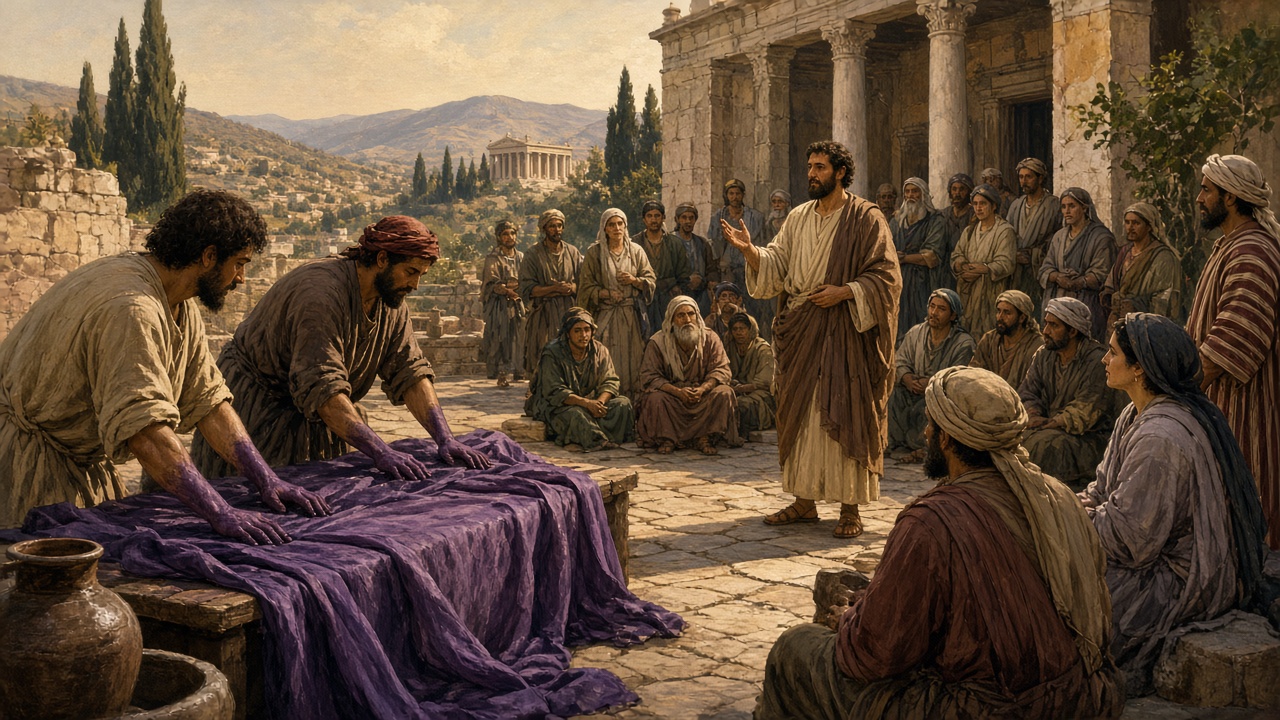
- O Apocalipse nomeia igrejas em cidades da Ásia Menor. Tiatira, na fronteira entre a Lídia e a Mísia e há muito famosa pelo tingimento, e Sardes, metrópole da Lídia, às margens do rio Pactolo e ao pé do monte Tmolo, eram cada qual uma das sete igrejas. Laodiceia, nos confins da Frígia e da Lídia, junto ao Lico, cerca de quarenta milhas a leste de Éfeso, também é citada; antes se chamara Diospolis e depois Rhoas, até que Antíoco II da Síria a reconstruiu e lhe deu o nome de sua esposa Laodice.Fontes: Thyatira · Sardis · Laodicea
- O Easton's Bible Dictionary (1897) chama o Apocalipse de livro que encerra o Novo Testamento e de único livro profético do cânone neotestamentário. Citando Plummer, diz que este livro e o Evangelho de João compartilham as mesmas ideias centrais: um oferece uma visão magnífica, o outro um grande drama histórico, do conflito supremo entre o bem e o mal e de seu desfecho. Em ambos, acrescenta o verbete, Jesus Cristo é a figura central, cuja vitória por meio da derrota é esse desfecho, e sua luta e seu triunfo são descritos em linguagem impregnada do Antigo Testamento.Fontes: Easton: Revelation, Book of
- Um manuscrito de cerca do século XII chama o autor de “João, o Divino”, embora o Easton's Bible Dictionary (1897) diga que não se pode apontar razão para esse título. No livro, Satanás é chamado “o dragão” e “a antiga serpente”, e Antipas é nomeado “mártir fiel”, de quem nada mais se sabe com certeza.Fontes: Easton: Revelation, Book of · Satan · Antipas
Notas escritas com auxílio de IA a partir de fontes abertas (Theographic Bible Metadata, CC BY-SA 4.0; Easton’s Bible Dictionary, domínio público) e revisadas antes de publicar.
Prologue
1This is the revelation of Jesus Christ, which God gave Him to show His servants what must soon come to pass. He made it known by sending His angel to His servant John, 2who testifies to everything he saw. This is the word of God and the testimony of Jesus Christ.
3Blessed is the one who reads aloud the words of this prophecy, and blessed are those who hear and obey what is written in it, because the time is near.
John Greets the Seven Churches
4John,
To the seven churches in the province of Asia:
Grace and peace to you from Him who is and was and is to come, and from the seven Spirits before His throne, 5and from Jesus Christ, the faithful witness, the firstborn from the dead, and the ruler of the kings of the earth.
To Him who loves us and has released us from our sins by His blood, 6who has made us to be a kingdom, priests to His God and Father—to Him be the glory and power forever and ever! Amen.
7Behold, He is coming with the clouds, and every eye will see Him—even those who pierced Him. And all the tribes of the earth will mourn because of Him. So shall it be! Amen.
8“I am the Alpha and the Omega,” says the Lord God, who is and was and is to come—the Almighty.
John’s Vision on Patmos
9I, John, your brother and partner in the tribulation and kingdom and perseverance that are in Jesus, was on the island of Patmos because of the word of God and my testimony about Jesus. 10On the Lord’s day I was in the Spirit, and I heard behind me a loud voice like a trumpet, 11saying, “Write on a scroll what you see and send it to the seven churches: to Ephesus, Smyrna, Pergamum, Thyatira, Sardis, Philadelphia, and Laodicea.”
12Then I turned to see the voice that was speaking with me. And having turned, I saw seven golden lampstands, 13and among the lampstands was One like the Son of Man, dressed in a long robe, with a golden sash around His chest. 14The hair of His head was white like wool, as white as snow, and His eyes were like a blazing fire. 15His feet were like polished bronze refined in a furnace, and His voice was like the roar of many waters. 16He held in His right hand seven stars, and a sharp double-edged sword came from His mouth. His face was like the sun shining at its brightest.
17When I saw Him, I fell at His feet like a dead man. But He placed His right hand on me and said, “Do not be afraid. I am the First and the Last, 18the Living One. I was dead, and behold, now I am alive forever and ever! And I hold the keys of Death and of Hades.
19Therefore write down the things you have seen, and the things that are, and the things that will happen after this. 20This is the mystery of the seven stars you saw in My right hand and of the seven golden lampstands: The seven stars are the angels of the seven churches, and the seven lampstands are the seven churches.
Você sabia?
Uma visão em Patmos para as igrejas da Ásia
- João escreve que estava na ilha de Patmos por causa da palavra de Deus e do seu testemunho a respeito de Jesus. Patmos é uma ilha pequena, rochosa e estéril das Espórades, no mar Egeu, e é mencionada nas Escrituras somente neste capítulo. O Dicionário Bíblico de Easton (1897) afirma que o imperador Domiciano baniu João para lá em 95 d.C. e que ele recebeu esta revelação na ilha.Fontes: o próprio texto bíblico · Patmos
- A mensagem é dirigida a sete igrejas na província da Ásia, a província romana da Ásia Proconsular, que abrangia a parte ocidental da Ásia Menor e tinha Éfeso como capital. João recebe a ordem de escrever num rolo o que vê e enviá-lo a Éfeso, Esmirna, Pérgamo, Tiatira, Sardes, Filadélfia e Laodiceia, as sete igrejas daquela província.Fontes: o próprio texto bíblico · Asia
- Éfeso, a capital da província, ostentava o título romano de "a primeira e a maior metrópole da Ásia". Era conhecida pelo templo de Diana e por um teatro a céu aberto, o maior do mundo, capaz de receber 50.000 espectadores. Tiatira, na fronteira entre a Lídia e a Mísia, era famosa pelo tingimento; Sardes, a metrópole da Lídia, ficava às margens do rio Pactolo, ao pé do monte Tmolo; e Laodiceia ficava a cerca de quarenta milhas a leste de Éfeso, às margens do Lico.Fontes: Ephesus · Thyatira · Sardis · Laodicea
Notas escritas com auxílio de IA a partir de fontes abertas (Theographic Bible Metadata, CC BY-SA 4.0; Easton’s Bible Dictionary, domínio público) e revisadas antes de publicar.
Lugares deste capítulo
- Asia · 38.400, 28.300 · versículos 4, 11
- Patmos · 37.325, 26.542 · versículo 9
- Ephesus · 37.939, 27.341 · versículo 11
- Laodicea · Hoje: Laodicea on the Lycus · 37.836, 29.108 · versículo 11
- Pergamum · Hoje: Pergamon · 39.132, 27.184 · versículo 11
- Philadelphia · Hoje: Alaşehir · 38.350, 28.517 · versículo 11
- Sardis · 38.488, 28.040 · versículo 11
- Smyrna · Hoje: Izmir · 38.419, 27.138 · versículo 11
- Thyatira · Hoje: Akhisar · 38.920, 27.837 · versículo 11
Só aparecem lugares com identificação de alta confiança (90% ou mais segundo as fontes acadêmicas reunidas pelo OpenBible). Mapa da época: DARE (Digital Atlas of the Roman Empire), CC BY 4.0; mapa atual: © colaboradores do OpenStreetMap; lugares: OpenBible.info (CC BY 4.0).
Créditos e licença desta tradução
Berean Standard Bible
The Holy Bible in English: Berean Standard Bible
Public Domain
Language: English
Contributor: BSB Publishing, LLC
2026-10-02
Fonte: http://ebible.org/engbsb/ · eBible.org