Apocalipsis 1
Berean Standard Bible · Toca un versículo para ver sus referencias cruzadas.
Acerca de este libro
Acerca del Apocalipsis
- El Easton's Bible Dictionary (1897) identifica al autor como el apóstol Juan, cuyo nombre aparece cuatro veces en el libro (1:1, 4, 9; 22:8). El mismo artículo dice que la fecha se ha fijado por lo general en el año 96 d. C., bajo Domiciano, mientras que algunos sostienen el 68 o el 69 d. C., bajo Nerón. Quienes favorecen la fecha más tardía apelan al padre de la Iglesia Ireneo, que había recibido información sobre el libro de personas que habían visto a Juan cara a cara, y que dijo que el Apocalipsis “fue visto no hace mucho tiempo”.Fuentes: Easton: Revelation, Book of
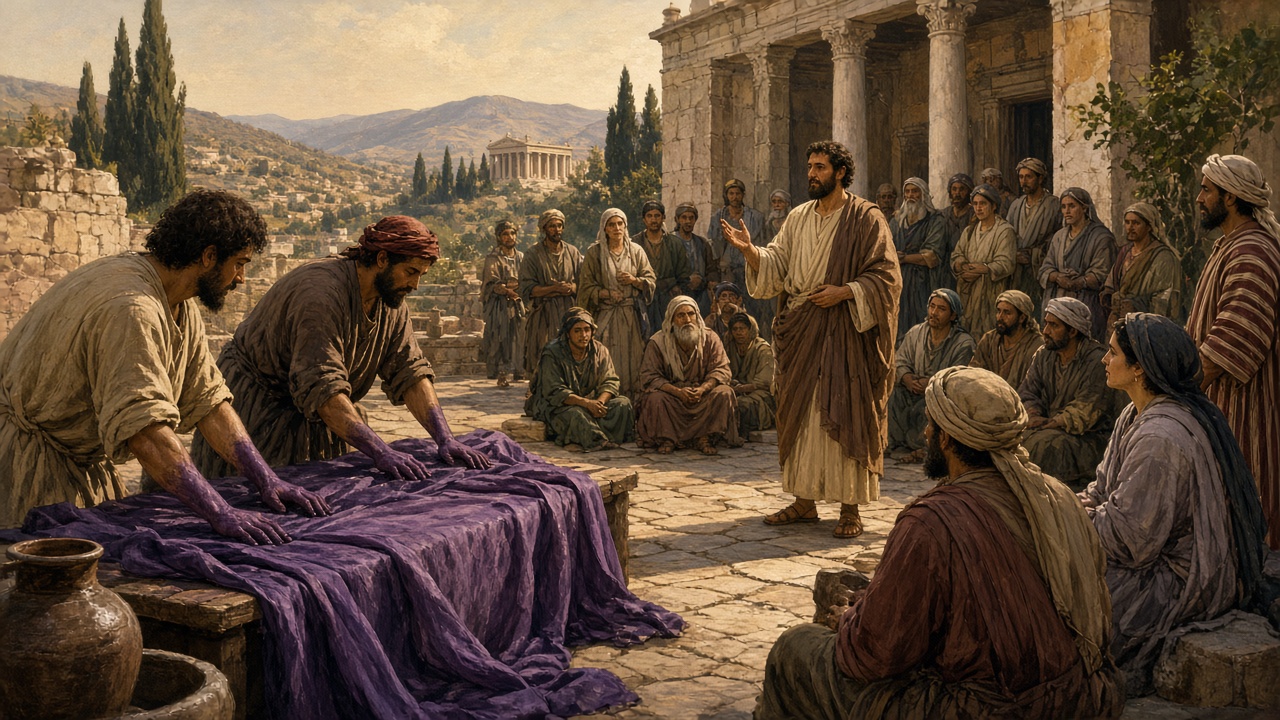
- El Apocalipsis nombra iglesias en ciudades de Asia Menor. Tiatira, en los límites de Lidia y Misia y célebre desde antiguo por el teñido, y Sardis, metrópoli de Lidia, a orillas del río Pactolo y al pie del monte Tmolus, eran cada una de las siete iglesias. Laodicea, en los confines de Frigia y Lidia, junto al Lico, a unas cuarenta millas al este de Éfeso, también se cita; antes se había llamado Diospolis y luego Rhoas, hasta que Antíoco II de Siria la reconstruyó y le puso el nombre de su esposa Laodice.Fuentes: Thyatira · Sardis · Laodicea
- El Easton's Bible Dictionary (1897) llama al libro Apocalipsis, el que cierra el Nuevo Testamento y el único libro profético del canon neotestamentario. Citando a Plummer, dice que este libro y el Evangelio de Juan comparten las mismas ideas centrales: uno ofrece una visión magnífica y el otro un gran drama histórico del conflicto supremo entre el bien y el mal y de su desenlace. En ambos, añade el artículo, Jesucristo es la figura central, cuya victoria por medio de la derrota es ese desenlace, y su lucha y su triunfo se describen en un lenguaje saturado del Antiguo Testamento.Fuentes: Easton: Revelation, Book of
- Un manuscrito de alrededor del siglo XII llama al autor “Juan el Divino”, aunque el Easton's Bible Dictionary (1897) dice que no se puede señalar razón alguna para ese título. En el libro, a Satanás se le llama “el dragón” y “la serpiente antigua”, y Antipas es nombrado “mártir fiel”, de quien no se sabe con certeza nada más.Fuentes: Easton: Revelation, Book of · Satan · Antipas
Notas escritas con ayuda de IA a partir de fuentes abiertas (Theographic Bible Metadata, CC BY-SA 4.0; Easton’s Bible Dictionary, dominio público) y revisadas antes de publicarse.
Prologue
1This is the revelation of Jesus Christ, which God gave Him to show His servants what must soon come to pass. He made it known by sending His angel to His servant John, 2who testifies to everything he saw. This is the word of God and the testimony of Jesus Christ.
3Blessed is the one who reads aloud the words of this prophecy, and blessed are those who hear and obey what is written in it, because the time is near.
John Greets the Seven Churches
4John,
To the seven churches in the province of Asia:
Grace and peace to you from Him who is and was and is to come, and from the seven Spirits before His throne, 5and from Jesus Christ, the faithful witness, the firstborn from the dead, and the ruler of the kings of the earth.
To Him who loves us and has released us from our sins by His blood, 6who has made us to be a kingdom, priests to His God and Father—to Him be the glory and power forever and ever! Amen.
7Behold, He is coming with the clouds, and every eye will see Him—even those who pierced Him. And all the tribes of the earth will mourn because of Him. So shall it be! Amen.
8“I am the Alpha and the Omega,” says the Lord God, who is and was and is to come—the Almighty.
John’s Vision on Patmos
9I, John, your brother and partner in the tribulation and kingdom and perseverance that are in Jesus, was on the island of Patmos because of the word of God and my testimony about Jesus. 10On the Lord’s day I was in the Spirit, and I heard behind me a loud voice like a trumpet, 11saying, “Write on a scroll what you see and send it to the seven churches: to Ephesus, Smyrna, Pergamum, Thyatira, Sardis, Philadelphia, and Laodicea.”
12Then I turned to see the voice that was speaking with me. And having turned, I saw seven golden lampstands, 13and among the lampstands was One like the Son of Man, dressed in a long robe, with a golden sash around His chest. 14The hair of His head was white like wool, as white as snow, and His eyes were like a blazing fire. 15His feet were like polished bronze refined in a furnace, and His voice was like the roar of many waters. 16He held in His right hand seven stars, and a sharp double-edged sword came from His mouth. His face was like the sun shining at its brightest.
17When I saw Him, I fell at His feet like a dead man. But He placed His right hand on me and said, “Do not be afraid. I am the First and the Last, 18the Living One. I was dead, and behold, now I am alive forever and ever! And I hold the keys of Death and of Hades.
19Therefore write down the things you have seen, and the things that are, and the things that will happen after this. 20This is the mystery of the seven stars you saw in My right hand and of the seven golden lampstands: The seven stars are the angels of the seven churches, and the seven lampstands are the seven churches.
¿Sabías que…?
Una visión en Patmos para las iglesias de Asia
- Juan escribe que estaba en la isla de Patmos a causa de la palabra de Dios y de su testimonio acerca de Jesús. Patmos es una isla pequeña, rocosa y estéril de las Espóradas, en el mar Egeo, y se menciona en las Escrituras solo en este capítulo. El Diccionario Bíblico de Easton (1897) afirma que el emperador Domiciano desterró a Juan allí en el año 95 d.C. y que él recibió esta revelación en la isla.Fuentes: el propio texto bíblico · Patmos
- El mensaje va dirigido a siete iglesias de la provincia de Asia, la provincia romana de Asia Proconsular, que abarcaba la parte occidental de Asia Menor y tenía a Éfeso como capital. A Juan se le manda escribir en un rollo lo que ve y enviarlo a Éfeso, Esmirna, Pérgamo, Tiatira, Sardis, Filadelfia y Laodicea, las siete iglesias de aquella provincia.Fuentes: el propio texto bíblico · Asia
- Éfeso, la capital de la provincia, ostentaba el título romano de "la primera y la más grande metrópolis de Asia". Era conocida por el templo de Diana y por un teatro al aire libre, el más grande del mundo, capaz de albergar a 50.000 espectadores. Tiatira, en los límites de Lidia y Misia, era famosa por el teñido; Sardis, la metrópoli de Lidia, estaba a orillas del río Pactolo, al pie del monte Tmolo; y Laodicea quedaba a unas cuarenta millas al este de Éfeso, a orillas del Lico.Fuentes: Ephesus · Thyatira · Sardis · Laodicea
Notas escritas con ayuda de IA a partir de fuentes abiertas (Theographic Bible Metadata, CC BY-SA 4.0; Easton’s Bible Dictionary, dominio público) y revisadas antes de publicarse.
Lugares de este capítulo
- Asia · 38.400, 28.300 · versículos 4, 11
- Patmos · 37.325, 26.542 · versículo 9
- Ephesus · 37.939, 27.341 · versículo 11
- Laodicea · Hoy: Laodicea on the Lycus · 37.836, 29.108 · versículo 11
- Pergamum · Hoy: Pergamon · 39.132, 27.184 · versículo 11
- Philadelphia · Hoy: Alaşehir · 38.350, 28.517 · versículo 11
- Sardis · 38.488, 28.040 · versículo 11
- Smyrna · Hoy: Izmir · 38.419, 27.138 · versículo 11
- Thyatira · Hoy: Akhisar · 38.920, 27.837 · versículo 11
Solo aparecen lugares identificados con alta confianza (90 % o más según las fuentes académicas reunidas por OpenBible). Mapa de la época: DARE (Digital Atlas of the Roman Empire), CC BY 4.0; mapa actual: © colaboradores de OpenStreetMap; lugares: OpenBible.info (CC BY 4.0).
Créditos y licencia de esta traducción
Berean Standard Bible
The Holy Bible in English: Berean Standard Bible
Public Domain
Language: English
Contributor: BSB Publishing, LLC
2026-10-02
Fuente: http://ebible.org/engbsb/ · eBible.org