Êxodo 5
Wycliffe Bible · Toque num versículo para ver as referências cruzadas.
Pharaoh’s First Refusal
1Aftir these thingis Moises and Aaron entriden, and seiden to Farao, The Lord God of Israel seith these thingis, Delyuere thou my puple, that it make sacrifice to me in deseert. 2And he answeride, Who is the Lord, that Y here his vois, and delyuere Israel? I knowe not the Lord, and Y schal not delyuere Israel. 3Thei seiden, God of Ebrews clepide vs, that we go the weie of thre daies in to wildirnesse, and that we make sacrifice to oure Lord God, lest perauenture pestilence, ether swerd, bifalle to vs. 4The kyng of Egipt seide to hem, Moises and Aaron, whi stiren ye the puple fro her werkis? Go ye to youre chargis. 5And Farao seide, The puple of the loond is myche; ye seen that the cumpany hath encreessid; hou myche more schal it encreesse, if ye schulen yyue to hem reste fro werkis.
Bricks and Straw
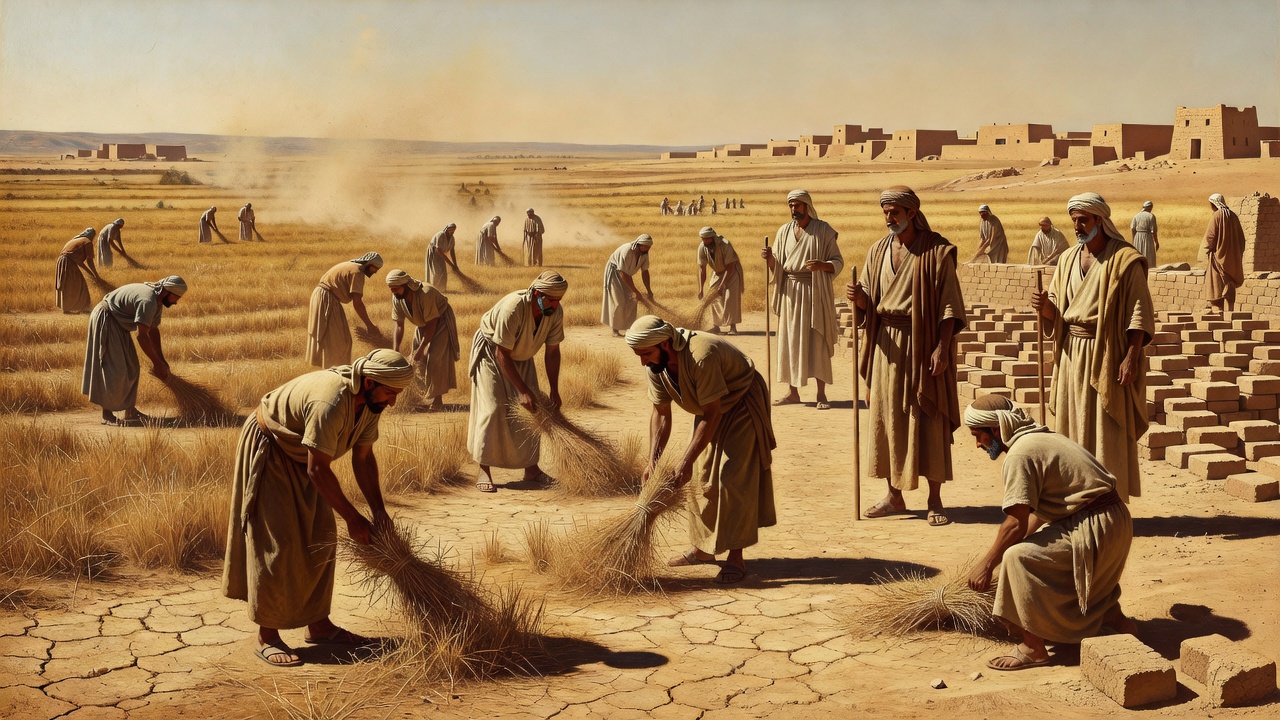
6Therfor Farao comaundide in that dai to the maistris of werkis, and to rente gadereris of the puple, 7and seide, Ye schulen no more yyue stre to the puple, to make tijl stoonys as bifore; but go thei, and gedere stobil; 8and ye schulen sette on hem the mesure of tijl stoonys, which thei maden bifore, nether ye schulen abate ony thing; for thei ben idil, and therfor thei crien, and seien, Go we, and make we sacrifice to oure God; 9be thei oppressid bi werkis, and fille thei tho, that thei assente not to the false wordis. 10Therfor the maistris of the workis and the rente gadereris yeden out to the puple, and seiden, Thus seith Farao, Y yyue not to you stre; 11go ye, and gadere, if ye moun fynde ony where; nether ony thing schal be decreessid of youre werk. 12And the puple was scaterid bi al the lond of Egipt to gadre stre. 13And the maystris of werkis weren bisi, and seiden, Fille ye youre werk ech dai, as ye weren wont to do, whanne the stre was youun to you. 14And thei, that weren maistris of the werkis of the sones of Israel, weren betun of the rent gadereris of Farao, that seiden, Whi filliden ye not the mesure of tijl stoonus, as bifore, nether yistirdai nethir to dai?
The Cry of the Israelites
15And the souereyns of the sonys of Israel camen, and crieden to Farao, and seiden, Whi doist thou so ayens thi seruauntis? 16Stre is not youun to vs, and tijl stoonus ben comaundid in lijk manere. Lo! we thi seruauntis ben betun with scourgis, and it is doon vniustli ayens thi puple. 17Farao seide, Ye yyuen tent to idilnesse, and therfor ye seien, Go we, and make we sacrifice to the Lord; 18therfor go ye, and worche; stre schal not be youun to you, and ye schulen yelde the customable noumbre of tijl stoonus. 19And the souereyns of the children of Israel sien hem silf in yuel, for it was seid to hem, No thing schal be decreessid of tijl stoonus bi alle daies. 20And thei `camen to Moises and Aaron, that stoden euene ayens, and thei `yeden out fro Farao, 21and seiden to `Moises and Aaron, The Lord se, and deme, for ye han maad oure odour to stynke bifore Farao and hise seruauntis; and ye han youe to hym a swerd, that he schulde sle vs. 22And Moises turnede ayen to the Lord, and seide, Lord, whi hast thou turmentid this puple? why sentist thou me? 23For sithen Y entride to Farao, that Y schulde speke in thi name, thou hast turmentid thi puple, and hast not delyuered hem.
Você sabia?
Trabalho mais duro depois da recusa do faraó
- O Easton's Bible Dictionary (1897) diz que o faraó do Êxodo foi provavelmente Menephtah I, o décimo quarto e mais velho filho sobrevivente de Ramsés II, mas trata a identificação como uma questão ainda em aberto: alguns estudiosos, observa a obra, preferem Seti II, cujo reinado ela descreve como iniciado em paz e terminado num desastre repentino. O verbete diz que ele residia em Zoã, onde recebeu Moisés e Arão nas audiências registradas em Êxodo.Fontes: Pharaoh (of the Exodus) · o próprio texto bíblico
- O Easton's Bible Dictionary (1897) situa a chegada de Jacó ao Egito provavelmente cerca de 350 anos antes do nascimento de Moisés. Diz que um rei hicso, de um povo semita pastoril da Ásia e chamado rei pastor, recebeu a família com favor e lhes destinou Gósen, a melhor terra; neste capítulo o faraó trata o povo de Israel, já numeroso, como trabalhadores que não pretende deixar partir.Fontes: Moses · o próprio texto bíblico
- O faraó responde ao pedido de celebrar uma festa no deserto deixando de fornecer a palha para os tijolos, mas ainda exigindo a mesma cota diária. O povo se espalha por toda a terra do Egito para recolher restolho, e os oficiais israelitas que os capatazes do faraó haviam posto sobre eles são espancados quando essa cota não é cumprida.Fontes: o próprio texto bíblico
Notas escritas com auxílio de IA a partir de fontes abertas (Theographic Bible Metadata, CC BY-SA 4.0; Easton’s Bible Dictionary, domínio público) e revisadas antes de publicar.
Lugares deste capítulo
Só aparecem lugares com identificação de alta confiança (90% ou mais segundo as fontes acadêmicas reunidas pelo OpenBible). Mapa da época: DARE (Digital Atlas of the Roman Empire), CC BY 4.0; mapa atual: © colaboradores do OpenStreetMap; lugares: OpenBible.info (CC BY 4.0).
Créditos e licença desta tradução
Wycliffe Bible
This is the Pentateuch and Gospels from The Holy Bible, containing the Old and New Testaments, with the apocryphal books, in the earliest English version made from the latin Vulgate by John Wycliffe and his followers. c.1395
Public Domain
Language: Middle English (English)
Dialect: Middle
Translation by: John Wycliffe
2016-11-08
Títulos de seção adaptados da Berean Standard Bible (domínio público); não fazem parte do texto bíblico desta tradução.
Fonte: http://ebible.org/engWycliffe/ · eBible.org