Éxodo 5
Wycliffe Bible · Toca un versículo para ver sus referencias cruzadas.
Pharaoh’s First Refusal
1Aftir these thingis Moises and Aaron entriden, and seiden to Farao, The Lord God of Israel seith these thingis, Delyuere thou my puple, that it make sacrifice to me in deseert. 2And he answeride, Who is the Lord, that Y here his vois, and delyuere Israel? I knowe not the Lord, and Y schal not delyuere Israel. 3Thei seiden, God of Ebrews clepide vs, that we go the weie of thre daies in to wildirnesse, and that we make sacrifice to oure Lord God, lest perauenture pestilence, ether swerd, bifalle to vs. 4The kyng of Egipt seide to hem, Moises and Aaron, whi stiren ye the puple fro her werkis? Go ye to youre chargis. 5And Farao seide, The puple of the loond is myche; ye seen that the cumpany hath encreessid; hou myche more schal it encreesse, if ye schulen yyue to hem reste fro werkis.
Bricks and Straw
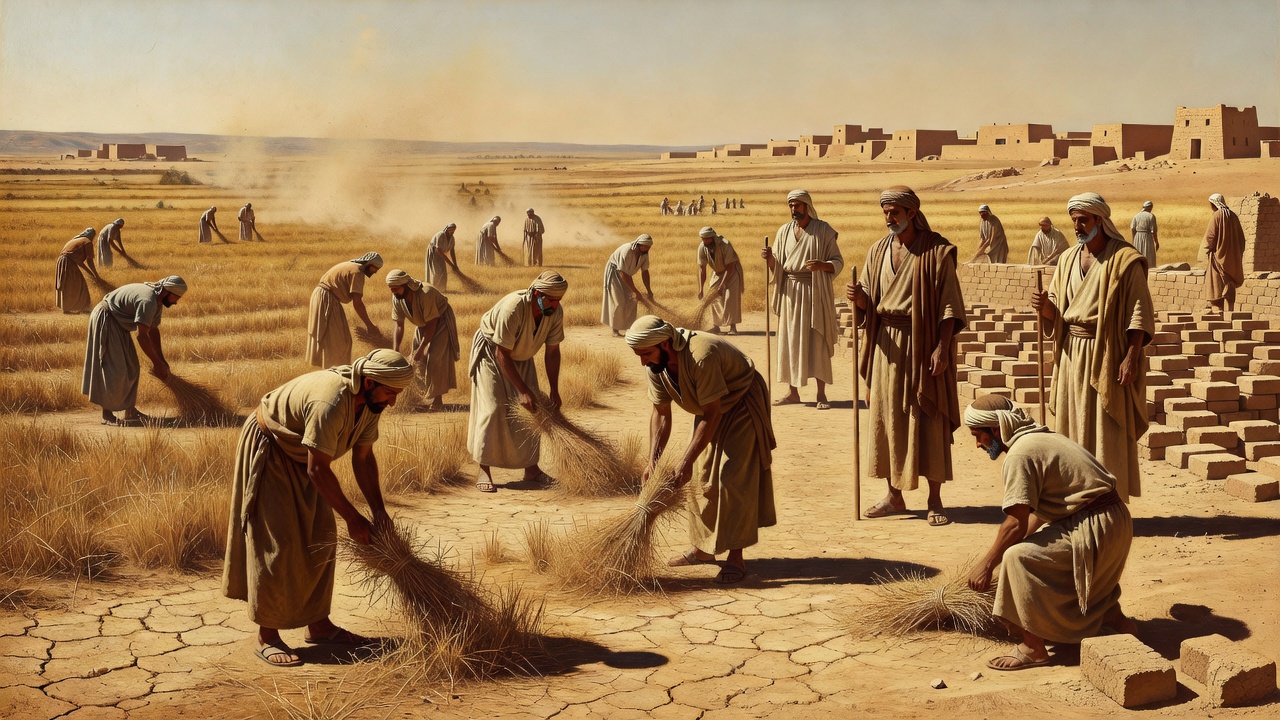
6Therfor Farao comaundide in that dai to the maistris of werkis, and to rente gadereris of the puple, 7and seide, Ye schulen no more yyue stre to the puple, to make tijl stoonys as bifore; but go thei, and gedere stobil; 8and ye schulen sette on hem the mesure of tijl stoonys, which thei maden bifore, nether ye schulen abate ony thing; for thei ben idil, and therfor thei crien, and seien, Go we, and make we sacrifice to oure God; 9be thei oppressid bi werkis, and fille thei tho, that thei assente not to the false wordis. 10Therfor the maistris of the workis and the rente gadereris yeden out to the puple, and seiden, Thus seith Farao, Y yyue not to you stre; 11go ye, and gadere, if ye moun fynde ony where; nether ony thing schal be decreessid of youre werk. 12And the puple was scaterid bi al the lond of Egipt to gadre stre. 13And the maystris of werkis weren bisi, and seiden, Fille ye youre werk ech dai, as ye weren wont to do, whanne the stre was youun to you. 14And thei, that weren maistris of the werkis of the sones of Israel, weren betun of the rent gadereris of Farao, that seiden, Whi filliden ye not the mesure of tijl stoonus, as bifore, nether yistirdai nethir to dai?
The Cry of the Israelites
15And the souereyns of the sonys of Israel camen, and crieden to Farao, and seiden, Whi doist thou so ayens thi seruauntis? 16Stre is not youun to vs, and tijl stoonus ben comaundid in lijk manere. Lo! we thi seruauntis ben betun with scourgis, and it is doon vniustli ayens thi puple. 17Farao seide, Ye yyuen tent to idilnesse, and therfor ye seien, Go we, and make we sacrifice to the Lord; 18therfor go ye, and worche; stre schal not be youun to you, and ye schulen yelde the customable noumbre of tijl stoonus. 19And the souereyns of the children of Israel sien hem silf in yuel, for it was seid to hem, No thing schal be decreessid of tijl stoonus bi alle daies. 20And thei `camen to Moises and Aaron, that stoden euene ayens, and thei `yeden out fro Farao, 21and seiden to `Moises and Aaron, The Lord se, and deme, for ye han maad oure odour to stynke bifore Farao and hise seruauntis; and ye han youe to hym a swerd, that he schulde sle vs. 22And Moises turnede ayen to the Lord, and seide, Lord, whi hast thou turmentid this puple? why sentist thou me? 23For sithen Y entride to Farao, that Y schulde speke in thi name, thou hast turmentid thi puple, and hast not delyuered hem.
¿Sabías que…?
Trabajo más duro tras la negativa del faraón
- El Easton's Bible Dictionary (1897) dice que el faraón del Éxodo fue probablemente Menephtah I, el decimocuarto y mayor hijo sobreviviente de Ramsés II, pero trata la identificación como una cuestión aún abierta: algunos eruditos, señala la obra, se inclinan por Seti II, cuyo reinado describe como iniciado en paz y terminado en un desastre repentino. La entrada dice que residía en Zoán, donde recibió a Moisés y a Aarón en las audiencias registradas en Éxodo.Fuentes: Pharaoh (of the Exodus) · el propio texto bíblico
- El Easton's Bible Dictionary (1897) sitúa la llegada de Jacob a Egipto probablemente unos 350 años antes del nacimiento de Moisés. Dice que un rey hicso, de un pueblo semita pastoril de Asia y llamado rey pastor, recibió a la familia con favor y les asignó Gosén, la mejor tierra; en este capítulo el faraón trata al pueblo de Israel, ya numeroso, como trabajadores a los que no dejará ir.Fuentes: Moses · el propio texto bíblico
- El faraón responde a la petición de celebrar una fiesta en el desierto dejando de suministrar la paja para los ladrillos, pero exigiendo todavía la misma cuota diaria. El pueblo se dispersa por toda la tierra de Egipto para recoger rastrojo, y los oficiales israelitas que los capataces del faraón habían puesto sobre ellos son golpeados cuando esa cuota no se cumple.Fuentes: el propio texto bíblico
Notas escritas con ayuda de IA a partir de fuentes abiertas (Theographic Bible Metadata, CC BY-SA 4.0; Easton’s Bible Dictionary, dominio público) y revisadas antes de publicarse.
Lugares de este capítulo
Solo aparecen lugares identificados con alta confianza (90 % o más según las fuentes académicas reunidas por OpenBible). Mapa de la época: DARE (Digital Atlas of the Roman Empire), CC BY 4.0; mapa actual: © colaboradores de OpenStreetMap; lugares: OpenBible.info (CC BY 4.0).
Créditos y licencia de esta traducción
Wycliffe Bible
This is the Pentateuch and Gospels from The Holy Bible, containing the Old and New Testaments, with the apocryphal books, in the earliest English version made from the latin Vulgate by John Wycliffe and his followers. c.1395
Public Domain
Language: Middle English (English)
Dialect: Middle
Translation by: John Wycliffe
2016-11-08
Títulos de sección adaptados de la Berean Standard Bible (dominio público); no forman parte del texto bíblico de esta traducción.
Fuente: http://ebible.org/engWycliffe/ · eBible.org