Exodus 5
Wycliffe Bible · Tap a verse to see its cross-references.
Pharaoh’s First Refusal
1Aftir these thingis Moises and Aaron entriden, and seiden to Farao, The Lord God of Israel seith these thingis, Delyuere thou my puple, that it make sacrifice to me in deseert. 2And he answeride, Who is the Lord, that Y here his vois, and delyuere Israel? I knowe not the Lord, and Y schal not delyuere Israel. 3Thei seiden, God of Ebrews clepide vs, that we go the weie of thre daies in to wildirnesse, and that we make sacrifice to oure Lord God, lest perauenture pestilence, ether swerd, bifalle to vs. 4The kyng of Egipt seide to hem, Moises and Aaron, whi stiren ye the puple fro her werkis? Go ye to youre chargis. 5And Farao seide, The puple of the loond is myche; ye seen that the cumpany hath encreessid; hou myche more schal it encreesse, if ye schulen yyue to hem reste fro werkis.
Bricks and Straw
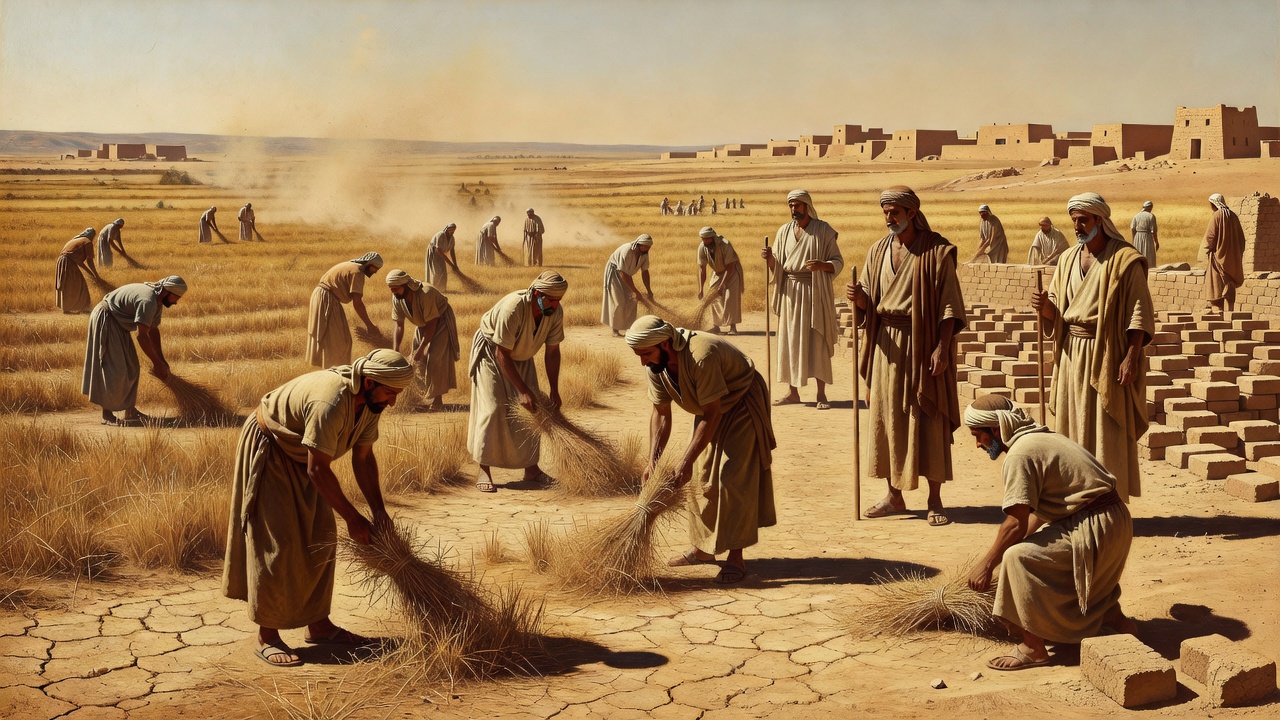
6Therfor Farao comaundide in that dai to the maistris of werkis, and to rente gadereris of the puple, 7and seide, Ye schulen no more yyue stre to the puple, to make tijl stoonys as bifore; but go thei, and gedere stobil; 8and ye schulen sette on hem the mesure of tijl stoonys, which thei maden bifore, nether ye schulen abate ony thing; for thei ben idil, and therfor thei crien, and seien, Go we, and make we sacrifice to oure God; 9be thei oppressid bi werkis, and fille thei tho, that thei assente not to the false wordis. 10Therfor the maistris of the workis and the rente gadereris yeden out to the puple, and seiden, Thus seith Farao, Y yyue not to you stre; 11go ye, and gadere, if ye moun fynde ony where; nether ony thing schal be decreessid of youre werk. 12And the puple was scaterid bi al the lond of Egipt to gadre stre. 13And the maystris of werkis weren bisi, and seiden, Fille ye youre werk ech dai, as ye weren wont to do, whanne the stre was youun to you. 14And thei, that weren maistris of the werkis of the sones of Israel, weren betun of the rent gadereris of Farao, that seiden, Whi filliden ye not the mesure of tijl stoonus, as bifore, nether yistirdai nethir to dai?
The Cry of the Israelites
15And the souereyns of the sonys of Israel camen, and crieden to Farao, and seiden, Whi doist thou so ayens thi seruauntis? 16Stre is not youun to vs, and tijl stoonus ben comaundid in lijk manere. Lo! we thi seruauntis ben betun with scourgis, and it is doon vniustli ayens thi puple. 17Farao seide, Ye yyuen tent to idilnesse, and therfor ye seien, Go we, and make we sacrifice to the Lord; 18therfor go ye, and worche; stre schal not be youun to you, and ye schulen yelde the customable noumbre of tijl stoonus. 19And the souereyns of the children of Israel sien hem silf in yuel, for it was seid to hem, No thing schal be decreessid of tijl stoonus bi alle daies. 20And thei `camen to Moises and Aaron, that stoden euene ayens, and thei `yeden out fro Farao, 21and seiden to `Moises and Aaron, The Lord se, and deme, for ye han maad oure odour to stynke bifore Farao and hise seruauntis; and ye han youe to hym a swerd, that he schulde sle vs. 22And Moises turnede ayen to the Lord, and seide, Lord, whi hast thou turmentid this puple? why sentist thou me? 23For sithen Y entride to Farao, that Y schulde speke in thi name, thou hast turmentid thi puple, and hast not delyuered hem.
Did you know?
Harder Work After Pharaoh's Refusal
- Easton's Bible Dictionary (1897) says the Pharaoh of the Exodus was probably Menephtah I, the fourteenth and eldest surviving son of Rameses II, but it treats the identification as still an open question: some scholars, it notes, favor Seti II, whose reign it describes as beginning peacefully and ending in sudden disaster. The entry says he resided at Zoan, where he received Moses and Aaron in the interviews recorded in Exodus.Sources: Pharaoh (of the Exodus) · the Bible text itself
- Easton's Bible Dictionary (1897) places Jacob's arrival in Egypt probably about 350 years before Moses was born. It says a Hyksos king, from a pastoral Semitic people of Asia and called a shepherd king, received the family favorably and assigned them Goshen, the best of the land; in this chapter Pharaoh treats the people of Israel, now numerous, as laborers he will not let go.Sources: Moses · the Bible text itself
- Pharaoh answers the request to hold a feast in the wilderness by no longer supplying straw for the bricks, while still requiring the same daily quota. The people scatter through the land of Egypt to gather stubble, and the Israelite foremen whom Pharaoh's taskmasters had set over them are beaten when that quota is not met.Sources: the Bible text itself
Notes written with AI assistance from open sources (Theographic Bible Metadata, CC BY-SA 4.0; Easton’s Bible Dictionary, public domain) and reviewed before publishing.
Places in this chapter
Only places identified with high confidence are shown (90% or more according to the scholarly sources compiled by OpenBible). Period map: DARE (Digital Atlas of the Roman Empire), CC BY 4.0; modern map: © OpenStreetMap contributors; places: OpenBible.info (CC BY 4.0).
Credits and license for this translation
Wycliffe Bible
This is the Pentateuch and Gospels from The Holy Bible, containing the Old and New Testaments, with the apocryphal books, in the earliest English version made from the latin Vulgate by John Wycliffe and his followers. c.1395
Public Domain
Language: Middle English (English)
Dialect: Middle
Translation by: John Wycliffe
2016-11-08
Section headings adapted from the Berean Standard Bible (public domain); they are not part of this translation’s text.
Source: http://ebible.org/engWycliffe/ · eBible.org