Gênesis 46
I tnalù dwata · Toque num versículo para ver as referências cruzadas.
I ksalu Dyékob ditù di banwe Idyif
1Taman flulen Dyékob i kdee nfunan, na mdà ale di Kanaan. Na di kakella di banwe Bérsiba dsù Dyékob dad lmanaf di Dwata, i Dwata maan Isaak.
2Na di kakifun nun kanteen Dyékob, na tlo kenen Dwata, manan, “E Dyékob.”
Na tmimel Dyékob, manan, “Hae, gani agu.”
3Na man Dwata, “Agu i Dwata, i Dwata i maam. Na nang ge likò salu di Idyif, du ditù kadang toogu fbel gamu, na gamu mgimò kadang i satu bung dad to too mlabung. 4Naginta ge salu ditù di Idyif, na kafnge én, nebegu i dad belam samfulê di banwe Kanaan. Na kadang di kfatim déén Dyosif di safédam.” Én gman Dwata di ku Dyékob.
5Na kafnge én, mdà ale Dyékob di Bérsiba, na fadlug ale di kagula. Fsakay i dad ngaan i màla, na i dad ngala, na i dad yaanla di dad kaditon febe Faraon, i harì di Idyif. 6Na nebela dad lmanafla, na i dad kandeenla gwèla di Kanaan, na salu ale di Idyif. Na fagin Dyékob di Idyif i kdee dad belan, 7i dad ngaan lagi, i dad ngaan libun, na i kdee dad fuan lagi na libun.
26Na nam falò nam i kdee dad bel Dyékob magin kenen salu di Idyif. Na là gakuf di kse ani i dad yaan i dad ngaan lagi. 27Na nun lwe dad ngà Dyosif sut di Idyif, na taman i kdee dad malay Dyékob masdagub fitu falò di ksalula di Idyif.
I ksite ale Dyékob na Dyosif
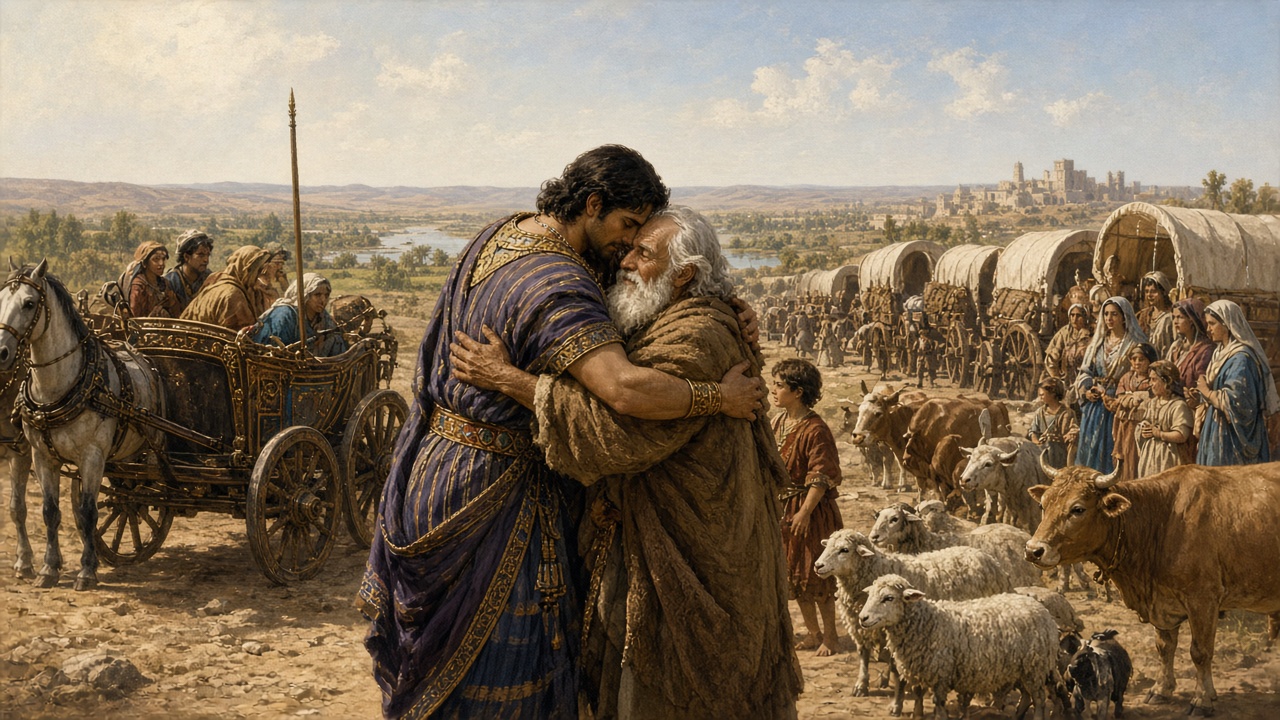
28Na fsalu Dyékob i tingaan Dyuda muna ditù di ku Dyosif, du fatdoan i dalan salu di Gosén. Na di kakella mdadong nan di Gosén, 29smakay Dyosif i snakayan fadyol i kudà, na salu di Gosén, du snitongan maan. Na di kakelan, lkafan i maan na too mlo mngel. 30Na man Dyékob di ku Dyosif, “Tò, balù kilen nan gatlagad agu mati. Hae, du tateenta ge na toogu gadè mto ge fa.”
31Kafnge ani, man Dyosif di dad flanekan na i dad dademe dad malay i maan, manan, “Salu agu ditù di ku Faraon i harì, du tulengu kenen, takel gamu i dad flanekgu, na i dad dademe dad malay i màgu, mdà di banwe Kanaan. 32Tulengu kenen kadang, gamu i dad gal mifat i dad bilibili, na dad baka, na tanebeyu dini i dad bilibiliyu, i dad kambingyu, na i dad bakayu, na i kdee nfunyu. 33Taman ku tlo gamu i harì na snalekan ku tan i galyu nimò, 34tooyu man di kenen, gamu i dad lifanan, gamu gal mifat i dad bilibili mdà fa di tingà gamu fa, salngad tamgimò i dad gutambulyu di muna. Ani manyu di kenen, du fye i gufnean gamu dini di Gosén, du dad to mnè di Idyif ani knangla dad to mifat bilibili.”
Você sabia?
Israel desce ao Egito
- Quando Israel partiu para o Egito com tudo o que possuía, parou em Berseba e ofereceu sacrifícios ao Deus de seu pai Isaque. Berseba, que significa poço do juramento ou poço dos sete, foi um poço que Abraão cavou e nomeou após um acordo com Abimeleque; quando Isaque o reabriu, deu-lhe o mesmo nome. Era um lugar predileto de morada dos dois patriarcas, e ali, naquela noite, Deus falou a Jacó numa visão, dizendo-lhe que não temesse descer ao Egito, pois ali o tornaria uma grande nação.Fontes: o próprio texto bíblico · Beersheba
- Jacó enviou Judá adiante de si a José, para obter o caminho até Gósen, distrito egípcio a leste do Nilo, aparentemente perto da residência real, onde a família permaneceu até o Êxodo. O Easton's Bible Dictionary (1897) chama essa terra de a melhor da região, hoje um deserto, e também de terra de Ramessés. José disse aos irmãos que afirmassem ter criado gado desde a juventude, para poderem estabelecer-se ali, pois os pastores eram detestáveis aos egípcios; esse dicionário sugere que o faraó era provavelmente Ápopis, o último rei dos hicsos, que acolheu esses pastores asiáticos, enquanto os egípcios nativos os abominavam, embora alguns argumentem que José chegou mais tarde, sob Tutmés III, depois da expulsão dos hicsos.Fontes: o próprio texto bíblico · Goshen · Pharaoh (of Joseph)
- O capítulo conta sessenta e seis descendentes diretos de Jacó que foram ao Egito, sem incluir as esposas de seus filhos, e setenta quando se incluem os dois filhos de José já nascidos no Egito. Os filhos de Lia e sua filha Diná aparecem nessa relação, embora o Easton's Bible Dictionary (1897) diga que a própria Lia já havia morrido em Canaã antes da viagem e fora sepultada na caverna de Macpela; Raquel morrera antes, ao dar à luz Benjamim, e foi sepultada no caminho de Efrata, isto é, Belém. Manassés e Efraim nasceram a José no Egito, de Asenate, filha de Potífera, sacerdote de On, um centro do culto ao sol que a Septuaginta e a Vulgata chamam de Heliópolis.Fontes: o próprio texto bíblico · Leah · Rachel · On
Notas escritas com auxílio de IA a partir de fontes abertas (Theographic Bible Metadata, CC BY-SA 4.0; Easton’s Bible Dictionary, domínio público) e revisadas antes de publicar.
Lugares deste capítulo
- Egypt · 30.129, 31.308 · versículos 1, 3, 4, 5, 6, 7, 8, 20, 26, 27
- Canaan · 32.767, 35.333 · versículos 6, 12, 31
- Heliopolis · Hoje: Ain Shams · 30.129, 31.308 · versículo 20
- Goshen · Hoje: Goshen 1 · 30.799, 31.834 · versículos 28, 29, 34
Só aparecem lugares com identificação de alta confiança (90% ou mais segundo as fontes acadêmicas reunidas pelo OpenBible). Mapa da época: DARE (Digital Atlas of the Roman Empire), CC BY 4.0; mapa atual: © colaboradores do OpenStreetMap; lugares: OpenBible.info (CC BY 4.0).
Créditos e licença desta tradução
I tnalù dwata
New Testament in Blaan, Sarangani
copyright © 1998 Wycliffe Bible Translators, Inc.
Language: Sarangani Blaan (Blaan, Sarangani)
Translation by: Wycliffe Bible Translators
Contributor: Wycliffe Bible Translators, Inc.
Copyright Information
© 1998, Wycliffe Bible Translators, Inc. All rights reserved.
This translation text is made available to you under the
terms of the Creative Commons License: Attribution-Noncommercial-No Derivative Works.
( http://creativecommons.org/licenses/by-nc-nd/3.0/ )
In addition, you have permission to port the text to different file formats, as long as you
do not change any of the text or punctuation of the Bible.
You may share, copy, distribute, transmit, and extract portions
or quotations from this work, provided that you include the above copyright
information:
You must give Attribution to the work.
You do not sell this work for a profit.
You do not make any derivative works that change any of the actual words or punctuation of the Scriptures.
Permissions beyond the scope of this license may be
available if you contact
us with your request.
The New Testament
in Blaan, Sarangani
© 1998, Wycliffe Bible Translators, Inc. All rights reserved.
This translation is made available to you under the terms of the
Creative Commons Attribution-Noncommercial-No Derivatives license 4.0.
You may share and redistribute this Bible translation or extracts from it in any format, provided that:
You include the above copyright and source information.
You do not sell this work for a profit.
You do not change any of the words or punctuation of the Scriptures.
Pictures included with Scriptures and other documents on this site are licensed just for use with those Scriptures and documents.
For other uses, please contact the respective copyright owners.
2015-03-17
Fonte: http://ebible.org/bps/ · eBible.org