Gênesis 45
I tnalù dwata · Toque num versículo para ver as referências cruzadas.
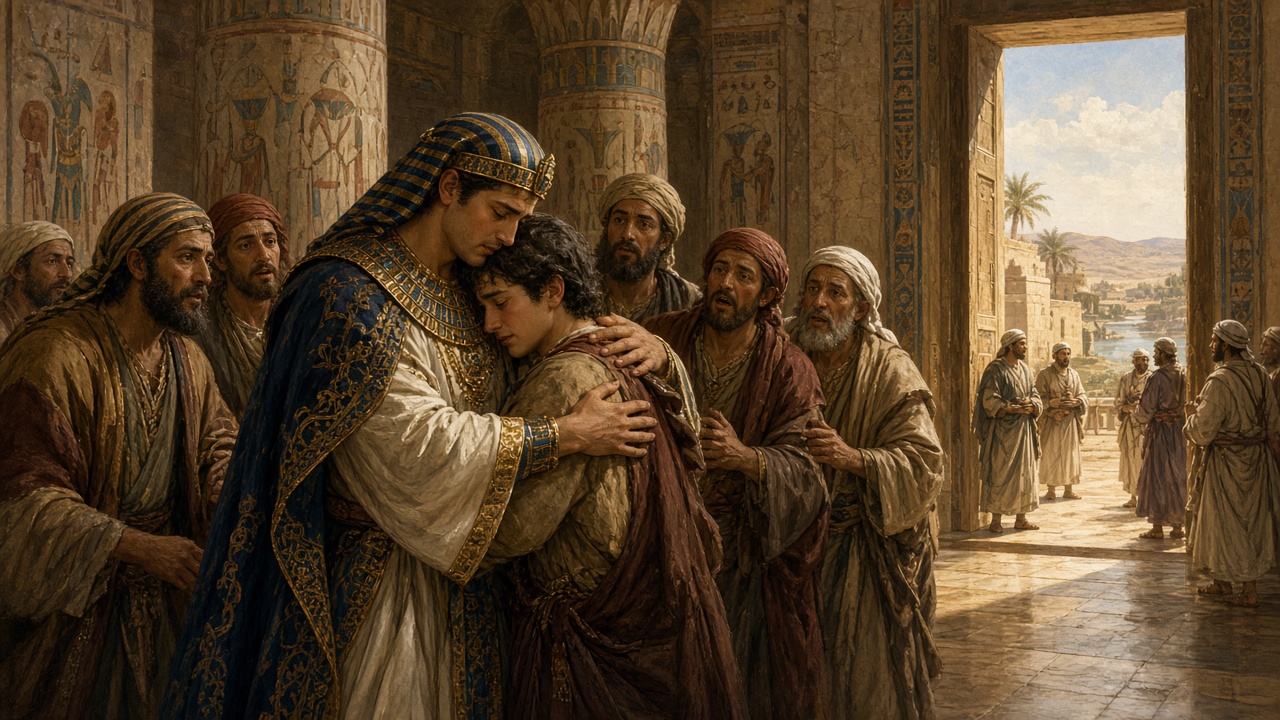
I kafgadè Dyosif i kton di dad flanekan
1Na talà nan gadnan Dyosif i nawan, taman fdaan i kdee i dad saligan, du fye landè di dale mite kenen. Landè dademe to déén di bang fgadè Dyosif i kton di dad flanekan. 2Na too kamwak Dyosif, taman linge i dad to di Idyif ditù di lwà, na nun tmulen di dad to di gumnè i harì.
3Na man Dyosif di dad flanekan, “Agu sa Dyosif i flanekyu! Too glut kè mto fa Mà?”
Kabay di kaklinge i dad flanekan ani, làla gtimel Dyosif, du too sasè klikòla. 4Na man Dyosif, “Dini gamu, fdadong gamu di deg.” Na kagdadongla di kenen, manan di dale, “Agu sa flanekyu Dyosif i fabliyu di muna fa, di dad to sbayad, na tamgebe dini di banwe Idyif. 5Na nangyu fsamuk i nawayu, na nangyu banlé salà i ktoyu di kafabliyu dagu, du Dwata sa febe deg dini muna di gamu, du fye là gamu mati malnus. 6Hae, du tlabo galwe fali i kbitil ani, na nun fa lime fali landè ulê i dad fla. 7Dwata sa febe deg muna dini, na too bong tabengan gamu, du kayean ku là gamu mati malnus, du fye fadlug ito fa mbel di tah tanà.
8“Ise sa gamu, bay Dwata febe deg dini. Dwata mlé di deg i mdatah glal, i glal gamtadol di harì. Agu sa gal mdek i kdee dad to i harì, na agu i magot i klamang banwe Idyif. Slame ani gablé Dwata dagu. 9Na faflal gamu mulê di màgu, na ani manyu kenen, ‘Ani i man i tingaam Dyosif, tafagot Dwata deg i klamang banwe Idyif. Mà, faflal ge salu dini di deg. 10Fnèta ge dini di banwe Gosén, du fye kdeeyu mdadong di deg, balù ge, dad ngaam, na i dad fuam, na i dad kambingam, i dad bilibilim, i dad bakam, na i kdee nfunam. 11Na agu sa mifat gamu ku dini gamu di Gosén. Du nun fa lime fali gdè kbitil ani, na kayègu ku dini ge mdadong di safédgu, du fye ge, na dad malayam, na i dad lmanafam là mati di kalnus.’ Ani i manyu kadang di ku Mà.” 12Na fadlug talù Dyosif di dale, manan. “Na i kdeeyu dad twegegu, na lê ge Bénhamin, tateenyu agu, na tadilèyu agu sa Dyosif i talù di gamu. 13Taman, tooyu tulen ku Mà gablà di kdatah glalgu dini di Idyif, na gablà di kdee teenyu dini. Na faflal gamu mulê na faginyu kenen dini.”
14Na di kagmanan ani, lkaf Dyosif i twalin Bénhamin na mngel, na lê mngel Bénhamin di kalkafan kenen. 15Kafnge én, nkatan nalak i dad flanekan, na mngel di slengan lamkaf dale. Kafnge én, tambù ale stulen di kenen. 16Na di takgadè i dad to ditù di bong gumnè i harì, takel nan i dad flanek Dyosif, lehew Faraon na i dad dademe ganlalan. 17Na man Faraon ku Dyosif, “Dekam i dad flanekam flulenla i dad dongkila na mulê di Kanaan, 18du fye fngéla i maam na i dad malayla na samfulê dini, du blégu dale i too fye tanà dini di Idyif, na gamkaan ale kadang i fye kakaan.
19“Na léam ale banlé i dademe dad kaditon mdà di Idyif, du fye nun gusmakay i dad ngàla na dad yaanla. Na toom fngé dale i maam. 20Manam dale, nangla fsamuk i nawala gablà i kandeenla tagakla kadang, du banlégu ale kadang i too fye di Idyif ani.”
21Na kdee i gman harì ani nimen i dad ngà Dyékob. Banlé ale Dyosif i dad kaditon, du ani i dek i harì di kenen, na léan banlé i bnatula di dalan. 22Banlén kat satu dale falami klaweh gumilila, bay banlén Bénhamin tlu latu salafì filak di dale, na lime klaweh gumilin. 23Na fneben i maan sfalò dongki i gumlulen i too fye di Idyif, na léan fnebe sfalò dademe dongki slame libun gumlulen i bong fali trigu na fan, na i dademe fa gkaan, du bnatula di kulêla di banwe Idyif. 24Kafnge én, fdà Dyosif i dad flanekan, na di fan ale mdà manan di dale, “Nang gamu sdalam na sbulaw di slengyu magu.”
25Taman mdà ale di Idyif. Na di kakella di Kanaan di màla Dyékob, 26manla, “Mà, mto fa Dyosif! Na kenen sa magot i klamang banwe Idyif”.
Na too sè ktikeng i nawa Dyékob, na too maliman fnaglut i gmanla di kenen. 27Kabay di ktulenla kenen i kdee gman Dyosif di dale, na di kiten i dee kaditon i feben kenen, du gusmakayan salu di Idyif, mulê i nawan na too kenen lehew. 28Na manan. “Tafnaglutgu nan too glut mto fa i tingàgu Dyosif. Landè dademe kayègu. Salu agu ditù di kenen, fye site gami di là agu fa mati.”
Você sabia?
José se revela a seus irmãos
- Gósen, a região onde José diz aos irmãos que se estabeleçam perto dele com os filhos, os netos, os rebanhos e o gado, ficava a leste do Nilo e, ao que parece, não longe da residência real. O Easton's Bible Dictionary (1897) observa que ela é mencionada pela primeira vez na mensagem de José a seu pai e que também era chamada terra de Ramessés, porque as cidades de Pitom e Ramessés ficavam dentro de seus limites.Fontes: Goshen · o próprio texto bíblico
- José chora tão alto que os egípcios o ouvem, e a casa do faraó logo fica sabendo; o faraó e seus servos se alegram ao saber que os irmãos chegaram, e ele lhes oferece o melhor da terra do Egito. O Easton's Bible Dictionary (1897) diz que o faraó dos dias de José foi provavelmente Apopi, ou Apópis, o último dos reis hicsos. Acrescenta que os reis hicsos acolhiam pastores asiáticos, enquanto os egípcios nativos mais antigos consideravam os pastores uma abominação, embora alguns argumentem que José chegou ao Egito no reinado de Tutmés III, muito depois de os hicsos terem sido expulsos.Fontes: Pharaoh (of Joseph) · o próprio texto bíblico
- Benjamim era o filho mais novo de Jacó com Raquel, e José, o mais velho dos dois filhos dela; a mãe morreu ao dar à luz Benjamim em Efrata e o chamou Benoni, que significa filho da minha dor, nome que o pai mudou para Benjamim. No reencontro, José abraça Benjamim e chora, dando-lhe trezentos siclos de prata e cinco mudas de roupa, enquanto cada um dos outros irmãos recebe uma veste nova.Fontes: Benjamin (patriarch) · Joseph (son of Jacob) · o próprio texto bíblico
Notas escritas com auxílio de IA a partir de fontes abertas (Theographic Bible Metadata, CC BY-SA 4.0; Easton’s Bible Dictionary, domínio público) e revisadas antes de publicar.
Lugares deste capítulo
- Egypt · 30.129, 31.308 · versículos 4, 8, 9, 13, 18, 19, 20, 23, 25, 26
- Goshen · Hoje: Goshen 1 · 30.799, 31.834 · versículo 10
- Canaan · 32.767, 35.333 · versículos 17, 25
Só aparecem lugares com identificação de alta confiança (90% ou mais segundo as fontes acadêmicas reunidas pelo OpenBible). Mapa da época: DARE (Digital Atlas of the Roman Empire), CC BY 4.0; mapa atual: © colaboradores do OpenStreetMap; lugares: OpenBible.info (CC BY 4.0).
Créditos e licença desta tradução
I tnalù dwata
New Testament in Blaan, Sarangani
copyright © 1998 Wycliffe Bible Translators, Inc.
Language: Sarangani Blaan (Blaan, Sarangani)
Translation by: Wycliffe Bible Translators
Contributor: Wycliffe Bible Translators, Inc.
Copyright Information
© 1998, Wycliffe Bible Translators, Inc. All rights reserved.
This translation text is made available to you under the
terms of the Creative Commons License: Attribution-Noncommercial-No Derivative Works.
( http://creativecommons.org/licenses/by-nc-nd/3.0/ )
In addition, you have permission to port the text to different file formats, as long as you
do not change any of the text or punctuation of the Bible.
You may share, copy, distribute, transmit, and extract portions
or quotations from this work, provided that you include the above copyright
information:
You must give Attribution to the work.
You do not sell this work for a profit.
You do not make any derivative works that change any of the actual words or punctuation of the Scriptures.
Permissions beyond the scope of this license may be
available if you contact
us with your request.
The New Testament
in Blaan, Sarangani
© 1998, Wycliffe Bible Translators, Inc. All rights reserved.
This translation is made available to you under the terms of the
Creative Commons Attribution-Noncommercial-No Derivatives license 4.0.
You may share and redistribute this Bible translation or extracts from it in any format, provided that:
You include the above copyright and source information.
You do not sell this work for a profit.
You do not change any of the words or punctuation of the Scriptures.
Pictures included with Scriptures and other documents on this site are licensed just for use with those Scriptures and documents.
For other uses, please contact the respective copyright owners.
2015-03-17
Fonte: http://ebible.org/bps/ · eBible.org