1 Samuel 3
Bib Sen An · Toca un versículo para ver sus referencias cruzadas.
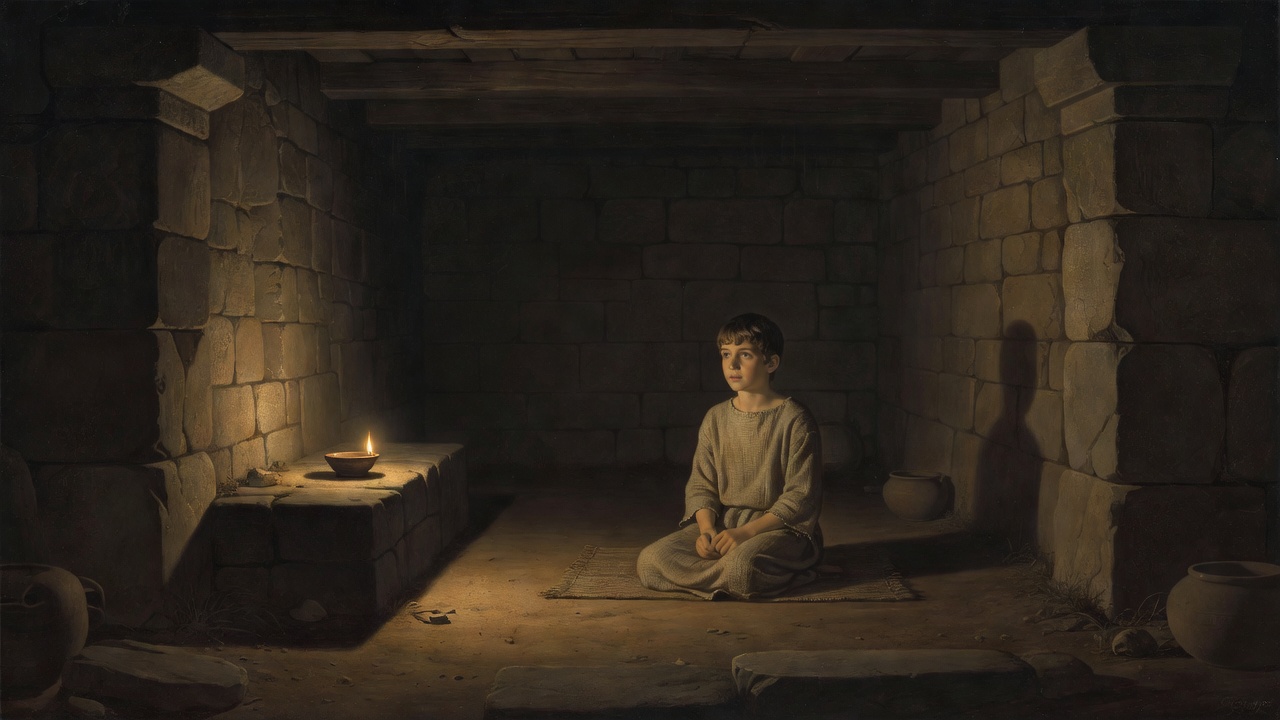
1Alò, Samuel te sèvi SENYÈ a devan Éli. Yon pawòl soti nan SENYÈ a te ra nan jou sa yo, e vizyon yo pa t fèt souvan. 2Li te rive nan lè sa a ke pandan Éli te kouche nan plas li, (alò, vizyon li te kòmanse febli; li pa t kab wè byen), 3epi lanp Bondye a potko etenn e Samuel te kouche nan tanp SENYÈ a kote lach Bondye a te ye a, 4ke SENYÈ a te rele Samuel. Li te reponn: “Men mwen isit la!”
5Alò, li te kouri vè Éli e te di: “Men mwen, paske ou te rele m.”
Men Éli te di: “Mwen pa t rele ou. Ale kouche ankò.”
Konsa, li te retounen kouche. 6Senyè a te rele ankò: “Samuel!”
Konsa, Samuel te leve, li te ale vè Éli. Li te di: “Men mwen, paske ou te rele m.” Men li te reponn: “Mwen pa t rele ou, fis mwen, ale kouche ankò.” 7Alò, Samuel potko konnen SENYÈ a, ni pawòl SENYÈ a potko revele a li. 8Alò, SENYÈ a te rele Samuel ankò pou yon twazyèm fwa. Epi li te leve ale vè Éli. Li te di: “Men mwen, paske ou te rele mwen.”
Konsa, Éli te vin apèsi ke SENYÈ a t ap rele gason an. 9Epi Éli te di a Samuel: “Ale kouche e li va fèt ke si Li rele ou, ke ou va di: ‘Pale, SENYÈ a, paske sèvitè ou ap koute ou.’” Konsa, Samuel te ale kouche nan plas li. 10Alò SENYÈ a te vin kanpe e Li te rele tankou lòt fwa yo: “Samuel! Samuel!” Epi Samuel te di: “Pale, paske sèvitè ou ap koute ou.”
11SENYÈ a te di a Samuel: “Veye byen, Mwen prèt pou fè yon bagay an Israël k ap fè zòrèy tout moun an Israël vin toudi. 12Nan jou sa a, Mwen va pote kont Éli tout sa ke M te pale selon lakay li, soti nan kòmansman, jiska lafen. 13Paske Mwen te di li ke Mwen prèt pou jije lakay li pou tout tan pou inikite ke li te konnen yo. Akoz fis li yo te mennen yon madichon sou pwòp tèt yo, e li pa t repwoche yo. 14Pou sa, mwen te fè temwen anvè lakay Éli ke inikite lakay Éli p ap padone, ni avèk ofrann, ni avèk sakrifis.”
15Konsa, Samuel te kouche jis rive nan maten. Li te ouvri pòt lakay SENYÈ a. Men li te krent pou pale Éli vizyon an. 16Alò, Éli te rele Samuel e te di: “Samuel, fis mwen.”
Epi li te di: “Men mwen.”
17Li te di: “Ki pawòl ke Li te pale ou a? Souple, pa kache l pou mwen. Ke Bondye fè l konsa a ou menm, e menm plis osi, si ou kache yon bagay a mwen nan tout pawòl ke li te pale ou yo.”
18Konsa, Samuel te di li tout bagay. Li pa t kache anyen a li menm.
Epi li te di: “Li se SENYÈ a; kite Li fè sa ki sanble bon pou Li menm.”
19Konsa, Samuel te grandi, SENYÈ a te avèk li e Li pa t kite okenn nan pawòl li yo manke reyisi. 20Tout Israël soti nan Dan jis rive menm Beer-Schéba te konnen ke Samuel te konfime kòm yon pwofèt a SENYÈ a. 21Epi SENYÈ a te vin parèt ankò nan Silo, paske SENYÈ a te revele Li menm a Samuel nan Silo selon pawòl Bondye a.
¿Sabías que…?
El Llamamiento de Samuel
- El santuario que albergaba el arca de Dios estaba ubicado en Silo, donde el joven Samuel servía bajo la tutela del sumo sacerdote Elí. El texto señala que las revelaciones divinas y las visiones eran escasas en aquellos días, antes de que el Señor volviera a revelarse a Samuel en Silo.Fuentes: el propio texto bíblico · Shiloh · Eli
- Elí ejerció el sumo sacerdocio y juzgó a Israel durante cuarenta años, pero no reprendió con severidad a sus hijos corruptos, Ofni y Finees, lo que provocó un juicio divino sobre su casa. El oficio sacerdotal permaneció en su linaje hasta que el rey Salomón depuso a Abiatar y nombró a Sadoc.Fuentes: Eli · el propio texto bíblico
- La frase desde Dan hasta Beerseba designa toda la extensión territorial de la Tierra Prometida, desde su frontera norte en Dan hasta el extremo sur en Beerseba, una distancia de unas 144 millas. Su mención destaca que toda la nación reconoció a Samuel como un profeta acreditado.Fuentes: Beersheba · el propio texto bíblico
Notas escritas con ayuda de IA a partir de fuentes abiertas (Theographic Bible Metadata, CC BY-SA 4.0; Easton’s Bible Dictionary, dominio público) y revisadas antes de publicarse.
Lugares de este capítulo
- Dan · Hoy: Tel Dan · 33.249, 35.652 · versículo 20
- Shiloh · Hoy: Khirbet Seilun · 32.056, 35.290 · versículo 21
Solo aparecen lugares identificados con alta confianza (90 % o más según las fuentes académicas reunidas por OpenBible). Mapa de la época: DARE (Digital Atlas of the Roman Empire), CC BY 4.0; mapa actual: © colaboradores de OpenStreetMap; lugares: OpenBible.info (CC BY 4.0).
Créditos y licencia de esta traducción
Bib Sen An
The Holy Bible in Haitian Creole, 2023 update
copyright © 2017-2023 Ron Smith
Language: Kreyòl Ayisyen (Haitian)
Translation by: Ron Smith
Contributor: Felix Nixon
This translation is made available to you under the terms of the
Creative Commons Attribution Share-Alike license 4.0.
You have permission to share and redistribute this Bible translation in any format and to make reasonable revisions and adaptations of this translation, provided that:
You include the above copyright and source information.
If you make any changes to the text, you must indicate that you did so in a way that makes it clear that the original licensor is not necessarily endorsing your changes.
If you redistribute this text, you must distribute your contributions under the same license as the original.
Pictures included with Scriptures and other documents on this site are licensed just for use with those Scriptures and documents.
For other uses, please contact the respective copyright owners.
Note that in addition to the rules above, revising and adapting God's Word involves a great responsibility to be true to God's Word. See Revelation 22:18-19.
2026-06-11
Fuente: http://ebible.org/hatbsa/ · eBible.org