1 Samuel 3
Bib Sen An · Toque num versículo para ver as referências cruzadas.
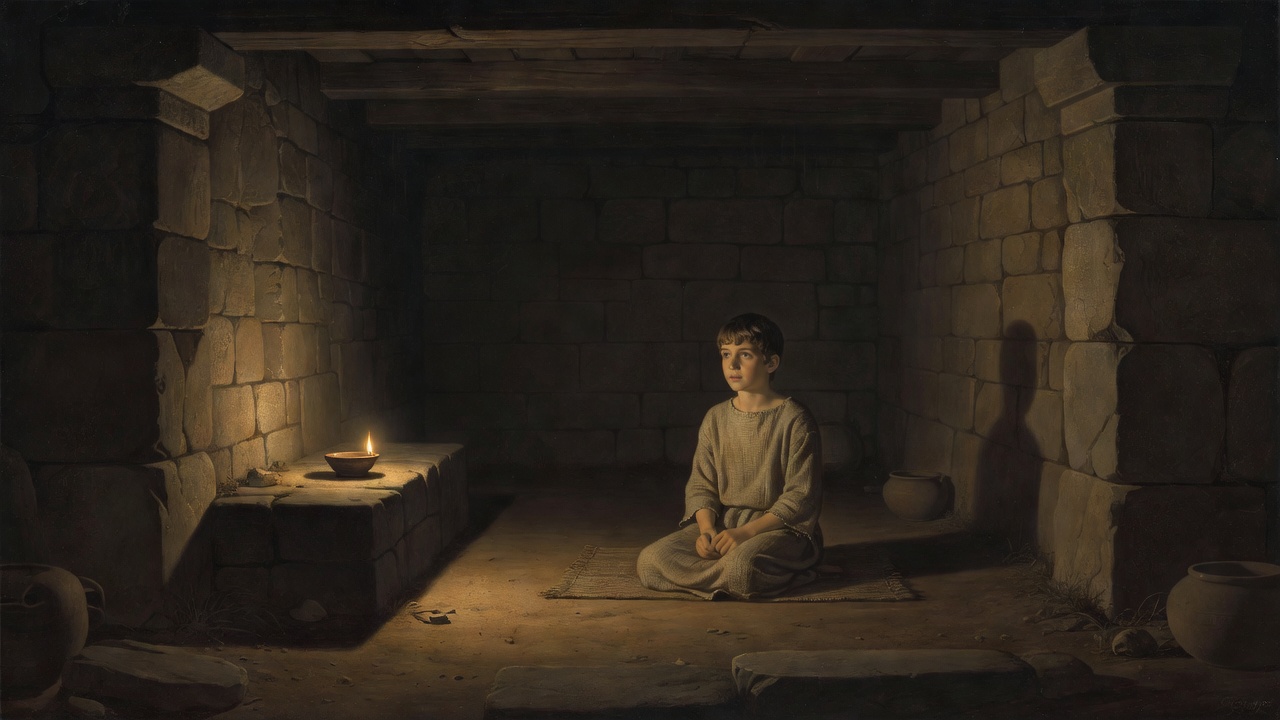
1Alò, Samuel te sèvi SENYÈ a devan Éli. Yon pawòl soti nan SENYÈ a te ra nan jou sa yo, e vizyon yo pa t fèt souvan. 2Li te rive nan lè sa a ke pandan Éli te kouche nan plas li, (alò, vizyon li te kòmanse febli; li pa t kab wè byen), 3epi lanp Bondye a potko etenn e Samuel te kouche nan tanp SENYÈ a kote lach Bondye a te ye a, 4ke SENYÈ a te rele Samuel. Li te reponn: “Men mwen isit la!”
5Alò, li te kouri vè Éli e te di: “Men mwen, paske ou te rele m.”
Men Éli te di: “Mwen pa t rele ou. Ale kouche ankò.”
Konsa, li te retounen kouche. 6Senyè a te rele ankò: “Samuel!”
Konsa, Samuel te leve, li te ale vè Éli. Li te di: “Men mwen, paske ou te rele m.” Men li te reponn: “Mwen pa t rele ou, fis mwen, ale kouche ankò.” 7Alò, Samuel potko konnen SENYÈ a, ni pawòl SENYÈ a potko revele a li. 8Alò, SENYÈ a te rele Samuel ankò pou yon twazyèm fwa. Epi li te leve ale vè Éli. Li te di: “Men mwen, paske ou te rele mwen.”
Konsa, Éli te vin apèsi ke SENYÈ a t ap rele gason an. 9Epi Éli te di a Samuel: “Ale kouche e li va fèt ke si Li rele ou, ke ou va di: ‘Pale, SENYÈ a, paske sèvitè ou ap koute ou.’” Konsa, Samuel te ale kouche nan plas li. 10Alò SENYÈ a te vin kanpe e Li te rele tankou lòt fwa yo: “Samuel! Samuel!” Epi Samuel te di: “Pale, paske sèvitè ou ap koute ou.”
11SENYÈ a te di a Samuel: “Veye byen, Mwen prèt pou fè yon bagay an Israël k ap fè zòrèy tout moun an Israël vin toudi. 12Nan jou sa a, Mwen va pote kont Éli tout sa ke M te pale selon lakay li, soti nan kòmansman, jiska lafen. 13Paske Mwen te di li ke Mwen prèt pou jije lakay li pou tout tan pou inikite ke li te konnen yo. Akoz fis li yo te mennen yon madichon sou pwòp tèt yo, e li pa t repwoche yo. 14Pou sa, mwen te fè temwen anvè lakay Éli ke inikite lakay Éli p ap padone, ni avèk ofrann, ni avèk sakrifis.”
15Konsa, Samuel te kouche jis rive nan maten. Li te ouvri pòt lakay SENYÈ a. Men li te krent pou pale Éli vizyon an. 16Alò, Éli te rele Samuel e te di: “Samuel, fis mwen.”
Epi li te di: “Men mwen.”
17Li te di: “Ki pawòl ke Li te pale ou a? Souple, pa kache l pou mwen. Ke Bondye fè l konsa a ou menm, e menm plis osi, si ou kache yon bagay a mwen nan tout pawòl ke li te pale ou yo.”
18Konsa, Samuel te di li tout bagay. Li pa t kache anyen a li menm.
Epi li te di: “Li se SENYÈ a; kite Li fè sa ki sanble bon pou Li menm.”
19Konsa, Samuel te grandi, SENYÈ a te avèk li e Li pa t kite okenn nan pawòl li yo manke reyisi. 20Tout Israël soti nan Dan jis rive menm Beer-Schéba te konnen ke Samuel te konfime kòm yon pwofèt a SENYÈ a. 21Epi SENYÈ a te vin parèt ankò nan Silo, paske SENYÈ a te revele Li menm a Samuel nan Silo selon pawòl Bondye a.
Você sabia?
O Chamado de Samuel
- O santuário que abrigava a arca de Deus ficava em Siló, onde o jovem Samuel servia sob os cuidados do sumo sacerdote Eli. O texto relata que revelações divinas e visões eram raras naquela época, antes de o Senhor voltar a Se manifestar a Samuel em Siló.Fontes: o próprio texto bíblico · Shiloh · Eli
- Eli exerceu o sumo sacerdócio e julgou Israel por quarenta anos, mas sua falha em repreender com firmeza seus filhos corruptos, Hofni e Fineias, trouxe uma sentença divina contra sua linhagem. O ofício sacerdotal permaneceu em sua família até que o rei Salomão depôs Abiatar e nomeou Zadoque.Fontes: Eli · o próprio texto bíblico
- A expressão de Dã a Berseba designa toda a extensão territorial da Terra Prometida, desde seu limite ao norte em Dã até a fronteira sul em Berseba, uma distância de cerca de 144 milhas. Seu uso enfatiza que a nação inteira reconheceu Samuel como um profeta confirmado.Fontes: Beersheba · o próprio texto bíblico
Notas escritas com auxílio de IA a partir de fontes abertas (Theographic Bible Metadata, CC BY-SA 4.0; Easton’s Bible Dictionary, domínio público) e revisadas antes de publicar.
Lugares deste capítulo
- Dan · Hoje: Tel Dan · 33.249, 35.652 · versículo 20
- Shiloh · Hoje: Khirbet Seilun · 32.056, 35.290 · versículo 21
Só aparecem lugares com identificação de alta confiança (90% ou mais segundo as fontes acadêmicas reunidas pelo OpenBible). Mapa da época: DARE (Digital Atlas of the Roman Empire), CC BY 4.0; mapa atual: © colaboradores do OpenStreetMap; lugares: OpenBible.info (CC BY 4.0).
Créditos e licença desta tradução
Bib Sen An
The Holy Bible in Haitian Creole, 2023 update
copyright © 2017-2023 Ron Smith
Language: Kreyòl Ayisyen (Haitian)
Translation by: Ron Smith
Contributor: Felix Nixon
This translation is made available to you under the terms of the
Creative Commons Attribution Share-Alike license 4.0.
You have permission to share and redistribute this Bible translation in any format and to make reasonable revisions and adaptations of this translation, provided that:
You include the above copyright and source information.
If you make any changes to the text, you must indicate that you did so in a way that makes it clear that the original licensor is not necessarily endorsing your changes.
If you redistribute this text, you must distribute your contributions under the same license as the original.
Pictures included with Scriptures and other documents on this site are licensed just for use with those Scriptures and documents.
For other uses, please contact the respective copyright owners.
Note that in addition to the rules above, revising and adapting God's Word involves a great responsibility to be true to God's Word. See Revelation 22:18-19.
2026-06-11
Fonte: http://ebible.org/hatbsa/ · eBible.org