Génesis 15
Berean Standard Bible · Toca un versículo para ver sus referencias cruzadas.
God’s Covenant with Abram
1After these events, the word of the LORD came to Abram in a vision:
“Do not be afraid, Abram.
I am your shield,
your very great reward.”
2But Abram replied, “O Lord GOD, what can You give me, since I remain childless, and the heir of my house is Eliezer of Damascus?” 3Abram continued, “Behold, You have given me no offspring, so a servant in my household will be my heir.”
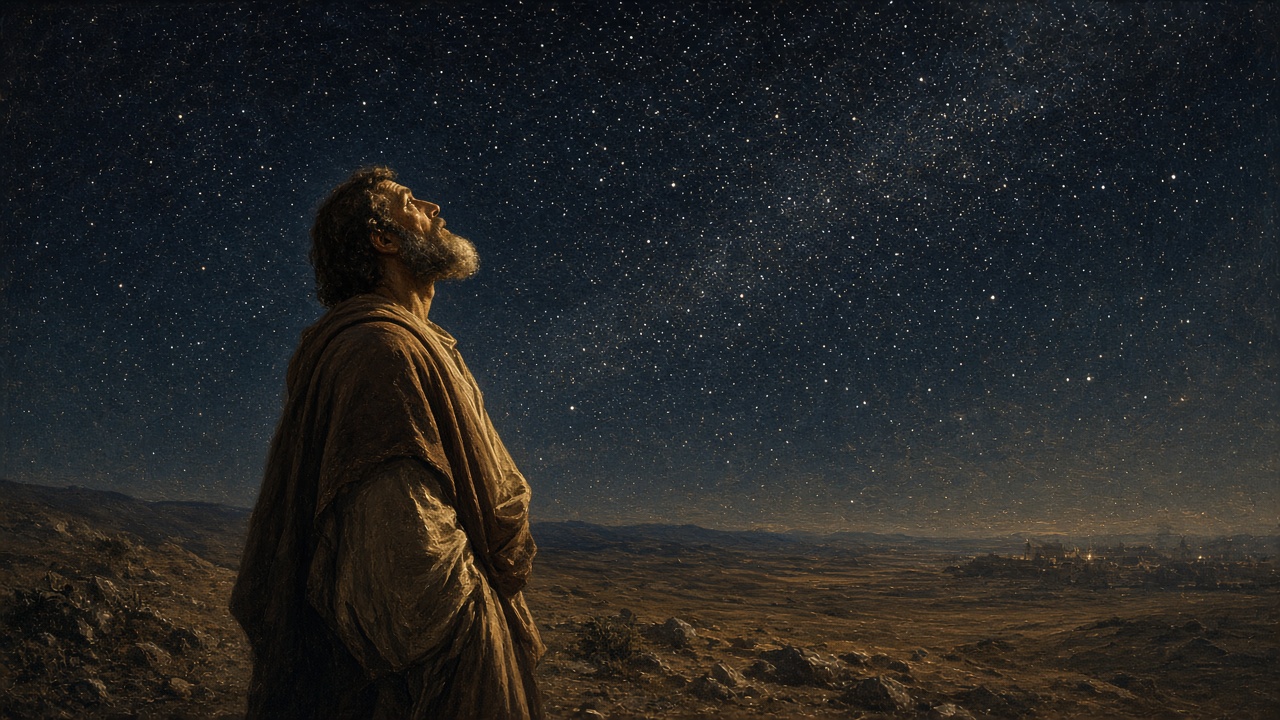
4Then the word of the LORD came to Abram, saying, “This one will not be your heir, but one who comes from your own body will be your heir.” 5And the LORD took him outside and said, “Now look to the heavens and count the stars, if you are able.” Then He told him, “So shall your offspring be.”
6Abram believed the LORD, and it was credited to him as righteousness.
7The LORD also told him, “I am the LORD, who brought you out of Ur of the Chaldeans to give you this land to possess.”
God Confirms His Promise
8But Abram replied, “Lord GOD, how can I know that I will possess it?”
9And the LORD said to him, “Bring Me a heifer, a goat, and a ram, each three years old, along with a turtledove and a young pigeon.”
10So Abram brought all these to Him, split each of them down the middle, and laid the halves opposite each other. The birds, however, he did not cut in half. 11And the birds of prey descended on the carcasses, but Abram drove them away. 12As the sun was setting, Abram fell into a deep sleep, and suddenly great terror and darkness overwhelmed him.
13Then the LORD said to Abram, “Know for certain that your descendants will be strangers in a land that is not their own, and they will be enslaved and mistreated four hundred years. 14But I will judge the nation they serve as slaves, and afterward they will depart with many possessions. 15You, however, will go to your fathers in peace and be buried at a ripe old age. 16In the fourth generation your descendants will return here, for the iniquity of the Amorites is not yet complete.”
17When the sun had set and darkness had fallen, behold, a smoking firepot and a flaming torch appeared and passed between the halves of the carcasses. 18On that day the LORD made a covenant with Abram, saying, “To your descendants I have given this land—from the river of Egypt to the great River Euphrates— 19the land of the Kenites, Kenizzites, Kadmonites, 20Hittites, Perizzites, Rephaites, 21Amorites, Canaanites, Girgashites, and Jebusites.”
¿Sabías que…?
La descendencia y la tierra del pacto
- Abram respondió que todavía no tenía hijos, así que el heredero de su casa sería Eliezer de Damasco, un siervo de su casa. El Diccionario Bíblico de Easton identifica a Eliezer como el mayordomo de la casa de Abraham —la Revised Version inglesa traduce la palabra como “possessor”, es decir, “poseedor”— y dice que probablemente fue él el siervo enviado después a buscar una esposa para Isaac. El mismo diccionario sitúa Damasco, la capital de Siria, a unas 133 millas al norte de Jerusalén, da como nombre moderno Esh-Sham, “el Oriente”, y señala que la Escritura menciona la ciudad por primera vez en relación con la victoria de Abraham registrada en Génesis 14.Fuentes: el propio texto bíblico · Eliezer (Abraham's Steward) · Damascus
- El Señor le dijo a Abram que lo había sacado de Ur de los caldeos para darle esta tierra. El Diccionario Bíblico de Easton (1897) describe Ur como una ciudad de los caldeos, la ciudad más grande de Sinar, o de la Caldea del norte, el principal centro comercial del país y el centro de su poder político, cerca de la desembocadura del Éufrates, en su orilla occidental, y da el nombre como “luz”, o “la ciudad de la luna”. La misma obra dice que Abram había vivido en Ur, en su país natal de Caldea, y que luego viajó con su padre unas 300 millas al norte, hasta Harán.Fuentes: el propio texto bíblico · Ur of the Chaldees · Abraham
- Aquel día el Señor hizo un pacto con Abram, dando a sus descendientes la tierra desde el río de Egipto hasta el gran río Éufrates. El Diccionario Bíblico de Easton registra el nombre hebreo Perath y el nombre asirio Purat, y dice que el nombre asirio significa “la corriente” o “la gran corriente”. También señala que la Biblia por lo general llama al Éufrates simplemente “el río” o “el gran río”.Fuentes: el propio texto bíblico · Euphrates
Notas escritas con ayuda de IA a partir de fuentes abiertas (Theographic Bible Metadata, CC BY-SA 4.0; Easton’s Bible Dictionary, dominio público) y revisadas antes de publicarse.
Lugares de este capítulo
- Damascus · 33.511, 36.306 · versículo 2
- Chaldea · 30.962, 46.104 · versículo 7
- Egypt · 30.129, 31.308 · versículo 18
- Euphrates · Hoy: Euphrates River · 31.004, 47.442 · versículo 18
Solo aparecen lugares identificados con alta confianza (90 % o más según las fuentes académicas reunidas por OpenBible). Mapa de la época: DARE (Digital Atlas of the Roman Empire), CC BY 4.0; mapa actual: © colaboradores de OpenStreetMap; lugares: OpenBible.info (CC BY 4.0).
Créditos y licencia de esta traducción
Berean Standard Bible
The Holy Bible in English: Berean Standard Bible
Public Domain
Language: English
Contributor: BSB Publishing, LLC
2026-10-02
Fuente: http://ebible.org/engbsb/ · eBible.org