Génesis 12
Berean Standard Bible · Toca un versículo para ver sus referencias cruzadas.
The Call of Abram
1Then the LORD said to Abram, “Leave your country, your kindred, and your father’s household, and go to the land I will show you.
2I will make you into a great nation,
and I will bless you;
I will make your name great,
so that you will be a blessing.
3I will bless those who bless you
and curse those who curse you;
and all the families of the earth
will be blessed through you.”
4So Abram departed, as the LORD had directed him, and Lot went with him. Abram was seventy-five years old when he left Haran. 5And Abram took his wife Sarai, his nephew Lot, and all the possessions and people they had acquired in Haran, and set out for the land of Canaan.
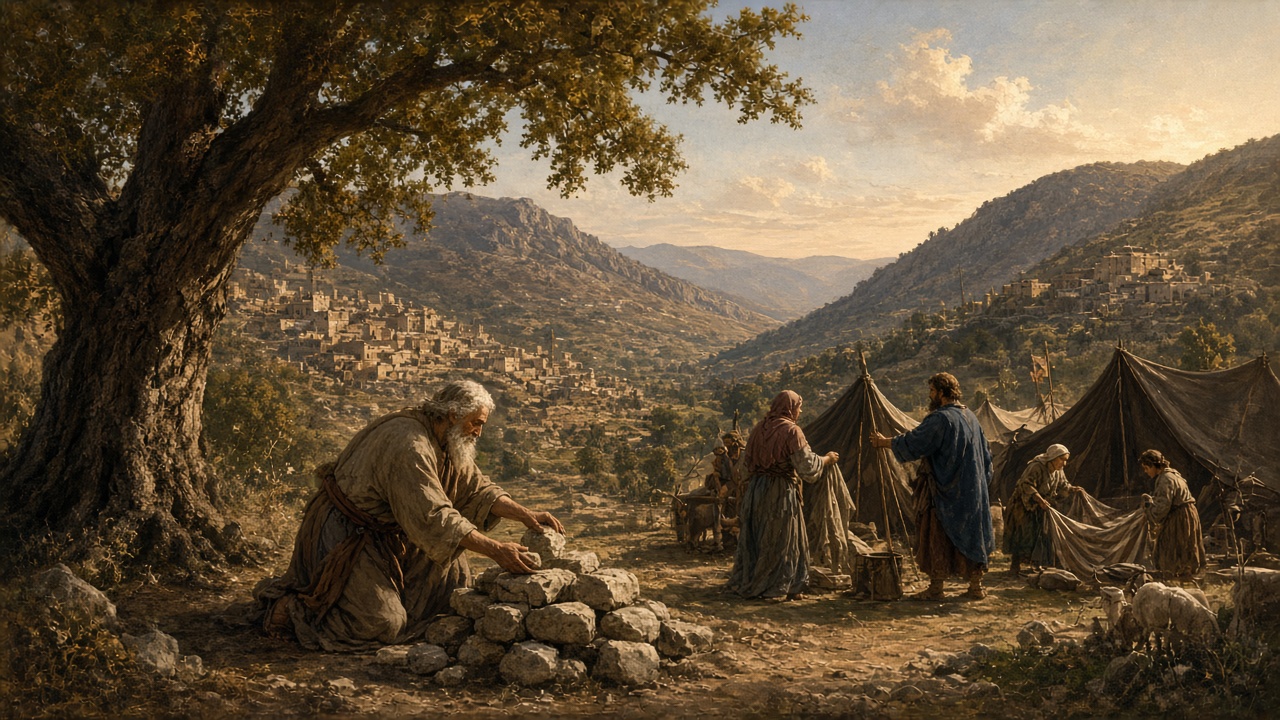
When they came to the land of Canaan, 6Abram traveled through the land as far as the site of the Oak of Moreh at Shechem. And at that time the Canaanites were in the land.
7Then the LORD appeared to Abram and said, “I will give this land to your offspring.” So Abram built an altar there to the LORD, who had appeared to him.
8From there Abram moved on to the hill country east of Bethel and pitched his tent, with Bethel to the west and Ai to the east. There he built an altar to the LORD, and he called on the name of the LORD.
9And Abram journeyed on toward the Negev.
Abram and Sarai in Egypt
10Now there was a famine in the land. So Abram went down to Egypt to live there for a while because the famine was severe. 11As he was about to enter Egypt, he said to his wife Sarai, “Look, I know that you are a beautiful woman, 12and when the Egyptians see you, they will say, ‘This is his wife.’ Then they will kill me but will let you live. 13Please say you are my sister, so that I will be treated well for your sake, and on account of you my life will be spared.”
14So when Abram entered Egypt, the Egyptians saw that the woman was very beautiful. 15When Pharaoh’s officials saw Sarai, they commended her to him, and she was taken into the palace of Pharaoh. 16He treated Abram well on her account, and Abram acquired sheep and cattle, male and female donkeys, menservants and maidservants, and camels.
17The LORD, however, afflicted Pharaoh and his household with severe plagues because of Abram’s wife Sarai. 18So Pharaoh summoned Abram and asked, “What have you done to me? Why didn’t you tell me she was your wife? 19Why did you say, ‘She is my sister,’ so that I took her as my wife? Now then, here is your wife. Take her and go!”
20Then Pharaoh gave his men orders concerning Abram, and they sent him away with his wife and all his possessions.
¿Sabías que…?
El llamado de Abram y el viaje a Canaán
- El Diccionario Bíblico de Easton trata el llamado que abre este capítulo como un segundo llamado, más definido. Un llamado anterior, mencionado en Hechos, pero no narrado en el Antiguo Testamento y solo implícito aquí, ya había llevado a Abram desde Ur de los caldeos unas trescientas millas al norte, hasta Harán, donde permaneció hasta la muerte de su padre, Taré. Génesis dice que tenía setenta y cinco años cuando dejó Harán con su esposa Sarai, su sobrino Lot y las personas y los bienes reunidos allí.Fuentes: Abraham · Haran · el propio texto bíblico
- La primera parada de Abram en la tierra fue en la encina de Moré, junto a Siquem, en el valle estrecho entre el monte Ebal y el monte Gerizim, cuyas bases distan apenas unas quinientas yardas. El Diccionario Bíblico de Easton dice que Moré fue probablemente un cananeo que dio su nombre al lugar, y que allí Abram plantó su tienda, construyó su primer altar y recibió la promesa de que la tierra sería dada a su descendencia, aunque los cananeos aún estaban en la tierra. Lo que algunas versiones antiguas llaman llanura, la Revised Version llama encina.Fuentes: Shechem · Moreh (Shechem) · el propio texto bíblico
- Una hambruna severa llevó entonces a Abram a Egipto, donde pidió a Sarai que dijera que era su hermana. El Diccionario Bíblico de Easton (1897) identifica a Sarai como su esposa y, a la vez, su media hermana; el nombre Sara, señala el diccionario, se le dio solo más tarde, cuando se anunció a Abraham que ella sería la madre del hijo prometido. El diccionario sugiere que el faraón de esta visita fue probablemente uno de los hicsos, o reyes pastores, gobernantes de origen semita cuya capital era Zoán, también llamada Tanis.Fuentes: Sarah · Pharaoh (during Abraham's Journey) · el propio texto bíblico
Notas escritas con ayuda de IA a partir de fuentes abiertas (Theographic Bible Metadata, CC BY-SA 4.0; Easton’s Bible Dictionary, dominio público) y revisadas antes de publicarse.
Lugares de este capítulo
- Haran · Hoy: Harran · 36.864, 39.033 · versículos 4, 5
- Canaan · 32.767, 35.333 · versículos 5, 10
- Moreh · Hoy: within 1 km of Tell Balatah · 32.214, 35.282 · versículo 6
- Shechem · Hoy: Tell Balatah · 32.214, 35.282 · versículo 6
- Negeb · 31.245, 34.841 · versículo 9
- Egypt · 30.129, 31.308 · versículos 10, 11, 14
Solo aparecen lugares identificados con alta confianza (90 % o más según las fuentes académicas reunidas por OpenBible). Mapa de la época: DARE (Digital Atlas of the Roman Empire), CC BY 4.0; mapa actual: © colaboradores de OpenStreetMap; lugares: OpenBible.info (CC BY 4.0).
Créditos y licencia de esta traducción
Berean Standard Bible
The Holy Bible in English: Berean Standard Bible
Public Domain
Language: English
Contributor: BSB Publishing, LLC
2026-10-02
Fuente: http://ebible.org/engbsb/ · eBible.org