Gênesis 12
Berean Standard Bible · Toque num versículo para ver as referências cruzadas.
The Call of Abram
1Then the LORD said to Abram, “Leave your country, your kindred, and your father’s household, and go to the land I will show you.
2I will make you into a great nation,
and I will bless you;
I will make your name great,
so that you will be a blessing.
3I will bless those who bless you
and curse those who curse you;
and all the families of the earth
will be blessed through you.”
4So Abram departed, as the LORD had directed him, and Lot went with him. Abram was seventy-five years old when he left Haran. 5And Abram took his wife Sarai, his nephew Lot, and all the possessions and people they had acquired in Haran, and set out for the land of Canaan.
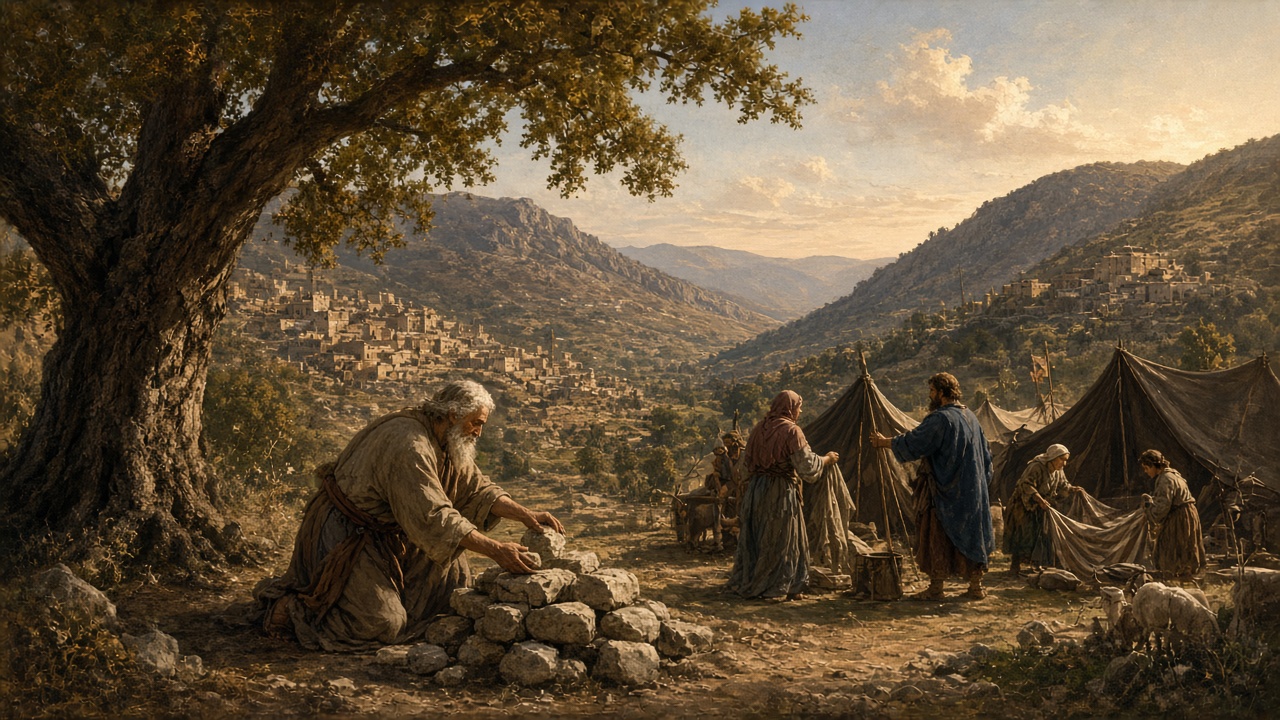
When they came to the land of Canaan, 6Abram traveled through the land as far as the site of the Oak of Moreh at Shechem. And at that time the Canaanites were in the land.
7Then the LORD appeared to Abram and said, “I will give this land to your offspring.” So Abram built an altar there to the LORD, who had appeared to him.
8From there Abram moved on to the hill country east of Bethel and pitched his tent, with Bethel to the west and Ai to the east. There he built an altar to the LORD, and he called on the name of the LORD.
9And Abram journeyed on toward the Negev.
Abram and Sarai in Egypt
10Now there was a famine in the land. So Abram went down to Egypt to live there for a while because the famine was severe. 11As he was about to enter Egypt, he said to his wife Sarai, “Look, I know that you are a beautiful woman, 12and when the Egyptians see you, they will say, ‘This is his wife.’ Then they will kill me but will let you live. 13Please say you are my sister, so that I will be treated well for your sake, and on account of you my life will be spared.”
14So when Abram entered Egypt, the Egyptians saw that the woman was very beautiful. 15When Pharaoh’s officials saw Sarai, they commended her to him, and she was taken into the palace of Pharaoh. 16He treated Abram well on her account, and Abram acquired sheep and cattle, male and female donkeys, menservants and maidservants, and camels.
17The LORD, however, afflicted Pharaoh and his household with severe plagues because of Abram’s wife Sarai. 18So Pharaoh summoned Abram and asked, “What have you done to me? Why didn’t you tell me she was your wife? 19Why did you say, ‘She is my sister,’ so that I took her as my wife? Now then, here is your wife. Take her and go!”
20Then Pharaoh gave his men orders concerning Abram, and they sent him away with his wife and all his possessions.
Você sabia?
O chamado de Abrão e a viagem a Canaã
- O Dicionário Bíblico de Easton trata o chamado que abre este capítulo como um segundo chamado, mais definido. Um chamado anterior, mencionado em Atos, mas não narrado no Antigo Testamento e apenas implícito aqui, já tinha levado Abrão de Ur dos caldeus cerca de trezentas milhas ao norte, até Harã, onde ele ficou até a morte de seu pai, Terá. Gênesis diz que ele tinha setenta e cinco anos quando partiu de Harã com a mulher, Sarai, o sobrinho Ló e as pessoas e os bens reunidos ali.Fontes: Abraham · Haran · o próprio texto bíblico
- A primeira parada de Abrão na terra foi no carvalho de Moré, junto a Siquém, no vale estreito entre o monte Ebal e o monte Gerizim, cujas bases distam apenas cerca de quinhentas jardas. O Dicionário Bíblico de Easton diz que Moré era provavelmente um cananeu que deu nome ao lugar, e que ali Abrão armou sua tenda, construiu seu primeiro altar e recebeu a promessa de que a terra seria dada à sua descendência, embora os cananeus ainda estivessem na terra. O que algumas versões mais antigas chamam de planície, a Revised Version chama de carvalho.Fontes: Shechem · Moreh (Shechem) · o próprio texto bíblico
- Uma fome severa levou então Abrão ao Egito, onde ele pediu a Sarai que dissesse ser sua irmã. O Dicionário Bíblico de Easton (1897) identifica Sarai como sua mulher e, ao mesmo tempo, sua meia-irmã; o nome Sara, observa o dicionário, só lhe foi dado mais tarde, quando se anunciou a Abraão que ela seria a mãe do filho prometido. O dicionário sugere que o faraó dessa visita foi provavelmente um dos hicsos, ou reis pastores, governantes de origem semita cuja capital era Zoã, também chamada Tânis.Fontes: Sarah · Pharaoh (during Abraham's Journey) · o próprio texto bíblico
Notas escritas com auxílio de IA a partir de fontes abertas (Theographic Bible Metadata, CC BY-SA 4.0; Easton’s Bible Dictionary, domínio público) e revisadas antes de publicar.
Lugares deste capítulo
- Haran · Hoje: Harran · 36.864, 39.033 · versículos 4, 5
- Canaan · 32.767, 35.333 · versículos 5, 10
- Moreh · Hoje: within 1 km of Tell Balatah · 32.214, 35.282 · versículo 6
- Shechem · Hoje: Tell Balatah · 32.214, 35.282 · versículo 6
- Negeb · 31.245, 34.841 · versículo 9
- Egypt · 30.129, 31.308 · versículos 10, 11, 14
Só aparecem lugares com identificação de alta confiança (90% ou mais segundo as fontes acadêmicas reunidas pelo OpenBible). Mapa da época: DARE (Digital Atlas of the Roman Empire), CC BY 4.0; mapa atual: © colaboradores do OpenStreetMap; lugares: OpenBible.info (CC BY 4.0).
Créditos e licença desta tradução
Berean Standard Bible
The Holy Bible in English: Berean Standard Bible
Public Domain
Language: English
Contributor: BSB Publishing, LLC
2026-10-02
Fonte: http://ebible.org/engbsb/ · eBible.org