Génesis 46
Nǫ̀htsı̨̨ Nı̨̨htł'è · Toca un versículo para ver sus referencias cruzadas.
Jacob Egypt nèk'e ts'ǫ̀ ajà
1Eyıt'à Israel t'asìı hazǫǫ̀ wets'ǫ xè ekǫ ts'ǫ̀ ajà. Bersheba gòyeh nììtła ekò, edetà Isaac Wenǫ̀htsı̨ ts'ǫ̀ tıts'aàdìı k'ı̨ı̨hk'ǫ.
2Eyı toò k'e Israel Nǫ̀htsı̨ yets'ǫ̀ gode ghǫ nàwhetı̨, “Jacob! Jacob!” yèhdı.
Israel yets'ǫ̀ hadı, “Neèhkw'ǫ,” hadı.
3“Nǫ̀htsı̨ aht'e, netà Wenǫ̀htsı̨ aht'e,” yèhdı, “Egypt nèk'e ts'ǫ̀ aąde gha nı̨ı̨jı̨-le, ekǫ nets'ıhɂǫ̀ǫ-dǫǫ̀ dǫdeè-xàɂaa gı̨ı̨lı̨į̀ agehłe ha. 4Ekǫ Egypt nèk'e ts'ǫ̀ nexè ahde ha, eyıts'ǫ k'achı̨ jǫ nèk'e ts'ǫ̀ anehłe ha hǫt'e. Nelǫ nèhòı̨wo nı̨dè neza Joseph wetł'aà newhìle ha,” yèhdı.
5Eyıt'à Jacob, Bersheba gòyeh gots'ǫǫ̀ nageèhde. Israel weza sìı edetà, edeza eyıts'ǫ edets'èkeè tłı̨cho-behchı̨į̀ k'àowocho Faraoh godanìyį̀ı̨laa sìı yìı gogı̨ı̨wa. 6Gıts'ǫ sahzǫ̀ą eyıts'ǫ ejıe hazǫǫ̀, t'asìı hazǫǫ̀ Kanan nèk'e gots'ǫ ełègį̀ı̨laa sìı edexè agį̀į̀là. Hanì t'aa Jacob eyıts'ǫ wets'ıhɂǫ̀ǫ-dǫǫ̀ hazǫǫ̀ Egypt nèk'e ts'ǫ̀ agejà. 7Egypt nèk'e ts'ǫ̀ weza, wetì eyıts'ǫ wekwı edexè agǫ̀ǫ̀là, wets'ıhɂǫ̀ǫ-dǫǫ̀ hazǫǫ̀ yexè agejà.
8Israel weza (Jacob eyıts'ǫ wets'ıhɂǫ̀ǫ-dǫǫ̀) Egypt nèk'e ts'ǫ̀ agejàa sìı dıı hagìyeh hǫt'e: Ruben, Jacob weza ǫhdaà hǫt'e.
9Dıı Ruben weza agı̨ı̨t'e: Hanok, Palu, Hezron eyıts'ǫ Karmı.
10Dıı Sımeyon weza agı̨ı̨t'e: Jemel, Jamın, Ohad, Jakın, Zohar eyıts'ǫ Kanan got'ı̨į̀ gots'ǫ ts'èko weza Shayul.
11Dıı Levı weza agı̨ı̨t'e: Gershon, Kohat eyıts'ǫ Merarı.
12Dıı Judah weza agı̨ı̨t'e: Er, Onan, Shelah, Perez eyıts'ǫ Zerah (hanìkò Er eyıts'ǫ Onan Kanan nèk'e ełaàgı̨ı̨dè ı̨lè). Dıı sìı Perez weza agı̨ı̨t'e: Hezron eyıts'ǫ Hamul.
13Dıı Isakar weza agı̨ı̨t'e: Tola, Puyah, Jashub eyıts'ǫ Shımron.
14Dıı Zebulun weza agı̨ı̨t'e: Sered, Elon eyıts'ǫ Jalel.
15Dǫzhìı haàtłǫǫ sìı Padan-Aram nèk'e Jacob wets'èkeè Leah xè wets'ıhɂǫ̀ǫ-dǫǫ̀ agı̨ı̨t'e, eyıts'ǫ wetì ı̨łè Dınah. Wets'ıhɂǫ̀ǫ-dǫǫ̀ hazǫǫ̀ t'à taènǫ-daats'ǫ̀-taı (33) geet'eè ı̨lè.
16Dıı Gad weza agı̨ı̨t'e: Zefon, Hagı, Shunı, Ezbon, Erı, Arodı eyıts'ǫ Arelı.
17Dıı Asher weza agı̨ı̨t'e: Imnah, Isvah, Isvı eyıts'ǫ Berıyah. Gıdè Serah wìyeh. Eyıts'ǫ dıı Berıyah weza agı̨ı̨t'e: Heber eyıts'ǫ Malkel.
18Eyı chekoa hoònǫ-daats'ǫ̀-ek'ètaı sìı Jacob Zılpah xè wets'ıhɂǫ̀ǫ-dǫǫ̀ agı̨ı̨t'e. Eyı ts'èko Zılpah, Laban edetì Leah ghàyı̨ı̨htı̨ ı̨lè hǫt'e.
19Jacob wets'èkeè Rachel gots'ǫ weza nàke: Joseph eyıts'ǫ Benjamın. 20Egypt nèk'e Joseph wets'èkeè Asenat yegha dǫzhìı nàke nìı̨la: Manaseh eyıts'ǫ Efrayım. Asenat wetà Potıfera wìyeh sìı yahtıı-kǫ̀ gocho On gha yahtıı elı̨ ı̨lè.
21Dıı Benjamın weza agı̨ı̨t'e: Bela, Beker, Ashbel, Gera, Naman, Ehı, Rosh, Mupım, Hupım eyıts'ǫ Ard.
22Jacob wets'èkeè Rachel wets'ıhɂǫ̀ǫ-dǫǫ̀ hoònǫ-daats'ǫ̀-dı̨ hǫt'e.
23Dıı Dan weza hǫt'e: Hushım.
24Dıı Naftalı weza agı̨ı̨t'e: Jazel, Gunı, Jezer eyıts'ǫ Shılem.
25Eyı Jacob weza łǫ̀hdı̨ sìı Bılah xè wets'ıhɂǫ̀ǫ-dǫǫ̀ agı̨ı̨t'e. Eyı ts'èko Bılah sìı Laban edetì Rachel ghàyı̨ı̨htı̨ ı̨lè hǫt'e.
26Jacob xàè wets'ıhɂǫ̀ǫ-dǫǫ̀ agı̨ı̨t'ee sìı hazǫǫ̀ wexè Egypt nèk'e ts'ǫ̀ agejà. Weza gıts'èkeè gıxè ıtà-le nı̨dè hazǫǫ̀ t'à dǫ ek'ètaènǫ-daats'ǫ̀-ek'ètaı (66) hageètłǫǫ agı̨ı̨t'e. 27Joseph weza nàke Egypt nèk'e gıgǫ̀hłı̨ı̨ sìı gıxè ıtà nı̨dè hazǫǫ̀ t'à Jacob wèot'ı̨ łǫ̀hdı̨ènǫ Egypt nèk'e ts'ǫ̀ tàgeède.
28Nagıadè nı, Jacob edeza Judah, Joseph ts'ǫ̀ edenakweè yeèhɂà, Goshen nèk'e edı̨į̀ ts'ǫ̀ goòɂàa sìı dayeehke ha t'à. Goshen nèk'e nègı̨ı̨de ekò, 29Joseph edets'ǫ tłı̨cho-behchı̨į̀ xè sıagǫ̀ǫ̀là gà edetà Israel eɂį̀ ha Goshen nèk'e ts'ǫ̀ èhtła. Edetà gà nììtła ts'ǫ̀et'ıì edetà edeàdo, wınà t'à whaà ı̨tsè.
30Israel, edeza Joseph ts'ǫ̀ hadı, “Įłaà ı̨da, sedaà t'à neehɂı̨ t'à, hòt'a ełaehwhı ha dìì-le,” yèhdı.
31Eyı tł'axǫǫ̀ Joseph edı̨ı̨de eyıts'ǫ wetà wèot'ı̨ hazǫǫ̀ gots'ǫ̀ hadı, “K'àowocho Faraoh wets'ǫ̀ dıı haehsı̨ ha, ‘Sı̨ı̨de eyıts'ǫ setà wèot'ı̨ hazǫǫ̀ Kanan nèk'e gots'ǫ sets'ǫ̀ nègı̨ı̨de. 32Sı̨ı̨de tıts'aàdìı k'ègedìı dǫǫ̀ agı̨ı̨t'e t'à edets'ǫ sahzǫ̀ą, ejıe, eyıts'ǫ t'asìı hazǫǫ̀ gıts'ǫ sìı edexè agį̀į̀là,’ wèehsı̨ ha. 33K'àowocho Faraoh naxıkayaı̨htı xè dıı hadıì danaxeehke, ‘Ayìı la ghàlaahda?’ naxèhdı nı̨dè, 34wets'ǫ̀ dıı haahdı nǫǫ̀, ‘K'àowo, chekoa ts'ı̨ı̨lı̨ gots'ǫ ejıe eyıts'ǫ sahzǫ̀ą k'èts'edì, gocho hagıat'į̀ lanì,’ wèahdı nǫǫ̀. Hanì-ı̨dè Goshen nèk'e nàahdè anaxele ha. Tıts'aàdìı-k'èdìı-dǫǫ̀ gots'ǫ̀ nıwà-le nàgedèe Egypt got'ı̨į̀ gıgha nezı̨-le hǫt'e,” Joseph gòhdı.
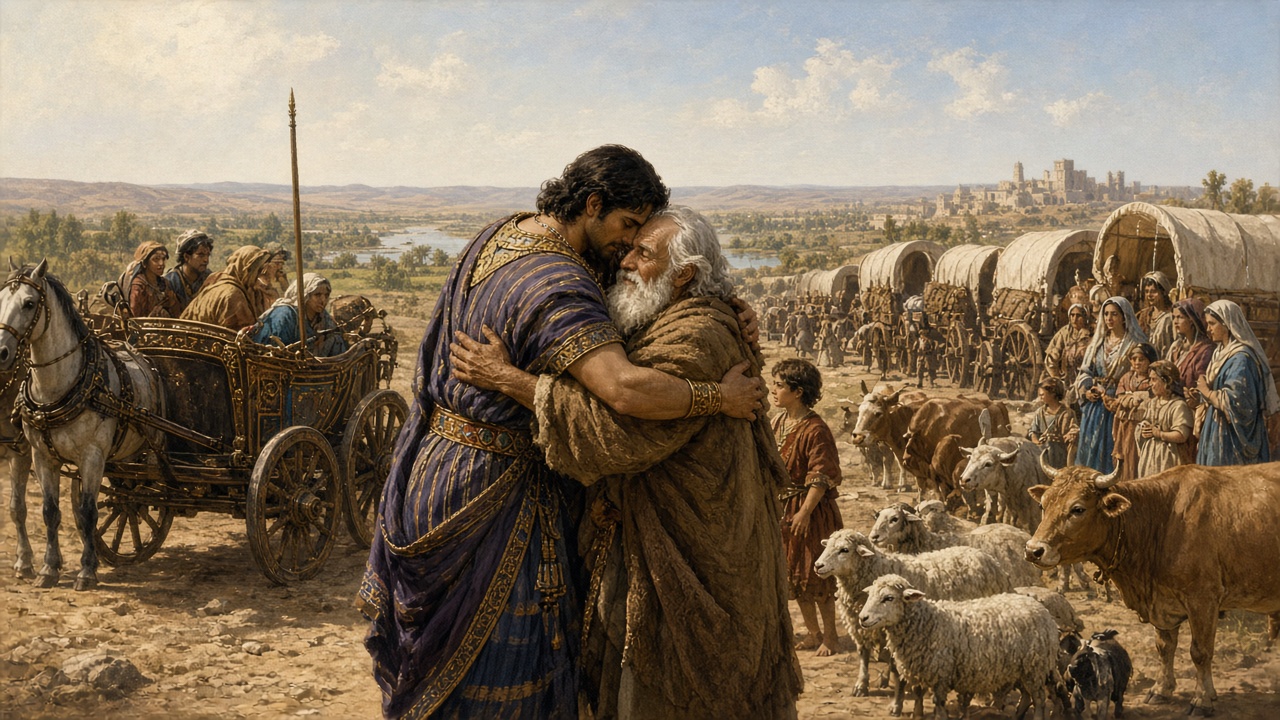
¿Sabías que…?
Israel desciende a Egipto
- Cuando Israel partió hacia Egipto con todo lo que tenía, se detuvo en Beerseba y ofreció sacrificios al Dios de su padre Isaac. Beerseba, que significa pozo del juramento o pozo de los siete, fue un pozo que Abraham cavó y nombró tras un pacto con Abimelec; cuando Isaac lo reabrió, le dio el mismo nombre. Era un lugar favorito de residencia de ambos patriarcas, y allí, aquella noche, Dios habló a Jacob en una visión y le dijo que no temiera bajar a Egipto, porque allí lo haría una gran nación.Fuentes: el propio texto bíblico · Beersheba
- Jacob envió a Judá por delante hacia José para que le indicara el camino a Gosén, un distrito egipcio al este del Nilo, al parecer cerca de la residencia real, donde la familia permaneció hasta el Éxodo. El Easton's Bible Dictionary (1897) la llama lo mejor de la tierra, hoy un desierto, y también tierra de Ramesés. José dijo a sus hermanos que afirmaran haber criado ganado desde su juventud, para poder establecerse allí, porque los pastores eran detestables para los egipcios; ese diccionario sugiere que el faraón fue probablemente Apopi, el último rey de los hicsos, que acogió a estos pastores asiáticos, mientras los egipcios nativos los aborrecían, aunque algunos argumentan que José llegó más tarde, bajo Tutmosis III, después de la expulsión de los hicsos.Fuentes: el propio texto bíblico · Goshen · Pharaoh (of Joseph)
- El capítulo cuenta sesenta y seis descendientes directos de Jacob que llegaron a Egipto, sin incluir a las esposas de sus hijos, y setenta al incluir a los dos hijos de José ya nacidos en Egipto. Los hijos de Lea y su hija Dina aparecen en esa lista, aunque el Easton's Bible Dictionary (1897) dice que la propia Lea ya había muerto en Canaán antes del viaje y fue sepultada en la cueva de Macpela; Raquel había muerto antes, al dar a luz a Benjamín, y fue sepultada en el camino a Efrata, es decir, Belén. Manasés y Efraín nacieron a José en Egipto de Asenat, hija de Potifera, sacerdote de On, un centro del culto al sol que la Septuaginta y la Vulgata llaman Heliópolis.Fuentes: el propio texto bíblico · Leah · Rachel · On
Notas escritas con ayuda de IA a partir de fuentes abiertas (Theographic Bible Metadata, CC BY-SA 4.0; Easton’s Bible Dictionary, dominio público) y revisadas antes de publicarse.
Lugares de este capítulo
- Egypt · 30.129, 31.308 · versículos 1, 3, 4, 5, 6, 7, 8, 20, 26, 27
- Canaan · 32.767, 35.333 · versículos 6, 12, 31
- Heliopolis · Hoy: Ain Shams · 30.129, 31.308 · versículo 20
- Goshen · Hoy: Goshen 1 · 30.799, 31.834 · versículos 28, 29, 34
Solo aparecen lugares identificados con alta confianza (90 % o más según las fuentes académicas reunidas por OpenBible). Mapa de la época: DARE (Digital Atlas of the Roman Empire), CC BY 4.0; mapa actual: © colaboradores de OpenStreetMap; lugares: OpenBible.info (CC BY 4.0).
Créditos y licencia de esta traducción
Nǫ̀htsı̨̨ Nı̨̨htł'è
Dogrib: Dogrib Genesis & New Testament New Testament & Portions of Old Testament
copyright © 2009 Canadian Bible Society
Language: Dogrib
Translation by: Canadian Bible Society
Tłı̨chǫ Genesis and New Testament
About Tłı̨chǫ
Tłı̨chǫ (Dogrib) is a Na-Dene (Athabaskan) language. It is spoken by the First Nations Tłı̨chǫ people in the Northwest Territories in Canada. It has the largest number of speakers of any of the Aboriginal language communities in the NWT, and is one of the official languages of the Northwest Territories.
About This Translation
This translation includes the book of Genesis and the New Testament in Tłı̨chǫ. The first edition of the Tłı̨chǫ New Testament was published in 2003. It was a historic event, as it was the first time in more than a hundred years that a complete New Testament was published for one of the Dene First Nations in the Territories. The first edition was well received and quickly sold out. In the meantime the book of Genesis had been completed. Consequently, the 2008 reprint of the Tłı̨chǫ New Testament included Genesis.
Though this translation of the New Testament and Genesis took a total of ten years, the people who worked on it built on years of labor invested by the Tłı̨chǫ people, elders, priests and missionaries, translators, educators, and linguists. The material contained in this book was checked and approved by consultants from Wycliffe Bible Translators and the Canadian Bible Society.
If you are interested in obtaining a printed copy of this Bible, please contact the Canadian Bible Society at http://www.biblescanada.com .
Copyright Information
Dogrib Genesis and New Testament © 2003, 2008 Canadian Bible Society
The text of the Bible in Tłı̨chǫ that appears in this electronic format or website is for personal use only.
Up to five hundred (500) verses of the Bible text in any form (written, visual, electronic or audio) may be quoted without permission. The quoted verses may not be more than 50% of a complete book of the Bible, or more than 25% of the total text of the work in which they are quoted. Prior written permission must be obtained for any other use of the text. Copyright acknowledgement must in all cases appear on the title or copyright page.
For more information on copyright conditions or to apply, visit http://www.biblesociety.ca/copyright .
This translation is made available to you under the terms of the
Creative Commons Attribution-Noncommercial-No Derivatives license 4.0.
You may share and redistribute this Bible translation or extracts from it in any format, provided that:
You include the above copyright and source information.
You do not sell this work for a profit.
You do not change any of the words or punctuation of the Scriptures.
Pictures included with Scriptures and other documents on this site are licensed just for use with those Scriptures and documents.
For other uses, please contact the respective copyright owners.
2014-04-22
Fuente: http://ebible.org/dgrDOGNT/ · eBible.org