Genesis 46
Nǫ̀htsı̨̨ Nı̨̨htł'è · Tap a verse to see its cross-references.
Jacob Egypt nèk'e ts'ǫ̀ ajà
1Eyıt'à Israel t'asìı hazǫǫ̀ wets'ǫ xè ekǫ ts'ǫ̀ ajà. Bersheba gòyeh nììtła ekò, edetà Isaac Wenǫ̀htsı̨ ts'ǫ̀ tıts'aàdìı k'ı̨ı̨hk'ǫ.
2Eyı toò k'e Israel Nǫ̀htsı̨ yets'ǫ̀ gode ghǫ nàwhetı̨, “Jacob! Jacob!” yèhdı.
Israel yets'ǫ̀ hadı, “Neèhkw'ǫ,” hadı.
3“Nǫ̀htsı̨ aht'e, netà Wenǫ̀htsı̨ aht'e,” yèhdı, “Egypt nèk'e ts'ǫ̀ aąde gha nı̨ı̨jı̨-le, ekǫ nets'ıhɂǫ̀ǫ-dǫǫ̀ dǫdeè-xàɂaa gı̨ı̨lı̨į̀ agehłe ha. 4Ekǫ Egypt nèk'e ts'ǫ̀ nexè ahde ha, eyıts'ǫ k'achı̨ jǫ nèk'e ts'ǫ̀ anehłe ha hǫt'e. Nelǫ nèhòı̨wo nı̨dè neza Joseph wetł'aà newhìle ha,” yèhdı.
5Eyıt'à Jacob, Bersheba gòyeh gots'ǫǫ̀ nageèhde. Israel weza sìı edetà, edeza eyıts'ǫ edets'èkeè tłı̨cho-behchı̨į̀ k'àowocho Faraoh godanìyį̀ı̨laa sìı yìı gogı̨ı̨wa. 6Gıts'ǫ sahzǫ̀ą eyıts'ǫ ejıe hazǫǫ̀, t'asìı hazǫǫ̀ Kanan nèk'e gots'ǫ ełègį̀ı̨laa sìı edexè agį̀į̀là. Hanì t'aa Jacob eyıts'ǫ wets'ıhɂǫ̀ǫ-dǫǫ̀ hazǫǫ̀ Egypt nèk'e ts'ǫ̀ agejà. 7Egypt nèk'e ts'ǫ̀ weza, wetì eyıts'ǫ wekwı edexè agǫ̀ǫ̀là, wets'ıhɂǫ̀ǫ-dǫǫ̀ hazǫǫ̀ yexè agejà.
8Israel weza (Jacob eyıts'ǫ wets'ıhɂǫ̀ǫ-dǫǫ̀) Egypt nèk'e ts'ǫ̀ agejàa sìı dıı hagìyeh hǫt'e: Ruben, Jacob weza ǫhdaà hǫt'e.
9Dıı Ruben weza agı̨ı̨t'e: Hanok, Palu, Hezron eyıts'ǫ Karmı.
10Dıı Sımeyon weza agı̨ı̨t'e: Jemel, Jamın, Ohad, Jakın, Zohar eyıts'ǫ Kanan got'ı̨į̀ gots'ǫ ts'èko weza Shayul.
11Dıı Levı weza agı̨ı̨t'e: Gershon, Kohat eyıts'ǫ Merarı.
12Dıı Judah weza agı̨ı̨t'e: Er, Onan, Shelah, Perez eyıts'ǫ Zerah (hanìkò Er eyıts'ǫ Onan Kanan nèk'e ełaàgı̨ı̨dè ı̨lè). Dıı sìı Perez weza agı̨ı̨t'e: Hezron eyıts'ǫ Hamul.
13Dıı Isakar weza agı̨ı̨t'e: Tola, Puyah, Jashub eyıts'ǫ Shımron.
14Dıı Zebulun weza agı̨ı̨t'e: Sered, Elon eyıts'ǫ Jalel.
15Dǫzhìı haàtłǫǫ sìı Padan-Aram nèk'e Jacob wets'èkeè Leah xè wets'ıhɂǫ̀ǫ-dǫǫ̀ agı̨ı̨t'e, eyıts'ǫ wetì ı̨łè Dınah. Wets'ıhɂǫ̀ǫ-dǫǫ̀ hazǫǫ̀ t'à taènǫ-daats'ǫ̀-taı (33) geet'eè ı̨lè.
16Dıı Gad weza agı̨ı̨t'e: Zefon, Hagı, Shunı, Ezbon, Erı, Arodı eyıts'ǫ Arelı.
17Dıı Asher weza agı̨ı̨t'e: Imnah, Isvah, Isvı eyıts'ǫ Berıyah. Gıdè Serah wìyeh. Eyıts'ǫ dıı Berıyah weza agı̨ı̨t'e: Heber eyıts'ǫ Malkel.
18Eyı chekoa hoònǫ-daats'ǫ̀-ek'ètaı sìı Jacob Zılpah xè wets'ıhɂǫ̀ǫ-dǫǫ̀ agı̨ı̨t'e. Eyı ts'èko Zılpah, Laban edetì Leah ghàyı̨ı̨htı̨ ı̨lè hǫt'e.
19Jacob wets'èkeè Rachel gots'ǫ weza nàke: Joseph eyıts'ǫ Benjamın. 20Egypt nèk'e Joseph wets'èkeè Asenat yegha dǫzhìı nàke nìı̨la: Manaseh eyıts'ǫ Efrayım. Asenat wetà Potıfera wìyeh sìı yahtıı-kǫ̀ gocho On gha yahtıı elı̨ ı̨lè.
21Dıı Benjamın weza agı̨ı̨t'e: Bela, Beker, Ashbel, Gera, Naman, Ehı, Rosh, Mupım, Hupım eyıts'ǫ Ard.
22Jacob wets'èkeè Rachel wets'ıhɂǫ̀ǫ-dǫǫ̀ hoònǫ-daats'ǫ̀-dı̨ hǫt'e.
23Dıı Dan weza hǫt'e: Hushım.
24Dıı Naftalı weza agı̨ı̨t'e: Jazel, Gunı, Jezer eyıts'ǫ Shılem.
25Eyı Jacob weza łǫ̀hdı̨ sìı Bılah xè wets'ıhɂǫ̀ǫ-dǫǫ̀ agı̨ı̨t'e. Eyı ts'èko Bılah sìı Laban edetì Rachel ghàyı̨ı̨htı̨ ı̨lè hǫt'e.
26Jacob xàè wets'ıhɂǫ̀ǫ-dǫǫ̀ agı̨ı̨t'ee sìı hazǫǫ̀ wexè Egypt nèk'e ts'ǫ̀ agejà. Weza gıts'èkeè gıxè ıtà-le nı̨dè hazǫǫ̀ t'à dǫ ek'ètaènǫ-daats'ǫ̀-ek'ètaı (66) hageètłǫǫ agı̨ı̨t'e. 27Joseph weza nàke Egypt nèk'e gıgǫ̀hłı̨ı̨ sìı gıxè ıtà nı̨dè hazǫǫ̀ t'à Jacob wèot'ı̨ łǫ̀hdı̨ènǫ Egypt nèk'e ts'ǫ̀ tàgeède.
28Nagıadè nı, Jacob edeza Judah, Joseph ts'ǫ̀ edenakweè yeèhɂà, Goshen nèk'e edı̨į̀ ts'ǫ̀ goòɂàa sìı dayeehke ha t'à. Goshen nèk'e nègı̨ı̨de ekò, 29Joseph edets'ǫ tłı̨cho-behchı̨į̀ xè sıagǫ̀ǫ̀là gà edetà Israel eɂį̀ ha Goshen nèk'e ts'ǫ̀ èhtła. Edetà gà nììtła ts'ǫ̀et'ıì edetà edeàdo, wınà t'à whaà ı̨tsè.
30Israel, edeza Joseph ts'ǫ̀ hadı, “Įłaà ı̨da, sedaà t'à neehɂı̨ t'à, hòt'a ełaehwhı ha dìì-le,” yèhdı.
31Eyı tł'axǫǫ̀ Joseph edı̨ı̨de eyıts'ǫ wetà wèot'ı̨ hazǫǫ̀ gots'ǫ̀ hadı, “K'àowocho Faraoh wets'ǫ̀ dıı haehsı̨ ha, ‘Sı̨ı̨de eyıts'ǫ setà wèot'ı̨ hazǫǫ̀ Kanan nèk'e gots'ǫ sets'ǫ̀ nègı̨ı̨de. 32Sı̨ı̨de tıts'aàdìı k'ègedìı dǫǫ̀ agı̨ı̨t'e t'à edets'ǫ sahzǫ̀ą, ejıe, eyıts'ǫ t'asìı hazǫǫ̀ gıts'ǫ sìı edexè agį̀į̀là,’ wèehsı̨ ha. 33K'àowocho Faraoh naxıkayaı̨htı xè dıı hadıì danaxeehke, ‘Ayìı la ghàlaahda?’ naxèhdı nı̨dè, 34wets'ǫ̀ dıı haahdı nǫǫ̀, ‘K'àowo, chekoa ts'ı̨ı̨lı̨ gots'ǫ ejıe eyıts'ǫ sahzǫ̀ą k'èts'edì, gocho hagıat'į̀ lanì,’ wèahdı nǫǫ̀. Hanì-ı̨dè Goshen nèk'e nàahdè anaxele ha. Tıts'aàdìı-k'èdìı-dǫǫ̀ gots'ǫ̀ nıwà-le nàgedèe Egypt got'ı̨į̀ gıgha nezı̨-le hǫt'e,” Joseph gòhdı.
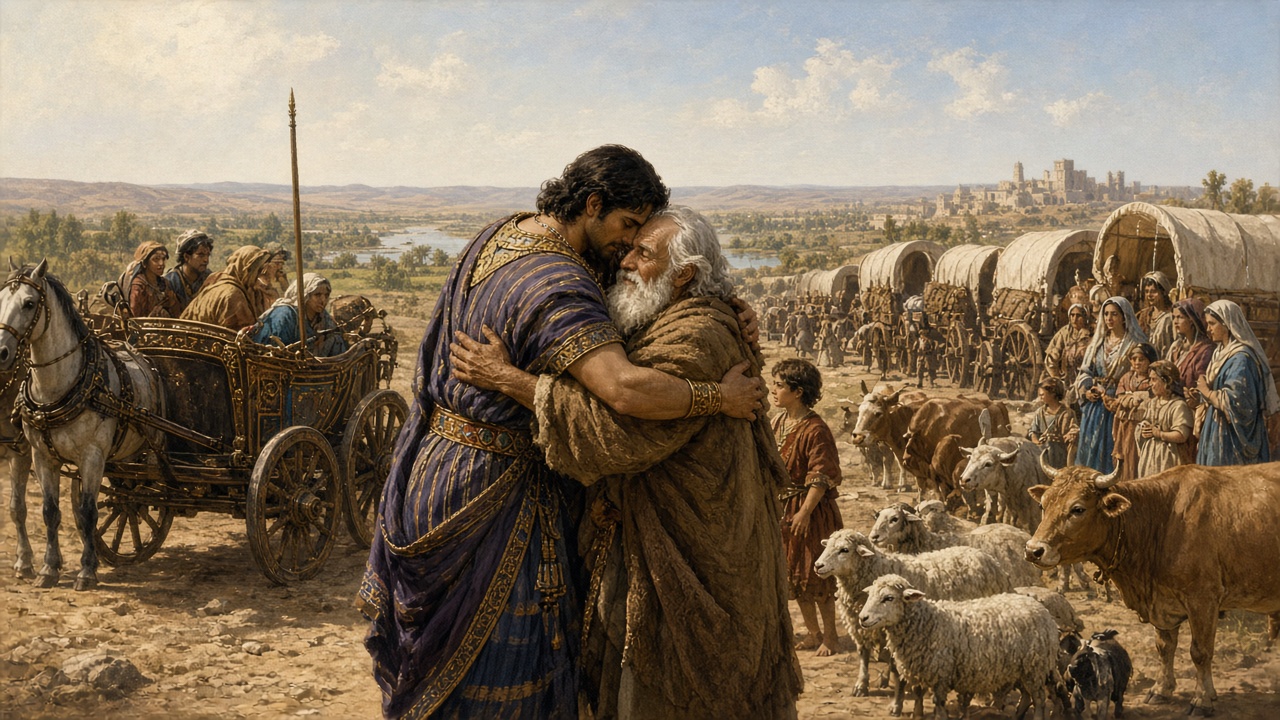
Did you know?
Israel Goes Down to Egypt
- As Israel set out for Egypt with all that he had, he stopped at Beersheba and offered sacrifices to the God of his father Isaac. Beersheba, meaning well of the oath or well of seven, was a well Abraham dug and named after a compact with Abimelech; when Isaac reopened it, he gave it the same name. It was a favorite dwelling of both patriarchs, and there that night God spoke to Jacob in a vision, telling him not to fear going down to Egypt, for he would make him a great nation there.Sources: the Bible text itself · Beersheba
- Jacob sent Judah ahead to Joseph for directions to Goshen, an Egyptian district east of the Nile, apparently near the royal residence, where the family remained until the Exodus. Easton's Bible Dictionary (1897) calls it the best of the land, now a desert, and also the land of Rameses. Joseph told his brothers to say they had raised livestock from youth, so they might settle there, because shepherds were detestable to the Egyptians; that dictionary suggests Pharaoh was probably Apopi, last of the Hyksos, who welcomed these Asiatic shepherds, while native Egyptians abhorred them, though some argue Joseph arrived later, under Thothmes III, after the Hyksos were expelled.Sources: the Bible text itself · Goshen · Pharaoh (of Joseph)
- The chapter counts sixty-six of Jacob's direct descendants who came to Egypt, not counting the wives of his sons, and seventy when Joseph's two sons already born in Egypt are included. Leah's sons and her daughter Dinah are named in that tally, although Easton's Bible Dictionary (1897) says Leah herself had died in Canaan before the journey and was buried in the cave of Machpelah; Rachel had died earlier giving birth to Benjamin and was buried on the way to Ephrath, that is, Bethlehem. Manasseh and Ephraim were born to Joseph in Egypt by Asenath, daughter of Potiphera, priest of On, a center of sun-worship that the Septuagint and Vulgate call Heliopolis.Sources: the Bible text itself · Leah · Rachel · On
Notes written with AI assistance from open sources (Theographic Bible Metadata, CC BY-SA 4.0; Easton’s Bible Dictionary, public domain) and reviewed before publishing.
Places in this chapter
- Egypt · 30.129, 31.308 · verses 1, 3, 4, 5, 6, 7, 8, 20, 26, 27
- Canaan · 32.767, 35.333 · verses 6, 12, 31
- Heliopolis · Today: Ain Shams · 30.129, 31.308 · verse 20
- Goshen · Today: Goshen 1 · 30.799, 31.834 · verses 28, 29, 34
Only places identified with high confidence are shown (90% or more according to the scholarly sources compiled by OpenBible). Period map: DARE (Digital Atlas of the Roman Empire), CC BY 4.0; modern map: © OpenStreetMap contributors; places: OpenBible.info (CC BY 4.0).
Credits and license for this translation
Nǫ̀htsı̨̨ Nı̨̨htł'è
Dogrib: Dogrib Genesis & New Testament New Testament & Portions of Old Testament
copyright © 2009 Canadian Bible Society
Language: Dogrib
Translation by: Canadian Bible Society
Tłı̨chǫ Genesis and New Testament
About Tłı̨chǫ
Tłı̨chǫ (Dogrib) is a Na-Dene (Athabaskan) language. It is spoken by the First Nations Tłı̨chǫ people in the Northwest Territories in Canada. It has the largest number of speakers of any of the Aboriginal language communities in the NWT, and is one of the official languages of the Northwest Territories.
About This Translation
This translation includes the book of Genesis and the New Testament in Tłı̨chǫ. The first edition of the Tłı̨chǫ New Testament was published in 2003. It was a historic event, as it was the first time in more than a hundred years that a complete New Testament was published for one of the Dene First Nations in the Territories. The first edition was well received and quickly sold out. In the meantime the book of Genesis had been completed. Consequently, the 2008 reprint of the Tłı̨chǫ New Testament included Genesis.
Though this translation of the New Testament and Genesis took a total of ten years, the people who worked on it built on years of labor invested by the Tłı̨chǫ people, elders, priests and missionaries, translators, educators, and linguists. The material contained in this book was checked and approved by consultants from Wycliffe Bible Translators and the Canadian Bible Society.
If you are interested in obtaining a printed copy of this Bible, please contact the Canadian Bible Society at http://www.biblescanada.com .
Copyright Information
Dogrib Genesis and New Testament © 2003, 2008 Canadian Bible Society
The text of the Bible in Tłı̨chǫ that appears in this electronic format or website is for personal use only.
Up to five hundred (500) verses of the Bible text in any form (written, visual, electronic or audio) may be quoted without permission. The quoted verses may not be more than 50% of a complete book of the Bible, or more than 25% of the total text of the work in which they are quoted. Prior written permission must be obtained for any other use of the text. Copyright acknowledgement must in all cases appear on the title or copyright page.
For more information on copyright conditions or to apply, visit http://www.biblesociety.ca/copyright .
This translation is made available to you under the terms of the
Creative Commons Attribution-Noncommercial-No Derivatives license 4.0.
You may share and redistribute this Bible translation or extracts from it in any format, provided that:
You include the above copyright and source information.
You do not sell this work for a profit.
You do not change any of the words or punctuation of the Scriptures.
Pictures included with Scriptures and other documents on this site are licensed just for use with those Scriptures and documents.
For other uses, please contact the respective copyright owners.
2014-04-22
Source: http://ebible.org/dgrDOGNT/ · eBible.org