Jonah 1
Godón Buk · Tap a verse to see its cross-references.
About this book
About Jonah
- Jonah, whose name means “a dove,” was the son of Amittai of Gath-hepher and a prophet of Israel. Easton's Bible Dictionary (1897) holds that he wrote the book himself. His ministry is placed very early in the reign of Jeroboam II: he was contemporary with Hosea and Amos, or possibly earlier, and so may have been the oldest of the prophets whose writings survive.Sources: Jonah · Amittai · Easton: Jonah, Book of
- The book professes to tell what actually happened to the prophet. Some critics have read it as a parable or allegory rather than history, because miracle is so prominent and the form is narrative rather than prophecy, or because they deny miracles altogether. Easton's Bible Dictionary (1897) instead treats it as history, attaching great weight to the mention of Jonah in Matthew 12:39-40 and Luke 11:29.Sources: Easton: Jonah, Book of
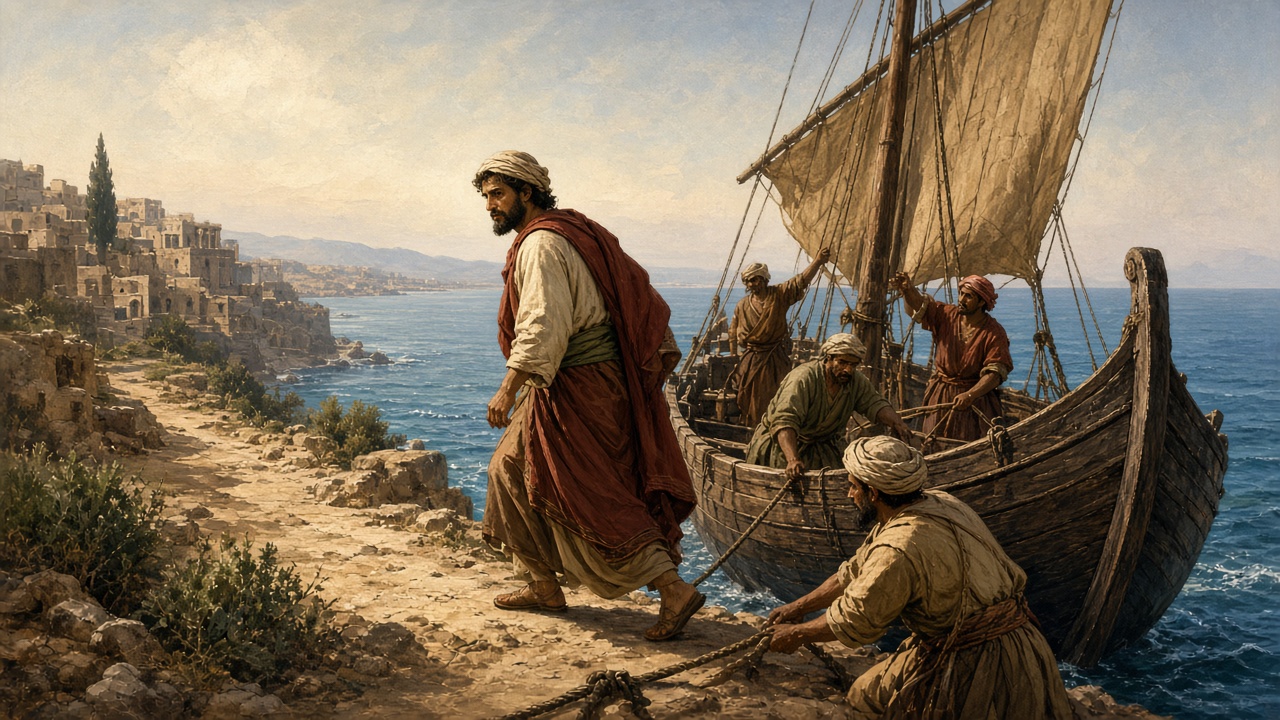
- Jonah was commissioned to go to Nineveh, described as a great and populous city and the flourishing capital of the Assyrian empire, but he sailed from Joppa, Judea's chief seaport, to flee toward Tarshish. Where Tarshish lay is disputed: some place it in the east, on the Indian coast, some identify it with Carthage, and Easton's dictionary takes it to be a Phoenician port in Spain.Sources: Easton: Jonah, Book of · Nineveh · Joppa · Tarshish
- Easton's outline has four movements: the divine commission, disobedience, and punishment; Jonah's prayer and deliverance; a second commission, the Ninevites' repentance, and God's sparing mercy; and Jonah's anger at that mercy, followed by a rebuke. The same dictionary notes that Nineveh was spared for more than a century after his mission.Sources: Easton: Jonah, Book of
- As a prophet of Israel, Jonah foretold the restoration of the kingdom's ancient borders. A biographical note presents him both as a missionary to Nineveh and as a type of the Son of man. The book of Nahum is taken up almost entirely with denunciations of that city, and Zephaniah also predicts its destruction.Sources: Jonah · Nineveh
Notes written with AI assistance from open sources (Theographic Bible Metadata, CC BY-SA 4.0; Easton’s Bible Dictionary, public domain) and reviewed before publishing.
Zona Ubi-koke Bainürr ⌊Lodón⌋ Bóktan Arrkrrum
1Darrpan ngürr Lod Zonan, Amitaen olom, bóktan ekyanórr. 2Wagó, “Ma ugó bupa Ninebe tótókóm, ene wirri basirrdü, da wirri arüngi bóktanke pamkolpamdó ibü kolae tonarrabkwata, zitülkus ka umulóla i ia kolae kolpamako.” 3A Zona bupadórr, da Lodón we kórzyónürr. Oya ubi darrü wirri basirrdü tótókóm yarilürr, ngi Tarrsyis, Spein kantrri kugupidü. Wa we tübinürr ama Zopa wirri basirrdü, malu kabedó. Wirri but we esenórr, nóma bupadóm kailürr ama Tarrsyis. Wa but darrem ekyanórr, we kasilürr butan zaget pampükü, ama Tarrsyis tótókóm. Oya gyagüpitótók inzan yarilürr wamaka, “ Lod ola babulase.”
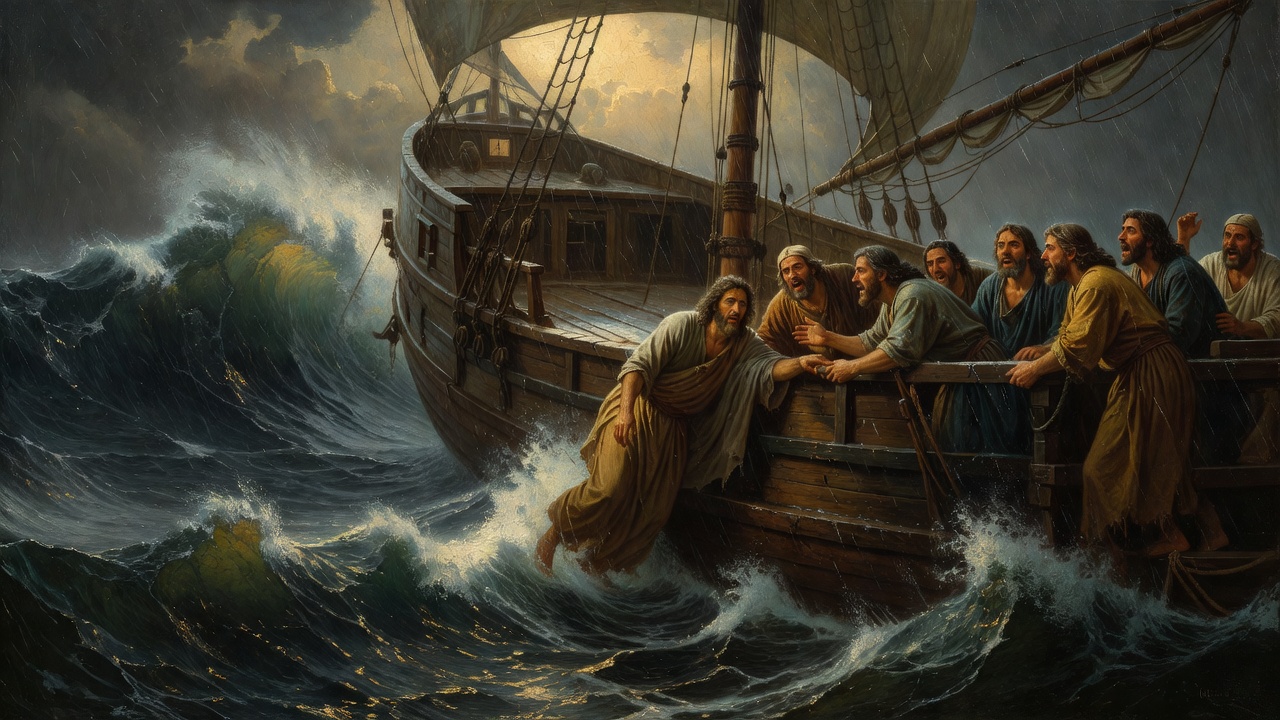
4I nóma baurr kwarilürr, Zona ugón but kugupidü abinürr utüm. A Lod wirri wór zirrsapónórr ene maludü. Wór kari arüng koke yarilürr; ene buta kolae bainüm kain yarilürr. 5Ene butan zaget pama kari gum koke yón taegwarr kwarilürr tibiób tangbamtinüm, darrpan-darrpan tibiób godódó. Tibiób but ul ainüm, i elklaza we aman kwarilürr maludü. Zona ma ugón but kugupidü büdül ut yarilürr.
6Up oloma we tamórr. Oyabóka wagó, “Ma iade utdóla? Bupa, moba godódó ugó górrga! Wa ne kubó gyagüpitótók nóma ipüde, mi kubó oyame koke nurrbarino!”
7Da butan zaget pama bamtinóp tibiób wagó, “Ngi asen kla ugó amónam. Mi kubó ene olom eserre mibü kolaedó nótó sirrbüne.” Nóma amónóp, Zonan ngia tamórr. 8I Zonanbóka wagó, “Gyaurka, ma kibü errkyadan tüzazilnünümo ini müp nótó sidüde? Ma aini ia kaindóla? Ma nadü bwóbdügabi tama? Ma laró bóktan olomla?”
9Zona bóktan yalkomólórr wagó, “Ka Ibrru pamla, ka Lodón gum-gum ⌊ótókdóla⌋, kwitüm God, tüp a malu nótó tónzapónórr.” 10Wa akó we bóktanórr ibüka wagó, “Ka Lodkagabi busodóla!” Ene pam gum kwarilürr, i nóma barrkrrurr, da Zonan we ilóp wagó, “Ma ia laró tónggapóna? Kari kolae koke!” 11Da malua tai kolae bain yarilürr, kókó amkoman kolaedó. Butan zaget pama we imtinóp wagó, “Ki marü ia mangórre ini wór piküp ainüm?”
12Zona ibüka wagó, “Kürü kwit kinam akó maludü kümaikam. Malua kubó igósidi zao-zao baine. Ka umulóla, trrez kótó sidüda, e ini wirri wórdü aebókamde tóbaogane.”
13Güblang-koke, butan zaget pama krrabe atül kwarilürr tibióbnüm arüngi, ene but kórrgópdó ódódóm. Da i gaodó koke kwarilürr, zitülkus malua tai balóng obzek bainürr. 14Da i Lodka górrgónóp wagó, “ Lod, gyaurka, ma kibü büdüldü amarrugu Zonan arról alakónóm. Ini kórsan oloman büdül müp sab kidi koke ipüdórre. Mató, Lod, blaman klama marü ubi ngarkwatódó tómbapóndako.” 15Da i Zonan ipüdóp, kwit inóp, ó amanikóp maludü, da ene malua we amkónórr.
16Da módóga, ene tonarr kakóm, i Lodón wirri gum we ipüdóp. I darrü lar we emkólóp oya eso akyanóm akó i oya tibiób ⌊arüng alkamül-koke bóktan⌋ ekyenóp.
17Lod tüób wirri wapi we zirrsapónórr Zonan adarüküm. Wirri wapia Zonan adarükda.|alt="Jonah swallowed by a fish" src="lll5-08.tif" size="span" ref="1:17" Wa wapian dupidü aüd ngürr akó aüd irrüb ngyabelórr.
Did you know?
Jonah Flees from the Lord
- Jonah, the son of Amittai from Gath-hepher, is also recorded in 2 Kings 14:25 as a prophet active in the northern kingdom of Israel during the reign of Jeroboam II. God instructed him to travel east to Nineveh, the prominent and populous capital of the Assyrian empire, to preach against its wickedness.Sources: Jonah · Amittai · Nineveh · the Bible text itself
- Rather than traveling northeast overland to Nineveh, Jonah journeyed down to the Mediterranean seaport of Joppa to board a ship for Tarshish. Tarshish is traditionally identified as a Phoenician trading port located far to the west in southern Spain, representing the exact opposite direction.Sources: Joppa · Tarshish · the Bible text itself
- The sailors aboard the cargo ship came from polytheistic backgrounds, each calling out to his own deity during the violent tempest. After throwing the ship's cargo overboard to lighten the vessel, they turned to the ancient practice of casting lots to determine who was responsible for the calamity.Sources: the Bible text itself
Notes written with AI assistance from open sources (Theographic Bible Metadata, CC BY-SA 4.0; Easton’s Bible Dictionary, public domain) and reviewed before publishing.
Places in this chapter
Only places identified with high confidence are shown (90% or more according to the scholarly sources compiled by OpenBible). Period map: DARE (Digital Atlas of the Roman Empire), CC BY 4.0; modern map: © OpenStreetMap contributors; places: OpenBible.info (CC BY 4.0).
Credits and license for this translation
Godón Buk
Portions of the Holy Bible in the Gizrra language of Western Province, Papua New Guinea
Buk Baibel long tokples Gizrra long Niugini
copyright © 2019 Wycliffe Bible Translators, Inc.
Language: Gizrra
Translation by: Wycliffe Bible Translators, Inc.
This translation is made available to you under the terms of the
Creative Commons Attribution-Noncommercial-No Derivatives license 4.0.
You may share and redistribute this Bible translation or extracts from it in any format, provided that:
You include the above copyright and source information.
You do not sell this work for a profit.
You do not change any of the words or punctuation of the Scriptures.
Pictures included with Scriptures and other documents on this site are licensed just for use with those Scriptures and documents.
For other uses, please contact the respective copyright owners.
2024-07-01
Source: http://png.bible/tof/ · eBible.org