2 Timothy 1
Kitab al Mukadas ma Arabi Juba · Tap a verse to see its cross-references.
About this book
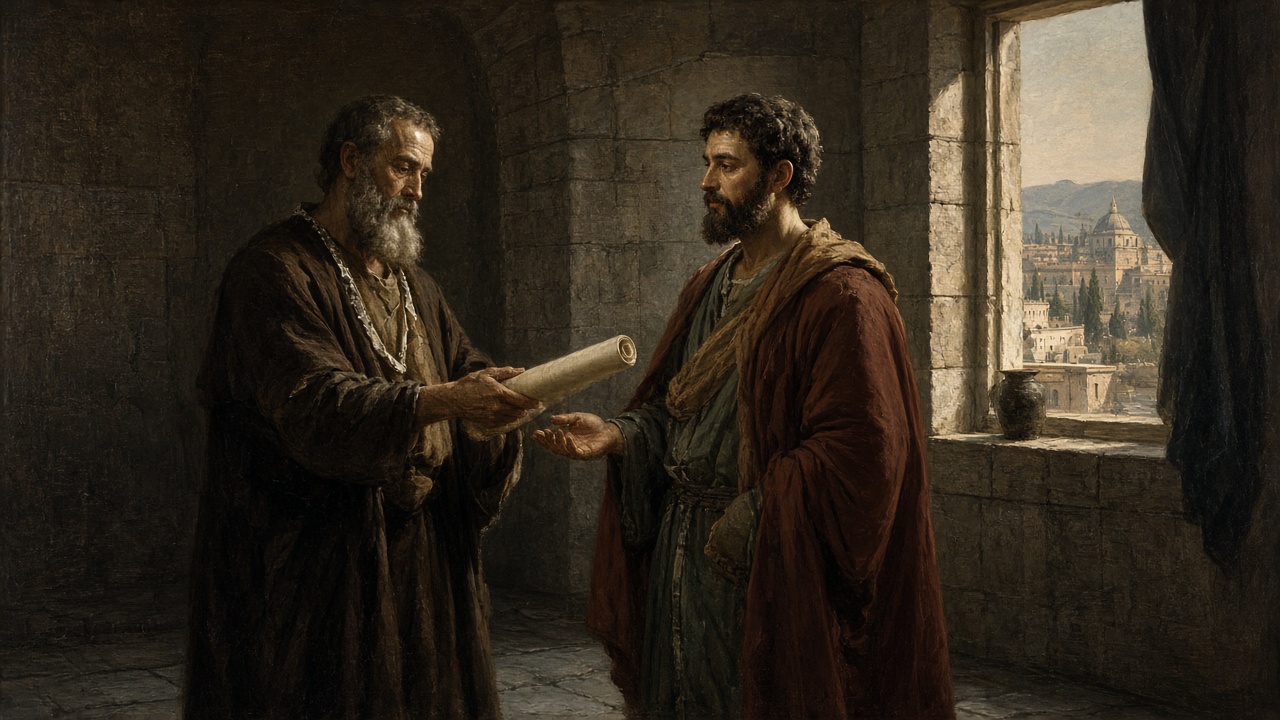
About 2 Timothy
- Easton's Bible Dictionary (1897) says the Second Epistle to Timothy was probably written a year or so after the first, from Rome, where Paul was a prisoner for a second time. It was sent to Timothy by the hands of Tychicus.Sources: Easton: Timothy, Second Epistle to
- According to Easton, Paul writes from that second imprisonment expecting that the time of his departure is at hand, and he asks Timothy to come before winter and bring Mark. When the New Testament was written, Rome was noted for its wealth and luxury and had an estimated population of 1,200,000, half of whom were slaves.Sources: Easton: Timothy, Second Epistle to · Rome
- Easton says Paul exhorts Timothy, whom he calls his son, to diligence and steadfastness, to patience under persecution, and to a faithful discharge of all the duties of his office, with the solemnity of one about to appear before the Judge of the living and the dead.Sources: Easton: Timothy, Second Epistle to
- Timothy was a young disciple who probably lived at Lystra, a town of Lycaonia in Asia Minor, and his father was a Greek. His mother Eunice and his grandmother Lois are mentioned as eminent for their piety, and Paul commends Lois for her faith. Paul called Timothy his own son in the faith, circumcised him so that he might conciliate the Jews, and took him as a companion.Sources: Timotheus · Lois · Lystra
- During Paul's second imprisonment at Rome, Phygellus, a Christian of Asia, and Hermogenes, once his fellow-worker in Asia Minor, turned away from him, probably because of the perils they faced. Asia here denotes proconsular Asia, the Roman province in the western part of Asia Minor, of which Ephesus was the capital. Onesiphorus, an Ephesian Christian, showed Paul great kindness in Rome and often refreshed him, and Paul expresses a warm interest in him and his household.Sources: Phygellus · Hermogenes · Onesiphorus · Asia
Notes written with AI assistance from open sources (Theographic Bible Metadata, CC BY-SA 4.0; Easton’s Bible Dictionary, public domain) and reviewed before publishing.
Risala nimra itnin al Bulus rasulu le Timoteo
Salam
1Risala de min Bulus. Rabuna azilu ana ashan bi kun rasul bita Yesuwa al Mesiya, ashan ana bi wori le nas an haya al uwo waad fi Yesuwa al Mesiya.
2Risala de le Timoteo, jena tai al ana hibu.
Keli neima, rahama, wa salam min Rabuna al Abu wa Sultan ta nina Yesuwa al Mesiya kun ma ita.
Wodi Shukur le Rabuna
3Ana gi shukuru Rabuna ashan kalam bitak, Rabuna al ana gi kadim ma geliba nedif, ze judud tai kaan amulu. Ana daiman gi zekiru ita fi salawat tai bilel wa nahar. 4Ana gi fekiru shedid ashan bi ainu ita wa ana gi zekiru kore taki wokit ana ferigu ma ita. Ana bi kun moksut kan nina limu tani. 5Ana kaman zekiru iman bitak al hagiga, nefsa iman de abuba taki Lois wa uma taki Yunis indu. Wa ana mutaakid ita kaman indu iman de.
Teshji le Timoteo
6Le sabab de ana gi zekiru ita ashan bi istamil hadiya al Rabuna wodi le ita wa kutu hadiya de kun hai. Hadiya al ita ligo wokit ana kutu ida tai fi ras taki. 7Ashan Rabuna maa wodi le nina roho ta kouf, lakin roho ta guwa, ta muhaba, wa ta hafizu nefsa. 8Ashan kida mata kun ma fadiya ashan kalam ta Sultan ta nina au ana al mobus ashan kalam bitou. Lakin isterik ma ana fi taab ashan kalam ta injil be guwa al Rabuna wodi le ita. 9Leanu Rabuna kalisu nina wa nadii nina ashan ish haya al kudus. Uwo amulu de, maa ashan amail al kweis ta nina lakin ashan kuta bitou wa neima, al uwo wodi le nina fi Yesuwa al Mesiya gubal maa kalagu duniya. 10Lakin hasa uwo kalas zahiru kuta bitou le nina be wasat ja ta mukalis ta nina Yesuwa al Mesiya. Uwo demiru guwa ta mut, wa uwo kaman jibu haya al abadiya be wasat injil. 11Rabuna azilu ana mubashir, rasul, wa muderis ta injil de. 12Wa de sabab ana gi taab ini fi sijin. Lakin fadiya maa gi amulu ana ma kalam de, ashan ana arufu kweis zol al ana aminu fi uwo. Wa ana arufu gali uwo bi agder hafizu haja al ana wodi le uwo kweis lahadi yom dak. 13Hafizu deresa al hagiga al ana derisu le ita ze misal, deresa al ita alimu min ana ma iman wa muhaba fi Yesuwa al Mesiya. 14Hafizu kweis haja al Rabuna wodi le ita, be wasat guwa ta Roho al Kudus al gi ish fi nina.
Nas al Aba Bulus
15Zema ita arufu, kulu nas al fi Mudiriya ta Asiya al Suker aba ana. Misal ta nas del yau Fugelo wa Erumogene. 16Kede Sultan beinu rahama le bet bita Onesiforo, ashan uwo kaan daiman gi sheja ana, wa uwo maa indu fadiya ashan ana mobus ashan kalam ta Yesuwa. 17Lakin wokit uwo wosulu fi Roma, uwo fetisu ana shedid wa uwo ligo ana. 18Kede uwo ligo rahama min Sultan fi yom dak! Wa ita arufu kef uwo saidu ana fi Efeso.
Did you know?
Faith without shame
- Paul addresses Timothy as his beloved child and recalls the sincere faith that first lived in Timothy’s grandmother Lois and his mother Eunice. Easton's Bible Dictionary (1897) describes Timothy as a young disciple who accompanied Paul on many journeys and whom the apostle regarded as his own son in the faith; it adds that nothing is known of his father except that he was a Greek, and that Timothy probably lived at Lystra.Sources: Timotheus · Lois · the Bible text itself
- Paul writes that everyone in the province of Asia has deserted him, including Phygelus and Hermogenes. Easton's Bible Dictionary (1897), which spells the first name Phygellus, calls him a Christian of Asia who turned away from Paul during what the dictionary describes as Paul’s second imprisonment at Rome, and says that nothing more is known of him; it calls Hermogenes a former fellow-worker in Asia Minor who abandoned Paul along with Phygellus, probably because of the dangers they faced. The dictionary explains that “Asia” is used in the New Testament to denote proconsular Asia, a Roman province in western Asia Minor whose capital was Ephesus.Sources: Phygellus · Hermogenes · Asia · the Bible text itself
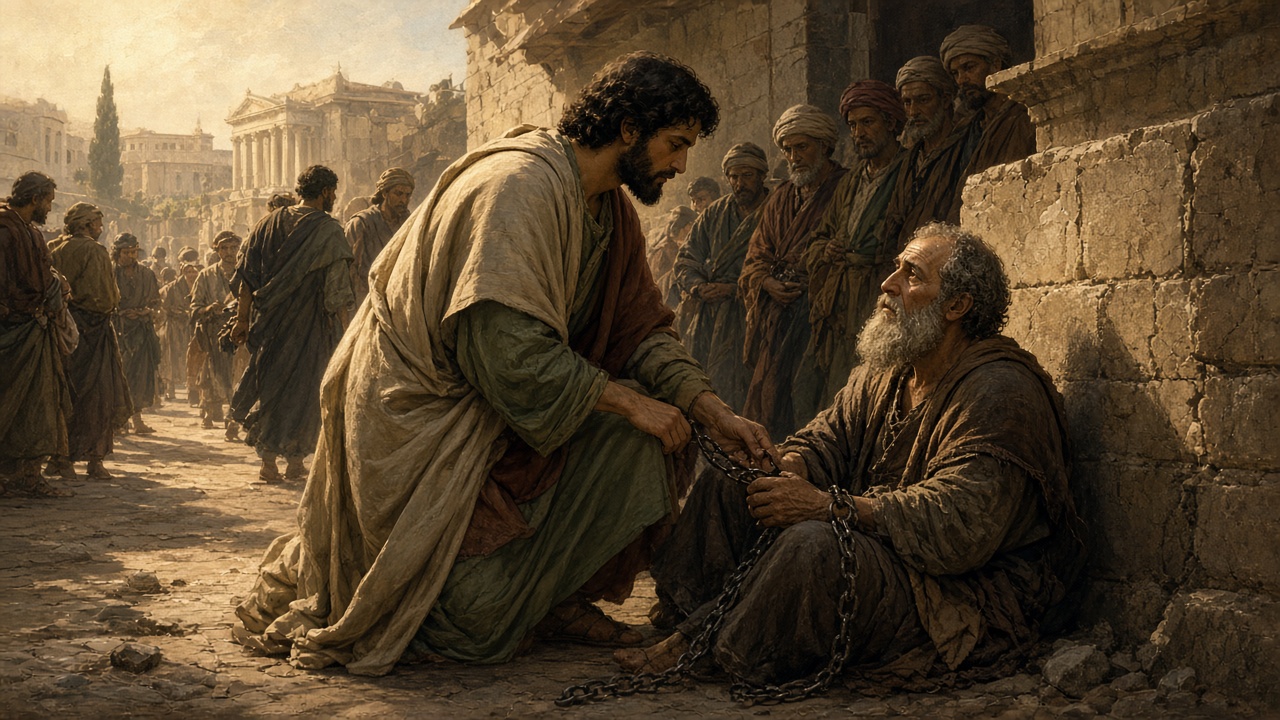
- Onesiphorus, an Ephesian Christian whose name Easton's Bible Dictionary (1897) explains as “bringing profit,” often refreshed Paul and was not ashamed of his chains. When he arrived in Rome he searched diligently until he found Paul, and Paul also recalls how much Onesiphorus had served him in Ephesus.Sources: Onesiphorus · the Bible text itself
Notes written with AI assistance from open sources (Theographic Bible Metadata, CC BY-SA 4.0; Easton’s Bible Dictionary, public domain) and reviewed before publishing.
Places in this chapter
Only places identified with high confidence are shown (90% or more according to the scholarly sources compiled by OpenBible). Period map: DARE (Digital Atlas of the Roman Empire), CC BY 4.0; modern map: © OpenStreetMap contributors; places: OpenBible.info (CC BY 4.0).
Credits and license for this translation
Kitab al Mukadas ma Arabi Juba
Southern Arabic
copyright © Pioneer Bible Translators
Language: Sudanese Creole Arabic (Arabic, Sudanese Creole)
Contributor: Pioneer Bible Translators
This translation is made available to you under the terms of the
Creative Commons Attribution Share-Alike license 4.0.
You have permission to share and redistribute this Bible translation in any format and to make reasonable revisions and adaptations of this translation, provided that:
You include the above copyright and source information.
If you make any changes to the text, you must indicate that you did so in a way that makes it clear that the original licensor is not necessarily endorsing your changes.
If you redistribute this text, you must distribute your contributions under the same license as the original.
Pictures included with Scriptures and other documents on this site are licensed just for use with those Scriptures and documents.
For other uses, please contact the respective copyright owners.
Note that in addition to the rules above, revising and adapting God's Word involves a great responsibility to be true to God's Word. See Revelation 22:18-19.
2025-07-03
Source: http://ebible.org/pga/ · eBible.org