2 Timothy 2
Kitab al Mukadas ma Arabi Juba · Tap a verse to see its cross-references.
Ziyada ta Teshji le Timoteo
1Ashan kida Timoteo jena tai, kun gowi be wasat neima fi Yesuwa al Mesiya. 2Ita asuma kalamat al ana derisu le nas ketir. Umon kaman bi agder wori kalam de. Min hasa keli ita derisu hajat del le nas al aminin al bi agder derisu nas tanin. 3Dumu ma ana fi taab de, ze askeri al kweis ta Yesuwa al Mesiya. 4Askeri al gi amulu shokol bitou, deiru kutu kaid bitou moksut wa uwo maa deiru lakbatu nefsa tou fi kalam ta muatinin. 5Ay zol al gi jere sabak sabak maa bi ligo hadiya ile kan uwo ihtiram gawanin ta jere jere. 6Muzare al gi istakal shedid uwo kede kun awal zol ashan bi akulu hajat ta jinena tou. 7Fekir an kalam al ana gi kelimu, ashan Rabuna bi wodi le ita tafahim fi kulu kalam.
8Zekiru Yesuwa al Mesiya, al min usra ta Dawud, uwo gum min mutu. De yau injil al ana gi bashiru. 9Ashan kida, ana gi taab wa genziruu ana ze zol mujrim. Lakin kilima ta Rabuna maa bi genziruu. 10Le sabab de, ana gi sobur fi kulu hajat ashan kalam bita nas ta Rabuna al aziluu, ashan umon kaman bi ligo kulasa fi Yesuwa al Mesiya wa mejid al maa indu nihaya. 11Kalam de hagiga:
Kan nina mutu ma uwo fi mamudiya, nina kaman bi ish ma uwo,
12kan nina indu sobur, nina kaman bi hukumu ma uwo.
Kan nina aba uwo, uwo kaman bi aba nina.
13Kan nina maa aminin, uwo daiman amin,
ashan uwo maa bi aba nefsa tou.
Kadam ta Rabuna al Sabit
14Zekiru umon an kalamat del. Wodi le umon inzar fi gidam Rabuna ashan bi sibu kore kore an kilimat, leanu uwo maa indu faida wa uwo gi demiru nas al gi asuma. 15Hawil shedid ashan ita bi kutu Rabuna moksut, ashan fadiya maa bi amulu ita kan ita ja fi gidam tou. Wa fasir kalam ta Rabuna al hagiga be teriga al kweis. 16Keli ita wasa bara min wanasa al waskan wa kalam farik, leanu nas al amulu zede gi ruwa beyid min sika ta Rabuna. 17Deresat taumon del ze marad al saab gi setetu fi gisim ta zol kulu. Misal ta nas del yau Umenayo wa Fileto. 18Umon sibu kalam al hagiga. Umon gi kelimu gali giyama ta nas al mutu hasil kalas, wa umon gi demiru iman bita nas tanin. 19Lakin asas al sabit ta Rabuna wogif gowi. Katibuu fogo gali, “Sultan arufu nas bitou,” wa, “Nas kulu al gi nadi isim ta Sultan kede wasa bara min kalam batal.” 20Fi juwa kebir fii afasat maa bes ta dahab wa fida, lakin kaman min kashab wa tin. Afas tanin ta shokol al mohim wa tanin ta shokol al adi. 21Biga, kan ay zol gi kutu nefsa tou nedif min hajat al waskan, uwo bi kun ze afas ta shokol al mohim, uwo kudus kalas, mohim le seyid bitou wa jahiz le ay shokol al kweis.
22Ya Timoteo, wasa bara min niyat al batal ta shokol shabab. Fetisu haya al adil, iman, muhaba wa salam, sawa ma nas al gi nadi Sultan min geliba al nedif. 23Mata dakalu fi wanasat al maa indu faida wa kalam farik, ashan ita arufu umon gi jibu kore-kore. 24Kadam bita Sultan kede maa kore kore lakin kede kun teib le nas kulu, wa bi agder derisu kweis, wa kede indu sobur ma nas al saabin. 25Wonusu birah le nas al gi aridu hagiga, imkin Rabuna bi geiru gulub ta nas del, wa umon bi tub wa alimu kalam al hagiga. 26Biga umon bi bada fekir kweis wa umon bi nofud min serik ta Shetan, al kaan gobudu umon mobus ashan amulu irada tou.
Did you know?
A faithful teacher under pressure
- This chapter warns that the talk of Hymenaeus and Philetus spreads like gangrene: they have deviated from the truth by saying that the resurrection has already occurred, and they undermine the faith of some. Easton's Bible Dictionary (1897) places Philetus with Hymenaeus at Ephesus and describes that claim, that the resurrection was already past, as a Gnostic heresy held by the Nicolaitans.Sources: the Bible text itself · Philetus
- The writer urges that Jesus Christ be remembered as raised from the dead and descended from David, the message he calls his gospel. Easton's Bible Dictionary (1897) describes David as the eighth and youngest son of Jesse, a citizen of Bethlehem, whose early work was tending his father's sheep on the uplands of Judah.Sources: the Bible text itself · David
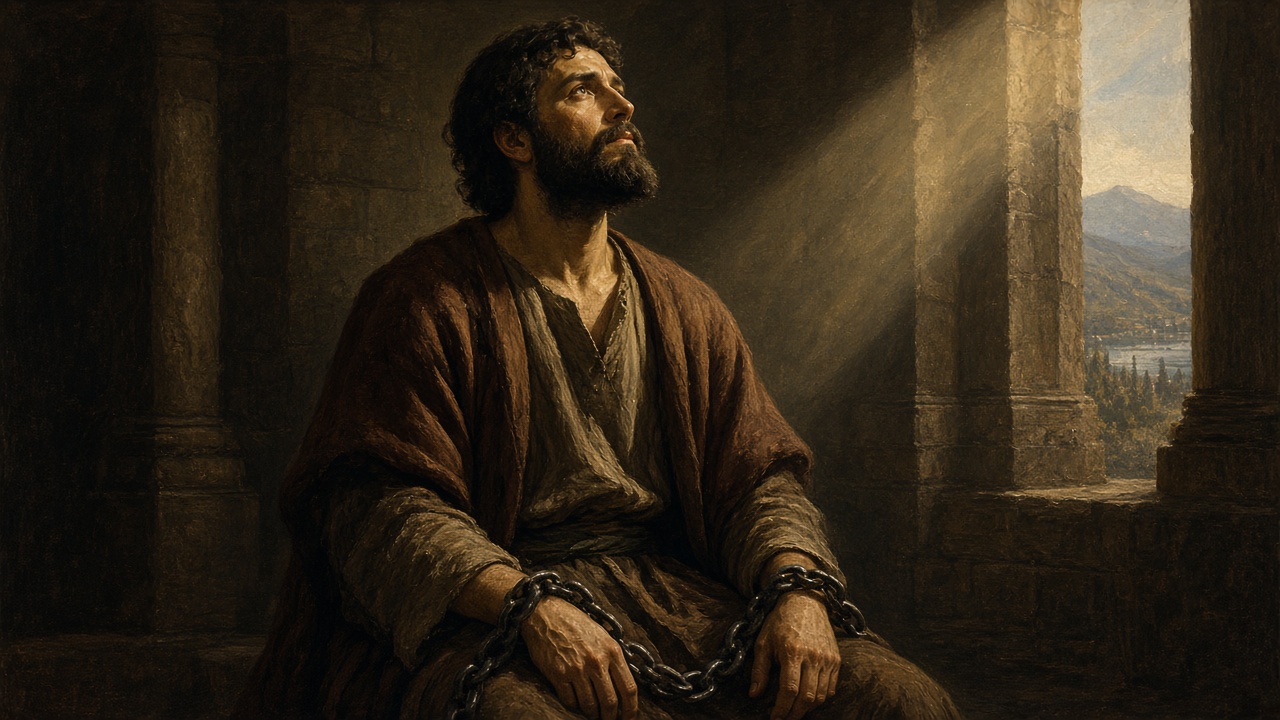
- Faithful service is pictured in three images: a soldier who avoids civilian affairs in order to please the one who enlisted him; a competitor who receives the crown only by competing according to the rules; and a hardworking farmer who should be first to share the crops. The writer also says he suffers chained like a criminal, yet insists that the word of God cannot be chained.Sources: the Bible text itself
Notes written with AI assistance from open sources (Theographic Bible Metadata, CC BY-SA 4.0; Easton’s Bible Dictionary, public domain) and reviewed before publishing.
Credits and license for this translation
Kitab al Mukadas ma Arabi Juba
Southern Arabic
copyright © Pioneer Bible Translators
Language: Sudanese Creole Arabic (Arabic, Sudanese Creole)
Contributor: Pioneer Bible Translators
This translation is made available to you under the terms of the
Creative Commons Attribution Share-Alike license 4.0.
You have permission to share and redistribute this Bible translation in any format and to make reasonable revisions and adaptations of this translation, provided that:
You include the above copyright and source information.
If you make any changes to the text, you must indicate that you did so in a way that makes it clear that the original licensor is not necessarily endorsing your changes.
If you redistribute this text, you must distribute your contributions under the same license as the original.
Pictures included with Scriptures and other documents on this site are licensed just for use with those Scriptures and documents.
For other uses, please contact the respective copyright owners.
Note that in addition to the rules above, revising and adapting God's Word involves a great responsibility to be true to God's Word. See Revelation 22:18-19.
2025-07-03
Source: http://ebible.org/pga/ · eBible.org