Jonah 1
Buki Kimaasabaina · Tap a verse to see its cross-references.
About this book
About Jonah
- Jonah, whose name means “a dove,” was the son of Amittai of Gath-hepher and a prophet of Israel. Easton's Bible Dictionary (1897) holds that he wrote the book himself. His ministry is placed very early in the reign of Jeroboam II: he was contemporary with Hosea and Amos, or possibly earlier, and so may have been the oldest of the prophets whose writings survive.Sources: Jonah · Amittai · Easton: Jonah, Book of
- The book professes to tell what actually happened to the prophet. Some critics have read it as a parable or allegory rather than history, because miracle is so prominent and the form is narrative rather than prophecy, or because they deny miracles altogether. Easton's Bible Dictionary (1897) instead treats it as history, attaching great weight to the mention of Jonah in Matthew 12:39-40 and Luke 11:29.Sources: Easton: Jonah, Book of
- Jonah was commissioned to go to Nineveh, described as a great and populous city and the flourishing capital of the Assyrian empire, but he sailed from Joppa, Judea's chief seaport, to flee toward Tarshish. Where Tarshish lay is disputed: some place it in the east, on the Indian coast, some identify it with Carthage, and Easton's dictionary takes it to be a Phoenician port in Spain.Sources: Easton: Jonah, Book of · Nineveh · Joppa · Tarshish
- Easton's outline has four movements: the divine commission, disobedience, and punishment; Jonah's prayer and deliverance; a second commission, the Ninevites' repentance, and God's sparing mercy; and Jonah's anger at that mercy, followed by a rebuke. The same dictionary notes that Nineveh was spared for more than a century after his mission.Sources: Easton: Jonah, Book of
- As a prophet of Israel, Jonah foretold the restoration of the kingdom's ancient borders. A biographical note presents him both as a missionary to Nineveh and as a type of the Son of man. The book of Nahum is taken up almost entirely with denunciations of that city, and Zephaniah also predicts its destruction.Sources: Jonah · Nineveh
Notes written with AI assistance from open sources (Theographic Bible Metadata, CC BY-SA 4.0; Easton’s Bible Dictionary, public domain) and reviewed before publishing.
Iyona Yauwe yaina isiyasiya tetelina
1Tétala ame Amitai natuna Iyona tetelina.
E tuta tayamo Yauwe ina livala ina Iyonayana yaina idigo kana,
2‘Iyona, Ninivei asa gagaina go, da Ninivei idi goyo yau matagu goi ivakaigaga toina, tauna kutāoya, woilīm kūna asayana goi kuliwolēdi.’
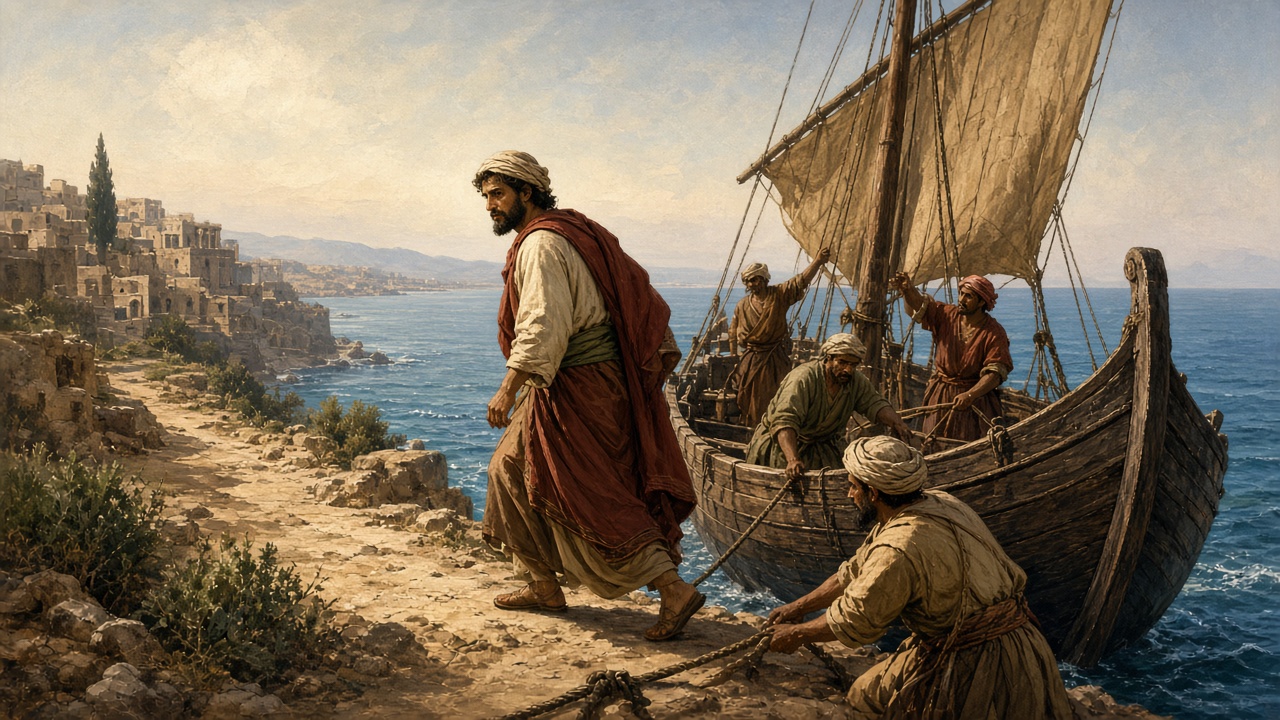
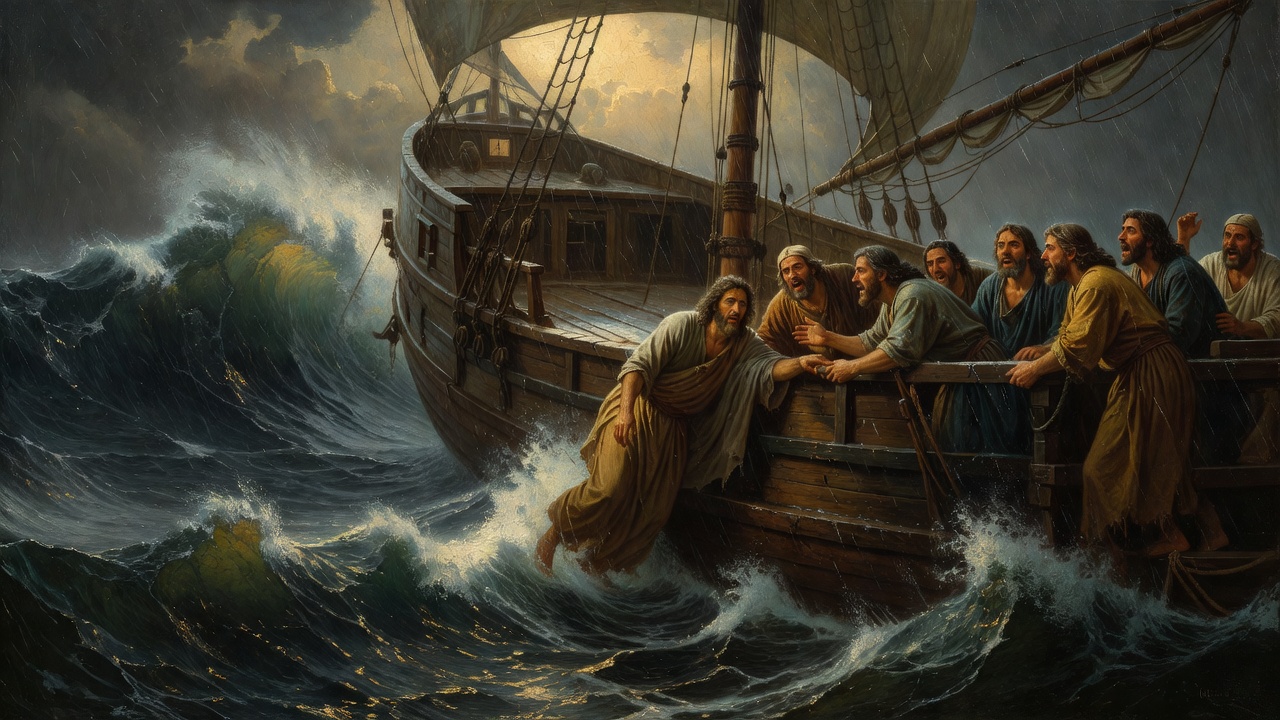
3Go kina Iyonayana itáoya bego Yauwe yaina goi isiya ina Tasisi. Mainao isou iiwo ina Yopa goi oga tayamo ibabane bei ikailova ina Tasisi. Tuwo iemáisa ikavava, isowoya taiyao bei sina amoko goi isou Yauweyana yaina isiya. Iyona iemaisi bego oga isowoya isiya ina Tasisi|src="co01407b.TIF" size="col" ref="1:3" 4E isowoya ikavava, sikailova sinonoina. E kina go Yauweyana yágira gagaina ibisilave isou ina oga isanabode. Tuwo yailúwasa itowo nakae aivaya sisowóduwo, e ana kaigigita bei oga sikauvisivisi. 5Tuwo gelugelu simatoita gagaina, e tamo tamo sipodeda toinidi idi basaleliuyao yaidi, sidigo kadi,
‘¡Oiyoi, kovaitēma!’
Siipodeda, geya, tuwo kónana sisavedi sisou négwasa goi bego oga ikakapu.
Ego kina Iyonayana bogina isou ina oga sinaena goi iimasisi, ikanamatáiya toina. 6Tuwo kapiteni isou ima Iyonayana iwoini, idigo kana,
‘¡Iyaa! ¿Kom kaga kumasisiye? ¡Kutāoya! ¡Kupodēda im basaleliu yaina! Nakona moe basaleliuyana bei inoveda, e geya tavailaita.’
7E gelugeluyadi aditava sibobóbwara, sidigo kadi,
‘Aba yagoina taodūgu bei taayagoi avatau ina puwoya, tauna vailai ame tababane.’
Tuwo moitamo, aba yagoinayana siiwodugu moe tomota sikatuyaividi. Idi katuyaivayana goi Iyona yoina isowóduwo. 8Tuwo tauyana silumadade sidigo kadi,
‘¿Kulatuwokōima avatau ina puwoya, tauna vailai ame tababane? ¿Im paisewa kaga goi kwaaiyaka? ¿Kom nako korotoim? ¿Im bodao avatauwa?’
9‘Yau Iberiu. Yauwe, Tauyana Yaubada totobukukui yábana goi négwasa be poyapoya imadagidi; moe Tauyana ataaimamine’, Iyonayana kaena.
10Tuwaina tauyana kana,
‘Ame Yauweyana yaina goi asiya.’
Tuwo tauyadi simatoita gagaina, tauna sidigo kadi,
‘¿Go kom kaga kuguinuwe bego kusiya?’
11Iyonayana bego ikatumapu go, aivaya ivaituwe gagaina, tuwo kidi sidigo kadi,
‘¿Kaga kaguinuwe yaim bego ikadaúmwara?’
12Tauyana idigo kana,
‘Bogina aayagoi bego yau guna puwoya vailai ame tababane. Tauna kokabīgu go, kolavēgu asou négwasa goi bei ikadaúmwara.’
13E kidi gelugeluyadi geya sikabiyeta, go sem oga sibeusikone; latuwodi bego siyava sina mamaya go, aivaya ivaituwe gagaina toina, tauna geya adi kaipatamo. 14Tuwo kidi sipodeda Yauwe yaina, sidigo kadi,
‘O Yauwe, kakawanoiyem, ame korotoyana bei kakaumate go, ina kámasa pasina taabu kutaagonēma kavaailai. Nakae taabu kam,
“Komi imi puwoya koroto dedevina ame ikámasa.”
Kom, Yauwe, moe im guinuwa toinim kuguinuwe nakae latuwom.’
15E Iyonayana sikabi, silave isou ina négwasa goi, e yailuwasayana mainao ikadaúmwara. 16Tuwo Yauwe simatoite gagaina toina, tuwo sikatótula be nakae yoguyogu sikasaledokoidi Yauwe yaina, e sivakasavedi.
17E Iyonayana isou ina négwasa goi go, Yauwe íyana tayamo gagaina ietune ina tauyana itono. Tuwo iyanayana sinaena goi ikaaiyaka maliyalina aito be sabamgo aito.
Did you know?
Jonah Flees from the Lord
- Jonah, the son of Amittai from Gath-hepher, is also recorded in 2 Kings 14:25 as a prophet active in the northern kingdom of Israel during the reign of Jeroboam II. God instructed him to travel east to Nineveh, the prominent and populous capital of the Assyrian empire, to preach against its wickedness.Sources: Jonah · Amittai · Nineveh · the Bible text itself
- Rather than traveling northeast overland to Nineveh, Jonah journeyed down to the Mediterranean seaport of Joppa to board a ship for Tarshish. Tarshish is traditionally identified as a Phoenician trading port located far to the west in southern Spain, representing the exact opposite direction.Sources: Joppa · Tarshish · the Bible text itself
- The sailors aboard the cargo ship came from polytheistic backgrounds, each calling out to his own deity during the violent tempest. After throwing the ship's cargo overboard to lighten the vessel, they turned to the ancient practice of casting lots to determine who was responsible for the calamity.Sources: the Bible text itself
Notes written with AI assistance from open sources (Theographic Bible Metadata, CC BY-SA 4.0; Easton’s Bible Dictionary, public domain) and reviewed before publishing.
Places in this chapter
Only places identified with high confidence are shown (90% or more according to the scholarly sources compiled by OpenBible). Period map: DARE (Digital Atlas of the Roman Empire), CC BY 4.0; modern map: © OpenStreetMap contributors; places: OpenBible.info (CC BY 4.0).
Credits and license for this translation
Buki Kimaasabaina
The New Testament and part of the Old Testament of the Holy Bible in the Gumawana language of Papua New Guinea
Buk Baibel long tokples Gumawana long Niugini
copyright © 2019 Wycliffe Bible Translators, Inc.
Language: Gumawana
This translation is made available to you under the terms of the
Creative Commons Attribution-Noncommercial-No Derivatives license 4.0.
You may share and redistribute this Bible translation or extracts from it in any format, provided that:
You include the above copyright and source information.
You do not sell this work for a profit.
You do not change any of the words or punctuation of the Scriptures.
Pictures included with Scriptures and other documents on this site are licensed just for use with those Scriptures and documents.
For other uses, please contact the respective copyright owners.
2026-10-02
Source: http://png.bible/gvs/ · eBible.org