Jude 1
Berean Standard Bible · Tap a verse to see its cross-references.
About this book
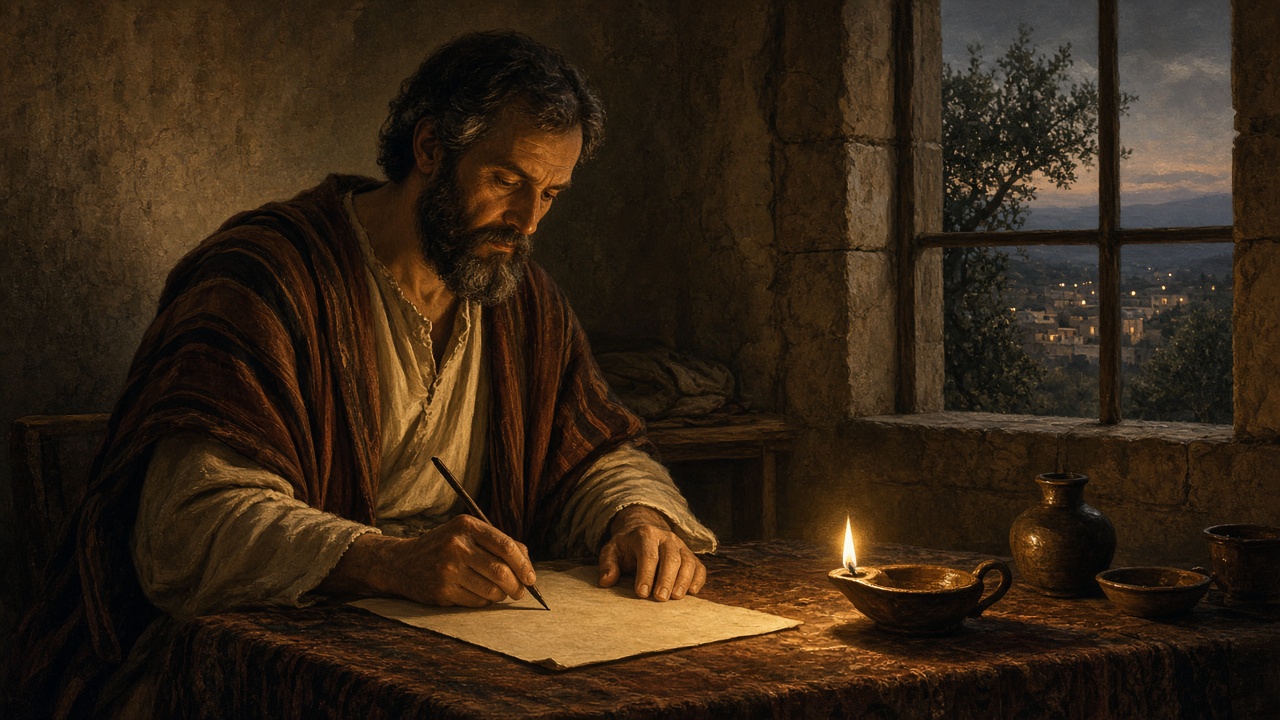
About Jude
- Easton's Bible Dictionary (1897) identifies the author as Judas, the brother of James the Less, also called Lebbaeus and Thaddaeus. A related entry lists him among the apostles named Judas and says that the one called the brother of James may be the same as Lebbaeus. The letter's genuineness was questioned early, and those doubts were revived at the Reformation.Sources: Easton: Jude, Epistle of · Jude
- Easton's Bible Dictionary (1897) finds nothing very definite to fix the time or place of writing. It places the letter in the later apostolic age, since people who had heard the apostles preach were still alive, and suggests it may have been written about A.D. 66 or 70, apparently in Palestine.Sources: Easton: Jude, Epistle of
- The letter is addressed to Christians in general. Its purpose, as Easton states it, is to warn them against the misleading efforts of a certain class of teachers to whom they were exposed.Sources: Easton: Jude, Epistle of
- Easton describes the style as an impassioned invective that heaps up examples of divine judgment. Among details noted in these sources, Michael disputes with Satan over the body of Moses, Enoch is called the seventh from Adam, and the destruction of Sodom and Gomorrah is linked with Jude 1:4-7.Sources: Easton: Jude, Epistle of · Michael · Enoch (father of Methuselah) · Gomorrah
- Easton notes the striking resemblance between this letter and 2 Peter and suggests that the author of one had seen the other. The doxology with which Jude ends is regarded in that dictionary as the finest in the New Testament.Sources: Easton: Jude, Epistle of
Notes written with AI assistance from open sources (Theographic Bible Metadata, CC BY-SA 4.0; Easton’s Bible Dictionary, public domain) and reviewed before publishing.
A Greeting from Jude
1Jude, a servant of Jesus Christ and a brother of James,
To those who are called, loved by God the Father, and kept in Jesus Christ:
2Mercy, peace, and love be multiplied to you.
God’s Judgment on the Ungodly
3Beloved, although I made every effort to write to you about the salvation we share, I felt it necessary to write and urge you to contend earnestly for the faith entrusted once for all to the saints. 4For certain men have crept in among you unnoticed—ungodly ones who were designated long ago for condemnation. They turn the grace of our God into a license for immorality, and they deny our only Master and Lord, Jesus Christ.
5Although you are fully aware of this, I want to remind you that after Jesus had delivered His people out of the land of Egypt, He destroyed those who did not believe. 6And the angels who did not stay within their own domain but abandoned their proper dwelling—these He has kept in eternal chains under darkness, bound for judgment on that great day. 7In like manner, Sodom and Gomorrah and the cities around them, who indulged in sexual immorality and pursued strange flesh, are on display as an example of those who sustain the punishment of eternal fire.
8Yet in the same way these dreamers defile their bodies, reject authority, and slander glorious beings. 9But even the archangel Michael, when he disputed with the devil over the body of Moses, did not presume to bring a slanderous charge against him, but said, “The Lord rebuke you!” 10These men, however, slander what they do not understand, and like irrational animals, they will be destroyed by the things they do instinctively. 11Woe to them! They have traveled the path of Cain; they have rushed headlong into the error of Balaam; they have perished in Korah’s rebellion.
12These men are hidden reefs in your love feasts, shamelessly feasting with you but shepherding only themselves. They are clouds without water, carried along by the wind; fruitless trees in autumn, twice dead after being uprooted. 13They are wild waves of the sea, foaming up their own shame; wandering stars, for whom blackest darkness has been reserved forever.
14Enoch, the seventh from Adam, also prophesied about them:
“Behold, the Lord is coming
with myriads of His holy ones
15to execute judgment on everyone,
and to convict all the ungodly
of every ungodly act of wickedness
and every harsh word spoken against Him by ungodly sinners.”
16These men are discontented grumblers, following after their own lusts; their mouths spew arrogance; they flatter others for their own advantage.
A Call to Persevere
17But you, beloved, remember what was foretold by the apostles of our Lord Jesus Christ 18when they said to you, “In the last times there will be scoffers who will follow after their own ungodly desires.” 19These are the ones who cause divisions, who are worldly and devoid of the Spirit.
20But you, beloved, by building yourselves up in your most holy faith and praying in the Holy Spirit, 21keep yourselves in the love of God as you await the mercy of our Lord Jesus Christ to bring you eternal life.
22And indeed, have mercy on those who doubt; 23save others by snatching them from the fire; and to still others show mercy tempered with fear, hating even the clothing stained by the flesh.
Doxology
24Now to Him who is able to keep you from stumbling and to present you unblemished in His glorious presence, with great joy— 25to the only God our Savior be glory, majesty, dominion, and authority through Jesus Christ our Lord before all time, and now, and for all eternity.
Amen.
Did you know?
Contending for the Faith
- The letter opens in the name of Jude, a servant of Jesus Christ and a brother of James, who says he must urge his readers to contend earnestly for the faith entrusted once for all to the saints. Easton's Bible Dictionary (1897) notes that Jude is another form of Judas, a name borne by two apostles—one also called Lebbaeus or Thaddaeus, and Judas Iscariot—and suggests that the man called “the brother of James” may be the Judas surnamed Lebbaeus.Sources: the Bible text itself · Jude
- Jude’s woe says these intruders have traveled the path of Cain, rushed headlong into the error of Balaam, and perished in Korah’s rebellion. Cain, the firstborn of Adam and Eve, was a tiller of the ground; Abel’s offering was accepted and judged more excellent than his. Balaam, son of Beor, lived at Pethor in Mesopotamia and was summoned by Balak to curse Israel, but by God’s intervention could not do so; Korah, a Levite, led a rebellion against Moses and Aaron with Dathan, Abiram, and two hundred and fifty princes, demanding that the former priesthood of family heads be restored.Sources: the Bible text itself · Cain · Balaam · Korah (Levite)
- Jude contrasts those who slander glorious beings with the archangel Michael, who, when he disputed with the devil over the body of Moses, did not presume to bring a slanderous charge against him, but said, “The Lord rebuke you!” Easton's Bible Dictionary (1897) describes Michael as one of the chief angels, with special charge of Israel as a nation, and notes that he disputed with Satan about the body of Moses.Sources: the Bible text itself · Michael
Notes written with AI assistance from open sources (Theographic Bible Metadata, CC BY-SA 4.0; Easton’s Bible Dictionary, public domain) and reviewed before publishing.
Places in this chapter
- Egypt · 30.129, 31.308 · verse 5
Only places identified with high confidence are shown (90% or more according to the scholarly sources compiled by OpenBible). Period map: DARE (Digital Atlas of the Roman Empire), CC BY 4.0; modern map: © OpenStreetMap contributors; places: OpenBible.info (CC BY 4.0).
Credits and license for this translation
Berean Standard Bible
The Holy Bible in English: Berean Standard Bible
Public Domain
Language: English
Contributor: BSB Publishing, LLC
2026-10-02
Source: http://ebible.org/engbsb/ · eBible.org