Exodus 5
Luda yã takada kũ Bisã yão · Tap a verse to see its cross-references.
Musa kũ Harunao gɛna Firi'auna arɛ
1Abire gbɛra Musa kũ Harunao gɛ̀ɛ ò Firi'auna lè ò pìnɛ: Yã kũ Dikiri Isarailanↄ Luda òon dí. À pì ǹ a gbɛ̃nↄ gbarɛ ò gɛ́ dikpɛ kɛarɛ gbárannan. 2Firi'auna wèḿma à pì: Dímɛ Dikiri ũ kũ mà a yã ma mà Isarailanↄ gbarɛɛ? Má Dikiri dↄ̃ro. Mani Isarailanↄ gbarɛro. 3Akũ ò pìnɛ: Eberunↄ Luda bò à sùwá. Ǹ ó gba zɛ́ ò gɛ́ ò gↄrↄ aakↄ̃ kɛ gbárannan ò sa o Dikiri ó Luda pìia, de àsun gyã káwáiro kesↄ̃ zĩ̀i. 4Akũ Misila kína pìi pì Musanɛ kũ Harunao: À kɛ̀ dera a tò gbɛ̃nↄ laakari tɛn go ń zĩaa? À ɛra á zĩa. 5Akũ à ɛ̀ra à pì: Kũ gbɛ̃nↄ dasi kũ̀ sà, akũ á ye ò kámma bo kũ ń zĩo yá?
6Zĩ birea Firi'auna yã dìtɛ Isaraila wɛ́tãmmarinↄnɛ kũ ń don'arɛdenↄ à pì: 7Àsun sɛ̃̀buru kpáḿma ò kúnku kɛo lákũ adì kɛ nà yã doro. Ò gɛ́ ò ń pↄ́ kɛ̃ ń zĩda. 8Ama ò kúnku kɛ lákũ òdi kɛ nà yã lɛ́n. Àsun lagońnɛro, zaakũ ma'ãdenↄmɛ. A yã mɛ́ à tò ń wiki dìgↄ̃ dↄ, òtɛn pi ò ye ò gɛ́ sa o ń Ludaamɛ. 9À zĩ karańnɛ de òsun ĩampaki le ò laakari kpá ɛ́kɛyãnↄa doro.
10Akũ ń wɛ́tãmmarii pìnↄ kũ ń don'arɛdenↄ sù ò pìńnɛ: Firi'auna pì òsun sɛ̃̀buru kpááwa doro. 11À gɛ́ à wɛtɛ á zĩda gu kũ áni len. Bee kũ abireo óni zĩ lagoárɛro, bee fíti. 12Akũ ò fã̀kↄ̃a ò gɛ̀ɛ Misila gu sĩnda pínki sɛ̃̀ kɛ̃ sɛ̃̀buru ũ. 13Ń wɛ́tãmmarii pìnↄ dìgↄ̃ nakaraḿma lákũ gu dìgↄ̃ dↄ nà, de ò ń zĩ láka lákũ òdi láka nà gↄrↄ kũ òdi sɛ̃̀buru kpáḿma. 14Ò gbɛ̃naa kɛ̀ Isaraila don'arɛde kũ ń wɛ́tãmmarinↄ dìtɛnↄnɛ ò pìńnɛ: À kɛ̀ dera ádi kúnku kɛ gbãra ke gĩa à kà lákũ ò a lɛ́ dìtɛárɛ nà yãroo? 15Akũ Isaraila don'arɛdenↄ gɛ̀ɛ ò wiki lɛ̀ Firi'aunaa ò pì: À kɛ̀ dera ntɛn kɛ ókↄ̃nↄ n zↄ̀blerinↄnɛ lɛɛ? 16Òtɛni sɛ̃̀buru kpáwá doro, akũ òtɛn pi ò kúnku kɛ. Òtɛni ó gbɛ̃, ama n gbɛ̃nↄ mɛ́ ò taari vĩ. 17Akũ à pì: Ma'ãdenↄn á ũ. Lɛn á de lɛ! A yã mɛ́ à tò adìgↄ̃ pi áni gɛ́ sa o Dikiria. 18À gɛ́ zĩ kɛ. Oni sɛ̃̀buru kpááwa doro, bee kũ abireo áni kúnku kɛ lákũ ò dàárɛ nà lɛ́a.
19Kũ ò ò Isaraila don'arɛdenↄnɛ òsun gↄrↄ do kúnkubona lagoro, ò dↄ̃̀ kũ ò yã è sà. 20Kũ ò bò Firi'auna kĩnaa, ò dàkarɛ kũ Musao kũ Harunao, òtɛni ń dã, 21akũ ò pìńnɛ: Dikiri á yã gwa à yãkpatɛ kɛ kãáo, zaakũ a tò Firi'auna kũ a gbɛ̃nↄn ye ó kãiro. A ó dɛna zɛ́ kpàḿman gwe. 22Akũ Musa ɛ̀ra à gɛ̀ɛ à pì Dikirinɛ: Dikiri, bↄ́yãi n wari dↄ̀ gbɛ̃ pìnↄaa? Abire yãin n ma zĩ yá? 23Zaa gↄrↄ kũ ma gɛ ma yã ò Firi'aunanɛ kũ n tↄ́o, akũ àtɛn wari dↄ n gbɛ̃nↄa, akũ ńdi ń bo sↄ̃ro bi!
Did you know?
Harder Work After Pharaoh's Refusal
- Easton's Bible Dictionary (1897) says the Pharaoh of the Exodus was probably Menephtah I, the fourteenth and eldest surviving son of Rameses II, but it treats the identification as still an open question: some scholars, it notes, favor Seti II, whose reign it describes as beginning peacefully and ending in sudden disaster. The entry says he resided at Zoan, where he received Moses and Aaron in the interviews recorded in Exodus.Sources: Pharaoh (of the Exodus) · the Bible text itself
- Easton's Bible Dictionary (1897) places Jacob's arrival in Egypt probably about 350 years before Moses was born. It says a Hyksos king, from a pastoral Semitic people of Asia and called a shepherd king, received the family favorably and assigned them Goshen, the best of the land; in this chapter Pharaoh treats the people of Israel, now numerous, as laborers he will not let go.Sources: Moses · the Bible text itself
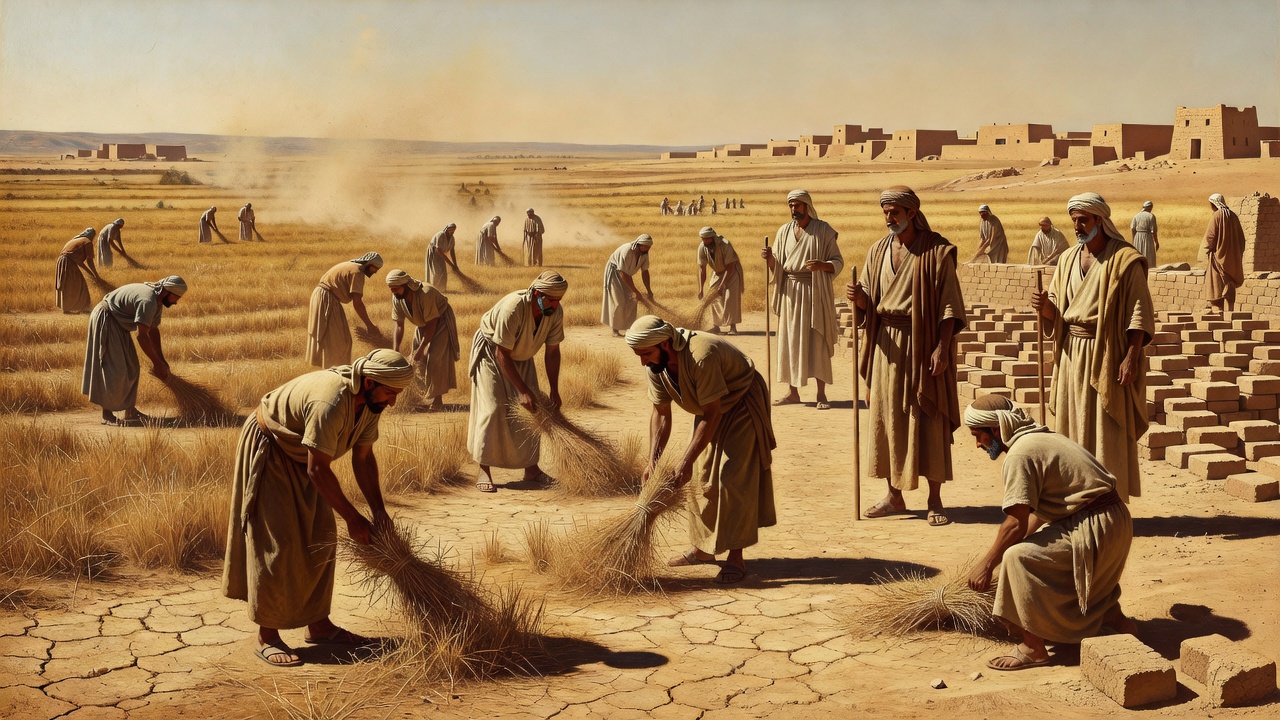
- Pharaoh answers the request to hold a feast in the wilderness by no longer supplying straw for the bricks, while still requiring the same daily quota. The people scatter through the land of Egypt to gather stubble, and the Israelite foremen whom Pharaoh's taskmasters had set over them are beaten when that quota is not met.Sources: the Bible text itself
Notes written with AI assistance from open sources (Theographic Bible Metadata, CC BY-SA 4.0; Easton’s Bible Dictionary, public domain) and reviewed before publishing.
Places in this chapter
Only places identified with high confidence are shown (90% or more according to the scholarly sources compiled by OpenBible). Period map: DARE (Digital Atlas of the Roman Empire), CC BY 4.0; modern map: © OpenStreetMap contributors; places: OpenBible.info (CC BY 4.0).
Credits and license for this translation
Luda yã takada kũ Bisã yão
Portions of the Holy Bible in the Busa language of Nigeria
copyright © 2005 SIM International
Language: Bisã (Busa)
Translation by: SIM
This translation text is made available to you under the
terms of the Creative Commons License: Attribution-Noncommercial-No Derivative Works.
( http://creativecommons.org/licenses/by-nc-nd/3.0/ )
In addition, you have permission to port the text to different file formats, as long as you
do not change any of the text or punctuation of the Bible.
You may share, copy, distribute, transmit, and extract portions
or quotations from this work, provided that you include the above copyright
information:
You must give Attribution to the work.
You do not sell this work for a profit.
You do not make any derivative works that change any of the actual words or punctuation of the Scriptures.
Permissions beyond the scope of this license may be
available if you contact
us with your request.
This translation is made available to you under the terms of the
Creative Commons Attribution-Noncommercial-No Derivatives license 4.0.
You may share and redistribute this Bible translation or extracts from it in any format, provided that:
You include the above copyright and source information.
You do not sell this work for a profit.
You do not change any of the words or punctuation of the Scriptures.
Pictures included with Scriptures and other documents on this site are licensed just for use with those Scriptures and documents.
For other uses, please contact the respective copyright owners.
2014-10-10
Source: http://ebible.org/bqp/ · eBible.org