Éxodo 5
Luda yã takada kũ Bisã yão · Toca un versículo para ver sus referencias cruzadas.
Musa kũ Harunao gɛna Firi'auna arɛ
1Abire gbɛra Musa kũ Harunao gɛ̀ɛ ò Firi'auna lè ò pìnɛ: Yã kũ Dikiri Isarailanↄ Luda òon dí. À pì ǹ a gbɛ̃nↄ gbarɛ ò gɛ́ dikpɛ kɛarɛ gbárannan. 2Firi'auna wèḿma à pì: Dímɛ Dikiri ũ kũ mà a yã ma mà Isarailanↄ gbarɛɛ? Má Dikiri dↄ̃ro. Mani Isarailanↄ gbarɛro. 3Akũ ò pìnɛ: Eberunↄ Luda bò à sùwá. Ǹ ó gba zɛ́ ò gɛ́ ò gↄrↄ aakↄ̃ kɛ gbárannan ò sa o Dikiri ó Luda pìia, de àsun gyã káwáiro kesↄ̃ zĩ̀i. 4Akũ Misila kína pìi pì Musanɛ kũ Harunao: À kɛ̀ dera a tò gbɛ̃nↄ laakari tɛn go ń zĩaa? À ɛra á zĩa. 5Akũ à ɛ̀ra à pì: Kũ gbɛ̃nↄ dasi kũ̀ sà, akũ á ye ò kámma bo kũ ń zĩo yá?
6Zĩ birea Firi'auna yã dìtɛ Isaraila wɛ́tãmmarinↄnɛ kũ ń don'arɛdenↄ à pì: 7Àsun sɛ̃̀buru kpáḿma ò kúnku kɛo lákũ adì kɛ nà yã doro. Ò gɛ́ ò ń pↄ́ kɛ̃ ń zĩda. 8Ama ò kúnku kɛ lákũ òdi kɛ nà yã lɛ́n. Àsun lagońnɛro, zaakũ ma'ãdenↄmɛ. A yã mɛ́ à tò ń wiki dìgↄ̃ dↄ, òtɛn pi ò ye ò gɛ́ sa o ń Ludaamɛ. 9À zĩ karańnɛ de òsun ĩampaki le ò laakari kpá ɛ́kɛyãnↄa doro.
10Akũ ń wɛ́tãmmarii pìnↄ kũ ń don'arɛdenↄ sù ò pìńnɛ: Firi'auna pì òsun sɛ̃̀buru kpááwa doro. 11À gɛ́ à wɛtɛ á zĩda gu kũ áni len. Bee kũ abireo óni zĩ lagoárɛro, bee fíti. 12Akũ ò fã̀kↄ̃a ò gɛ̀ɛ Misila gu sĩnda pínki sɛ̃̀ kɛ̃ sɛ̃̀buru ũ. 13Ń wɛ́tãmmarii pìnↄ dìgↄ̃ nakaraḿma lákũ gu dìgↄ̃ dↄ nà, de ò ń zĩ láka lákũ òdi láka nà gↄrↄ kũ òdi sɛ̃̀buru kpáḿma. 14Ò gbɛ̃naa kɛ̀ Isaraila don'arɛde kũ ń wɛ́tãmmarinↄ dìtɛnↄnɛ ò pìńnɛ: À kɛ̀ dera ádi kúnku kɛ gbãra ke gĩa à kà lákũ ò a lɛ́ dìtɛárɛ nà yãroo? 15Akũ Isaraila don'arɛdenↄ gɛ̀ɛ ò wiki lɛ̀ Firi'aunaa ò pì: À kɛ̀ dera ntɛn kɛ ókↄ̃nↄ n zↄ̀blerinↄnɛ lɛɛ? 16Òtɛni sɛ̃̀buru kpáwá doro, akũ òtɛn pi ò kúnku kɛ. Òtɛni ó gbɛ̃, ama n gbɛ̃nↄ mɛ́ ò taari vĩ. 17Akũ à pì: Ma'ãdenↄn á ũ. Lɛn á de lɛ! A yã mɛ́ à tò adìgↄ̃ pi áni gɛ́ sa o Dikiria. 18À gɛ́ zĩ kɛ. Oni sɛ̃̀buru kpááwa doro, bee kũ abireo áni kúnku kɛ lákũ ò dàárɛ nà lɛ́a.
19Kũ ò ò Isaraila don'arɛdenↄnɛ òsun gↄrↄ do kúnkubona lagoro, ò dↄ̃̀ kũ ò yã è sà. 20Kũ ò bò Firi'auna kĩnaa, ò dàkarɛ kũ Musao kũ Harunao, òtɛni ń dã, 21akũ ò pìńnɛ: Dikiri á yã gwa à yãkpatɛ kɛ kãáo, zaakũ a tò Firi'auna kũ a gbɛ̃nↄn ye ó kãiro. A ó dɛna zɛ́ kpàḿman gwe. 22Akũ Musa ɛ̀ra à gɛ̀ɛ à pì Dikirinɛ: Dikiri, bↄ́yãi n wari dↄ̀ gbɛ̃ pìnↄaa? Abire yãin n ma zĩ yá? 23Zaa gↄrↄ kũ ma gɛ ma yã ò Firi'aunanɛ kũ n tↄ́o, akũ àtɛn wari dↄ n gbɛ̃nↄa, akũ ńdi ń bo sↄ̃ro bi!
¿Sabías que…?
Trabajo más duro tras la negativa del faraón
- El Easton's Bible Dictionary (1897) dice que el faraón del Éxodo fue probablemente Menephtah I, el decimocuarto y mayor hijo sobreviviente de Ramsés II, pero trata la identificación como una cuestión aún abierta: algunos eruditos, señala la obra, se inclinan por Seti II, cuyo reinado describe como iniciado en paz y terminado en un desastre repentino. La entrada dice que residía en Zoán, donde recibió a Moisés y a Aarón en las audiencias registradas en Éxodo.Fuentes: Pharaoh (of the Exodus) · el propio texto bíblico
- El Easton's Bible Dictionary (1897) sitúa la llegada de Jacob a Egipto probablemente unos 350 años antes del nacimiento de Moisés. Dice que un rey hicso, de un pueblo semita pastoril de Asia y llamado rey pastor, recibió a la familia con favor y les asignó Gosén, la mejor tierra; en este capítulo el faraón trata al pueblo de Israel, ya numeroso, como trabajadores a los que no dejará ir.Fuentes: Moses · el propio texto bíblico
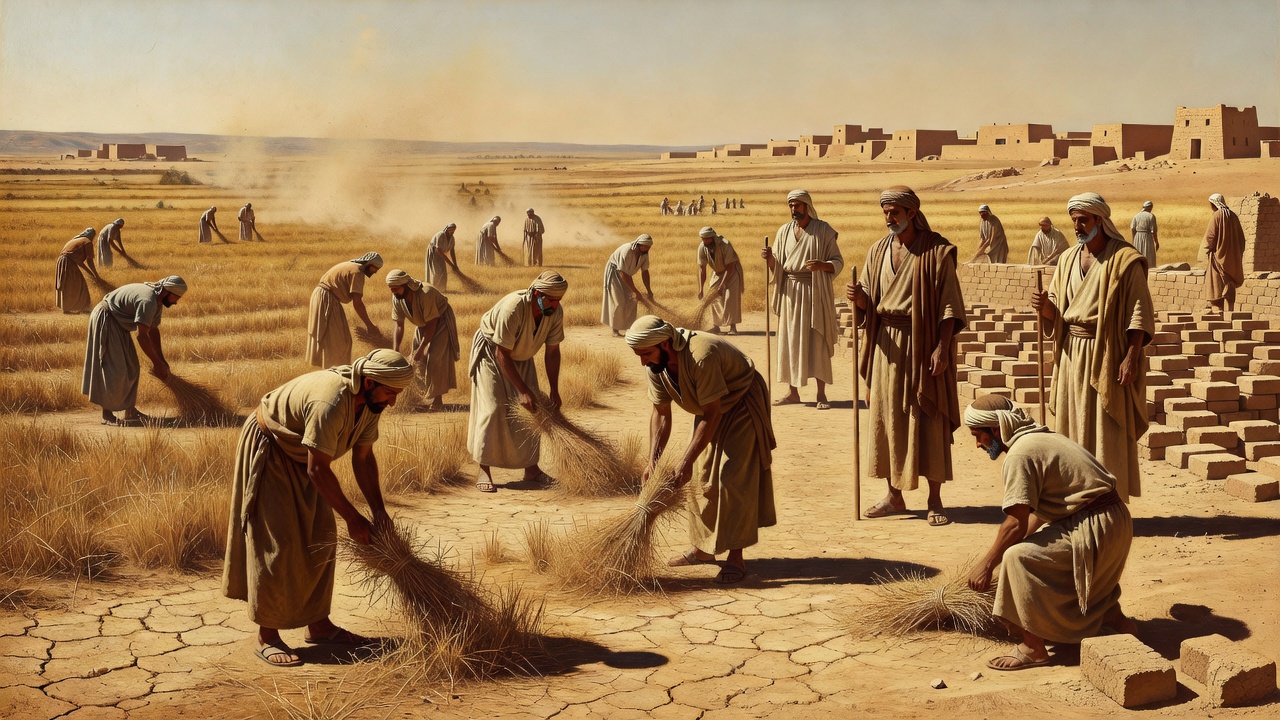
- El faraón responde a la petición de celebrar una fiesta en el desierto dejando de suministrar la paja para los ladrillos, pero exigiendo todavía la misma cuota diaria. El pueblo se dispersa por toda la tierra de Egipto para recoger rastrojo, y los oficiales israelitas que los capataces del faraón habían puesto sobre ellos son golpeados cuando esa cuota no se cumple.Fuentes: el propio texto bíblico
Notas escritas con ayuda de IA a partir de fuentes abiertas (Theographic Bible Metadata, CC BY-SA 4.0; Easton’s Bible Dictionary, dominio público) y revisadas antes de publicarse.
Lugares de este capítulo
Solo aparecen lugares identificados con alta confianza (90 % o más según las fuentes académicas reunidas por OpenBible). Mapa de la época: DARE (Digital Atlas of the Roman Empire), CC BY 4.0; mapa actual: © colaboradores de OpenStreetMap; lugares: OpenBible.info (CC BY 4.0).
Créditos y licencia de esta traducción
Luda yã takada kũ Bisã yão
Portions of the Holy Bible in the Busa language of Nigeria
copyright © 2005 SIM International
Language: Bisã (Busa)
Translation by: SIM
This translation text is made available to you under the
terms of the Creative Commons License: Attribution-Noncommercial-No Derivative Works.
( http://creativecommons.org/licenses/by-nc-nd/3.0/ )
In addition, you have permission to port the text to different file formats, as long as you
do not change any of the text or punctuation of the Bible.
You may share, copy, distribute, transmit, and extract portions
or quotations from this work, provided that you include the above copyright
information:
You must give Attribution to the work.
You do not sell this work for a profit.
You do not make any derivative works that change any of the actual words or punctuation of the Scriptures.
Permissions beyond the scope of this license may be
available if you contact
us with your request.
This translation is made available to you under the terms of the
Creative Commons Attribution-Noncommercial-No Derivatives license 4.0.
You may share and redistribute this Bible translation or extracts from it in any format, provided that:
You include the above copyright and source information.
You do not sell this work for a profit.
You do not change any of the words or punctuation of the Scriptures.
Pictures included with Scriptures and other documents on this site are licensed just for use with those Scriptures and documents.
For other uses, please contact the respective copyright owners.
2014-10-10
Fuente: http://ebible.org/bqp/ · eBible.org