Exodus 6
Luda yã takada kũ Bisã yão · Tap a verse to see its cross-references.
Dikiri lɛ́sɛna Musanɛ Isarailanↄ surabana yã musu
1Akũ Dikiri pìnɛ: Ĩni yã kũ mani kɛ Firi'aunanɛ e tera. Ani ń gbarɛ ma gbãna zↄ̃kↄ̃ yãi. Ani pɛ́ḿma a bùsun ma gbãna zↄ̃kↄ̃ yãi. 2Akũ Luda ɛ̀ra à yã ò Musanɛ à pì: Makũmɛ Dikiri ũ, 3ma bo ma su Ibrahĩ kũ Isaakuo kũ Yakubuooa Luda Gbãnasĩndapinkide ũ, ama odi ma dↄ̃ ma tↄ́ Dikiriaro. 4Ma bàka kú kũńwo, ma pì mani Kanaanↄ bùsu kũ ò kú a gũn buri zĩ̀tↄ ũ kpáḿma. 5Ma Isarailanↄ ndanaa mà ń zↄ̀blena Misilanↄnɛ yãi, akũ ma bàka kũ à kú kũńwoo pì yã dí sãmaguro. 6A yã mɛ́ à tò ǹ o Isarailanↄnɛ makũmɛ Dikiri ũ. Mani á bo zĩ gbãna kũ Misilanↄ dàárɛ gũn, mani á bo zↄ̀blen. Mani yãkpatɛ kɛ kũńwo mani a bo kũ ma gã̀sã gbãnao. 7Mani á sɛ́ ma gbɛ̃nↄ ũ màgↄ̃ de á Luda ũ, ánigↄ̃ dↄ̃ kũ makũmɛ Dikiri á Luda kũ à á bó Misila zĩ gbãna gũn ũ. 8Mani gɛ́ kãáo bùsu kũ ma a la dà Ibrahĩnɛ kũ Isaakuo kũ Yakubuo gũn. Mani á gba àgↄ̃ vĩ. Makũmɛ Dikiri ũ.
9Musa yã pìi ò Isarailanↄnɛ, ama odi a yã maro kũ zↄ̀zĩ pãsĩ ń mɛ̀ɛ yↄ̀ yãi. 10Akũ Dikiri ò Musanɛ à pì: 11Ǹ gɛ́ ǹ o Misilanↄ kína Firi'aunanɛ à Isarailanↄ gbarɛ ò bↄtɛ a bùsun. 12Akũ Musa wè Dikiria à pì: Lákũ Isarailanↄ dì ma yã maro nà, makũ kũ ma lɛ́ tìkisi, deran Firi'auna ni ma yã ma sↄ̃ↄ?
Musa kũ Harunao buri bozirɛ
13Dikiri yã ò Musanɛ kũ Harunao Isarailanↄ yã musu kũ Misila kínao, à òńnɛ ò bↄtɛ kũ Isarailanↄ Misila. 14Ń buri ↄmbede káakunↄ tↄ́n dí. Isaraila daudu Rubɛni nɛ́gↄ̃gbɛ̃nↄn dí: Anↄku, Palu, Ɛzɛrↄnu, Kaami. Rubɛni burinↄn gwe danɛdanɛ. 15Simɛↄ nɛ́gↄ̃gbɛ̃nↄn dí: Yemuɛli, Yami, Oada, Yakĩ, Zoa kũ Kanaa nↄgbɛ̃ nɛ́ Soluo. Simɛↄ burinↄn gwe danɛdanɛ. 16Levi nɛ́gↄ̃gbɛ̃nↄ tↄ́n dí ń burinↄa: Gɛsↄmu, Koa, Mɛrari. Levi kɛ̀ wɛ̃̀ basuddo akuri awɛɛsupplamɛ. 17Gɛsↄmu nɛ́gↄ̃gbɛ̃nↄn dí ń burinↄa danɛdanɛ: Libini kũ Simɛio. 18Koa nɛ́gↄ̃gbɛ̃nↄ tↄ́n dí: Amlamu, Iza, Ɛblↄnu, Uziɛli. Koa kɛ̀ wɛ̃̀ basuddo akuri awɛɛ'aakↄ̃mɛ. 19Mɛrari nɛ́gↄ̃gbɛ̃nↄn Mali kũ Musio ũ. Levi burinↄn gwe danɛdanɛ.
20Amlamu a dasɛ̃ Yↄkɛbɛdi sɛ̀ nↄ ũ, akũ à Haruna kũ Musao ì kãao. Amlamu kɛ̀ wɛ̃̀ basuddo akuri awɛɛsupplamɛ. 21Iza nɛ́gↄ̃gbɛ̃nↄn Kora kũ Nɛfɛgio kũ Zikirio ũ. 22Uziɛli nɛ́gↄ̃gbɛ̃nↄn Misaili kũ Ɛlɛzafão kũ Sitirio ũ. 23Haruna Aminadabu nɛ́ Ɛlisɛba, Nasↄ̃ dãre sɛ̀ nↄ ũ, akũ à Nadabu kũ Abiuo kũ Ɛlɛazao kũ Itamao ì kãao. 24Kora nɛ́gↄ̃gbɛ̃nↄn Asi kũ Ɛlɛkanao kũ Abiasafao ũ. Kora burinↄn gwe danɛdanɛ. 25Haruna nɛ́ Ɛlɛaza Putiɛli nɛ́nↄgbɛ̃nↄ doke sɛ̀ nↄ ũ, akũ à Finɛasi ì kãao. Levi buri ↄmbede káakunↄn gwe danɛdanɛ.
26Haruna kũ Musa kũ Dikiri òńnɛ ò Isarailanↄ bↄtɛ Misila gã̀ kũ gã̀aon gwe. 27Mↄ́kↄ̃nↄ mɛ́ ò yã ò Misilanↄ kína Firi'aunanɛ de ò Isarailanↄ bↄtɛ Misila. 28Kũ Dikiri yã ò Musanɛ Misila, 29à pì akãamɛ Dikiri ũ, yã kũ átɛn onɛn à o Firi'aunanɛ pínki. 30Akũ Musa pìnɛ a lɛ́ tìkisi, deran Firi'auna ni a yã maa?
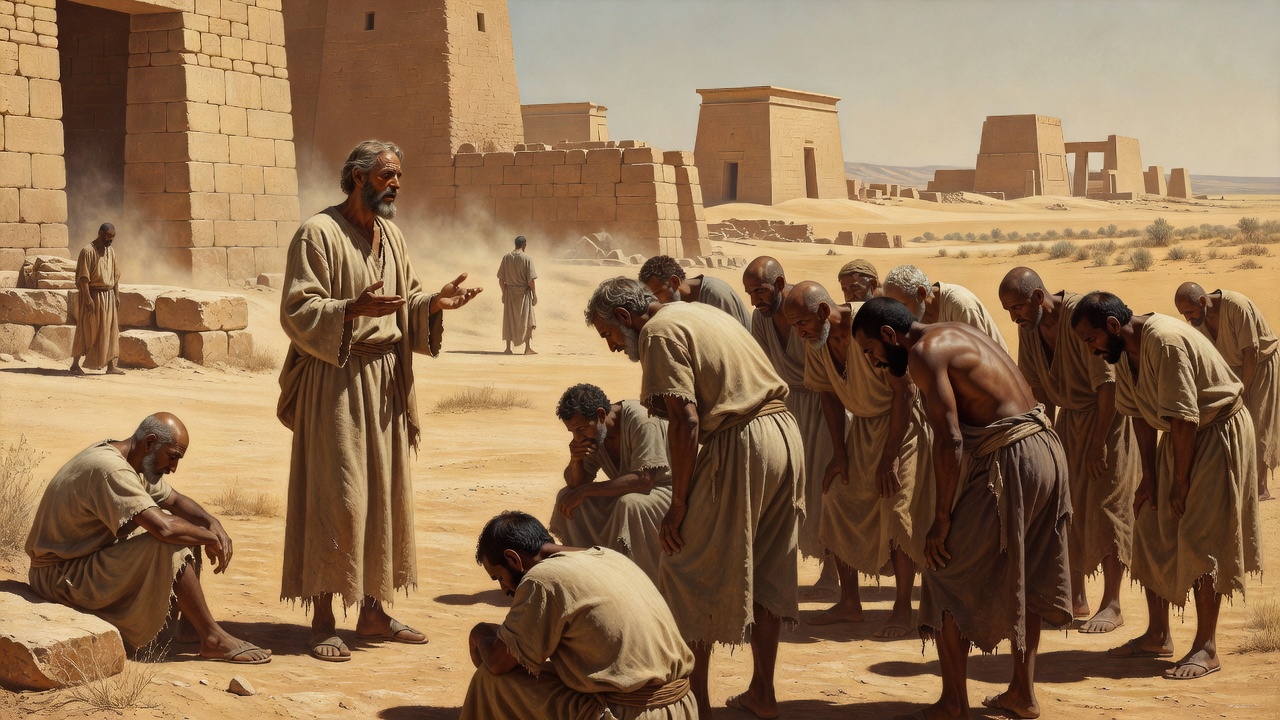
Did you know?
I Am the LORD
- In Exodus 6 God tells Moses that he is the LORD, and that he appeared to Abraham, Isaac, and Jacob as God Almighty but did not make himself known to them by the name the LORD. He recalls the covenant to give them the land of Canaan, where they had lived as foreigners. Easton's Bible Dictionary (1897) says the name Canaan signifies the lowlands, and that in the time of Moses and Joshua it denoted the whole country west of the Jordan and the Dead Sea.Sources: the Bible text itself · Canaan
- A family list then identifies the men charged to bring the Israelites out of Egypt: Levi, Jacob’s third son by Leah, whose name is linked to her Hebrew word meaning joined, and Levi’s sons Gershon, Kohath, and Merari. Levi lived 137 years, and Kohath, Amram’s father, lived 133; Amram married his father’s sister Jochebed, a daughter of Levi, and she bore Aaron and Moses. Aaron, the elder brother, was born in Egypt three years before Moses and married Elisheba, daughter of Amminadab of the house of Judah.Sources: the Bible text itself · Levi (patriarch) · Kohath · Aaron
- Moses and Aaron are sent to speak to Pharaoh king of Egypt. Easton's Bible Dictionary (1897) says the Pharaoh of the Exodus was probably Menephtah I, the fourteenth and eldest surviving son of Rameses II, who resided at Zoan, where those interviews took place. That entry still leaves open whether Seti II or his father Menephtah was that Pharaoh, and notes that some think the evidence favors Seti II.Sources: the Bible text itself · Pharaoh (of the Exodus)
Notes written with AI assistance from open sources (Theographic Bible Metadata, CC BY-SA 4.0; Easton’s Bible Dictionary, public domain) and reviewed before publishing.
Places in this chapter
Only places identified with high confidence are shown (90% or more according to the scholarly sources compiled by OpenBible). Period map: DARE (Digital Atlas of the Roman Empire), CC BY 4.0; modern map: © OpenStreetMap contributors; places: OpenBible.info (CC BY 4.0).
Credits and license for this translation
Luda yã takada kũ Bisã yão
Portions of the Holy Bible in the Busa language of Nigeria
copyright © 2005 SIM International
Language: Bisã (Busa)
Translation by: SIM
This translation text is made available to you under the
terms of the Creative Commons License: Attribution-Noncommercial-No Derivative Works.
( http://creativecommons.org/licenses/by-nc-nd/3.0/ )
In addition, you have permission to port the text to different file formats, as long as you
do not change any of the text or punctuation of the Bible.
You may share, copy, distribute, transmit, and extract portions
or quotations from this work, provided that you include the above copyright
information:
You must give Attribution to the work.
You do not sell this work for a profit.
You do not make any derivative works that change any of the actual words or punctuation of the Scriptures.
Permissions beyond the scope of this license may be
available if you contact
us with your request.
This translation is made available to you under the terms of the
Creative Commons Attribution-Noncommercial-No Derivatives license 4.0.
You may share and redistribute this Bible translation or extracts from it in any format, provided that:
You include the above copyright and source information.
You do not sell this work for a profit.
You do not change any of the words or punctuation of the Scriptures.
Pictures included with Scriptures and other documents on this site are licensed just for use with those Scriptures and documents.
For other uses, please contact the respective copyright owners.
2014-10-10
Source: http://ebible.org/bqp/ · eBible.org