Êxodo 5
Luda yã takada kũ Bisã yão · Toque num versículo para ver as referências cruzadas.
Musa kũ Harunao gɛna Firi'auna arɛ
1Abire gbɛra Musa kũ Harunao gɛ̀ɛ ò Firi'auna lè ò pìnɛ: Yã kũ Dikiri Isarailanↄ Luda òon dí. À pì ǹ a gbɛ̃nↄ gbarɛ ò gɛ́ dikpɛ kɛarɛ gbárannan. 2Firi'auna wèḿma à pì: Dímɛ Dikiri ũ kũ mà a yã ma mà Isarailanↄ gbarɛɛ? Má Dikiri dↄ̃ro. Mani Isarailanↄ gbarɛro. 3Akũ ò pìnɛ: Eberunↄ Luda bò à sùwá. Ǹ ó gba zɛ́ ò gɛ́ ò gↄrↄ aakↄ̃ kɛ gbárannan ò sa o Dikiri ó Luda pìia, de àsun gyã káwáiro kesↄ̃ zĩ̀i. 4Akũ Misila kína pìi pì Musanɛ kũ Harunao: À kɛ̀ dera a tò gbɛ̃nↄ laakari tɛn go ń zĩaa? À ɛra á zĩa. 5Akũ à ɛ̀ra à pì: Kũ gbɛ̃nↄ dasi kũ̀ sà, akũ á ye ò kámma bo kũ ń zĩo yá?
6Zĩ birea Firi'auna yã dìtɛ Isaraila wɛ́tãmmarinↄnɛ kũ ń don'arɛdenↄ à pì: 7Àsun sɛ̃̀buru kpáḿma ò kúnku kɛo lákũ adì kɛ nà yã doro. Ò gɛ́ ò ń pↄ́ kɛ̃ ń zĩda. 8Ama ò kúnku kɛ lákũ òdi kɛ nà yã lɛ́n. Àsun lagońnɛro, zaakũ ma'ãdenↄmɛ. A yã mɛ́ à tò ń wiki dìgↄ̃ dↄ, òtɛn pi ò ye ò gɛ́ sa o ń Ludaamɛ. 9À zĩ karańnɛ de òsun ĩampaki le ò laakari kpá ɛ́kɛyãnↄa doro.
10Akũ ń wɛ́tãmmarii pìnↄ kũ ń don'arɛdenↄ sù ò pìńnɛ: Firi'auna pì òsun sɛ̃̀buru kpááwa doro. 11À gɛ́ à wɛtɛ á zĩda gu kũ áni len. Bee kũ abireo óni zĩ lagoárɛro, bee fíti. 12Akũ ò fã̀kↄ̃a ò gɛ̀ɛ Misila gu sĩnda pínki sɛ̃̀ kɛ̃ sɛ̃̀buru ũ. 13Ń wɛ́tãmmarii pìnↄ dìgↄ̃ nakaraḿma lákũ gu dìgↄ̃ dↄ nà, de ò ń zĩ láka lákũ òdi láka nà gↄrↄ kũ òdi sɛ̃̀buru kpáḿma. 14Ò gbɛ̃naa kɛ̀ Isaraila don'arɛde kũ ń wɛ́tãmmarinↄ dìtɛnↄnɛ ò pìńnɛ: À kɛ̀ dera ádi kúnku kɛ gbãra ke gĩa à kà lákũ ò a lɛ́ dìtɛárɛ nà yãroo? 15Akũ Isaraila don'arɛdenↄ gɛ̀ɛ ò wiki lɛ̀ Firi'aunaa ò pì: À kɛ̀ dera ntɛn kɛ ókↄ̃nↄ n zↄ̀blerinↄnɛ lɛɛ? 16Òtɛni sɛ̃̀buru kpáwá doro, akũ òtɛn pi ò kúnku kɛ. Òtɛni ó gbɛ̃, ama n gbɛ̃nↄ mɛ́ ò taari vĩ. 17Akũ à pì: Ma'ãdenↄn á ũ. Lɛn á de lɛ! A yã mɛ́ à tò adìgↄ̃ pi áni gɛ́ sa o Dikiria. 18À gɛ́ zĩ kɛ. Oni sɛ̃̀buru kpááwa doro, bee kũ abireo áni kúnku kɛ lákũ ò dàárɛ nà lɛ́a.
19Kũ ò ò Isaraila don'arɛdenↄnɛ òsun gↄrↄ do kúnkubona lagoro, ò dↄ̃̀ kũ ò yã è sà. 20Kũ ò bò Firi'auna kĩnaa, ò dàkarɛ kũ Musao kũ Harunao, òtɛni ń dã, 21akũ ò pìńnɛ: Dikiri á yã gwa à yãkpatɛ kɛ kãáo, zaakũ a tò Firi'auna kũ a gbɛ̃nↄn ye ó kãiro. A ó dɛna zɛ́ kpàḿman gwe. 22Akũ Musa ɛ̀ra à gɛ̀ɛ à pì Dikirinɛ: Dikiri, bↄ́yãi n wari dↄ̀ gbɛ̃ pìnↄaa? Abire yãin n ma zĩ yá? 23Zaa gↄrↄ kũ ma gɛ ma yã ò Firi'aunanɛ kũ n tↄ́o, akũ àtɛn wari dↄ n gbɛ̃nↄa, akũ ńdi ń bo sↄ̃ro bi!
Você sabia?
Trabalho mais duro depois da recusa do faraó
- O Easton's Bible Dictionary (1897) diz que o faraó do Êxodo foi provavelmente Menephtah I, o décimo quarto e mais velho filho sobrevivente de Ramsés II, mas trata a identificação como uma questão ainda em aberto: alguns estudiosos, observa a obra, preferem Seti II, cujo reinado ela descreve como iniciado em paz e terminado num desastre repentino. O verbete diz que ele residia em Zoã, onde recebeu Moisés e Arão nas audiências registradas em Êxodo.Fontes: Pharaoh (of the Exodus) · o próprio texto bíblico
- O Easton's Bible Dictionary (1897) situa a chegada de Jacó ao Egito provavelmente cerca de 350 anos antes do nascimento de Moisés. Diz que um rei hicso, de um povo semita pastoril da Ásia e chamado rei pastor, recebeu a família com favor e lhes destinou Gósen, a melhor terra; neste capítulo o faraó trata o povo de Israel, já numeroso, como trabalhadores que não pretende deixar partir.Fontes: Moses · o próprio texto bíblico
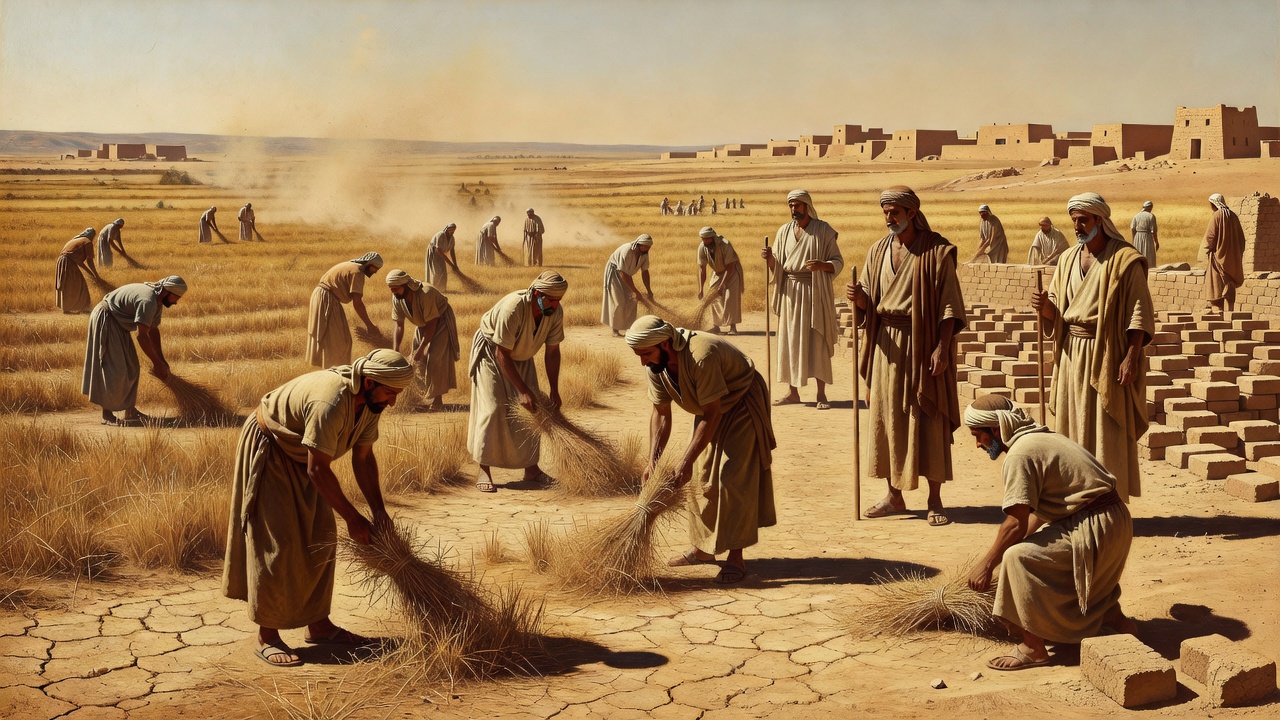
- O faraó responde ao pedido de celebrar uma festa no deserto deixando de fornecer a palha para os tijolos, mas ainda exigindo a mesma cota diária. O povo se espalha por toda a terra do Egito para recolher restolho, e os oficiais israelitas que os capatazes do faraó haviam posto sobre eles são espancados quando essa cota não é cumprida.Fontes: o próprio texto bíblico
Notas escritas com auxílio de IA a partir de fontes abertas (Theographic Bible Metadata, CC BY-SA 4.0; Easton’s Bible Dictionary, domínio público) e revisadas antes de publicar.
Lugares deste capítulo
Só aparecem lugares com identificação de alta confiança (90% ou mais segundo as fontes acadêmicas reunidas pelo OpenBible). Mapa da época: DARE (Digital Atlas of the Roman Empire), CC BY 4.0; mapa atual: © colaboradores do OpenStreetMap; lugares: OpenBible.info (CC BY 4.0).
Créditos e licença desta tradução
Luda yã takada kũ Bisã yão
Portions of the Holy Bible in the Busa language of Nigeria
copyright © 2005 SIM International
Language: Bisã (Busa)
Translation by: SIM
This translation text is made available to you under the
terms of the Creative Commons License: Attribution-Noncommercial-No Derivative Works.
( http://creativecommons.org/licenses/by-nc-nd/3.0/ )
In addition, you have permission to port the text to different file formats, as long as you
do not change any of the text or punctuation of the Bible.
You may share, copy, distribute, transmit, and extract portions
or quotations from this work, provided that you include the above copyright
information:
You must give Attribution to the work.
You do not sell this work for a profit.
You do not make any derivative works that change any of the actual words or punctuation of the Scriptures.
Permissions beyond the scope of this license may be
available if you contact
us with your request.
This translation is made available to you under the terms of the
Creative Commons Attribution-Noncommercial-No Derivatives license 4.0.
You may share and redistribute this Bible translation or extracts from it in any format, provided that:
You include the above copyright and source information.
You do not sell this work for a profit.
You do not change any of the words or punctuation of the Scriptures.
Pictures included with Scriptures and other documents on this site are licensed just for use with those Scriptures and documents.
For other uses, please contact the respective copyright owners.
2014-10-10
Fonte: http://ebible.org/bqp/ · eBible.org