Lamentações 4
Bib Sen An · Toque num versículo para ver as referências cruzadas.
1A la briyans lò a vin bese!
Lò pi a pa menm ankò!
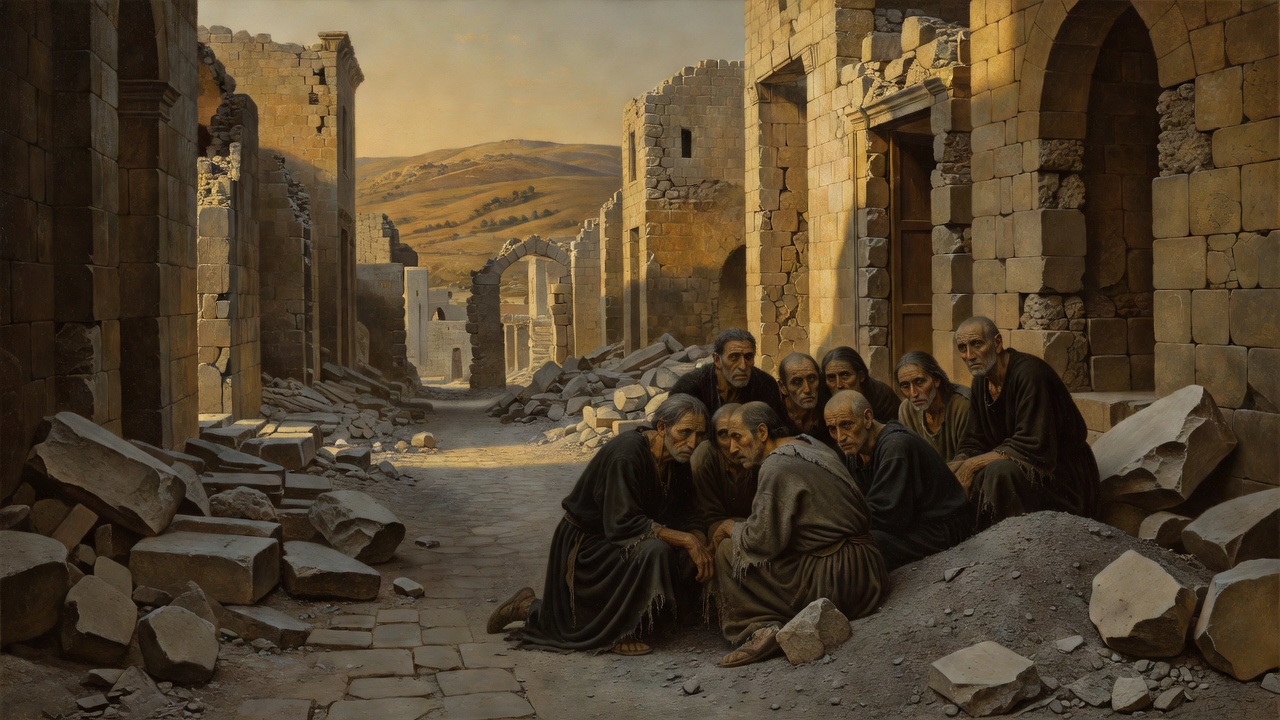
Wòch tanp yo vide deyò nan tout kwen lari.
2Pyè presye a fis a Sion yo;
ki gen valè kon lò fen,
gade kijan yo konsidere kon veso tè,
travay a potye a!
3Menm chen mawon yo konn bay tete;
yo kite pitit yo souse yo.
Men fi a pèp mwen an te vin mechan
kon yon otrich nan dezè.
4Lang a ti bebe a kole nan fon bouch yo,
tèlman yo swaf;
ti piti yo mande pen,
men pèsòn pa kase bay yo.
5Sila ki te konn manje ti manje delika yo,
vin abandone nan lari.
Sila ki te leve nan abiman an mov yo
ap degaje yo chèche kaka bèf.
6Paske inikite a fi a pèp mwen an
pi gwo ke peche Sodome,
ki te boulvèse nan yon moman,
san pa t gen men ki boulvèse l.
7Prens li yo te pi pwòp ke lanèj.
Yo te pi blan ke lèt.
Yo te pi wouj pase koray.
Yo te poli tankou pyè safì.
8Aparans yo koulye a pi nwa ke poud chabon.
Yo pa menm rekonèt yo nan lari.
Chè yo vin kole sou zo yo.
Li fennen nèt.
Li vin tankou bwa.
9Pi bon se sila ki te touye ak nepe yo,
ke sila ki touye ak grangou yo;
paske yo vin chagren
e epwize akoz mank fwi chan an.
10Men a fanm ki te konn plen konpasyon yo
te bouyi pwòp pitit yo.
Yo te devni manje pou yo,
akoz destriksyon a fi a pèp mwen an.
11SENYÈ a te acheve gwo kòlè Li a.
Li te vide gwo kòlè Li a.
Li te limen yon dife nan Sion,
ki te manje tout fondasyon Li yo.
12Wa latè yo pa t kwè,
ni okenn abitan nan mond lan,
ke advèsè ak ènmi an ta ka antre
nan pòtay Jérusalem nan.
13Akoz peche a pwofèt li yo
ak inikite a prèt li yo,
ki te vèse nan mitan li
san a moun ladwati yo.
14Yo egare e avèg nan lari yo.
Yo te vin souye ak san,
jiskaske pèsòn pa t ka manyen abiman yo.
15“Sòti! Pa pwòp!” Yo te kriye a yo menm.
“Sòti, sòti, pa touche!”
Konsa yo te sove ale, e te mache toupatou.
Pami nasyon yo, yo te di:
“Yo p ap ka kontinye rete pami nou”.
16Prezans a SENYÈ a te gaye yo.
Li p ap kontinye bay yo swen.
Yo pa t onore prèt yo,
Yo pa t respekte ansyen yo.
17Malgre sa, zye nou febli.
Chache sekou te vin initil.
Nan chache, nou te chache pou yon nasyon
ki pa t ka sove.
18Konsa, yo te fè lachas dèyè nou
jiskaske nou pa t ka mache nan lari nou yo.
Lafen nou vin pwòch.
Jou nou yo fin akonpli,
paske dènye moman nou vin rive.
19Sila ki te kouri dèyè nou yo
te pi vit pase èg k ap vole anlè.
Yo te fè lachas sou nou nan mòn yo.
Yo te kache tann anbiskad pou nou nan savann nan.
20Souf lè ki nan nen nou,
nou menm ki onksyone de SENYÈ a,
te vin kaptire nan twou fòs yo,
de sila nou te konn di:
“Anba lonbraj li, nou va viv pami nasyon yo”.
21Rejwi e fè kè kontan, O fi a Edom an,
ki rete nan peyi Uts la.
Tas la va fè wonn vin jwenn ou tou.
Ou va vin sou.
Ou va vin toutouni.
22Pinisyon pou inikite nou yo fin konplete,
O fi a Sion an.
Li p ap ekzile nou ankò.
Li va pini inikite nou an, O fi Edom an.
Li va fè parèt tout peche ou yo!
Você sabia?
A Agonia da Cidade Caída
- O poeta considera o sofrimento prolongado de Jerusalém pior do que o destino de Sodoma. Enquanto Sodoma foi destruída em um instante por fogo divino, os habitantes de Jerusalém suportaram o tormento lento e doloroso do cerco e da fome.Fontes: o próprio texto bíblico · Sodom
- Antes de sua queda, Jerusalém era amplamente vista como uma cidade montanhosa impenetrável. O texto observa que os reis estrangeiros e as nações vizinhas nunca imaginaram que um inimigo pudesse romper seus portões fortificados.Fontes: o próprio texto bíblico · Jerusalem
- O capítulo se encerra com uma mensagem dirigida a Edom, que habitava na terra de Uz, advertindo que o juízo logo a alcançaria. A terra de Uz é mencionada em apenas três livros bíblicos: Jó, Jeremias e Lamentações.Fontes: o próprio texto bíblico · Uz · Edom
Notas escritas com auxílio de IA a partir de fontes abertas (Theographic Bible Metadata, CC BY-SA 4.0; Easton’s Bible Dictionary, domínio público) e revisadas antes de publicar.
Lugares deste capítulo
- Zion · Hoje: Jerusalem · 31.777, 35.234 · versículos 2, 11, 22
- Jerusalem · 31.777, 35.234 · versículo 12
- Edom · 30.746, 35.604 · versículos 21, 22
Só aparecem lugares com identificação de alta confiança (90% ou mais segundo as fontes acadêmicas reunidas pelo OpenBible). Mapa da época: DARE (Digital Atlas of the Roman Empire), CC BY 4.0; mapa atual: © colaboradores do OpenStreetMap; lugares: OpenBible.info (CC BY 4.0).
Créditos e licença desta tradução
Bib Sen An
The Holy Bible in Haitian Creole, 2023 update
copyright © 2017-2023 Ron Smith
Language: Kreyòl Ayisyen (Haitian)
Translation by: Ron Smith
Contributor: Felix Nixon
This translation is made available to you under the terms of the
Creative Commons Attribution Share-Alike license 4.0.
You have permission to share and redistribute this Bible translation in any format and to make reasonable revisions and adaptations of this translation, provided that:
You include the above copyright and source information.
If you make any changes to the text, you must indicate that you did so in a way that makes it clear that the original licensor is not necessarily endorsing your changes.
If you redistribute this text, you must distribute your contributions under the same license as the original.
Pictures included with Scriptures and other documents on this site are licensed just for use with those Scriptures and documents.
For other uses, please contact the respective copyright owners.
Note that in addition to the rules above, revising and adapting God's Word involves a great responsibility to be true to God's Word. See Revelation 22:18-19.
2026-06-11
Fonte: http://ebible.org/hatbsa/ · eBible.org