Apocalipse 6
Tupàn ze'eg · Toque num versículo para ver as referências cruzadas.
Àràpuhàràna'yr zàwenugar pape heta 7 ipegwer a'e wà
1Na'e Àràpuhàràna'yr zàwenugar uwàpytymawok a'e pape a'e kury. 7 hewàpytymaw heta a'e pape rehe a'e. Wexak kar amo ipehegwer iwàpytymawok pà ihewe kury. Pitài haw ma'erexak kar haw her romo a'e. Na'e amo ma'e wikuwe ma'e a'e pe har uze'eg ihewe a'e kury. Ize'eg nuzawy kwaw àmànànogaw. -Ezur xe nehe ty, i'i ihewe.
2Na'e ame'e a'e pape rehe ihe kury. A'e ma'e hexakaw nuzawy kwaw hepuahu pe ma'e hexakaw ihewe. Aexak kawaru xigatu ma'e. Awa iku'az har wereko uwyrapar opo pe a'e. Umunehew tuwihaw àkàgàpixi haw wàkàg rehe no. Na'e uhem oho urewi zauxiapekwer ài kury. Ywy nànàn ihon kury, wàmàtyry'ymar wazuka pà kury.
3Na'e a'e Àràpuhàràna'yr zàwenugar wexak kar amo pape pehegwer ihewe kury. Mokoz haw ma'erexak kar haw a'e pehegwer her romo a'e. Aenu amo ma'e ihewe uze'eg mehe ihe kury. — Ezur xe nehe ty, i'i ihewe.
4Na'e uhem kawaru ipiràg ma'e oho urewi a'e kury. Tupàn omono ukàgaw iku'az har pe, takihe uhua'u ma'e imono pà izupe. Omono kar ywy nànàn, teko wàmàtyry'ym kar pà izupe.
5Na'e Àràpuhàràna'yr zàwenugar wexak kar amo pape pehegwer ihewe kury. Na'iruz haw ma'erexak kar haw a'e pehegwer her romo a'e. Aenu amo ma'e ihewe uze'eg mehe. — Ezur xe nehe ty, i'i ihewe. Na'e aexak kawaru ipihun ma'e kury. Awa iku'az har wereko ma'e puhuz taw hagapaw opo pe a'e. 6Na'e a'e wikuwe ma'e uze'eg ihewe a'e wà kury. — Teko tetea'u ima'uhez putar a'e wà nehe. Ni aroz nuhyk kwaw wanupe nehe. Ma'e kawer a'e nehe, win a'e nehe no, xo a'e zo uhyk putar wanupe nehe, i'i ihewe. 7Na'e Àràpuhàràna'yr zàwenugar wexak kar amo pape pehegwer ihewe kury. 4 haw ma'erexak kar haw a'e pehegwer her romo a'e. Aenu amo ma'e ize'eg mehe ihe. — Ezur xe nehe ty, i'i ihewe.
8Na'e aexak kawaru itawa ma'e ihe kury. Amo awa iku'az hin a'e. Màno haw a'e awa her romo a'e. Amo ma'e oho haikweromo a'e no. Umàno ma'e kwer waneko haw a'e ma'e her romo a'e. Tupàn omono ukàgaw wanupe a'e no. A'e rupi oho amo ywy rehe a'e wà kury. Uzàmàtyry'ym kar teko a'e ywy rehe har amo ae teko a'e ywy rehe har wanupe wà kury. Umumaw wanemi'u oho wà no. A'e rupi teko a'e ywy rehe har ima'uhez wà. A'e kawaru ku'az har umuma'eahy kar a'e pe har a'e wà no. Omono kar miar hehaite ma'e a'e pe wà no. Miar u'u teko a'e pe har a'e wà.
9Na'e Àràpuhàràna'yr zàwenugar wexak kar amo pape pehegwer ihewe kury. 5 haw ma'erexak kar haw a'e pehegwer her romo a'e. Aexak Tupàn pe ma'ea'yr zuka haw a'e pe hin mehe ihe. Nuzawy kwaw ywyrapew a'e. Aexak teko izuka pyrer wanekwe a'e pe ihe wà no, ma'ea'yr zuka haw iwy pe ihe wà no. Kwehe mehe tuwihaw uzuka kar a'e teko a'e wà, ta'e umume'u Tupàn ze'eg oho waiko purupe a'e wà xe, ta'e nupytu'u kwaw imume'u re a'e wà xe. 10Na'e wanekwe uhapukaz wahyhaw rupi a'e wà kury. — Urezar ikàg wera'u ma'e ne, nekatuahy ne, erezemonokatu ikatu 'ym ma'e wi netyryk pà ne. Nerezapo pixik kwaw ikatu 'ym ma'e ne, i'i izupe wà. — Erezapo ma'e neze'eg rupi tuweharupi ne, i'i izupe wà. — Ma'e 'ar mehe erezepyk putar urezuka arer wanehe nehe, i'i izupe wà. Iàrew tuwe wanehe nezepykaw, i'i izupe wà.
11Na'e Àràpuhàràna'yr zàwenugar omono kamir xigatu ma'e wanupe a'e kury, izuka pyrer wanupe pitàitàigatu a'e kury. — Pepytu'u nehe kury, i'i wanupe. — Ta'e heta we amo uzeruzar ma'e izuka pyràm a'e wà nehe no xe, i'i wanupe. — Heremiruze'eg romo wanekon a'e wà no, pezàwegatete a'e wà no, i'i wanupe. — Wiko penywyr romo herehe uzeruzar haw rehe a'e wà no, i'i wanupe. — Amo 'ar mehe uhyk putar peneta haw nehe, i'i wanupe.
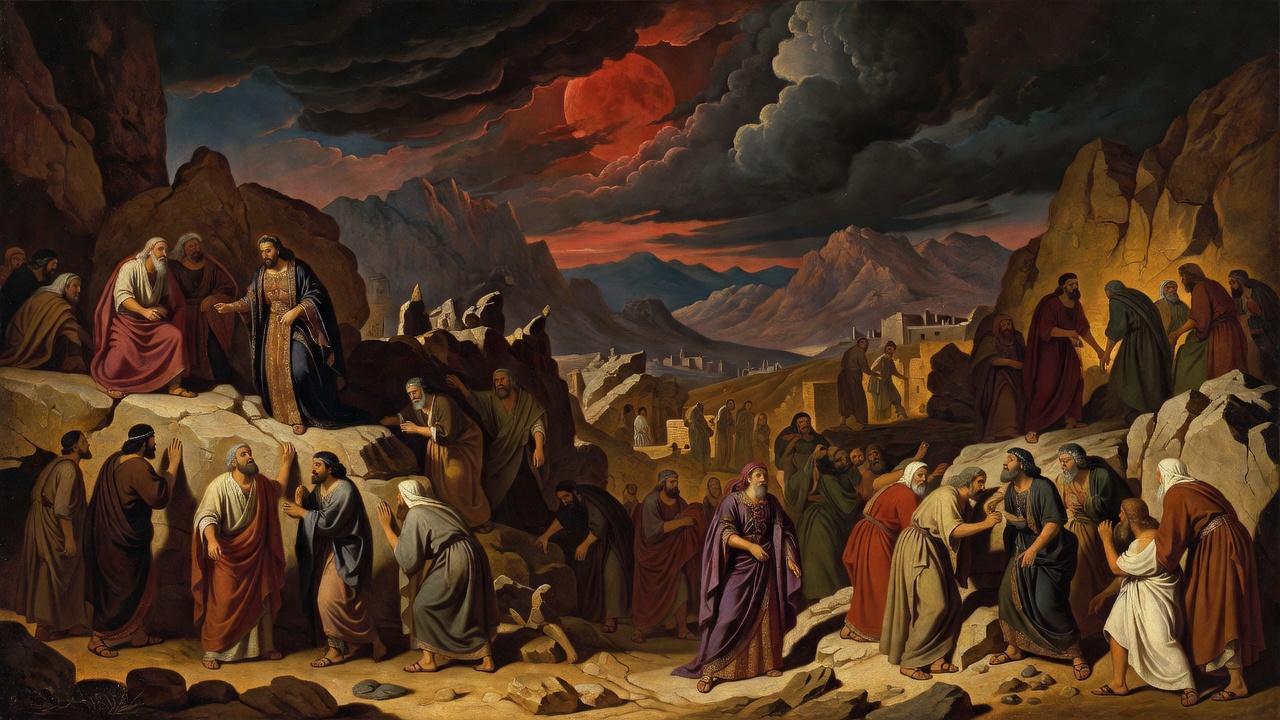
12Na'e Àràpuhàràna'yr zàwenugar wexak kar amo pape pehegwer ihewe kury. 6 haw ma'erexak kar haw a'e pehegwer her romo a'e. Na'e ywy uryryryryz tuwe a'e kury. Kwarahy uwew a'e no. Ipytunahy pàn ipihun ma'e ài. Zahy ipiràg ma'eruwy kwer ài paw rupi a'e no. 13Zahytata u'ar ywak wi wà. Nuzawy kwaw ma'ywa u'yw wi u'ar ma'e kwer ywytuàiw hemityk kwer a'e wà, u'ar mehe a'e wà. 14Na'e ywak ukàzym a'e kury, pape imàimàn pyrer ài a'e kury. Ywytyr paw rupi a'e wà, yrypypo'o paw rupi a'e wà no, utyryk wenaw wi a'e wà no. 15Na'e tuwihaw ywy rehe har a'e wà, teko waneruze'egar a'e wà no, zauxiapekwer wanuwihaw a'e wà no, awa hemetarer katu ma'e a'e wà no, awa ikàg ma'e a'e wà no, amogwer teko paw rupi a'e wà no, amo pe uma'ereko ma'e a'e wà, uzeupe uma'ereko ma'e a'e wà no, uzeàmim oho ita kwar pupe paw rupi a'e wà, uzeàmim ita iwy pe ywytyr rehe a'e wà no, a'e ma'erahy wi uzàn pà a'e wà. 16Uhapukaz ywytyr wanupe uze'eg pà a'e wà, itahu wanupe a'e wà no. — Pe'ar pekwaw pà urerehe nehe, i'i wanupe wà. — Uremim pe nehe, a'e rupi tuwihaw henaw rehe har na'urerexak kwaw a'e nehe, a'e rupi Àràpuhàràna'yr zàwenugar nuzepyk kwaw urerehe a'e nehe, i'i ywytyr wanupe itahu wanupe wà. 17— Ta'e Tupàn 'ar uhem kwez kury xe, ta'e urerehe izepykaw uhem kwez kury xe, i'i wanupe wà. — Mo upuner a'e ma'erahy ipuraraw paw rehe a'e wà nehe, i'i wanupe wà.
Você sabia?
A Abertura dos Seis Selos
- Os primeiros quatro selos revelam quatro cavaleiros em cavalos branco, vermelho brilhante, preto e amarelo, convocados um a um pelos quatro seres viventes. Cada cavaleiro traz uma aflição distinta sobre a terra, desde a conquista e a retirada da paz até a fome generalizada, a peste e a morte.Fontes: o próprio texto bíblico
- O terceiro cavaleiro segura uma balança, acompanhado por uma proclamação que fixa o preço de uma medida de trigo ou três de cevada em um denário, refletindo uma grave escassez e racionamento de alimentos enquanto o azeite e o vinho são poupados.Fontes: o próprio texto bíblico
- Com a abertura do quinto e do sexto selos, o foco se volta para as almas dos mártires debaixo do altar e, em seguida, para imensas convulsões cósmicas e terrestres que levam pessoas de todas as classes sociais a se esconderem em cavernas nas montanhas.Fontes: o próprio texto bíblico
Notas escritas com auxílio de IA a partir de fontes abertas (Theographic Bible Metadata, CC BY-SA 4.0; Easton’s Bible Dictionary, domínio público) e revisadas antes de publicar.
Créditos e licença desta tradução
Tupàn ze'eg
Bible without Deuterocanon in Guajajára (BR:gub:Guajajára)
copyright © 2007 Wycliffe Bible Translators, Inc.
Language: Guajajára
Translation by: Wycliffe Bible Translators, Inc.
Guajajára [gub], Brazil
Copyright Information
© 2007, Wycliffe Bible Translators, Inc. All rights reserved.
This translation text is made available to you under the
terms of the Creative Commons License: Attribution-Noncommercial-No Derivative Works.
( http://creativecommons.org/licenses/by-nc-nd/3.0/ )
In addition, you have permission to port the text to different file formats, as long as you
do not change any of the text or punctuation of the Bible.
You may share, copy, distribute, transmit, and extract portions
or quotations from this work, provided that you include the above copyright
information:
You must give Attribution to the work.
You do not sell this work for a profit.
You do not make any derivative works that change any of the actual words or punctuation of the Scriptures.
Permissions beyond the scope of this license may be
available if you contact
us with your request.
Printed book ISBN 9788531109713
The Bible without Deuterocanon
in Guajajára
© 2007, Wycliffe Bible Translators, Inc. All rights reserved.
This translation is made available to you under the terms of the
Creative Commons Attribution-Noncommercial-No Derivatives license 4.0.
You may share and redistribute this Bible translation or extracts from it in any format, provided that:
You include the above copyright and source information.
You do not sell this work for a profit.
You do not change any of the words or punctuation of the Scriptures.
Pictures included with Scriptures and other documents on this site are licensed just for use with those Scriptures and documents.
For other uses, please contact the respective copyright owners.
2020-03-30
Fonte: http://ebible.org/gubBl/ · eBible.org