Apocalipsis 6
Tupàn ze'eg · Toca un versículo para ver sus referencias cruzadas.
Àràpuhàràna'yr zàwenugar pape heta 7 ipegwer a'e wà
1Na'e Àràpuhàràna'yr zàwenugar uwàpytymawok a'e pape a'e kury. 7 hewàpytymaw heta a'e pape rehe a'e. Wexak kar amo ipehegwer iwàpytymawok pà ihewe kury. Pitài haw ma'erexak kar haw her romo a'e. Na'e amo ma'e wikuwe ma'e a'e pe har uze'eg ihewe a'e kury. Ize'eg nuzawy kwaw àmànànogaw. -Ezur xe nehe ty, i'i ihewe.
2Na'e ame'e a'e pape rehe ihe kury. A'e ma'e hexakaw nuzawy kwaw hepuahu pe ma'e hexakaw ihewe. Aexak kawaru xigatu ma'e. Awa iku'az har wereko uwyrapar opo pe a'e. Umunehew tuwihaw àkàgàpixi haw wàkàg rehe no. Na'e uhem oho urewi zauxiapekwer ài kury. Ywy nànàn ihon kury, wàmàtyry'ymar wazuka pà kury.
3Na'e a'e Àràpuhàràna'yr zàwenugar wexak kar amo pape pehegwer ihewe kury. Mokoz haw ma'erexak kar haw a'e pehegwer her romo a'e. Aenu amo ma'e ihewe uze'eg mehe ihe kury. — Ezur xe nehe ty, i'i ihewe.
4Na'e uhem kawaru ipiràg ma'e oho urewi a'e kury. Tupàn omono ukàgaw iku'az har pe, takihe uhua'u ma'e imono pà izupe. Omono kar ywy nànàn, teko wàmàtyry'ym kar pà izupe.
5Na'e Àràpuhàràna'yr zàwenugar wexak kar amo pape pehegwer ihewe kury. Na'iruz haw ma'erexak kar haw a'e pehegwer her romo a'e. Aenu amo ma'e ihewe uze'eg mehe. — Ezur xe nehe ty, i'i ihewe. Na'e aexak kawaru ipihun ma'e kury. Awa iku'az har wereko ma'e puhuz taw hagapaw opo pe a'e. 6Na'e a'e wikuwe ma'e uze'eg ihewe a'e wà kury. — Teko tetea'u ima'uhez putar a'e wà nehe. Ni aroz nuhyk kwaw wanupe nehe. Ma'e kawer a'e nehe, win a'e nehe no, xo a'e zo uhyk putar wanupe nehe, i'i ihewe. 7Na'e Àràpuhàràna'yr zàwenugar wexak kar amo pape pehegwer ihewe kury. 4 haw ma'erexak kar haw a'e pehegwer her romo a'e. Aenu amo ma'e ize'eg mehe ihe. — Ezur xe nehe ty, i'i ihewe.
8Na'e aexak kawaru itawa ma'e ihe kury. Amo awa iku'az hin a'e. Màno haw a'e awa her romo a'e. Amo ma'e oho haikweromo a'e no. Umàno ma'e kwer waneko haw a'e ma'e her romo a'e. Tupàn omono ukàgaw wanupe a'e no. A'e rupi oho amo ywy rehe a'e wà kury. Uzàmàtyry'ym kar teko a'e ywy rehe har amo ae teko a'e ywy rehe har wanupe wà kury. Umumaw wanemi'u oho wà no. A'e rupi teko a'e ywy rehe har ima'uhez wà. A'e kawaru ku'az har umuma'eahy kar a'e pe har a'e wà no. Omono kar miar hehaite ma'e a'e pe wà no. Miar u'u teko a'e pe har a'e wà.
9Na'e Àràpuhàràna'yr zàwenugar wexak kar amo pape pehegwer ihewe kury. 5 haw ma'erexak kar haw a'e pehegwer her romo a'e. Aexak Tupàn pe ma'ea'yr zuka haw a'e pe hin mehe ihe. Nuzawy kwaw ywyrapew a'e. Aexak teko izuka pyrer wanekwe a'e pe ihe wà no, ma'ea'yr zuka haw iwy pe ihe wà no. Kwehe mehe tuwihaw uzuka kar a'e teko a'e wà, ta'e umume'u Tupàn ze'eg oho waiko purupe a'e wà xe, ta'e nupytu'u kwaw imume'u re a'e wà xe. 10Na'e wanekwe uhapukaz wahyhaw rupi a'e wà kury. — Urezar ikàg wera'u ma'e ne, nekatuahy ne, erezemonokatu ikatu 'ym ma'e wi netyryk pà ne. Nerezapo pixik kwaw ikatu 'ym ma'e ne, i'i izupe wà. — Erezapo ma'e neze'eg rupi tuweharupi ne, i'i izupe wà. — Ma'e 'ar mehe erezepyk putar urezuka arer wanehe nehe, i'i izupe wà. Iàrew tuwe wanehe nezepykaw, i'i izupe wà.
11Na'e Àràpuhàràna'yr zàwenugar omono kamir xigatu ma'e wanupe a'e kury, izuka pyrer wanupe pitàitàigatu a'e kury. — Pepytu'u nehe kury, i'i wanupe. — Ta'e heta we amo uzeruzar ma'e izuka pyràm a'e wà nehe no xe, i'i wanupe. — Heremiruze'eg romo wanekon a'e wà no, pezàwegatete a'e wà no, i'i wanupe. — Wiko penywyr romo herehe uzeruzar haw rehe a'e wà no, i'i wanupe. — Amo 'ar mehe uhyk putar peneta haw nehe, i'i wanupe.
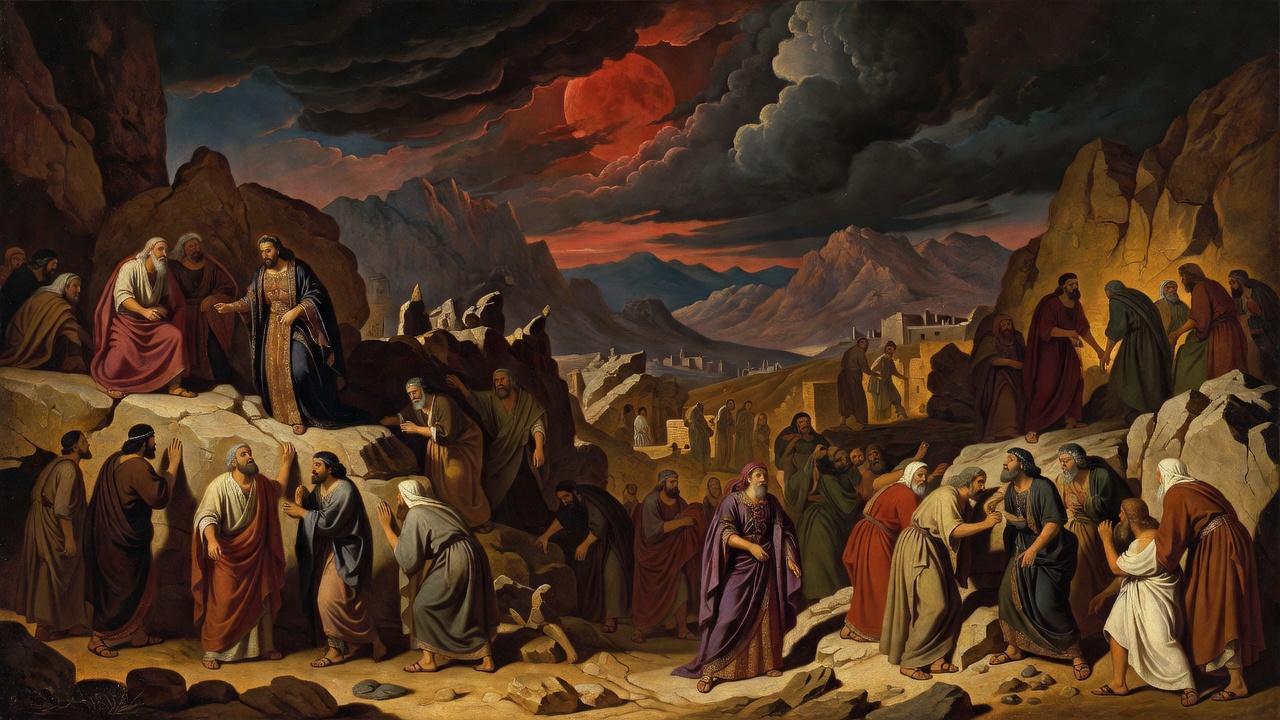
12Na'e Àràpuhàràna'yr zàwenugar wexak kar amo pape pehegwer ihewe kury. 6 haw ma'erexak kar haw a'e pehegwer her romo a'e. Na'e ywy uryryryryz tuwe a'e kury. Kwarahy uwew a'e no. Ipytunahy pàn ipihun ma'e ài. Zahy ipiràg ma'eruwy kwer ài paw rupi a'e no. 13Zahytata u'ar ywak wi wà. Nuzawy kwaw ma'ywa u'yw wi u'ar ma'e kwer ywytuàiw hemityk kwer a'e wà, u'ar mehe a'e wà. 14Na'e ywak ukàzym a'e kury, pape imàimàn pyrer ài a'e kury. Ywytyr paw rupi a'e wà, yrypypo'o paw rupi a'e wà no, utyryk wenaw wi a'e wà no. 15Na'e tuwihaw ywy rehe har a'e wà, teko waneruze'egar a'e wà no, zauxiapekwer wanuwihaw a'e wà no, awa hemetarer katu ma'e a'e wà no, awa ikàg ma'e a'e wà no, amogwer teko paw rupi a'e wà no, amo pe uma'ereko ma'e a'e wà, uzeupe uma'ereko ma'e a'e wà no, uzeàmim oho ita kwar pupe paw rupi a'e wà, uzeàmim ita iwy pe ywytyr rehe a'e wà no, a'e ma'erahy wi uzàn pà a'e wà. 16Uhapukaz ywytyr wanupe uze'eg pà a'e wà, itahu wanupe a'e wà no. — Pe'ar pekwaw pà urerehe nehe, i'i wanupe wà. — Uremim pe nehe, a'e rupi tuwihaw henaw rehe har na'urerexak kwaw a'e nehe, a'e rupi Àràpuhàràna'yr zàwenugar nuzepyk kwaw urerehe a'e nehe, i'i ywytyr wanupe itahu wanupe wà. 17— Ta'e Tupàn 'ar uhem kwez kury xe, ta'e urerehe izepykaw uhem kwez kury xe, i'i wanupe wà. — Mo upuner a'e ma'erahy ipuraraw paw rehe a'e wà nehe, i'i wanupe wà.
¿Sabías que…?
La apertura de los seis sellos
- Los primeros cuatro sellos revelan cuatro jinetes sobre caballos blanco, bermejo, negro y pálido, llamados uno a uno por los cuatro seres vivientes. Cada jinete trae una aflicción distinta sobre la tierra, desde la conquista y la pérdida de la paz hasta la escasez generalizada, la peste y la muerte.Fuentes: el propio texto bíblico
- El tercer jinete lleva una balanza, acompañado por una proclamación que fija el precio de una medida de trigo o tres de cebada en un denario, lo que refleja una grave escasez de alimentos básicos mientras el aceite y el vino no sufren daño.Fuentes: el propio texto bíblico
- Al abrirse el quinto y el sexto sello, la visión pasa a las almas de los mártires bajo el altar y luego a enormes conmociones cósmicas y terrestres que impulsan a personas de toda condición social a refugiarse en cuevas y peñascos.Fuentes: el propio texto bíblico
Notas escritas con ayuda de IA a partir de fuentes abiertas (Theographic Bible Metadata, CC BY-SA 4.0; Easton’s Bible Dictionary, dominio público) y revisadas antes de publicarse.
Créditos y licencia de esta traducción
Tupàn ze'eg
Bible without Deuterocanon in Guajajára (BR:gub:Guajajára)
copyright © 2007 Wycliffe Bible Translators, Inc.
Language: Guajajára
Translation by: Wycliffe Bible Translators, Inc.
Guajajára [gub], Brazil
Copyright Information
© 2007, Wycliffe Bible Translators, Inc. All rights reserved.
This translation text is made available to you under the
terms of the Creative Commons License: Attribution-Noncommercial-No Derivative Works.
( http://creativecommons.org/licenses/by-nc-nd/3.0/ )
In addition, you have permission to port the text to different file formats, as long as you
do not change any of the text or punctuation of the Bible.
You may share, copy, distribute, transmit, and extract portions
or quotations from this work, provided that you include the above copyright
information:
You must give Attribution to the work.
You do not sell this work for a profit.
You do not make any derivative works that change any of the actual words or punctuation of the Scriptures.
Permissions beyond the scope of this license may be
available if you contact
us with your request.
Printed book ISBN 9788531109713
The Bible without Deuterocanon
in Guajajára
© 2007, Wycliffe Bible Translators, Inc. All rights reserved.
This translation is made available to you under the terms of the
Creative Commons Attribution-Noncommercial-No Derivatives license 4.0.
You may share and redistribute this Bible translation or extracts from it in any format, provided that:
You include the above copyright and source information.
You do not sell this work for a profit.
You do not change any of the words or punctuation of the Scriptures.
Pictures included with Scriptures and other documents on this site are licensed just for use with those Scriptures and documents.
For other uses, please contact the respective copyright owners.
2020-03-30
Fuente: http://ebible.org/gubBl/ · eBible.org