Apocalipse 7
Tupàn ze'eg · Toque num versículo para ver as referências cruzadas.
Izaew izuapyapyr tetea'u wiko putar Tupàn hemiruze'eg romo a'e wà kury
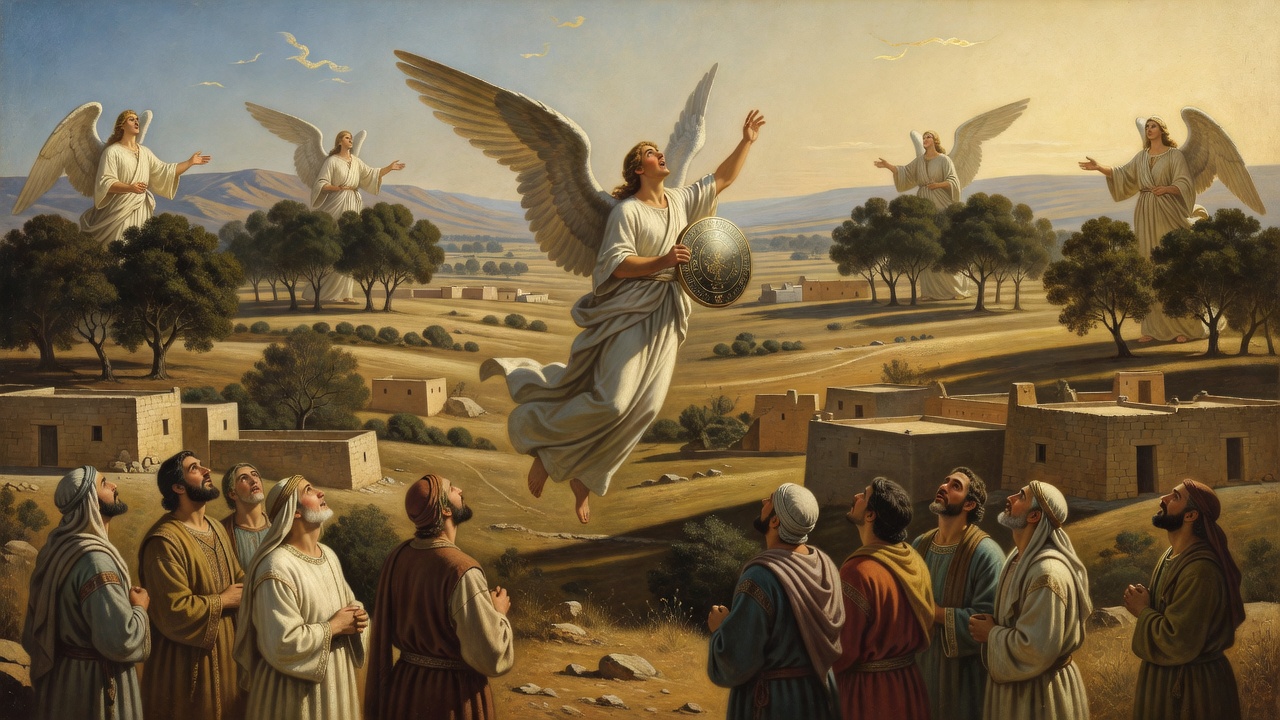
1Na'e aexak 4 Tupàn heko haw pe har ihe wà kury, 4 ywy heme'y rehe wiko ma'e ihe wà kury. Umupytu'u kar ywytu a'e wà. A'e rupi ywytu nupuner kwaw uhemaw rehe a'e kury, ni ywy rehe, ni yryhu rehe, ni ka'a rehe no. 2Na'e aexak amo Tupàn heko haw pe har ihe kury. Kwarahy ihemaw wi tur a'e. Werur Tupàn her ikaikair pyràm uzeupi a'e no. Uze'eg wahyhaw rupi, a'e 4 Tupàn heko haw pe har wanupe, a'e ywy imumaw par wanupe. 3— Pemumaw zo ywy nehe ty wà, pemumaw zo yryhu nehe ty wà, pemumaw zo ka'a nehe ty wà, i'i wanupe. — Urumuapyapyk putar Tupàn her ure nehe, hemiruze'eg wanehàpykà rehe nehe, i'i wanupe. — A'e re pepuner ywy imumaw paw rehe nehe. Pemumaw yryhu a'e mehe nehe no. Pemumaw ka'a a'e mehe nehe no, i'i wanupe.
4Na'e Tupàn heko haw pe har upapar hemiruze'eg a'e wà, ta'e ipurumuapyapyk wer waner rehe a'e wà xe, wanehàpykà rehe a'e wà xe. Umume'u waneta haw ihewe. — 144.000 waneta haw a'e wà, i'i ihewe. Kwehe mehe Izaew umuzàg 12 wa'yr a'e wà. Ta'yr umuzàg wa'yr tetea'u a'e wà no. A'e Tupàn heko haw pe har umuapyapyk her Izaew ta'yr wazuapyapyr wanehàpykà rehe a'e wà. Umume'u waneta haw ihewe wà.
5Heta 12.000 Zuta izuapyapyr wà.
Heta 12.000 Hu izuapyapyr wà no.
Heta 12.000 Kaz izuapyapyr wà no.
Heta 12.000 Azer izuapyapyr wà no.
Heta 12.000 Natari izuapyapyr wà no.
Heta 12.000 Manaxe izuapyapyr wà no.
Heta 12.000 Ximeàw izuapyapyr wà no.
Heta 12.000 Erewi izuapyapyr wà no.
Heta 12.000 Ixakar izuapyapyr wà no.
Heta 12.000 Zepuru izuapyapyr wà no.
Heta 12.000 Zuze izuapyapyr wà no.
Heta 12.000 Mezàmi izuapyapyr wà no, i'i ihewe.
Teko tetea'u ywak rehe har umume'u Tupàn ikatu haw a'e wà kury
9Na'e aexak teko tetea'u ihe wà kury. Ni amo nupuner kwaw wapapar haw rehe a'e wà. Amo tenetehar a'e pe wanekon wà, amo àwà a'e pe wanekon wà no, amo karaiw a'e pe wanekon wà no. Amo ze'egete rupi uze'eg ma'e a'e pe wanekon wà, amo àwà ze'eg rupi uze'eg ma'e a'e pe wanekon wà no, amo karaiw ze'eg rupi uze'eg ma'e a'e pe wanekon wà no, amo ae ze'eg rupi uze'eg ma'e tetea'u a'e pe wanekon wà no. Amo ko ywy rehe arer wiko a'e pe wà, amo amo ae ywy rehe arer wiko a'e pe wà no. Amo ywy nànàgatu har a'e pe wanekon wà no. Amo pàrànà wiko a'e pe wà, amo izu ma'e wiko a'e pe wà no, amo ipihun wewer ma'e wiko a'e pe wà no. Amo ae uzexak uzuawyawy ma'e a'e pe wanekon wà no. A'e teko paw rupi katete a'e wà, upu'àm tuwihaw henaw henataromo a'e wà, Àràpuhàràna'yr zàwenugar henataromo a'e wà. Umunehew ukamir xigatu ma'e wà. Upyhyk wàhu àkàgwer opo pe wà no. 10Uhapukaz uze'eg pà wà. Tupàn zaneru a'e, Tuwihaw henaw rehe har a'e, Zanepyro a'e, i'i izupe uhapukaz pà wà.
11Tupàn heko haw pe har paw rupi a'e wà no, upu'àm a'e pe tuwihaw henaw huwake a'e wà no. Tuwihaw a'e wà no, a'e 4 wikuwe ma'e a'e wà no, a'e pe i'àz a'e wà no. Na'e uzeamumew ukwaw pà wà, uwa ywy rehe tuwihaw henaw henataromo wà. Umuwete katu Tupàn a'e pe wà.
12Uze'eg nezewe izupe wà. Azeharomoete. Tuwe teko paw umume'u nekatu haw a'e wà nehe. Nekàg wera'u ne, nepuràg eteahy wera'u ne. Erekwaw katu ma'e paw rupi katete ne. Urerurywete ure, ta'e urepyro pe ne xe, ta'e ikatuahy ma'e erezapo iko urewe ne xe. Tuwe teko uze'eg newe neremiruze'eg ài wà nehe, Tuwe weruzar neze'eg wà nehe. Ereiko ikàg wera'u ma'e romo ne. Tuwe nezewe ereiko tuweharupi nehe, Awyze har rupi nehe no. Azeharomoete, i'i izupe wà.
13Na'e amo tuwihaw uze'eg ihewe kury, herehe upuranu pà kury. — Mo romo wanekon a'e teko a'e wà, a'e kamir xigatu ma'e imunehew par a'e wà, i'i ihewe. — Ma'e wi wanur wà, i'i ihewe.
14— Heruwà, a'e izupe. — Nakwaw kwaw ihe, a'e izupe. — Ne ty, aipo erekwaw ne ty, a'e izupe. — A'e teko a'e wà. Ma'erahy kwer uhua'u ma'e ipuraraw paw pe har romo wanekon a'e wà, i'i ihewe. Teko uputuka ukamir 'y pupe wà, xigatu ma'e romo iapo pà wà. Àràpuhàràna'yr huwykwer a'e, nuzawy kwaw 'y purupe a'e. Ta'e uhez ikatu 'ym ma'e puruwi a'e xe. 15— A'e rupi upu'àm Tupàn henaw henataromo a'e wà kury. Weruzar ize'eg hàpuzuhu pupe wà, pyhaw wà, 'aromo wà no, i'i ihewe. — Tuwihaw henaw rehe har a'e nehe, umuigo kar putar a'e teko uzepyr a'e wà nehe, ikatu 'ymaw wi wapyro pà ukàgaw pupe a'e wà nehe, i'i ihewe. 16— Na'ima'uhez pixik kwaw a'e wà nehe. Na'iziwez pixik kwaw wà nehe no, i'i ihewe. — Kwarahy nuwapy kwaw a'e wà nehe. Tata nuwapy kwaw a'e wà nehe, i'i ihewe. 17— Ta'e Àràpuhàràna'yr zàwenugar a'e nehe xe, tuwihaw henaw mytepe har a'e nehe xe, wiko putar wanehe uzekaiw ma'e romo a'e nehe xe, i'i ihewe. — Weraha putar wemiaihu ytyzuzàmaw pe a'e wà nehe, wamui'u kar pà a'e pe a'e wà nehe, 'y purumuigo kar har i'u kar pà wanupe a'e wà nehe, i'i ihewe. — Na'e Tupàn uhyuhyw putar wanehay kwer wanuwi a'e nehe, i'i ihewe.
Você sabia?
As tribos seladas e a grande multidão
- Apocalipse 7 apresenta o número dos selados como 144.000, doze mil de cada uma das tribos de Israel nomeadas no capítulo. Israel era outro nome de Jacó, o segundo dos filhos gêmeos de Isaque e Rebeca; o Easton's Bible Dictionary (1897) explica o nome de Jacó como alguém que segue os calcanhares de outro, ou um suplantador.Fontes: o próprio texto bíblico · Jacob (Israel)
- Embora Rúben fosse o filho mais velho de Jacó e Lia, a lista dos selados começa com Judá e depois nomeia Rúben. A lista inclui também tanto José como Manassés; Manassés era o filho mais velho de José, e Jacó adotou a ele e a seu irmão Efraim como seus próprios filhos.Fontes: o próprio texto bíblico · Reuben · Manasseh (son of Joseph)
- Depois do selamento, a visão mostra uma multidão grande demais para ser contada, de toda nação, tribo, povo e língua, de pé diante do trono e do Cordeiro, com vestes brancas e ramos de palmeira nas mãos. Um dos anciãos diz que eles saíram da grande tribulação e lavaram as suas vestes, tornando-as brancas no sangue do Cordeiro.Fontes: o próprio texto bíblico
Notas escritas com auxílio de IA a partir de fontes abertas (Theographic Bible Metadata, CC BY-SA 4.0; Easton’s Bible Dictionary, domínio público) e revisadas antes de publicar.
Créditos e licença desta tradução
Tupàn ze'eg
Bible without Deuterocanon in Guajajára (BR:gub:Guajajára)
copyright © 2007 Wycliffe Bible Translators, Inc.
Language: Guajajára
Translation by: Wycliffe Bible Translators, Inc.
Guajajára [gub], Brazil
Copyright Information
© 2007, Wycliffe Bible Translators, Inc. All rights reserved.
This translation text is made available to you under the
terms of the Creative Commons License: Attribution-Noncommercial-No Derivative Works.
( http://creativecommons.org/licenses/by-nc-nd/3.0/ )
In addition, you have permission to port the text to different file formats, as long as you
do not change any of the text or punctuation of the Bible.
You may share, copy, distribute, transmit, and extract portions
or quotations from this work, provided that you include the above copyright
information:
You must give Attribution to the work.
You do not sell this work for a profit.
You do not make any derivative works that change any of the actual words or punctuation of the Scriptures.
Permissions beyond the scope of this license may be
available if you contact
us with your request.
Printed book ISBN 9788531109713
The Bible without Deuterocanon
in Guajajára
© 2007, Wycliffe Bible Translators, Inc. All rights reserved.
This translation is made available to you under the terms of the
Creative Commons Attribution-Noncommercial-No Derivatives license 4.0.
You may share and redistribute this Bible translation or extracts from it in any format, provided that:
You include the above copyright and source information.
You do not sell this work for a profit.
You do not change any of the words or punctuation of the Scriptures.
Pictures included with Scriptures and other documents on this site are licensed just for use with those Scriptures and documents.
For other uses, please contact the respective copyright owners.
2020-03-30
Fonte: http://ebible.org/gubBl/ · eBible.org