Isaías 20
The Orthodox Jewish Bible · Toque num versículo para ver as referências cruzadas.
A Sign against Egypt and Cush
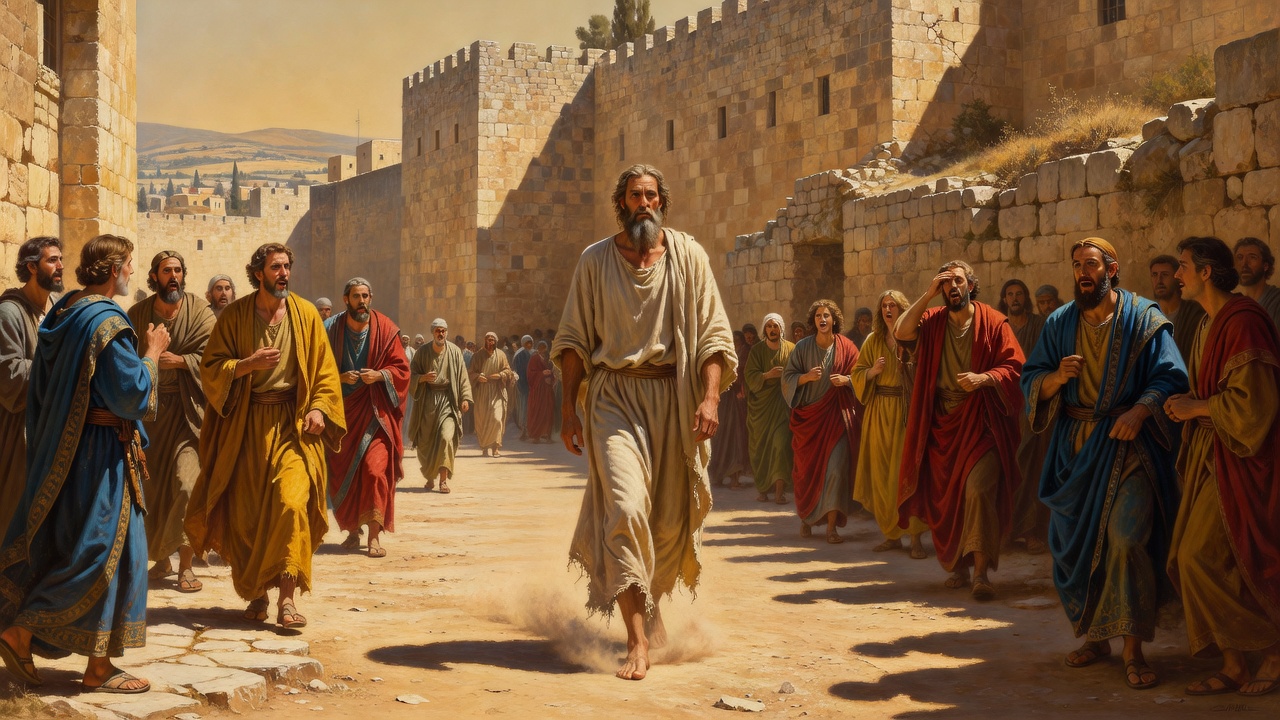
1In the year that Tartan came unto Ashdod, (when Sargon Melech Ashur sent him,) and fought against Ashdod, and took it; 2At the same time spoke Hashem by Yeshayah Ben Amotz, saying, Go and remove the sackcloth from off thy loins, and put off thy sandal from thy regel. And he did so, going arom (naked, stripped) and barefoot.
3And Hashem said, Just as Avdi Yeshayah hath walked arom (naked) and barefoot shalosh shanim for an ot and mofet against Mitzrayim and Kush; 4So shall Melech Ashur (Assyria) lead away captive Mitzrayim and Golus-exiled Kush, ne'arim and zekenim, aron (naked) and barefoot, even with their buttocks uncovered, to the shame of Mitzrayim. 5And they shall be afraid and ashamed of Kush their expectation, and of Mitzrayim their tiferet (glory, boast). 6And the inhabitants of this coast shall say in that day, Hinei, such is our expectation, where we fled for ezrah (help) to be delivered from Melech Ashur; and how shall we escape?
Você sabia?
Sinal profético contra o Egito e Cuxe
- Asdode era uma cidade filisteia fortemente fortificada, situada ao longo da rota costeira que ligava a Palestina ao Egito. O rei assírio Sargão enviou o seu comandante para sitiar e conquistar a cidade à medida que o Império Assírio avançava para o sul.Fontes: o próprio texto bíblico · Ashdod
- Deus ordenou que Isaías retirasse o seu pano de saco exterior e as sandálias, andando despojado e descalço por três anos. Essa ação profética simbolizava como a Assíria conquistaria e levaria cativos os povos do Egito e de Cuxe em humilhação.Fontes: o próprio texto bíblico · Isaiah · Cush
Notas escritas com auxílio de IA a partir de fontes abertas (Theographic Bible Metadata, CC BY-SA 4.0; Easton’s Bible Dictionary, domínio público) e revisadas antes de publicar.
Lugares deste capítulo
- Ashdod · Hoje: Tel Ashdod · 31.757, 34.658 · versículo 1
- Assyria · 36.359, 43.153 · versículos 1, 4, 6
- Cush · Hoje: Cush 1 · 16.935, 33.751 · versículos 3, 4, 5
- Egypt · 30.129, 31.308 · versículos 3, 4, 5, 6
Só aparecem lugares com identificação de alta confiança (90% ou mais segundo as fontes acadêmicas reunidas pelo OpenBible). Mapa da época: DARE (Digital Atlas of the Roman Empire), CC BY 4.0; mapa atual: © colaboradores do OpenStreetMap; lugares: OpenBible.info (CC BY 4.0).
Créditos e licença desta tradução
The Orthodox Jewish Bible
The Orthodox Jewish Bible - Tanakh and Orthodox Jewish Brit Chadasha - The Holy Bible
copyright © 2002-2011, 2021, 2024 Artists for Israel International
Language: English
Contributor: Artists for Israel International
THE ORTHODOX JEWISH TANAKH
Artists For Israel Intl Inc.
This version also appears with the Orthodox Yiddish Triglot which presents the Hebrew Yiddish script in Latin script and an English word for word translation, available at afii.org/Torah
To donate PayPal.Me
This translation is made available to you under the terms of the
Creative Commons Attribution license 4.0.
You may share and redistribute this Bible translation or extracts from it in any format, provided that:
You include the above copyright and source information.
If you make any changes to the text, you must indicate that you did so in a way that makes it clear that the original licensor is not necessarily endorsing your changes.
Pictures included with Scriptures and other documents on this site are licensed just for use with those Scriptures and documents.
For other uses, please contact the respective copyright owners.
Note that in addition to the rules above, revising and adapting God's Word involves a great responsibility to be true to God's Word. See Revelation 22:18-19.
2026-01-06
Títulos de seção adaptados da Berean Standard Bible (domínio público); não fazem parte do texto bíblico desta tradução.
Fonte: http://ebible.org/engojb/ · eBible.org