Isaiah 20
The Orthodox Jewish Bible · Tap a verse to see its cross-references.
A Sign against Egypt and Cush
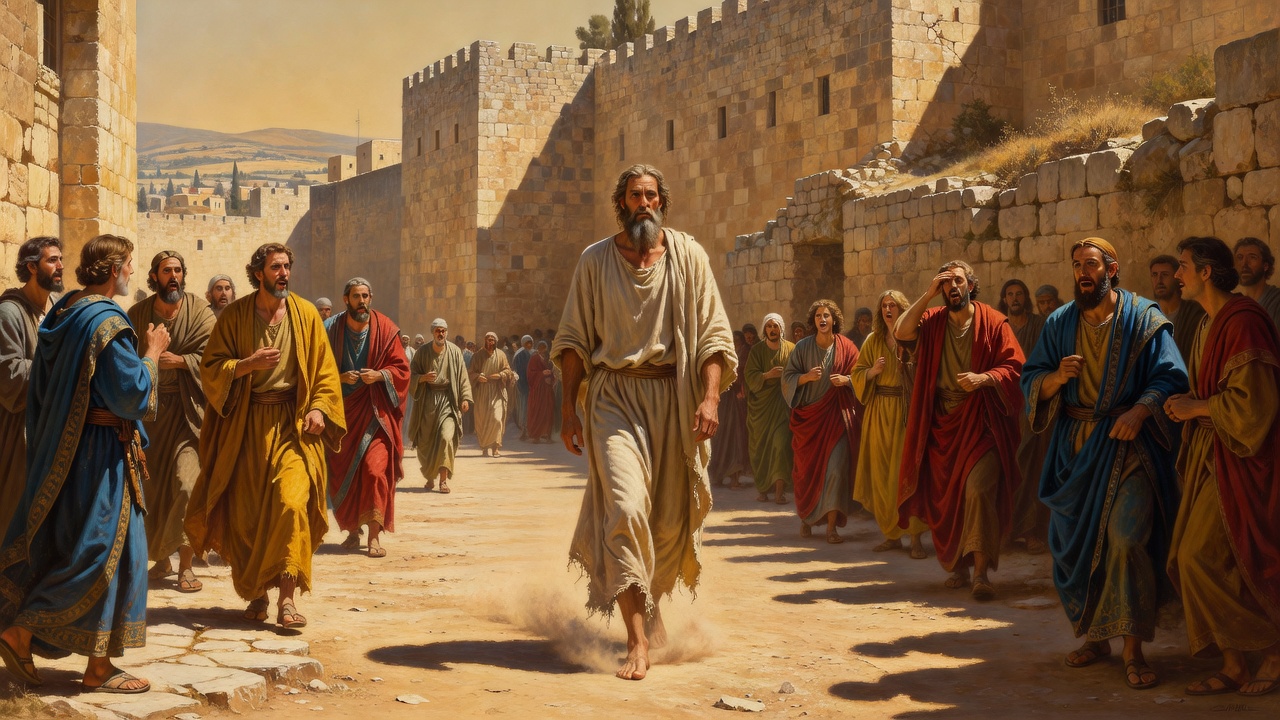
1In the year that Tartan came unto Ashdod, (when Sargon Melech Ashur sent him,) and fought against Ashdod, and took it; 2At the same time spoke Hashem by Yeshayah Ben Amotz, saying, Go and remove the sackcloth from off thy loins, and put off thy sandal from thy regel. And he did so, going arom (naked, stripped) and barefoot.
3And Hashem said, Just as Avdi Yeshayah hath walked arom (naked) and barefoot shalosh shanim for an ot and mofet against Mitzrayim and Kush; 4So shall Melech Ashur (Assyria) lead away captive Mitzrayim and Golus-exiled Kush, ne'arim and zekenim, aron (naked) and barefoot, even with their buttocks uncovered, to the shame of Mitzrayim. 5And they shall be afraid and ashamed of Kush their expectation, and of Mitzrayim their tiferet (glory, boast). 6And the inhabitants of this coast shall say in that day, Hinei, such is our expectation, where we fled for ezrah (help) to be delivered from Melech Ashur; and how shall we escape?
Did you know?
Prophetic Sign Against Egypt and Cush
- Ashdod was a heavily fortified Philistine city situated along the coastal highway linking Palestine with Egypt. The Assyrian king Sargon sent his commander to besiege and capture the city as the Assyrian Empire expanded southward.Sources: the Bible text itself · Ashdod
- God commanded Isaiah to take off his outer sackcloth and sandals, walking stripped and barefoot for three years. This dramatic prophetic act symbolized how Assyria would conquer and lead away the captives of Egypt and Cush in humiliation.Sources: the Bible text itself · Isaiah · Cush
Notes written with AI assistance from open sources (Theographic Bible Metadata, CC BY-SA 4.0; Easton’s Bible Dictionary, public domain) and reviewed before publishing.
Places in this chapter
- Ashdod · Today: Tel Ashdod · 31.757, 34.658 · verse 1
- Assyria · 36.359, 43.153 · verses 1, 4, 6
- Cush · Today: Cush 1 · 16.935, 33.751 · verses 3, 4, 5
- Egypt · 30.129, 31.308 · verses 3, 4, 5, 6
Only places identified with high confidence are shown (90% or more according to the scholarly sources compiled by OpenBible). Period map: DARE (Digital Atlas of the Roman Empire), CC BY 4.0; modern map: © OpenStreetMap contributors; places: OpenBible.info (CC BY 4.0).
Credits and license for this translation
The Orthodox Jewish Bible
The Orthodox Jewish Bible - Tanakh and Orthodox Jewish Brit Chadasha - The Holy Bible
copyright © 2002-2011, 2021, 2024 Artists for Israel International
Language: English
Contributor: Artists for Israel International
THE ORTHODOX JEWISH TANAKH
Artists For Israel Intl Inc.
This version also appears with the Orthodox Yiddish Triglot which presents the Hebrew Yiddish script in Latin script and an English word for word translation, available at afii.org/Torah
To donate PayPal.Me
This translation is made available to you under the terms of the
Creative Commons Attribution license 4.0.
You may share and redistribute this Bible translation or extracts from it in any format, provided that:
You include the above copyright and source information.
If you make any changes to the text, you must indicate that you did so in a way that makes it clear that the original licensor is not necessarily endorsing your changes.
Pictures included with Scriptures and other documents on this site are licensed just for use with those Scriptures and documents.
For other uses, please contact the respective copyright owners.
Note that in addition to the rules above, revising and adapting God's Word involves a great responsibility to be true to God's Word. See Revelation 22:18-19.
2026-01-06
Section headings adapted from the Berean Standard Bible (public domain); they are not part of this translation’s text.
Source: http://ebible.org/engojb/ · eBible.org