Cântico dos Cânticos 1
Berean Standard Bible · Toque num versículo para ver as referências cruzadas.
Sobre este livro
Sobre o Cântico dos Cânticos
- O Easton's Bible Dictionary (1897) registra a visão tradicional de que Salomão escreveu o Cântico dos Cânticos, embora observe que essa autoria foi posta em dúvida. Salomão, em hebraico Shelomoh, que significa "pacífico", era filho de Davi e Bate-Seba; Easton diz que ele provavelmente nasceu por volta de 1035 a.C.Fontes: Easton: Solomon, Song of · Solomon
- A partir da Vulgata, o livro também é chamado Canticles. Ele se designa "cântico dos cânticos" (1:1), nome do canto mais excelente de sua espécie, e Lutero o chamou de "das Hohelied".Fontes: Easton: Solomon, Song of
- O Easton's Bible Dictionary (1897) apresenta o livro como um poema alegórico do amor mútuo de Cristo e da Igreja, figurado como noivo e noiva.Fontes: Easton: Solomon, Song of
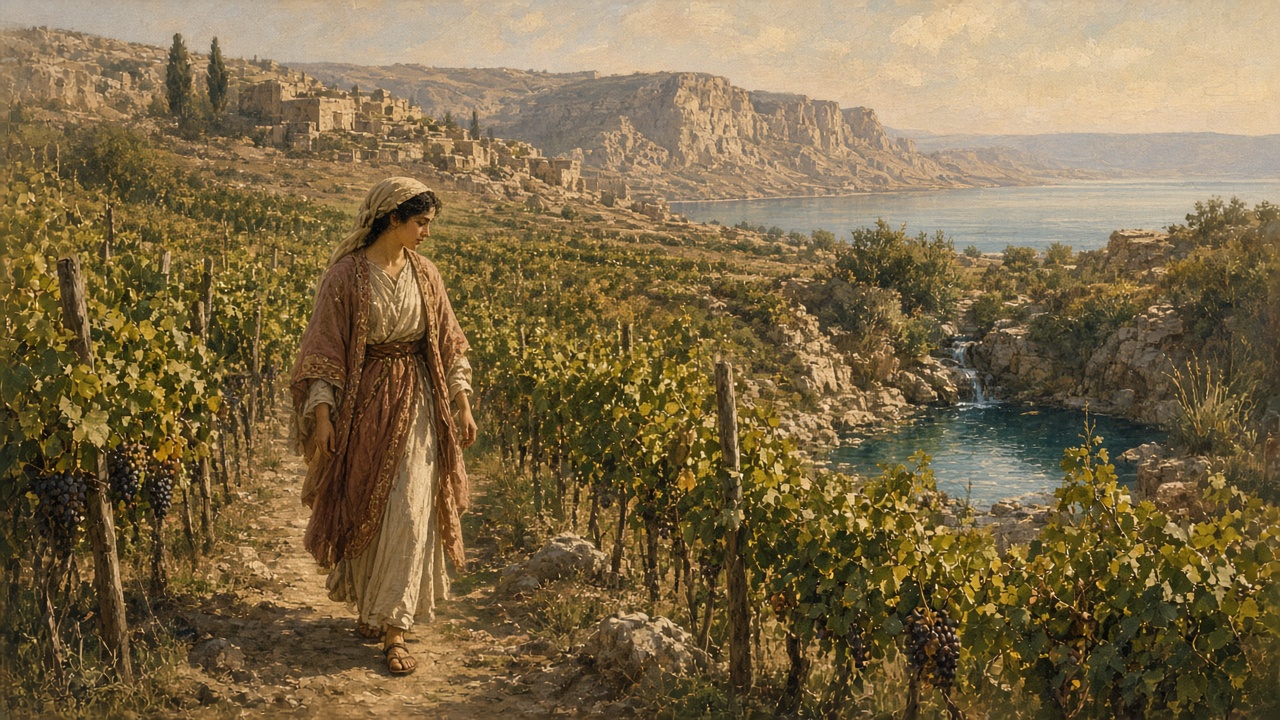
- As imagens do poema recorrem a lugares ligados ao tempo de Salomão. En-Gedi, uma fonte na margem ocidental do mar Morto, tinha vinhedos célebres em seus dias, e a planície fértil de Sarom era conhecida pela "rosa de Sarom".Fontes: Engedi · Saron
- Quedar, nome que significa "de pele escura", era o segundo filho de Ismael e também o nome de tribos árabes nômades do noroeste da Arábia. Elas viviam em tendas negras de pelo, mencionadas no Cântico dos Cânticos.Fontes: Kedar · Kedar
Notas escritas com auxílio de IA a partir de fontes abertas (Theographic Bible Metadata, CC BY-SA 4.0; Easton’s Bible Dictionary, domínio público) e revisadas antes de publicar.
The Bride Confesses Her Love
1This is Solomon’s Song of Songs.
The Bride
2Let him kiss me with the kisses of his mouth!
For your love is more delightful than wine.
3The fragrance of your perfume is pleasing;
your name is like perfume poured out.
No wonder the maidens adore you.
4Take me away with you—let us hurry!
May the king bring me to his chambers.
The Friends
We will rejoice and delight in you;
we will praise your love more than wine.
The Bride
It is only right that they adore you.
5I am dark, yet lovely, O daughters of Jerusalem,
like the tents of Kedar, like the curtains of Solomon.
6Do not stare because I am dark,
for the sun has gazed upon me.
My mother’s sons were angry with me;
they made me a keeper of the vineyards,
but my own vineyard I have neglected.
7Tell me, O one I love,
where do you pasture your sheep?
Where do you rest them at midday?
Why should I be like a veiled woman
beside the flocks of your companions?
The Friends
8If you do not know, O fairest of women,
follow the tracks of the flock,
and graze your young goats
near the tents of the shepherds.
The Bridegroom
9I compare you, my darling,
to a mare among Pharaoh’s chariots.
10Your cheeks are beautiful with ornaments,
your neck with strings of jewels.
The Friends
11We will make you ornaments of gold,
studded with beads of silver.
The Bride
12While the king was at his table,
my perfume spread its fragrance.
13My beloved is to me a sachet of myrrh
resting between my breasts.
14My beloved is to me a cluster of henna blossoms
in the vineyards of En-gedi.
The Bridegroom
15How beautiful you are, my darling!
Oh, how very beautiful!
Your eyes are like doves.
The Bride
16How handsome you are, my beloved!
Oh, how delightful!
The soft grass is our bed.
The Bridegroom
17The beams of our house are cedars;
our rafters are fragrant firs.
Você sabia?
Amor Pastoral e Imagens Reais
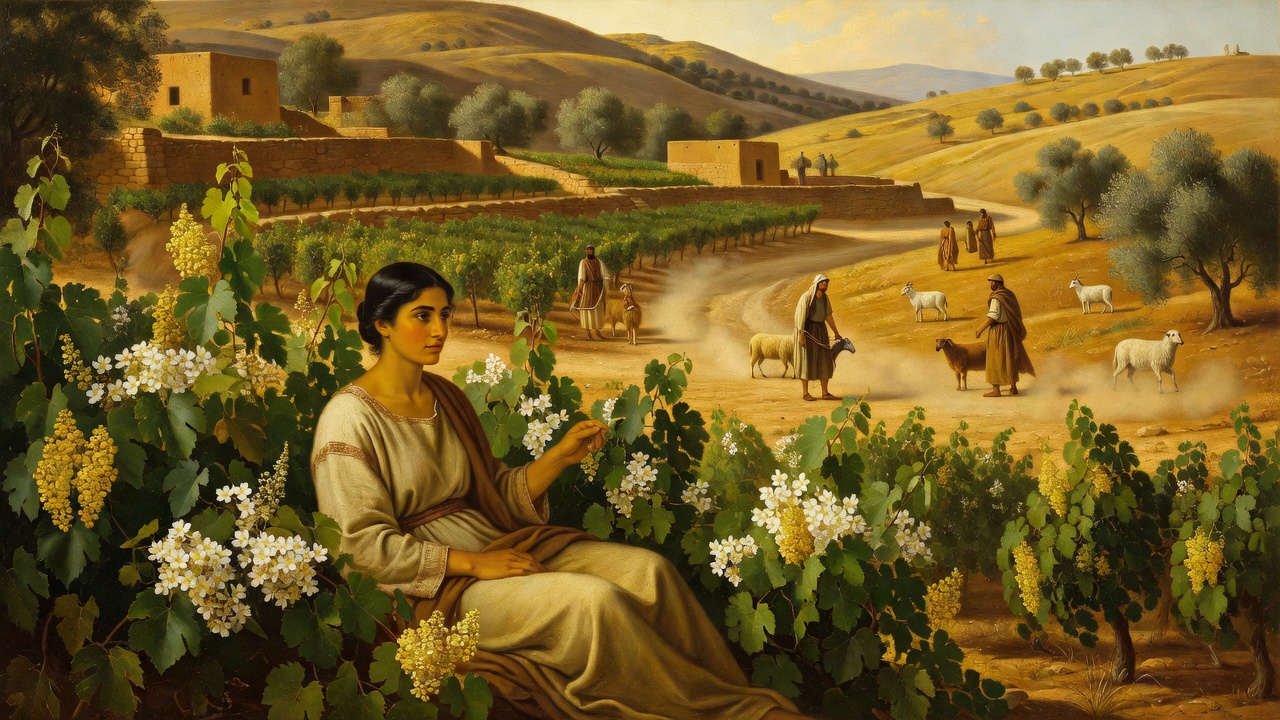
- A jovem compara a sua pele bronzeada pelo sol às tendas de Quedar. Quedar, o segundo filho de Ismael, deu nome a tribos nómades do noroeste da Arábia, conhecidas por habitarem em tendas pretas feitas de pelos de animais.Fontes: Kedar · Kedar · o próprio texto bíblico
- O amado é comparado a um cacho de flores de hena nas vinhas de En-Gedi. Situado na margem ocidental do Mar Morto, no deserto de Judá, En-Gedi era famoso pela sua fonte de água doce e pelas suas vinhas férteis.Fontes: Engedi · o próprio texto bíblico
Notas escritas com auxílio de IA a partir de fontes abertas (Theographic Bible Metadata, CC BY-SA 4.0; Easton’s Bible Dictionary, domínio público) e revisadas antes de publicar.
Lugares deste capítulo
- Jerusalem · 31.777, 35.234 · versículo 5
- Kedar · 29.811, 39.868 · versículo 5
- Engedi · Hoje: Ein Gedi · 31.450, 35.383 · versículo 14
Só aparecem lugares com identificação de alta confiança (90% ou mais segundo as fontes acadêmicas reunidas pelo OpenBible). Mapa da época: DARE (Digital Atlas of the Roman Empire), CC BY 4.0; mapa atual: © colaboradores do OpenStreetMap; lugares: OpenBible.info (CC BY 4.0).
Créditos e licença desta tradução
Berean Standard Bible
The Holy Bible in English: Berean Standard Bible
Public Domain
Language: English
Contributor: BSB Publishing, LLC
2026-10-02
Fonte: http://ebible.org/engbsb/ · eBible.org