Song of Songs 1
Berean Standard Bible · Tap a verse to see its cross-references.
About this book
About Song of Songs
- Easton's Bible Dictionary (1897) records the traditional view that Solomon wrote the Song of Songs, while noting that this authorship has been called into question. Solomon, Hebrew Shelomoh, meaning "peaceful," was David's son by Bathsheba; Easton says he was probably born about 1035 B.C.Sources: Easton: Solomon, Song of · Solomon
- After the Vulgate, the book is also called Canticles. It calls itself the "song of songs" (1:1), a name for the finest song of its kind, and Luther called it "das Hohelied."Sources: Easton: Solomon, Song of
- Easton's Bible Dictionary (1897) presents the book as an allegorical poem of the mutual love of Christ and the Church, figured as a bridegroom and a bride.Sources: Easton: Solomon, Song of
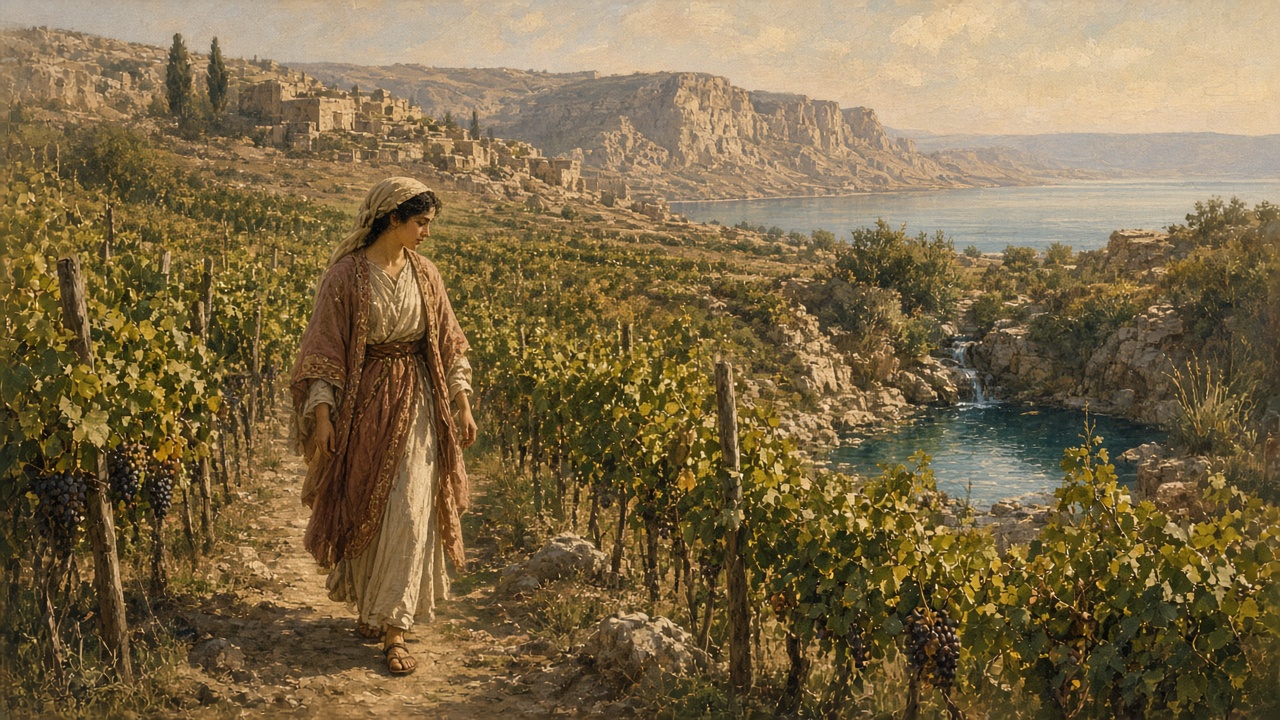
- The poem's imagery draws on places linked with Solomon's time. Engedi, a spring on the western shore of the Dead Sea, had vineyards celebrated in his day, and the fertile plain of Sharon was known for the "rose of Sharon."Sources: Engedi · Saron
- Kedar, a name meaning "dark-skinned," was Ishmael's second son and also the name of nomadic Arab tribes of northwest Arabia. They lived in black hair-tents, which the Song of Songs mentions.Sources: Kedar · Kedar
Notes written with AI assistance from open sources (Theographic Bible Metadata, CC BY-SA 4.0; Easton’s Bible Dictionary, public domain) and reviewed before publishing.
The Bride Confesses Her Love
1This is Solomon’s Song of Songs.
The Bride
2Let him kiss me with the kisses of his mouth!
For your love is more delightful than wine.
3The fragrance of your perfume is pleasing;
your name is like perfume poured out.
No wonder the maidens adore you.
4Take me away with you—let us hurry!
May the king bring me to his chambers.
The Friends
We will rejoice and delight in you;
we will praise your love more than wine.
The Bride
It is only right that they adore you.
5I am dark, yet lovely, O daughters of Jerusalem,
like the tents of Kedar, like the curtains of Solomon.
6Do not stare because I am dark,
for the sun has gazed upon me.
My mother’s sons were angry with me;
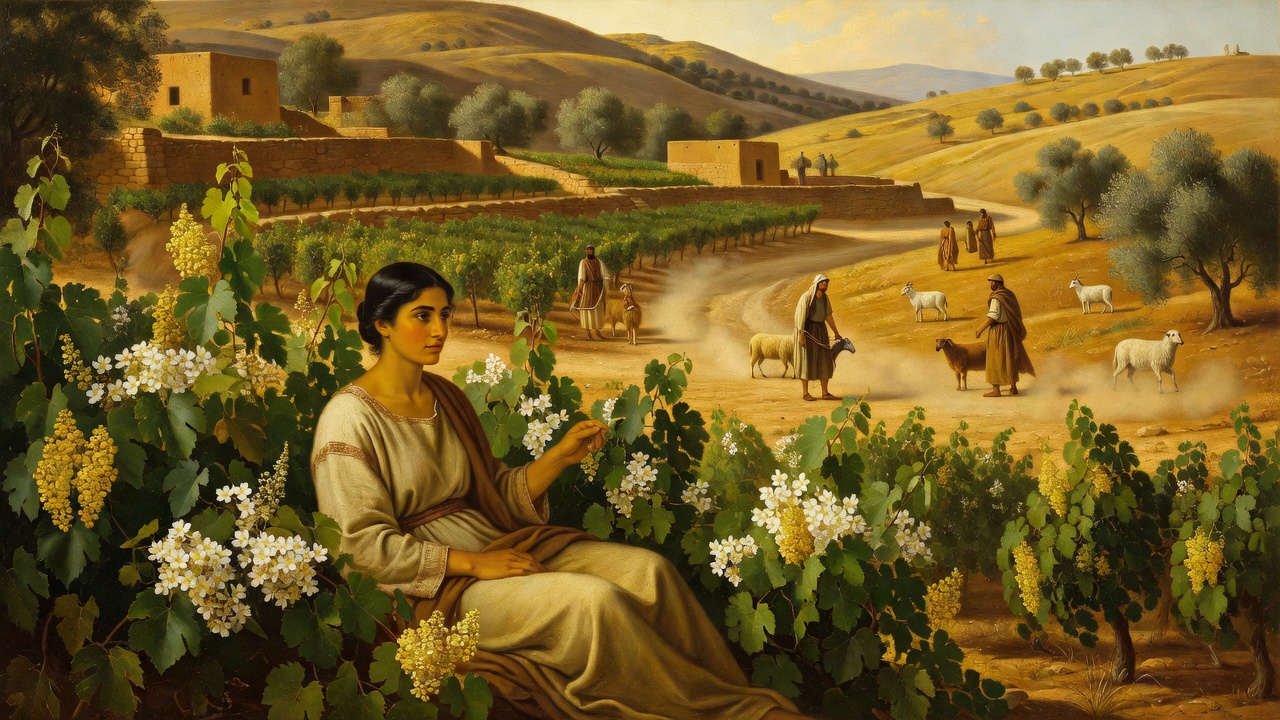
they made me a keeper of the vineyards,
but my own vineyard I have neglected.
7Tell me, O one I love,
where do you pasture your sheep?
Where do you rest them at midday?
Why should I be like a veiled woman
beside the flocks of your companions?
The Friends
8If you do not know, O fairest of women,
follow the tracks of the flock,
and graze your young goats
near the tents of the shepherds.
The Bridegroom
9I compare you, my darling,
to a mare among Pharaoh’s chariots.
10Your cheeks are beautiful with ornaments,
your neck with strings of jewels.
The Friends
11We will make you ornaments of gold,
studded with beads of silver.
The Bride
12While the king was at his table,
my perfume spread its fragrance.
13My beloved is to me a sachet of myrrh
resting between my breasts.
14My beloved is to me a cluster of henna blossoms
in the vineyards of En-gedi.
The Bridegroom
15How beautiful you are, my darling!
Oh, how very beautiful!
Your eyes are like doves.
The Bride
16How handsome you are, my beloved!
Oh, how delightful!
The soft grass is our bed.
The Bridegroom
17The beams of our house are cedars;
our rafters are fragrant firs.
Did you know?
Pastoral Love and Royal Imagery
- The speaker compares her sun-darkened skin to the tents of Kedar. Kedar, the second son of Ishmael, gave his name to nomadic tribes in northwest Arabia known for dwelling in distinctive black tents woven from animal hair.Sources: Kedar · Kedar · the Bible text itself
- The beloved is likened to a cluster of henna blossoms from the vineyards of En-gedi. Located on the western shore of the Dead Sea in the wilderness of Judah, En-gedi was renowned for its fresh mountain spring and celebrated vineyards.Sources: Engedi · the Bible text itself
Notes written with AI assistance from open sources (Theographic Bible Metadata, CC BY-SA 4.0; Easton’s Bible Dictionary, public domain) and reviewed before publishing.
Places in this chapter
- Jerusalem · 31.777, 35.234 · verse 5
- Kedar · 29.811, 39.868 · verse 5
- Engedi · Today: Ein Gedi · 31.450, 35.383 · verse 14
Only places identified with high confidence are shown (90% or more according to the scholarly sources compiled by OpenBible). Period map: DARE (Digital Atlas of the Roman Empire), CC BY 4.0; modern map: © OpenStreetMap contributors; places: OpenBible.info (CC BY 4.0).
Credits and license for this translation
Berean Standard Bible
The Holy Bible in English: Berean Standard Bible
Public Domain
Language: English
Contributor: BSB Publishing, LLC
2026-10-02
Source: http://ebible.org/engbsb/ · eBible.org