Cantares 1
Berean Standard Bible · Toca un versículo para ver sus referencias cruzadas.
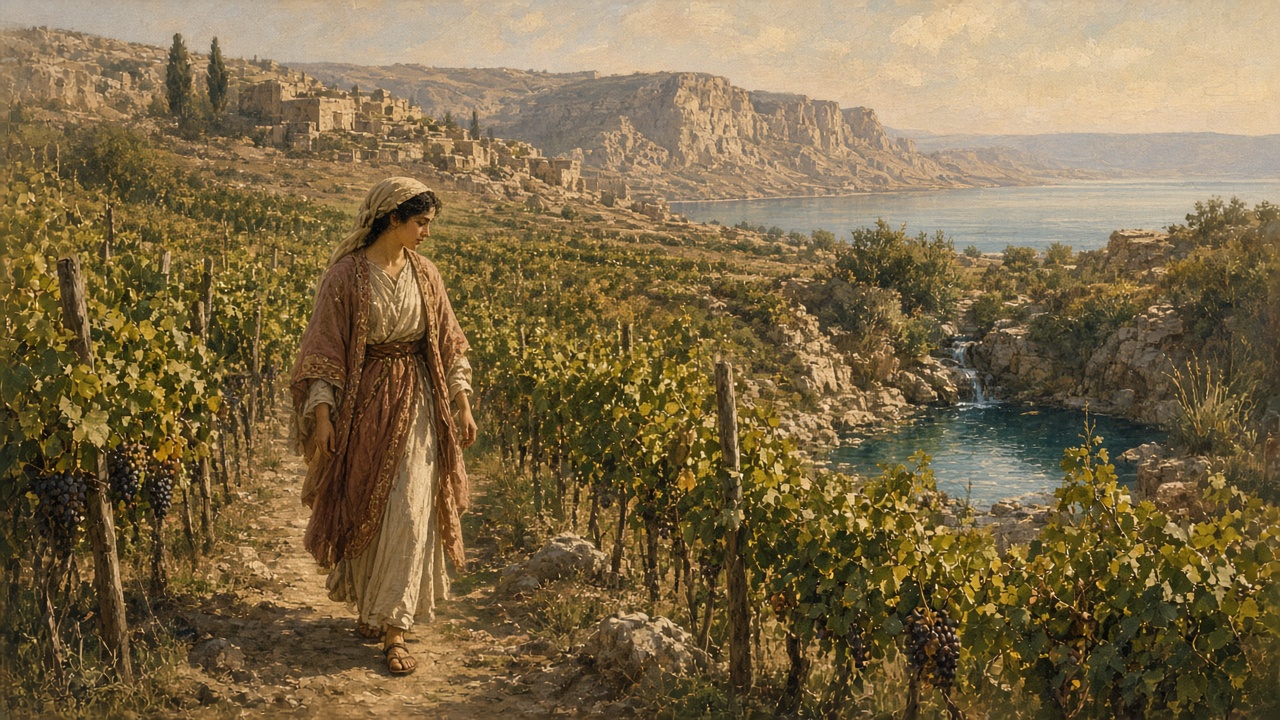
Acerca de este libro
Acerca del Cantar de los Cantares
- El Easton's Bible Dictionary (1897) recoge la opinión tradicional de que Salomón escribió el Cantar de los Cantares, aunque señala que esa autoría ha sido puesta en duda. Salomón, en hebreo Shelomoh, que significa "pacífico", era hijo de David y Betsabé; Easton dice que probablemente nació hacia el año 1035 a. C.Fuentes: Easton: Solomon, Song of · Solomon
- A partir de la Vulgata, el libro también se llama Canticles. Se designa a sí mismo "cantar de los cantares" (1:1), nombre del canto más excelente de su clase, y Lutero lo llamó "das Hohelied".Fuentes: Easton: Solomon, Song of
- El Easton's Bible Dictionary (1897) presenta el libro como un poema alegórico del amor mutuo de Cristo y la Iglesia, figurado como novio y novia.Fuentes: Easton: Solomon, Song of
- Las imágenes del poema recurren a lugares vinculados con la época de Salomón. Engadi, un manantial en la orilla occidental del mar Muerto, tenía viñedos célebres en su tiempo, y la fértil llanura de Sarón era conocida por la "rosa de Sarón".Fuentes: Engedi · Saron
- Cedar, nombre que significa "de piel oscura", era el segundo hijo de Ismael y también el nombre de tribus árabes nómadas del noroeste de Arabia. Vivían en tiendas negras de pelo, que el Cantar de los Cantares menciona.Fuentes: Kedar · Kedar
Notas escritas con ayuda de IA a partir de fuentes abiertas (Theographic Bible Metadata, CC BY-SA 4.0; Easton’s Bible Dictionary, dominio público) y revisadas antes de publicarse.
The Bride Confesses Her Love
1This is Solomon’s Song of Songs.
The Bride
2Let him kiss me with the kisses of his mouth!
For your love is more delightful than wine.
3The fragrance of your perfume is pleasing;
your name is like perfume poured out.
No wonder the maidens adore you.
4Take me away with you—let us hurry!
May the king bring me to his chambers.
The Friends
We will rejoice and delight in you;
we will praise your love more than wine.
The Bride
It is only right that they adore you.
5I am dark, yet lovely, O daughters of Jerusalem,
like the tents of Kedar, like the curtains of Solomon.
6Do not stare because I am dark,
for the sun has gazed upon me.
My mother’s sons were angry with me;
they made me a keeper of the vineyards,
but my own vineyard I have neglected.
7Tell me, O one I love,
where do you pasture your sheep?
Where do you rest them at midday?
Why should I be like a veiled woman
beside the flocks of your companions?
The Friends
8If you do not know, O fairest of women,
follow the tracks of the flock,
and graze your young goats
near the tents of the shepherds.
The Bridegroom
9I compare you, my darling,
to a mare among Pharaoh’s chariots.
10Your cheeks are beautiful with ornaments,
your neck with strings of jewels.
The Friends
11We will make you ornaments of gold,
studded with beads of silver.
The Bride
12While the king was at his table,
my perfume spread its fragrance.
13My beloved is to me a sachet of myrrh
resting between my breasts.
14My beloved is to me a cluster of henna blossoms
in the vineyards of En-gedi.
The Bridegroom
15How beautiful you are, my darling!
Oh, how very beautiful!
Your eyes are like doves.
The Bride
16How handsome you are, my beloved!
Oh, how delightful!
The soft grass is our bed.
The Bridegroom
17The beams of our house are cedars;
our rafters are fragrant firs.
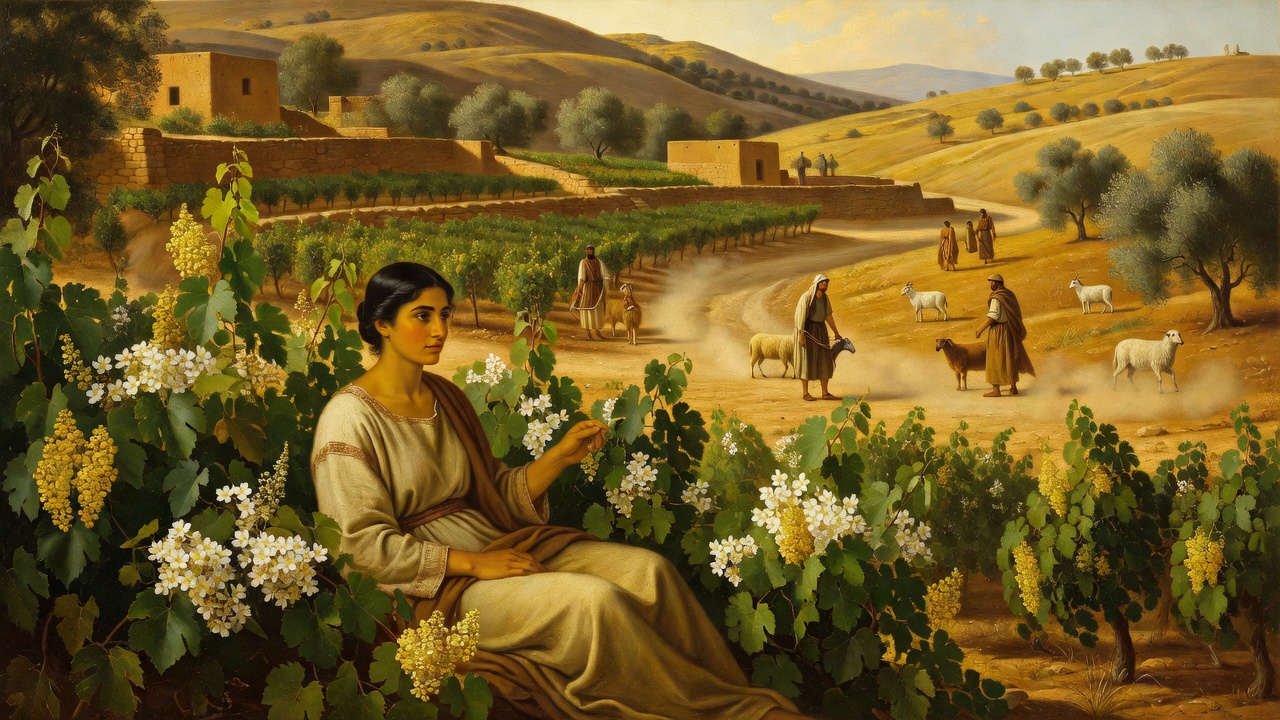
¿Sabías que…?
Amor Pastoral e Imágenes Reales
- La joven compara su piel bronceada por el sol con las tiendas de Cedar. Cedar, el segundo hijo de Ismael, dio nombre a tribus nómadas del noroeste de Arabia conocidas por habitar en tiendas negras fabricadas con pelo de animales.Fuentes: Kedar · Kedar · el propio texto bíblico
- El amado es comparado con un racimo de flores de alheña de las viñas de En-gadi. Situado en la orilla occidental del mar Muerto, en el desierto de Judá, En-gadi era famoso por su manantial de montaña y sus fértiles viñedos.Fuentes: Engedi · el propio texto bíblico
Notas escritas con ayuda de IA a partir de fuentes abiertas (Theographic Bible Metadata, CC BY-SA 4.0; Easton’s Bible Dictionary, dominio público) y revisadas antes de publicarse.
Lugares de este capítulo
- Jerusalem · 31.777, 35.234 · versículo 5
- Kedar · 29.811, 39.868 · versículo 5
- Engedi · Hoy: Ein Gedi · 31.450, 35.383 · versículo 14
Solo aparecen lugares identificados con alta confianza (90 % o más según las fuentes académicas reunidas por OpenBible). Mapa de la época: DARE (Digital Atlas of the Roman Empire), CC BY 4.0; mapa actual: © colaboradores de OpenStreetMap; lugares: OpenBible.info (CC BY 4.0).
Créditos y licencia de esta traducción
Berean Standard Bible
The Holy Bible in English: Berean Standard Bible
Public Domain
Language: English
Contributor: BSB Publishing, LLC
2026-10-02
Fuente: http://ebible.org/engbsb/ · eBible.org