Rute 1
Berean Standard Bible · Toque num versículo para ver as referências cruzadas.
Sobre este livro
Sobre Rute
- Os acontecimentos se passam nos dias dos juízes. Uma grande fome levou Elimeleque, homem da tribo de Judá e parente de Boaz, a deixar Belém com sua esposa Noemi e os filhos Malom e Quiliom e a estabelecer-se em Moabe, a leste do Jordão e do mar Morto. Ali morreram Elimeleque e os dois filhos.Fontes: Elimelech · Moab · Mahlon · Chilion
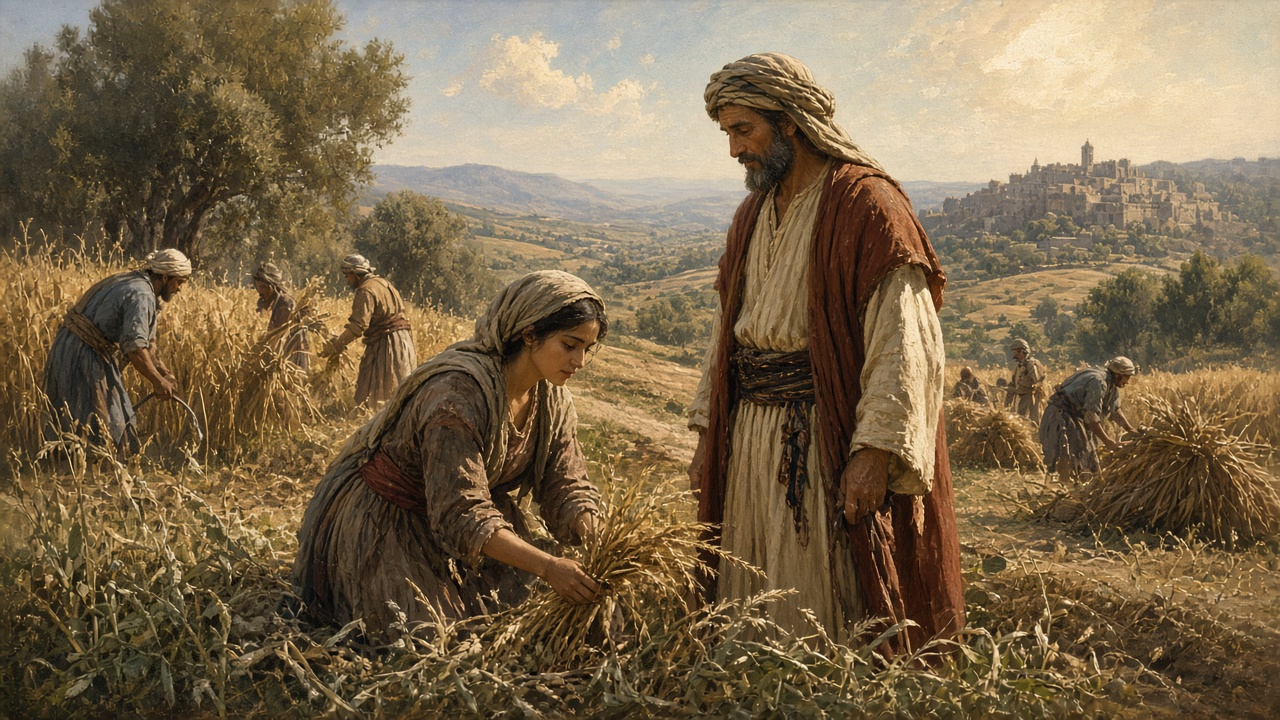
- Noemi voltou então a Belém com Rute, moabita e viúva de Malom, que se recusou a deixá-la. Orpa, viúva de Quiliom, acompanhou Noemi parte do caminho e depois retornou a Moabe. No vale a leste da cidade, Rute respigou nos campos e acabou se casando com Boaz, um parente rico.Fontes: Easton: Ruth · Orpah · Bethlehem · Boaz
- O dicionário bíblico de Easton (1897) diz que a história da respigadora Rute ilustra as relações amistosas entre Boaz e seus ceifeiros, o sistema de terras, o modo de transferir propriedade e o funcionamento da lei mosaica em favor de famílias arruinadas. Pela lei do levirato, Boaz, parente de Malom, assumiu o dever de casar-se com Rute.Fontes: Easton: Ruth · Boaz
- Rute tornou-se mãe de Obede, avô de Davi. A genealogia de Rute 4:18-22 traça essa linhagem, e Mateus 1:5 inclui Rute, uma gentia, entre os antepassados de Jesus. Easton também a compara com Tamar e Raabe, que igualmente se tornaram antepassadas de Davi.Fontes: Easton: Ruth · Obed · Ruth
- Belém, na região montanhosa de Judá, chamava-se originalmente Efrata; Rute 1:2 a chama Belém de Judá, e seus habitantes, efrateus. O dicionário bíblico de Easton (1897) explica Rute como “amiga” e Noemi como amarga ou triste, nome simbólico que ela mesma adotou por causa de suas desgraças.Fontes: Bethlehem · Ephrathah · Ruth · Naomi
Notas escritas com auxílio de IA a partir de fontes abertas (Theographic Bible Metadata, CC BY-SA 4.0; Easton’s Bible Dictionary, domínio público) e revisadas antes de publicar.
Naomi Becomes a Widow
1In the days when the judges ruled, there was a famine in the land. And a certain man from Bethlehem in Judah, with his wife and two sons, went to reside in the land of Moab. 2The man’s name was Elimelech, his wife’s name was Naomi, and the names of his two sons were Mahlon and Chilion. They were Ephrathites from Bethlehem in Judah, and they entered the land of Moab and settled there.
3Then Naomi’s husband Elimelech died, and she was left with her two sons, 4who took Moabite women as their wives, one named Orpah and the other named Ruth.
And after they had lived in Moab about ten years, 5both Mahlon and Chilion also died, and Naomi was left without her two sons and without her husband.
Ruth’s Loyalty to Naomi
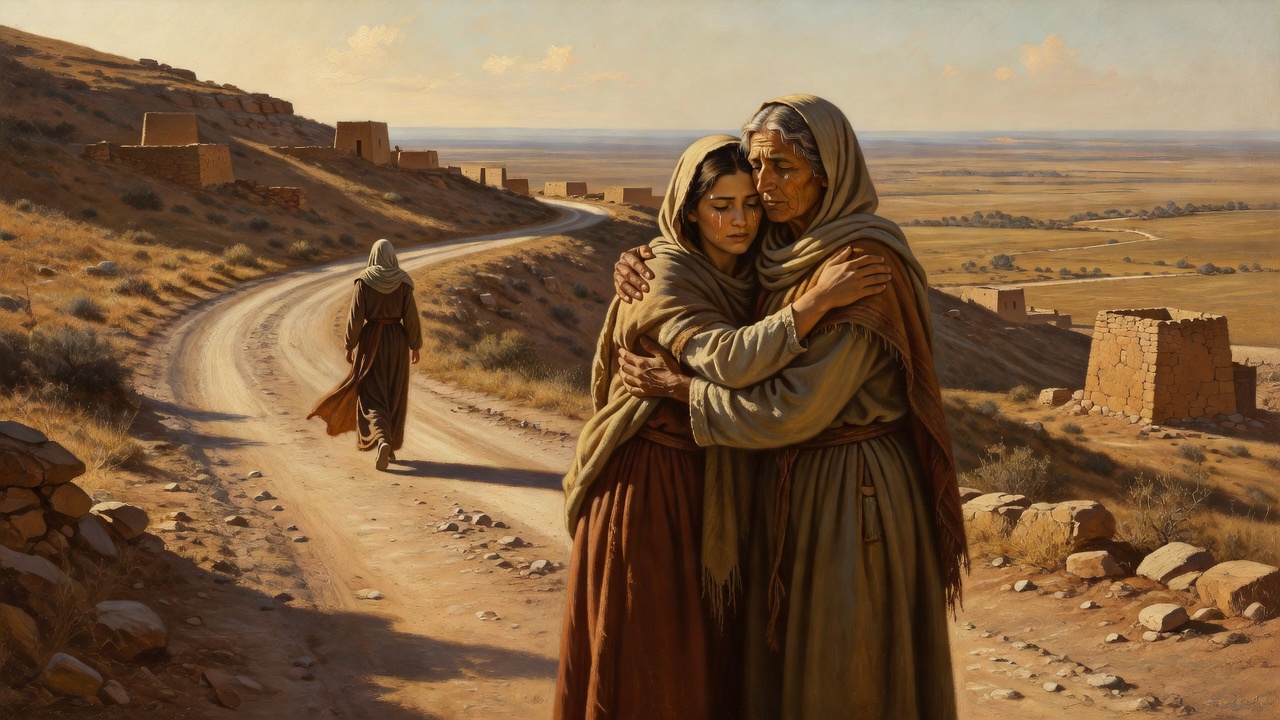
6When Naomi heard in Moab that the LORD had attended to His people by providing them with food, she and her daughters-in-law prepared to leave the land of Moab. 7Accompanied by her two daughters-in-law, she left the place where she had been living and set out on the road leading back to the land of Judah.
8Then Naomi said to her two daughters-in-law, “Go back, each of you to your mother’s home. May the LORD show you loving devotion, as you have shown to your dead and to me. 9May the LORD enable each of you to find rest in the home of your new husband.”
And she kissed them as they wept aloud 10and said, “Surely we will return with you to your people.”
11But Naomi replied, “Return home, my daughters. Why would you go with me? Are there still sons in my womb to become your husbands? 12Return home, my daughters. Go on, for I am too old to have another husband. Even if I thought there was hope for me to have a husband tonight and to bear sons, 13would you wait for them to grow up? Would you refrain from having husbands? No, my daughters, it grieves me very much for your sakes that the hand of the LORD has gone out against me.”
14Again they wept aloud, and Orpah kissed her mother-in-law goodbye, but Ruth clung to her.
15“Look,” said Naomi, “your sister-in-law has gone back to her people and her gods; follow her back home.”
16But Ruth replied:
“Do not urge me to leave you
or to turn from following you.
For wherever you go, I will go,
and wherever you live, I will live;
your people will be my people,
and your God will be my God.
17Where you die, I will die,
and there I will be buried.
May the LORD punish me,
and ever so severely,
if anything but death
separates you and me.”
18When Naomi saw that Ruth was determined to go with her, she stopped trying to persuade her.
The Return to Bethlehem
19So Naomi and Ruth traveled until they came to Bethlehem. When they entered Bethlehem, the whole city was stirred because of them, and the women of the city exclaimed, “Can this be Naomi?”
20“Do not call me Naomi,” she replied. “Call me Mara, because the Almighty has dealt quite bitterly with me. 21I went away full, but the LORD has brought me back empty. Why call me Naomi? After all, the LORD has testified against me, and the Almighty has afflicted me.”
22So Naomi returned from the land of Moab with her daughter-in-law Ruth the Moabitess. And they arrived in Bethlehem at the beginning of the barley harvest.
Você sabia?
O retorno de Noemi e Rute a Belém
- Nos dias em que os juízes governavam, a fome forçou Elimeleque e sua família de Belém, na região montanhosa de Judá, a migrarem para a terra de Moabe, a leste do Mar Morto. Após a morte de Elimeleque e de seus dois filhos, Noemi decidiu retornar a Belém ao ouvir que havia novamente alimento em Judá.Fontes: o próprio texto bíblico · Bethlehem · Moab · Elimelech
- Enquanto Orfa retornou ao seu povo e aos seus deuses em Moabe, Rute apegou-se à sua sogra e jurou lealdade a Noemi e ao seu Deus. Rute, uma mulher moabita, viajou para Belém e mais tarde se tornaria ancestral do rei Davi.Fontes: o próprio texto bíblico · Ruth · Orpah
- Ao chegar a Belém no início da colheita da cevada, Noemi pediu às mulheres da cidade que a chamassem de Mara, que significa amarga, porque sentia que o Todo-Poderoso havia lidado amargamente com ela. Ela havia saído cheia, com marido e dois filhos, mas retornou vazia após a morte deles.Fontes: o próprio texto bíblico · Naomi
Notas escritas com auxílio de IA a partir de fontes abertas (Theographic Bible Metadata, CC BY-SA 4.0; Easton’s Bible Dictionary, domínio público) e revisadas antes de publicar.
Lugares deste capítulo
- Bethlehem · 31.704, 35.208 · versículos 1, 2, 19, 22
- Moab · Hoje: Moab 1 · 31.181, 35.701 · versículos 1, 2, 4, 6, 22
Só aparecem lugares com identificação de alta confiança (90% ou mais segundo as fontes acadêmicas reunidas pelo OpenBible). Mapa da época: DARE (Digital Atlas of the Roman Empire), CC BY 4.0; mapa atual: © colaboradores do OpenStreetMap; lugares: OpenBible.info (CC BY 4.0).
Créditos e licença desta tradução
Berean Standard Bible
The Holy Bible in English: Berean Standard Bible
Public Domain
Language: English
Contributor: BSB Publishing, LLC
2026-10-02
Fonte: http://ebible.org/engbsb/ · eBible.org