Rut 1
Berean Standard Bible · Toca un versículo para ver sus referencias cruzadas.
Acerca de este libro
Acerca de Rut
- Los acontecimientos se sitúan en los días de los jueces. Una gran escasez llevó a Elimelec, hombre de la tribu de Judá y pariente de Booz, a dejar Belén con su esposa Noemí y sus hijos Mahlón y Quelión para establecerse en Moab, al este del Jordán y del mar Muerto. Allí murieron Elimelec y sus dos hijos.Fuentes: Elimelech · Moab · Mahlon · Chilion
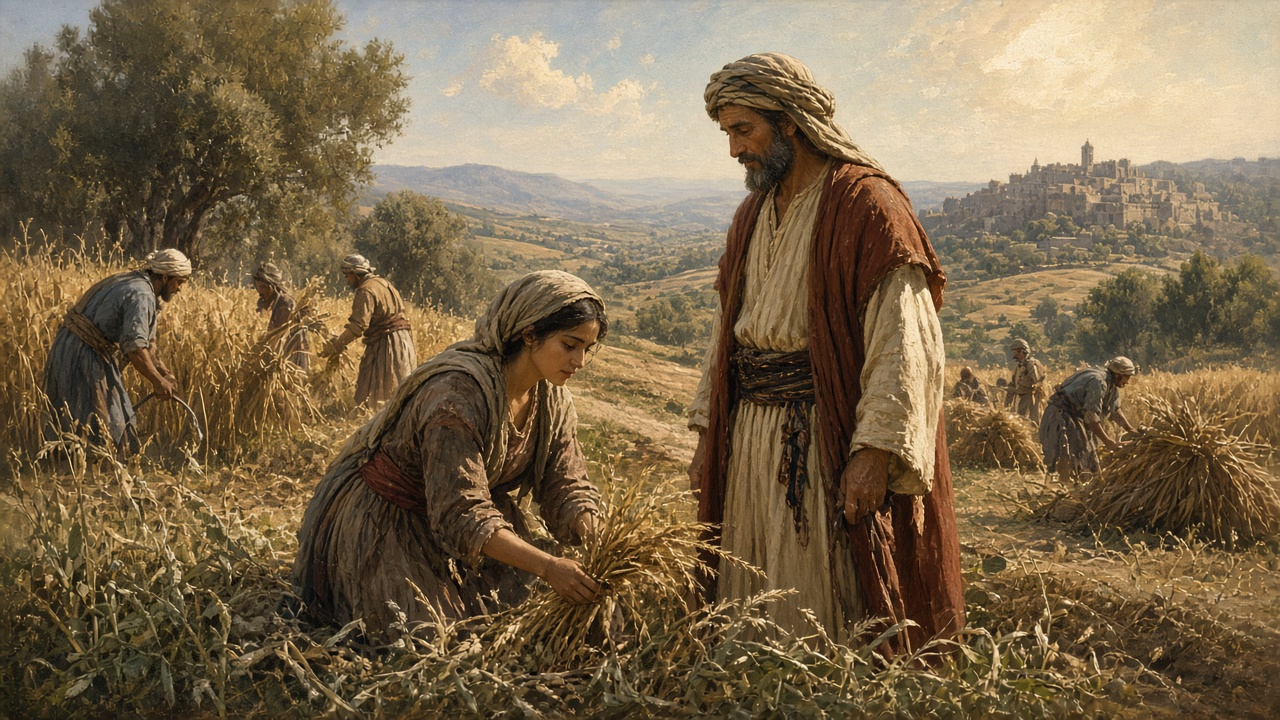
- Noemí regresó entonces a Belén con Rut, moabita y viuda de Mahlón, que se negó a dejarla. Orfa, viuda de Quelión, acompañó a Noemí parte del camino y luego volvió a Moab. En el valle al este de la ciudad, Rut espigó en los campos y acabó casándose con Booz, un pariente rico.Fuentes: Easton: Ruth · Orpah · Bethlehem · Boaz
- El diccionario bíblico de Easton (1897) dice que la historia de la espigadora Rut ilustra las relaciones amistosas entre Booz y sus segadores, el sistema de tierras, el modo de transferir la propiedad y el funcionamiento de la ley mosaica en favor de familias arruinadas. Por la ley del levirato, Booz, pariente de Mahlón, asumió el deber de casarse con Rut.Fuentes: Easton: Ruth · Boaz
- Rut fue madre de Obed, abuelo de David. La genealogía de Rut 4:18-22 traza esa línea, y Mateo 1:5 incluye a Rut, una gentil, entre los antepasados de Jesús. Easton también la compara con Tamar y Rahab, que igualmente llegaron a ser antepasadas de David.Fuentes: Easton: Ruth · Obed · Ruth
- Belén, en la región montañosa de Judá, se llamaba originalmente Efrata; Rut 1:2 la llama Belén de Judá, y a sus habitantes, efrateos. El diccionario bíblico de Easton (1897) explica Rut como «amiga» y Noemí como amarga o triste, nombre simbólico que ella misma se dio a causa de sus desgracias.Fuentes: Bethlehem · Ephrathah · Ruth · Naomi
Notas escritas con ayuda de IA a partir de fuentes abiertas (Theographic Bible Metadata, CC BY-SA 4.0; Easton’s Bible Dictionary, dominio público) y revisadas antes de publicarse.
Naomi Becomes a Widow
1In the days when the judges ruled, there was a famine in the land. And a certain man from Bethlehem in Judah, with his wife and two sons, went to reside in the land of Moab. 2The man’s name was Elimelech, his wife’s name was Naomi, and the names of his two sons were Mahlon and Chilion. They were Ephrathites from Bethlehem in Judah, and they entered the land of Moab and settled there.
3Then Naomi’s husband Elimelech died, and she was left with her two sons, 4who took Moabite women as their wives, one named Orpah and the other named Ruth.
And after they had lived in Moab about ten years, 5both Mahlon and Chilion also died, and Naomi was left without her two sons and without her husband.
Ruth’s Loyalty to Naomi
6When Naomi heard in Moab that the LORD had attended to His people by providing them with food, she and her daughters-in-law prepared to leave the land of Moab. 7Accompanied by her two daughters-in-law, she left the place where she had been living and set out on the road leading back to the land of Judah.
8Then Naomi said to her two daughters-in-law, “Go back, each of you to your mother’s home. May the LORD show you loving devotion, as you have shown to your dead and to me. 9May the LORD enable each of you to find rest in the home of your new husband.”
And she kissed them as they wept aloud 10and said, “Surely we will return with you to your people.”
11But Naomi replied, “Return home, my daughters. Why would you go with me? Are there still sons in my womb to become your husbands? 12Return home, my daughters. Go on, for I am too old to have another husband. Even if I thought there was hope for me to have a husband tonight and to bear sons, 13would you wait for them to grow up? Would you refrain from having husbands? No, my daughters, it grieves me very much for your sakes that the hand of the LORD has gone out against me.”
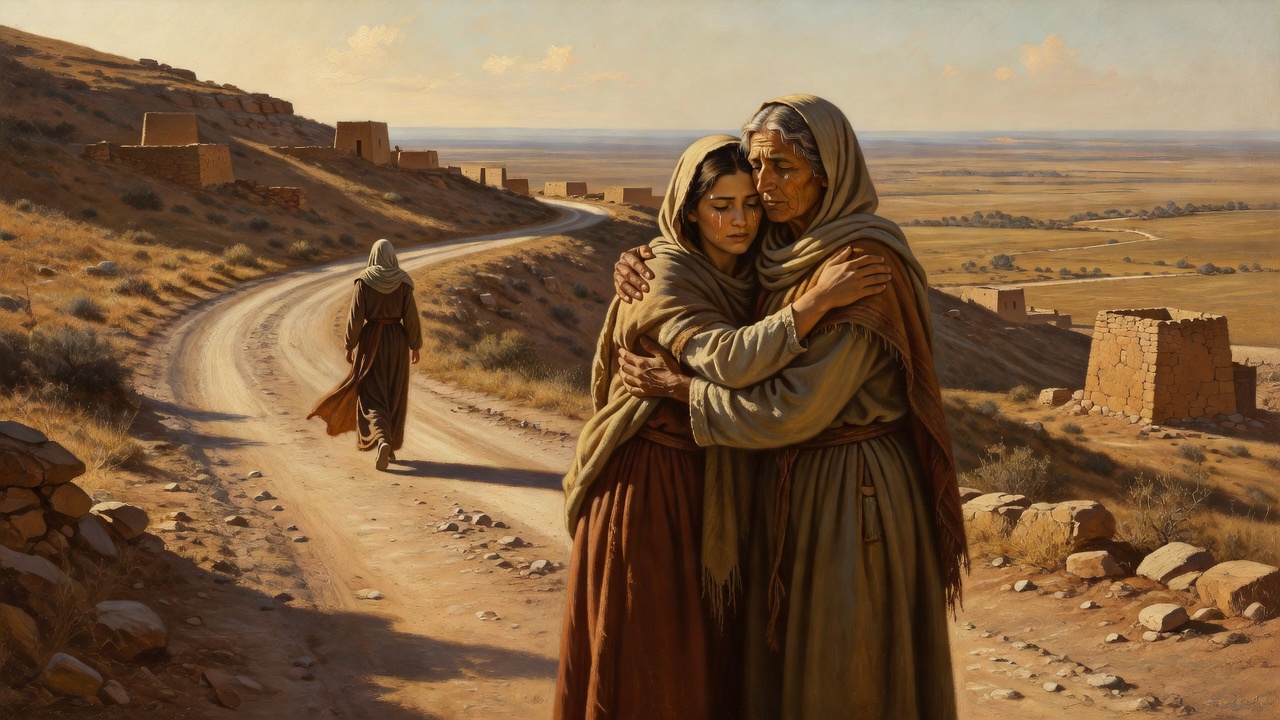
14Again they wept aloud, and Orpah kissed her mother-in-law goodbye, but Ruth clung to her.
15“Look,” said Naomi, “your sister-in-law has gone back to her people and her gods; follow her back home.”
16But Ruth replied:
“Do not urge me to leave you
or to turn from following you.
For wherever you go, I will go,
and wherever you live, I will live;
your people will be my people,
and your God will be my God.
17Where you die, I will die,
and there I will be buried.
May the LORD punish me,
and ever so severely,
if anything but death
separates you and me.”
18When Naomi saw that Ruth was determined to go with her, she stopped trying to persuade her.
The Return to Bethlehem
19So Naomi and Ruth traveled until they came to Bethlehem. When they entered Bethlehem, the whole city was stirred because of them, and the women of the city exclaimed, “Can this be Naomi?”
20“Do not call me Naomi,” she replied. “Call me Mara, because the Almighty has dealt quite bitterly with me. 21I went away full, but the LORD has brought me back empty. Why call me Naomi? After all, the LORD has testified against me, and the Almighty has afflicted me.”
22So Naomi returned from the land of Moab with her daughter-in-law Ruth the Moabitess. And they arrived in Bethlehem at the beginning of the barley harvest.
¿Sabías que…?
El regreso de Noemí y Rut a Belén
- En los días en que gobernaban los jueces, el hambre obligó a Elimelec y a su familia de Belén, en la región montañosa de Judá, a emigrar a la tierra de Moab, al este del mar Muerto. Tras la muerte de Elimelec y de sus dos hijos, Noemí decidió regresar a Belén cuando supo que volvía a haber alimento en Judá.Fuentes: el propio texto bíblico · Bethlehem · Moab · Elimelech
- Mientras que Orfa regresó a su pueblo y a sus dioses en Moab, Rut se aferró a su suegra y juró lealtad a Noemí y a su Dios. Rut, una mujer moabita, viajó a Belén y más tarde se convertiría en antepasada del rey David.Fuentes: el propio texto bíblico · Ruth · Orpah
- Al llegar a Belén al comienzo de la siega de la cebada, Noemí pidió a las mujeres de la ciudad que la llamaran Mara, que significa amarga, porque sentía que el Todopoderoso la había tratado con gran amargura. Había partido llena con esposo y dos hijos, pero regresó vacía tras la muerte de ellos.Fuentes: el propio texto bíblico · Naomi
Notas escritas con ayuda de IA a partir de fuentes abiertas (Theographic Bible Metadata, CC BY-SA 4.0; Easton’s Bible Dictionary, dominio público) y revisadas antes de publicarse.
Lugares de este capítulo
- Bethlehem · 31.704, 35.208 · versículos 1, 2, 19, 22
- Moab · Hoy: Moab 1 · 31.181, 35.701 · versículos 1, 2, 4, 6, 22
Solo aparecen lugares identificados con alta confianza (90 % o más según las fuentes académicas reunidas por OpenBible). Mapa de la época: DARE (Digital Atlas of the Roman Empire), CC BY 4.0; mapa actual: © colaboradores de OpenStreetMap; lugares: OpenBible.info (CC BY 4.0).
Créditos y licencia de esta traducción
Berean Standard Bible
The Holy Bible in English: Berean Standard Bible
Public Domain
Language: English
Contributor: BSB Publishing, LLC
2026-10-02
Fuente: http://ebible.org/engbsb/ · eBible.org