Jonas 1
Berean Standard Bible · Toque num versículo para ver as referências cruzadas.
Sobre este livro
Sobre Jonas
- Jonas, cujo nome significa “uma pomba”, era filho de Amitai, de Gate-Hefer, e profeta de Israel. O Easton's Bible Dictionary (1897) sustenta que ele mesmo escreveu o livro. Seu ministério é situado bem no início do reinado de Jeroboão II: foi contemporâneo de Oseias e Amós, ou possivelmente anterior, e assim pode ter sido o mais antigo dos profetas cujos escritos se conservam.Fontes: Jonah · Amittai · Easton: Jonah, Book of
- O livro se apresenta como o relato do que de fato aconteceu ao profeta. Alguns críticos o leram como parábola ou alegoria, e não como história, porque o milagre ocupa lugar tão grande e a forma é narrativa, não profética, ou porque negam os milagres por completo. O Easton's Bible Dictionary (1897), ao contrário, o trata como história e dá grande peso à menção de Jonas em Mateus 12:39-40 e Lucas 11:29.Fontes: Easton: Jonah, Book of
- Jonas recebeu o encargo de ir a Nínive, descrita como cidade grande e populosa e florescente capital do império assírio, mas embarcou em Jope, o principal porto marítimo de Judá, para fugir em direção a Társis. A localização de Társis é disputada: alguns a situam no Oriente, na costa da Índia, outros a identificam com Cartago, e o dicionário de Easton a entende como um porto fenício na Espanha.Fontes: Easton: Jonah, Book of · Nineveh · Joppa · Tarshish
- O esboço de Easton tem quatro movimentos: o encargo divino, a desobediência e o castigo; a oração de Jonas e seu livramento; um segundo encargo, o arrependimento dos ninivitas e a misericórdia de Deus que os poupou; e a ira de Jonas diante dessa misericórdia, seguida de uma repreensão. O mesmo dicionário observa que Nínive foi poupada por mais de um século depois da missão dele.Fontes: Easton: Jonah, Book of
- Como profeta de Israel, Jonas anunciou a restauração das antigas fronteiras do reino. Uma nota biográfica o apresenta tanto como missionário enviado a Nínive quanto como tipo do Filho do homem. O livro de Naum é ocupado quase inteiramente por denúncias contra essa cidade, e Sofonias também prediz a sua destruição.Fontes: Jonah · Nineveh
Notas escritas com auxílio de IA a partir de fontes abertas (Theographic Bible Metadata, CC BY-SA 4.0; Easton’s Bible Dictionary, domínio público) e revisadas antes de publicar.
Jonah Flees from the LORD
1Now the word of the LORD came to Jonah son of Amittai, saying, 2“Get up! Go to the great city of Nineveh and preach against it, because its wickedness has come up before Me.”
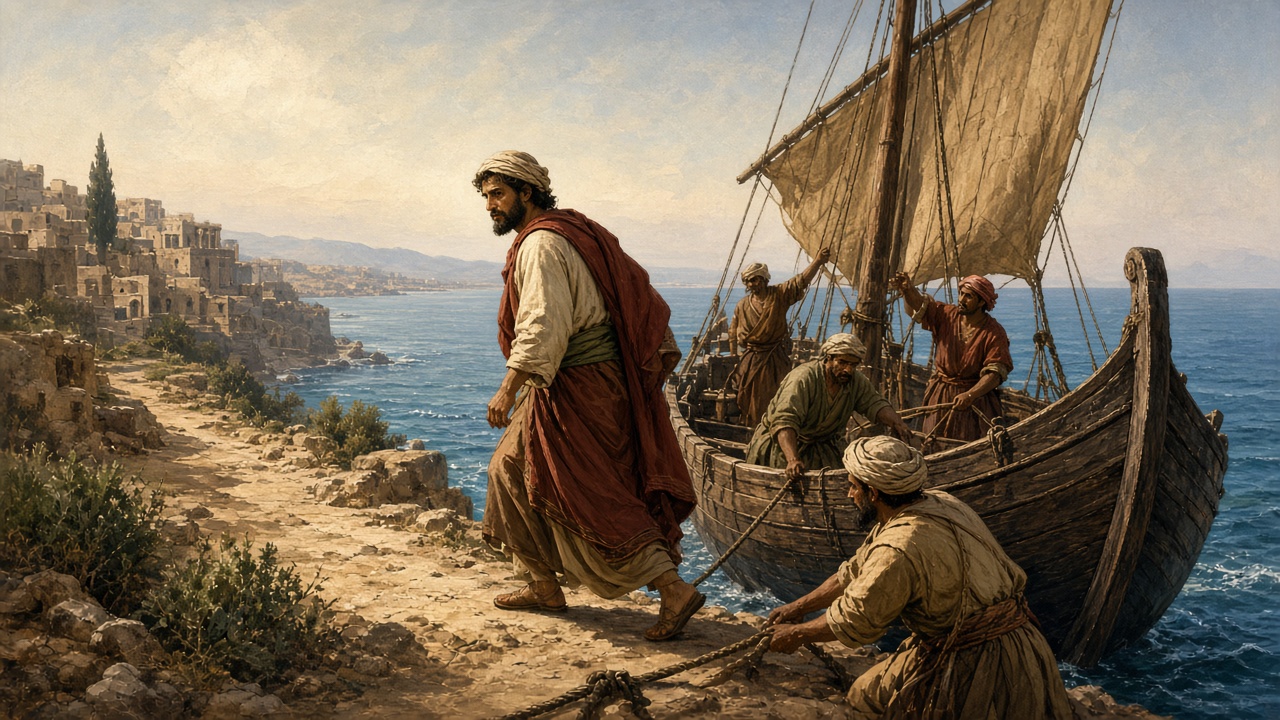
3Jonah, however, got up to flee to Tarshish, away from the presence of the LORD. He went down to Joppa and found a ship bound for Tarshish. So he paid the fare and went aboard to sail for Tarshish, away from the presence of the LORD.
The Great Storm
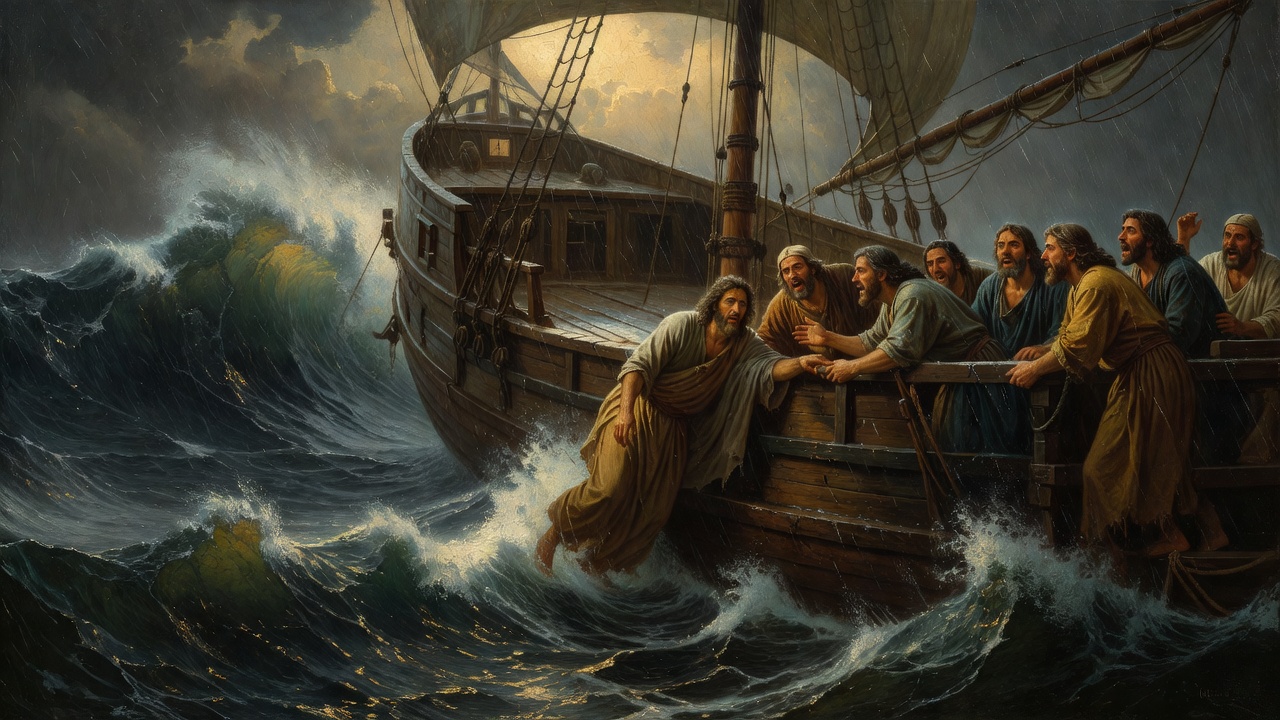
4Then the LORD hurled a great wind upon the sea, and such a violent storm arose that the ship was in danger of breaking apart. 5The sailors were afraid, and each cried out to his own god. And they threw the ship’s cargo into the sea to lighten the load. But Jonah had gone down to the lowest part of the vessel, where he lay down and fell into a deep sleep.
6The captain approached him and said, “How can you sleep? Get up and call upon your God. Perhaps this God will consider us, so that we may not perish.”
7“Come!” said the sailors to one another. “Let us cast lots to find out who is responsible for this calamity that is upon us.”
So they cast lots, and the lot fell on Jonah.
8“Tell us now,” they demanded, “who is to blame for this calamity that is upon us? What is your occupation, and where have you come from? What is your country, and who are your people?”
9“I am a Hebrew,” replied Jonah. “I worship the LORD, the God of the heavens, who made the sea and the dry land.”
10Then the men were even more afraid and said to him, “What have you done?” The men knew that he was fleeing from the presence of the LORD, because he had told them.
Jonah Cast into the Sea
11Now the sea was growing worse and worse, so they said to Jonah, “What must we do to you to calm this sea for us?”
12“Pick me up,” he answered, “and cast me into the sea, so it may quiet down for you. For I know that I am to blame for this violent storm that has come upon you.”
13Nevertheless, the men rowed hard to get back to dry land, but they could not, for the sea was raging against them more and more.
14So they cried out to the LORD: “Please, O LORD, do not let us perish on account of this man’s life! Do not charge us with innocent blood! For You, O LORD, have done as You pleased.”
15At this, they picked up Jonah and cast him into the sea, and the raging sea grew calm.
16Then the men feared the LORD greatly, and they offered a sacrifice to the LORD and made vows to Him.
17Now the LORD had appointed a great fish to swallow Jonah, and Jonah spent three days and three nights in the belly of the fish.
Você sabia?
Jonas foge do Senhor
- Jonas, filho de Amitai e natural de Gate-Héfer, também é mencionado em 2 Reis 14:25 como profeta em Israel durante o reinado de Jeroboão II. Deus lhe ordenou que viajasse para o leste até Nínive, a florescente e populosa capital do Império Assírio, para adverti-la de sua maldade.Fontes: Jonah · Amittai · Nineveh · o próprio texto bíblico
- Em vez de viajar por terra em direção ao nordeste até Nínive, Jonas desceu ao porto de Jope, no Mediterrâneo, para embarcar rumo a Társis. Társis é tradicionalmente identificada como um porto fenício no extremo ocidente, no sul da Espanha, a direção exatamente oposta.Fontes: Joppa · Tarshish · o próprio texto bíblico
- Os marinheiros a bordo do navio comercial tinham origens politeístas e clamavam cada um ao seu próprio deus durante a violenta tempestade. Depois de lançarem a carga ao mar para aliviar a embarcação, recorreram ao antigo costume de lançar sortes para descobrir quem era o responsável pela calamidade.Fontes: o próprio texto bíblico
Notas escritas com auxílio de IA a partir de fontes abertas (Theographic Bible Metadata, CC BY-SA 4.0; Easton’s Bible Dictionary, domínio público) e revisadas antes de publicar.
Lugares deste capítulo
Só aparecem lugares com identificação de alta confiança (90% ou mais segundo as fontes acadêmicas reunidas pelo OpenBible). Mapa da época: DARE (Digital Atlas of the Roman Empire), CC BY 4.0; mapa atual: © colaboradores do OpenStreetMap; lugares: OpenBible.info (CC BY 4.0).
Créditos e licença desta tradução
Berean Standard Bible
The Holy Bible in English: Berean Standard Bible
Public Domain
Language: English
Contributor: BSB Publishing, LLC
2026-10-02
Fonte: http://ebible.org/engbsb/ · eBible.org