2 Samuel 1
Berean Standard Bible · Toque num versículo para ver as referências cruzadas.
Sobre este livro
Sobre 2 Samuel
- O Dicionário Bíblico de Easton (1897) diz que os livros de Samuel foram provavelmente escritos por Samuel, Gade e Natã. Segundo esse verbete, Samuel redigiu os primeiros vinte e quatro capítulos do primeiro livro; Gade, companheiro de Davi, continuou a história, e Natã a concluiu, provavelmente organizando o conjunto. O verbete não indica data de redação, mas diz que 2 Samuel abrange talvez cinquenta anos, o reinado de Davi.Fontes: Easton: Samuel, Books of
- Depois da morte de Saul, Davi foi feito rei sobre Judá e reinou em Hebrom, enquanto Abner, comandante do exército de Saul, fez proclamar rei a Isbosete. Isbosete reinou em Maanaim, além do Jordão, e houve um estado de guerra entre os dois reis. Joabe, capitão do exército durante todo o reinado de Davi, liderou o assalto à fortaleza no monte Sião, em Jerusalém, e por esse serviço foi elevado ao posto de príncipe do exército do rei.Fontes: Abner · Mahanaim · Joab · Jerusalem
- Easton descreve 2 Samuel como uma história do reinado de Davi, sobretudo em seus aspectos políticos: sobre Judá nos capítulos 1 a 4 e sobre todo o Israel nos capítulos 5 a 24. Os quatro últimos capítulos são tratados como uma espécie de apêndice, que registra vários acontecimentos, mas não em ordem cronológica. Os livros não são histórias completas; há lacunas frequentes porque, na visão de Easton, o objetivo é o desenvolvimento gradual do reino de Deus, e não um relato completo de cada reinado.Fontes: Easton: Samuel, Books of
- Os tradutores da Septuaginta consideraram os livros de Samuel e de Reis como uma única história contínua, que dividiram em quatro livros chamados Livros do Reino. A Vulgata seguiu essa divisão, mas os nomeou Livros dos Reis, de modo que os livros chamados Primeiro e Segundo Samuel nas versões protestantes modernas eram o Primeiro e o Segundo Livros dos Reis. Easton também observa que o relato do pecado de Davi no caso de Bate-Seba, em 2 Samuel 11:2-12:29, é omitido na passagem correspondente de 1 Crônicas 20.Fontes: Easton: Samuel, Books of
Notas escritas com auxílio de IA a partir de fontes abertas (Theographic Bible Metadata, CC BY-SA 4.0; Easton’s Bible Dictionary, domínio público) e revisadas antes de publicar.
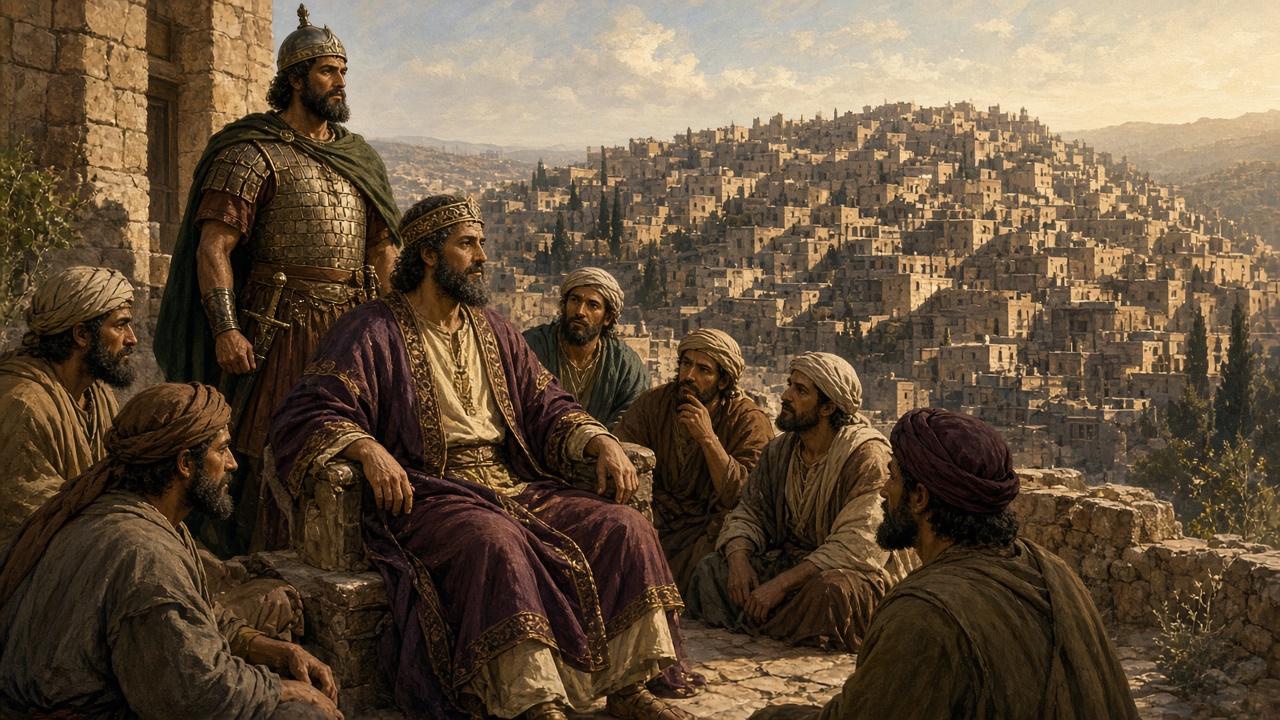
Saul’s Death Reported to David
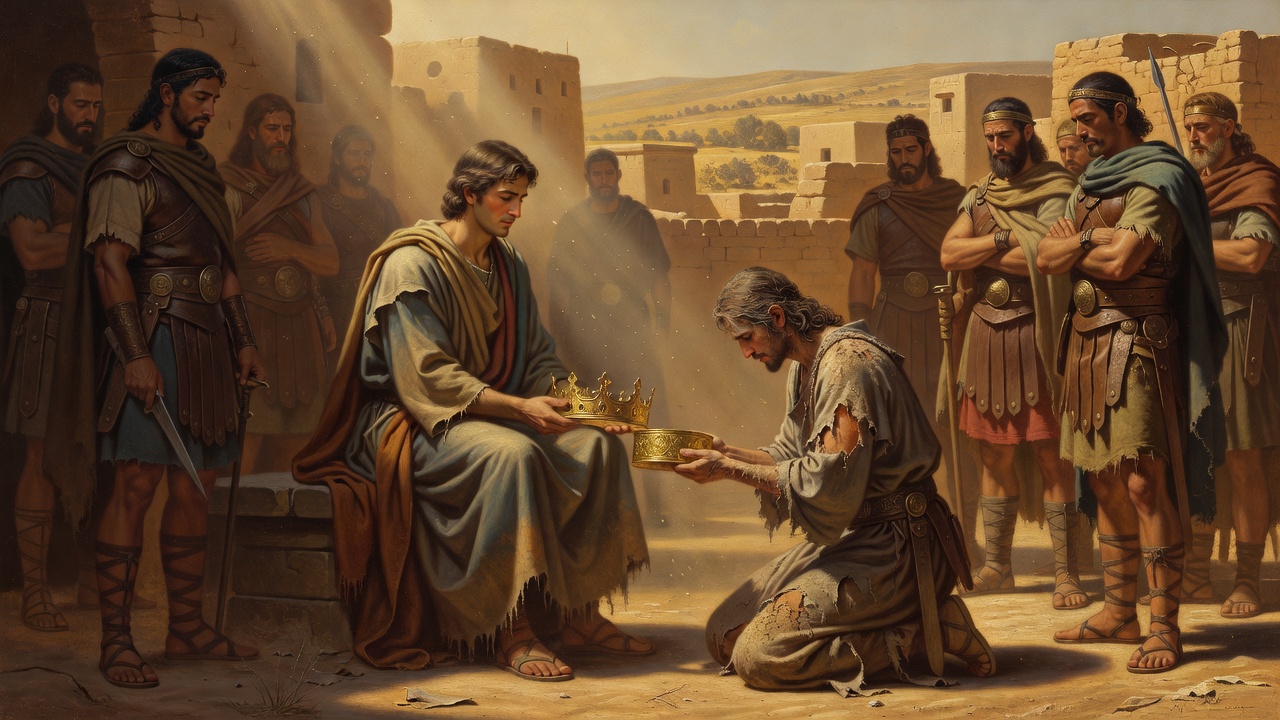
1After the death of Saul, David returned from the slaughter of the Amalekites and stayed in Ziklag two days. 2On the third day a man with torn clothes and dust on his head arrived from Saul’s camp. When he came to David, he fell to the ground to pay him homage.
3“Where have you come from?” David asked.
“I have escaped from the Israelite camp,” he replied.
4“What was the outcome?” David asked. “Please tell me.”
“The troops fled from the battle,” he replied. “Many of them fell and died. And Saul and his son Jonathan are also dead.”
5Then David asked the young man who had brought him the report, “How do you know that Saul and his son Jonathan are dead?”
6“I happened to be on Mount Gilboa,” he replied, “and there was Saul, leaning on his spear, with the chariots and the cavalry closing in on him. 7When he turned around and saw me, he called out and I answered, ‘Here I am!’
8‘Who are you?’ he asked.
So I told him, ‘I am an Amalekite.’
9Then he begged me, ‘Stand over me and kill me, for agony has seized me, but my life still lingers.’
10So I stood over him and killed him, because I knew that after he had fallen he could not survive. And I took the crown that was on his head and the band that was on his arm, and I have brought them here to my lord.”
11Then David took hold of his own clothes and tore them, and all the men who were with him did the same. 12They mourned and wept and fasted until evening for Saul and his son Jonathan, and for the people of the LORD and the house of Israel, because they had fallen by the sword.
13And David inquired of the young man who had brought him the report, “Where are you from?”
“I am the son of a foreigner,” he answered. “I am an Amalekite.”
14So David asked him, “Why were you not afraid to lift your hand to destroy the LORD’s anointed?” 15Then David summoned one of the young men and said, “Go, execute him!” So the young man struck him down, and he died. 16For David had said to the Amalekite, “Your blood be on your own head because your own mouth has testified against you, saying, ‘I killed the LORD’s anointed.’”
David’s Song for Saul and Jonathan
17Then David took up this lament for Saul and his son Jonathan, 18and he ordered that the sons of Judah be taught the Song of the Bow. It is written in the Book of Jashar:
19“Your glory, O Israel, lies slain on your heights.
How the mighty have fallen!
20Tell it not in Gath;
proclaim it not in the streets of Ashkelon,
lest the daughters of the Philistines rejoice,
and the daughters of the uncircumcised exult.
21O mountains of Gilboa,
may you have no dew or rain,
no fields yielding offerings of grain.
For there the shield of the mighty was defiled,
the shield of Saul, no longer anointed with oil.
22From the blood of the slain,
from the fat of the mighty,
the bow of Jonathan did not retreat,
and the sword of Saul did not return empty.
23Saul and Jonathan, beloved and delightful in life,
were not divided in death.
They were swifter than eagles,
they were stronger than lions.
24O daughters of Israel,
weep for Saul,
who clothed you in scarlet and luxury,
who decked your garments with ornaments of gold.
25How the mighty have fallen in the thick of battle!
Jonathan lies slain on your heights.
26I grieve for you, Jonathan, my brother.
You were delightful to me;
your love to me was extraordinary,
surpassing the love of women.
27How the mighty have fallen
and the weapons of war have perished!”
Você sabia?
Davi lamenta a morte de Saul e Jônatas
- Davi ordenou que os filhos de Judá aprendessem seu lamento por Saul e Jônatas, chamado de Cântico do Arco. Essa elegia fúnebre foi registrada no Livro de Jasar, uma antiga coletânea de cânticos em honra a líderes e feitos notáveis de Israel.Fontes: Jasher · o próprio texto bíblico
- Em sua lamentação, Davi pediu que a tragédia não fosse anunciada em Gate nem nas ruas de Ascalom, duas importantes cidades filisteias. Ele lamentava que a notícia da derrota no monte Gilboa levasse as filhas dos filisteus a celebrar sobre os líderes caídos de Israel.Fontes: Gath · Ashkelon · o próprio texto bíblico
- Davi recebeu a notícia da morte de Saul enquanto estava em Ziclague, uma cidade no Neguebe concedida a ele pelo rei filisteu de Gate. O mensageiro levou a coroa e o bracelete reais de Saul diretamente a Davi após a batalha no monte Gilboa.Fontes: Ziklag · o próprio texto bíblico
Notas escritas com auxílio de IA a partir de fontes abertas (Theographic Bible Metadata, CC BY-SA 4.0; Easton’s Bible Dictionary, domínio público) e revisadas antes de publicar.
Lugares deste capítulo
- Mount Gilboa · 32.434, 35.414 · versículos 6, 21
- Ashkelon · Hoje: Tel Ashkelon · 31.664, 34.546 · versículo 20
Só aparecem lugares com identificação de alta confiança (90% ou mais segundo as fontes acadêmicas reunidas pelo OpenBible). Mapa da época: DARE (Digital Atlas of the Roman Empire), CC BY 4.0; mapa atual: © colaboradores do OpenStreetMap; lugares: OpenBible.info (CC BY 4.0).
Créditos e licença desta tradução
Berean Standard Bible
The Holy Bible in English: Berean Standard Bible
Public Domain
Language: English
Contributor: BSB Publishing, LLC
2026-10-02
Fonte: http://ebible.org/engbsb/ · eBible.org