2 Samuel 1
Berean Standard Bible · Toca un versículo para ver sus referencias cruzadas.
Acerca de este libro
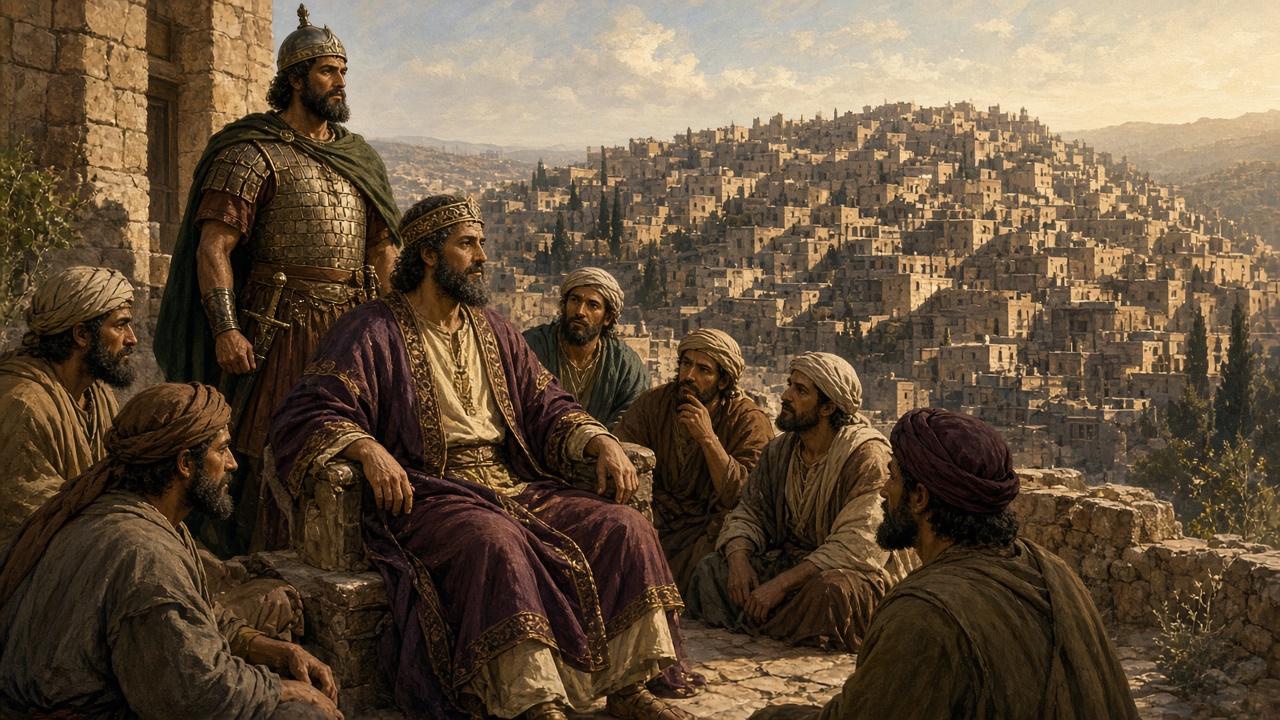
Acerca de 2 Samuel
- El Diccionario Bíblico de Easton (1897) dice que los libros de Samuel fueron escritos probablemente por Samuel, Gad y Natán. Según ese artículo, Samuel redactó los primeros veinticuatro capítulos del primer libro; Gad, compañero de David, continuó la historia, y Natán la completó, probablemente ordenando el conjunto. El artículo no da fecha de redacción, pero dice que 2 Samuel abarca quizá cincuenta años, el reinado de David.Fuentes: Easton: Samuel, Books of
- Tras la muerte de Saúl, David fue hecho rey sobre Judá y reinó en Hebrón, mientras Abner, comandante del ejército de Saúl, hizo proclamar rey a Is-boset. Is-boset reinó en Mahanaim, al otro lado del Jordán, y hubo un estado de guerra entre los dos reyes. Joab, capitán del ejército durante todo el reinado de David, dirigió el asalto a la fortaleza del monte Sion, en Jerusalén, y por ese servicio fue elevado al rango de príncipe del ejército del rey.Fuentes: Abner · Mahanaim · Joab · Jerusalem
- Easton describe 2 Samuel como una historia del reinado de David, sobre todo en sus aspectos políticos: sobre Judá en los capítulos 1 a 4 y sobre todo Israel en los capítulos 5 a 24. Los últimos cuatro capítulos se tratan como una especie de apéndice, que registra varios sucesos, pero no en orden cronológico. Los libros no son historias completas; hay lagunas frecuentes porque, según Easton, su propósito es el desarrollo gradual del reino de Dios, y no un relato completo de cada reinado.Fuentes: Easton: Samuel, Books of
- Los traductores de la Septuaginta consideraron los libros de Samuel y de Reyes como una sola historia continua, que dividieron en cuatro libros llamados Libros del Reino. La Vulgata siguió esa división, pero los llamó Libros de los Reyes, de modo que los libros llamados Primero y Segundo Samuel en las versiones protestantes modernas eran el Primero y el Segundo Libros de los Reyes. Easton también señala que el relato del pecado de David en el asunto de Betsabé, en 2 Samuel 11:2-12:29, se omite en el pasaje correspondiente de 1 Crónicas 20.Fuentes: Easton: Samuel, Books of
Notas escritas con ayuda de IA a partir de fuentes abiertas (Theographic Bible Metadata, CC BY-SA 4.0; Easton’s Bible Dictionary, dominio público) y revisadas antes de publicarse.
Saul’s Death Reported to David
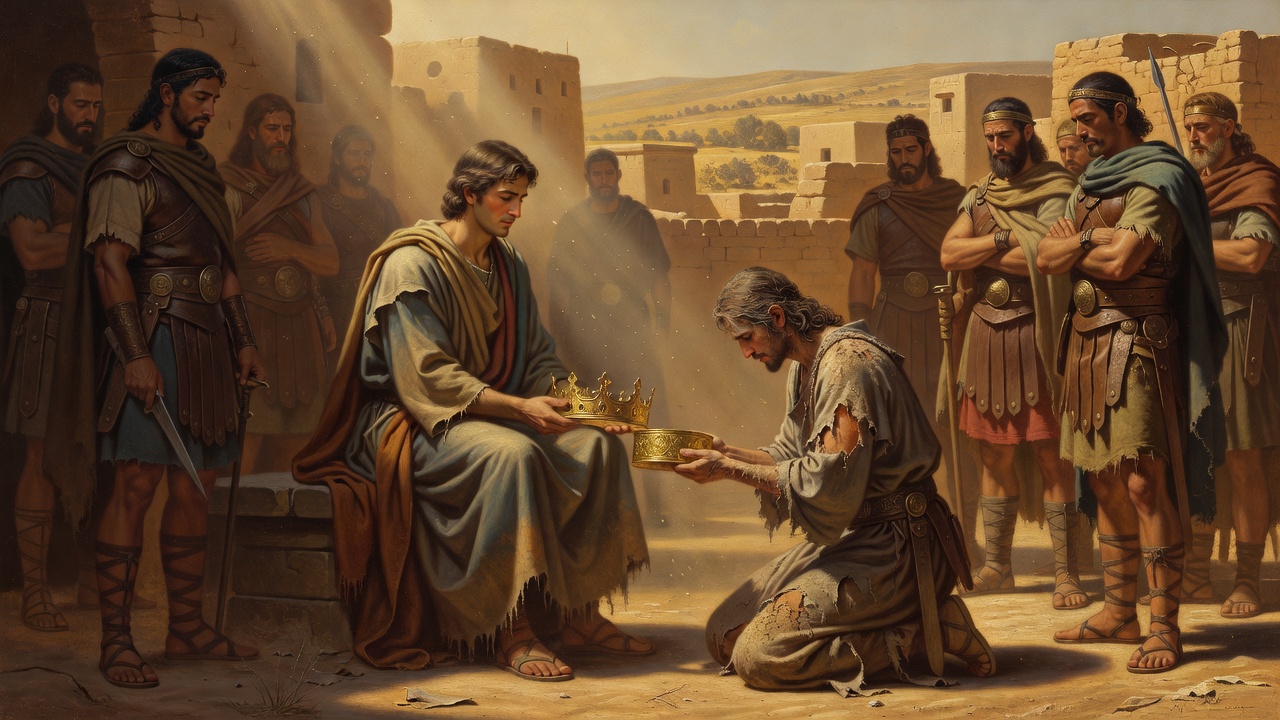
1After the death of Saul, David returned from the slaughter of the Amalekites and stayed in Ziklag two days. 2On the third day a man with torn clothes and dust on his head arrived from Saul’s camp. When he came to David, he fell to the ground to pay him homage.
3“Where have you come from?” David asked.
“I have escaped from the Israelite camp,” he replied.
4“What was the outcome?” David asked. “Please tell me.”
“The troops fled from the battle,” he replied. “Many of them fell and died. And Saul and his son Jonathan are also dead.”
5Then David asked the young man who had brought him the report, “How do you know that Saul and his son Jonathan are dead?”
6“I happened to be on Mount Gilboa,” he replied, “and there was Saul, leaning on his spear, with the chariots and the cavalry closing in on him. 7When he turned around and saw me, he called out and I answered, ‘Here I am!’
8‘Who are you?’ he asked.
So I told him, ‘I am an Amalekite.’
9Then he begged me, ‘Stand over me and kill me, for agony has seized me, but my life still lingers.’
10So I stood over him and killed him, because I knew that after he had fallen he could not survive. And I took the crown that was on his head and the band that was on his arm, and I have brought them here to my lord.”
11Then David took hold of his own clothes and tore them, and all the men who were with him did the same. 12They mourned and wept and fasted until evening for Saul and his son Jonathan, and for the people of the LORD and the house of Israel, because they had fallen by the sword.
13And David inquired of the young man who had brought him the report, “Where are you from?”
“I am the son of a foreigner,” he answered. “I am an Amalekite.”
14So David asked him, “Why were you not afraid to lift your hand to destroy the LORD’s anointed?” 15Then David summoned one of the young men and said, “Go, execute him!” So the young man struck him down, and he died. 16For David had said to the Amalekite, “Your blood be on your own head because your own mouth has testified against you, saying, ‘I killed the LORD’s anointed.’”
David’s Song for Saul and Jonathan
17Then David took up this lament for Saul and his son Jonathan, 18and he ordered that the sons of Judah be taught the Song of the Bow. It is written in the Book of Jashar:
19“Your glory, O Israel, lies slain on your heights.
How the mighty have fallen!
20Tell it not in Gath;
proclaim it not in the streets of Ashkelon,
lest the daughters of the Philistines rejoice,
and the daughters of the uncircumcised exult.
21O mountains of Gilboa,
may you have no dew or rain,
no fields yielding offerings of grain.
For there the shield of the mighty was defiled,
the shield of Saul, no longer anointed with oil.
22From the blood of the slain,
from the fat of the mighty,
the bow of Jonathan did not retreat,
and the sword of Saul did not return empty.
23Saul and Jonathan, beloved and delightful in life,
were not divided in death.
They were swifter than eagles,
they were stronger than lions.
24O daughters of Israel,
weep for Saul,
who clothed you in scarlet and luxury,
who decked your garments with ornaments of gold.
25How the mighty have fallen in the thick of battle!
Jonathan lies slain on your heights.
26I grieve for you, Jonathan, my brother.
You were delightful to me;
your love to me was extraordinary,
surpassing the love of women.
27How the mighty have fallen
and the weapons of war have perished!”
¿Sabías que…?
David lamenta la muerte de Saúl y Jonatán
- David ordenó que a los hijos de Judá se les enseñara su lamento por Saúl y Jonatán, conocido como el Cántico del Arco. Esta elegía fúnebre fue registrada en el Libro de Jaser, una antigua colección de cantos que honraba a líderes y hechos notables de Israel.Fuentes: Jasher · el propio texto bíblico
- En su lamento, David pidió que la tragedia no fuera proclamada en Gat ni en las calles de Ascalón, dos destacadas ciudades filisteas. Lamentaba que la noticia de la derrota en el monte Gilboa hiciera que las hijas de los filisteos se regocijaran por los líderes caídos de Israel.Fuentes: Gath · Ashkelon · el propio texto bíblico
- David recibió la noticia de la muerte de Saúl mientras residía en Siclag, una ciudad en el Neguev que le había sido concedida por el rey filisteo de Gat. El mensajero llevó la corona real y el brazalete de Saúl ante David tras la batalla en el monte Gilboa.Fuentes: Ziklag · el propio texto bíblico
Notas escritas con ayuda de IA a partir de fuentes abiertas (Theographic Bible Metadata, CC BY-SA 4.0; Easton’s Bible Dictionary, dominio público) y revisadas antes de publicarse.
Lugares de este capítulo
- Mount Gilboa · 32.434, 35.414 · versículos 6, 21
- Ashkelon · Hoy: Tel Ashkelon · 31.664, 34.546 · versículo 20
Solo aparecen lugares identificados con alta confianza (90 % o más según las fuentes académicas reunidas por OpenBible). Mapa de la época: DARE (Digital Atlas of the Roman Empire), CC BY 4.0; mapa actual: © colaboradores de OpenStreetMap; lugares: OpenBible.info (CC BY 4.0).
Créditos y licencia de esta traducción
Berean Standard Bible
The Holy Bible in English: Berean Standard Bible
Public Domain
Language: English
Contributor: BSB Publishing, LLC
2026-10-02
Fuente: http://ebible.org/engbsb/ · eBible.org