1 Pedro 1
Berean Standard Bible · Toque num versículo para ver as referências cruzadas.
Sobre este livro
Sobre 1 Pedro
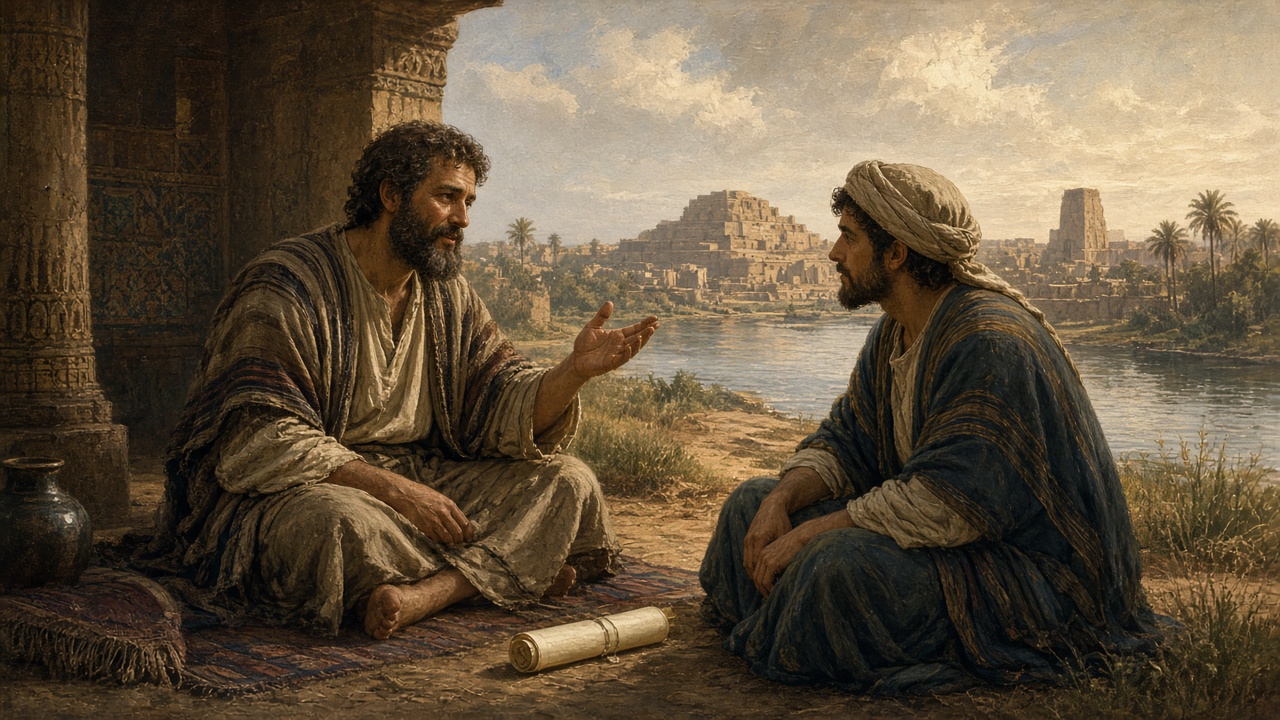
- O Easton's Bible Dictionary (1897) apresenta 1 Pedro como carta de Pedro, escrita da Babilônia, junto ao Eufrates, então uma das principais sedes do saber judaico e um centro adequado para o trabalho entre os judeus. O verbete observa que as províncias da Ásia Menor nomeadas no início seguem uma ordem que ocorreria naturalmente a quem escrevesse da Babilônia.Fontes: Easton: Peter, First Epistle of
- A carta é dirigida aos “estrangeiros dispersos”, que Easton identifica como os judeus da Dispersão. Os verbetes de Ponto, Capadócia e Bitínia ligam essas províncias da Ásia Menor a 1 Pedro 1:1: Ponto era, evidentemente, um lugar frequentado por muitos judeus da Dispersão; havia capadócios em Jerusalém no Pentecostes; e congregações cristãs na Bitínia são mencionadas desde cedo.Fontes: Easton: Peter, First Epistle of · Pontus · Cappadocia · Bithynia
- Easton afirma que o objetivo é confirmar os leitores nas doutrinas que já lhes haviam sido ensinadas e registra que Pedro tem sido chamado “o apóstolo da esperança”, porque a carta abunda em consolo e ânimo capazes de sustentar uma “esperança viva”. Ele distingue quatro linhas de conselho: firmeza e perseverança sob perseguição (1:1–2:10), os deveres práticos de uma vida santa (2:11–3:13), o exemplo de Cristo e outros motivos para a paciência e a santidade (3:14–4:19) e orientações a pastores e povo (capítulo 5).Fontes: Easton: Peter, First Epistle of
- Um traço notável registrado por Easton é o quanto a carta recorre à Escritura anterior: ela contém cerca de trinta e cinco referências ao Antigo Testamento.Fontes: Easton: Peter, First Epistle of
- O final da carta nomeia companheiros conhecidos em outros textos. Silas, também chamado Silvano, membro de destaque da igreja de Jerusalém e companheiro de Paulo, é mencionado em 1 Pedro 5:12, e Pedro chama João Marcos, primo de Barnabé, de seu “filho” em 1 Pedro 5:13.Fontes: Silas · John Mark
Notas escritas com auxílio de IA a partir de fontes abertas (Theographic Bible Metadata, CC BY-SA 4.0; Easton’s Bible Dictionary, domínio público) e revisadas antes de publicar.
A Greeting from Peter
1Peter, an apostle of Jesus Christ,
To the elect who are exiles of the Dispersion throughout Pontus, Galatia, Cappadocia, Asia, and Bithynia, chosen 2according to the foreknowledge of God the Father and sanctified by the Spirit for obedience to Jesus Christ and sprinkling by His blood:
Grace and peace be yours in abundance.
A Living Hope
3Blessed be the God and Father of our Lord Jesus Christ! By His great mercy He has given us new birth into a living hope through the resurrection of Jesus Christ from the dead, 4and into an inheritance that is imperishable, undefiled, and unfading, reserved in heaven for you, 5who through faith are shielded by God’s power for the salvation that is ready to be revealed in the last time.
6In this you greatly rejoice, though now for a little while you may have had to suffer grief in various trials 7so that the proven character of your faith—more precious than gold, which perishes even though refined by fire—may result in praise, glory, and honor at the revelation of Jesus Christ.
8Though you have not seen Him, you love Him; and though you do not see Him now, you believe in Him and rejoice with an inexpressible and glorious joy, 9now that you are receiving the goal of your faith, the salvation of your souls.
10Concerning this salvation, the prophets who foretold the grace to come to you searched and investigated carefully, 11trying to determine the time and setting to which the Spirit of Christ in them was pointing when He predicted the sufferings of Christ and the glories to follow.
12It was revealed to them that they were not serving themselves, but you, when they foretold the things now announced by those who preached the gospel to you by the Holy Spirit sent from heaven. Even angels long to look into these things.
A Call to Holiness
13Therefore prepare your minds for action. Be sober-minded. Set your hope fully on the grace to be given you at the revelation of Jesus Christ. 14As obedient children, do not conform to the passions of your former ignorance. 15But just as He who called you is holy, so be holy in all you do, 16for it is written: “Be holy, because I am holy.”
17Since you call on a Father who judges each one’s work impartially, conduct yourselves in reverent fear during your stay as foreigners. 18For you know that it was not with perishable things such as silver or gold that you were redeemed from the empty way of life you inherited from your forefathers, 19but with the precious blood of Christ, a lamb without blemish or spot. 20He was known before the foundation of the world, but was revealed in the last times for your sake.
21Through Him you believe in God, who raised Him from the dead and glorified Him; and so your faith and hope are in God.
The Enduring Word
22Since you have purified your souls by obedience to the truth so that you have a genuine love for your brothers, love one another deeply, from a pure heart. 23For you have been born again, not of perishable seed, but of imperishable, through the living and enduring word of God. 24For,
“All flesh is like grass,
and all its glory like the flowers of the field;
the grass withers and the flowers fall,
25but the word of the Lord stands forever.”
And this is the word that was proclaimed to you.
Você sabia?
Uma esperança viva para os exilados
- A carta se dirige a eleitos exilados da Dispersão em Ponto, Galácia, Capadócia, Ásia e Bitínia. O Ponto era uma província romana ao longo da costa sul do mar Euxino; a Bitínia ficava ao sul do Euxino e da Propôntida; e a Capadócia era a província mais oriental e a maior da Ásia Menor.Fontes: o próprio texto bíblico · Pontus · Bithynia · Cappadocia
- O Ponto era, evidentemente, um lugar frequentado por muitos judeus da Dispersão, e a carta se dirige, entre outros lugares, a estrangeiros espalhados por ali. Estrangeiros do Ponto e capadócios estavam em Jerusalém no Pentecostes, e Áquila era natural do Ponto. O cristianismo chegou muito cedo à Capadócia, congregações se formaram cedo na Bitínia, e Paulo foi impedido pelo Espírito de entrar na Bitínia.Fontes: Pontus · Cappadocia · Bithynia · o próprio texto bíblico
- A Galácia, nomeada na mesma saudação, já foi chamada de Gália do Oriente, e escritores romanos chamavam seu povo de Galli. Eram uma mistura de gauleses e gregos, conhecidos como Gallo-Graeci, e a região como Gallo-Graecia. O Easton's Bible Dictionary liga sua origem a uma migração celta que invadiu a Macedônia por volta de 280 a.C.; o rei da Bitínia os convidou à Ásia Menor para ajudá-lo em suas guerras, e ali eles se estabeleceram.Fontes: Galatia · o próprio texto bíblico
Notas escritas com auxílio de IA a partir de fontes abertas (Theographic Bible Metadata, CC BY-SA 4.0; Easton’s Bible Dictionary, domínio público) e revisadas antes de publicar.
Lugares deste capítulo
- Asia · 38.400, 28.300 · versículo 1
- Bithynia · 40.500, 31.000 · versículo 1
- Cappadocia · 38.671, 34.839 · versículo 1
- Galatia · 39.267, 32.983 · versículo 1
- Pontus · 40.680, 37.830 · versículo 1
Só aparecem lugares com identificação de alta confiança (90% ou mais segundo as fontes acadêmicas reunidas pelo OpenBible). Mapa da época: DARE (Digital Atlas of the Roman Empire), CC BY 4.0; mapa atual: © colaboradores do OpenStreetMap; lugares: OpenBible.info (CC BY 4.0).
Créditos e licença desta tradução
Berean Standard Bible
The Holy Bible in English: Berean Standard Bible
Public Domain
Language: English
Contributor: BSB Publishing, LLC
2026-10-02
Fonte: http://ebible.org/engbsb/ · eBible.org