1 Pedro 1
Berean Standard Bible · Toca un versículo para ver sus referencias cruzadas.
Acerca de este libro
Acerca de 1 Pedro
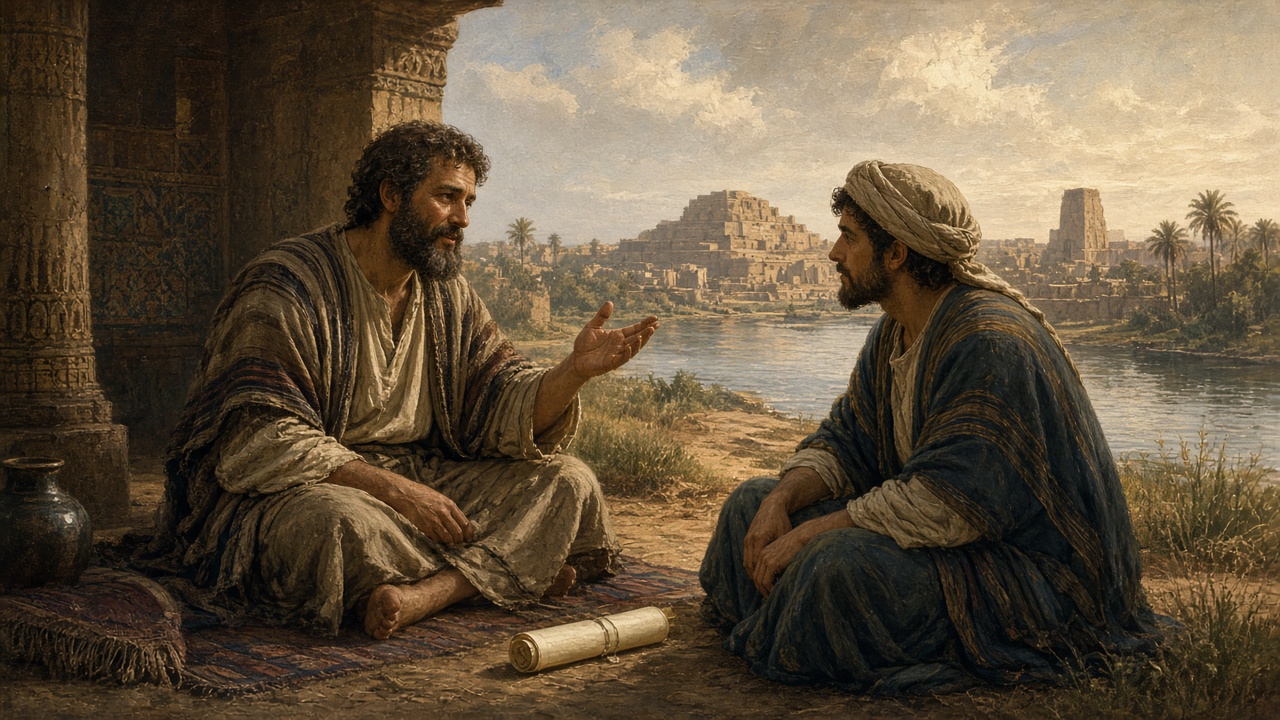
- El Easton's Bible Dictionary (1897) presenta 1 Pedro como una carta de Pedro, escrita desde Babilonia, a orillas del Éufrates, entonces una de las principales sedes del saber judío y un centro adecuado para el trabajo entre los judíos. La entrada señala que las provincias de Asia Menor nombradas al comienzo siguen un orden que resultaría natural a quien escribiera desde Babilonia.Fuentes: Easton: Peter, First Epistle of
- La carta está dirigida a “los extranjeros dispersos”, a quienes Easton identifica como judíos de la Dispersión. Las entradas de Ponto, Capadocia y Bitinia vinculan esas provincias de Asia Menor con 1 Pedro 1:1: Ponto era, evidentemente, un lugar frecuentado por muchos judíos de la Dispersión; había capadocios en Jerusalén en Pentecostés; y las congregaciones cristianas en Bitinia se mencionan desde una época temprana.Fuentes: Easton: Peter, First Epistle of · Pontus · Cappadocia · Bithynia
- Easton dice que el propósito es confirmar a los lectores en las doctrinas que ya se les habían enseñado, y anota que a Pedro se le ha llamado “el apóstol de la esperanza”, porque la carta abunda en consuelo y aliento aptos para sostener una “esperanza viva”. Distingue cuatro líneas de consejo: firmeza y perseverancia bajo la persecución (1:1–2:10), los deberes prácticos de una vida santa (2:11–3:13), el ejemplo de Cristo y otros motivos para la paciencia y la santidad (3:14–4:19), y orientaciones a pastores y pueblo (capítulo 5).Fuentes: Easton: Peter, First Epistle of
- Un rasgo notable que Easton registra es lo mucho que la carta acude a la Escritura anterior: contiene unas treinta y cinco referencias al Antiguo Testamento.Fuentes: Easton: Peter, First Epistle of
- El cierre de la carta nombra a compañeros conocidos en otros textos. Silas, también llamado Silvano, miembro destacado de la iglesia de Jerusalén y compañero de Pablo, es mencionado en 1 Pedro 5:12, y Pedro llama a Juan Marcos, primo de Bernabé, su “hijo” en 1 Pedro 5:13.Fuentes: Silas · John Mark
Notas escritas con ayuda de IA a partir de fuentes abiertas (Theographic Bible Metadata, CC BY-SA 4.0; Easton’s Bible Dictionary, dominio público) y revisadas antes de publicarse.
A Greeting from Peter
1Peter, an apostle of Jesus Christ,
To the elect who are exiles of the Dispersion throughout Pontus, Galatia, Cappadocia, Asia, and Bithynia, chosen 2according to the foreknowledge of God the Father and sanctified by the Spirit for obedience to Jesus Christ and sprinkling by His blood:
Grace and peace be yours in abundance.
A Living Hope
3Blessed be the God and Father of our Lord Jesus Christ! By His great mercy He has given us new birth into a living hope through the resurrection of Jesus Christ from the dead, 4and into an inheritance that is imperishable, undefiled, and unfading, reserved in heaven for you, 5who through faith are shielded by God’s power for the salvation that is ready to be revealed in the last time.
6In this you greatly rejoice, though now for a little while you may have had to suffer grief in various trials 7so that the proven character of your faith—more precious than gold, which perishes even though refined by fire—may result in praise, glory, and honor at the revelation of Jesus Christ.
8Though you have not seen Him, you love Him; and though you do not see Him now, you believe in Him and rejoice with an inexpressible and glorious joy, 9now that you are receiving the goal of your faith, the salvation of your souls.
10Concerning this salvation, the prophets who foretold the grace to come to you searched and investigated carefully, 11trying to determine the time and setting to which the Spirit of Christ in them was pointing when He predicted the sufferings of Christ and the glories to follow.
12It was revealed to them that they were not serving themselves, but you, when they foretold the things now announced by those who preached the gospel to you by the Holy Spirit sent from heaven. Even angels long to look into these things.
A Call to Holiness
13Therefore prepare your minds for action. Be sober-minded. Set your hope fully on the grace to be given you at the revelation of Jesus Christ. 14As obedient children, do not conform to the passions of your former ignorance. 15But just as He who called you is holy, so be holy in all you do, 16for it is written: “Be holy, because I am holy.”
17Since you call on a Father who judges each one’s work impartially, conduct yourselves in reverent fear during your stay as foreigners. 18For you know that it was not with perishable things such as silver or gold that you were redeemed from the empty way of life you inherited from your forefathers, 19but with the precious blood of Christ, a lamb without blemish or spot. 20He was known before the foundation of the world, but was revealed in the last times for your sake.
21Through Him you believe in God, who raised Him from the dead and glorified Him; and so your faith and hope are in God.
The Enduring Word
22Since you have purified your souls by obedience to the truth so that you have a genuine love for your brothers, love one another deeply, from a pure heart. 23For you have been born again, not of perishable seed, but of imperishable, through the living and enduring word of God. 24For,
“All flesh is like grass,
and all its glory like the flowers of the field;
the grass withers and the flowers fall,
25but the word of the Lord stands forever.”
And this is the word that was proclaimed to you.
¿Sabías que…?
Una esperanza viva para los exiliados
- La carta se dirige a los elegidos exiliados de la Dispersión en el Ponto, Galacia, Capadocia, Asia y Bitinia. El Ponto era una provincia romana a lo largo de la costa sur del mar Euxino; Bitinia quedaba al sur del Euxino y de la Propóntide; y Capadocia era la provincia más oriental y la más grande de Asia Menor.Fuentes: el propio texto bíblico · Pontus · Bithynia · Cappadocia
- El Ponto era, evidentemente, un lugar frecuentado por muchos judíos de la Dispersión, y la carta se dirige, entre otros lugares, a extranjeros dispersos allí. Extranjeros del Ponto y capadocios estaban en Jerusalén en Pentecostés, y Aquila era natural del Ponto. El cristianismo llegó muy pronto a Capadocia, se formaron congregaciones temprano en Bitinia, y el Espíritu impidió a Pablo entrar en Bitinia.Fuentes: Pontus · Cappadocia · Bithynia · el propio texto bíblico
- Galacia, nombrada en el mismo saludo, ha sido llamada la Galia de Oriente, y los escritores romanos llamaban Galli a sus habitantes. Eran una mezcla de galos y griegos, conocidos como Gallo-Graeci, y el país como Gallo-Graecia. El Easton's Bible Dictionary relaciona su origen con una migración celta que invadió Macedonia hacia el 280 a. C.; el rey de Bitinia los invitó a Asia Menor para que lo ayudaran en sus guerras, y allí se establecieron.Fuentes: Galatia · el propio texto bíblico
Notas escritas con ayuda de IA a partir de fuentes abiertas (Theographic Bible Metadata, CC BY-SA 4.0; Easton’s Bible Dictionary, dominio público) y revisadas antes de publicarse.
Lugares de este capítulo
- Asia · 38.400, 28.300 · versículo 1
- Bithynia · 40.500, 31.000 · versículo 1
- Cappadocia · 38.671, 34.839 · versículo 1
- Galatia · 39.267, 32.983 · versículo 1
- Pontus · 40.680, 37.830 · versículo 1
Solo aparecen lugares identificados con alta confianza (90 % o más según las fuentes académicas reunidas por OpenBible). Mapa de la época: DARE (Digital Atlas of the Roman Empire), CC BY 4.0; mapa actual: © colaboradores de OpenStreetMap; lugares: OpenBible.info (CC BY 4.0).
Créditos y licencia de esta traducción
Berean Standard Bible
The Holy Bible in English: Berean Standard Bible
Public Domain
Language: English
Contributor: BSB Publishing, LLC
2026-10-02
Fuente: http://ebible.org/engbsb/ · eBible.org