1 Peter 1
Berean Standard Bible · Tap a verse to see its cross-references.
About this book
About 1 Peter
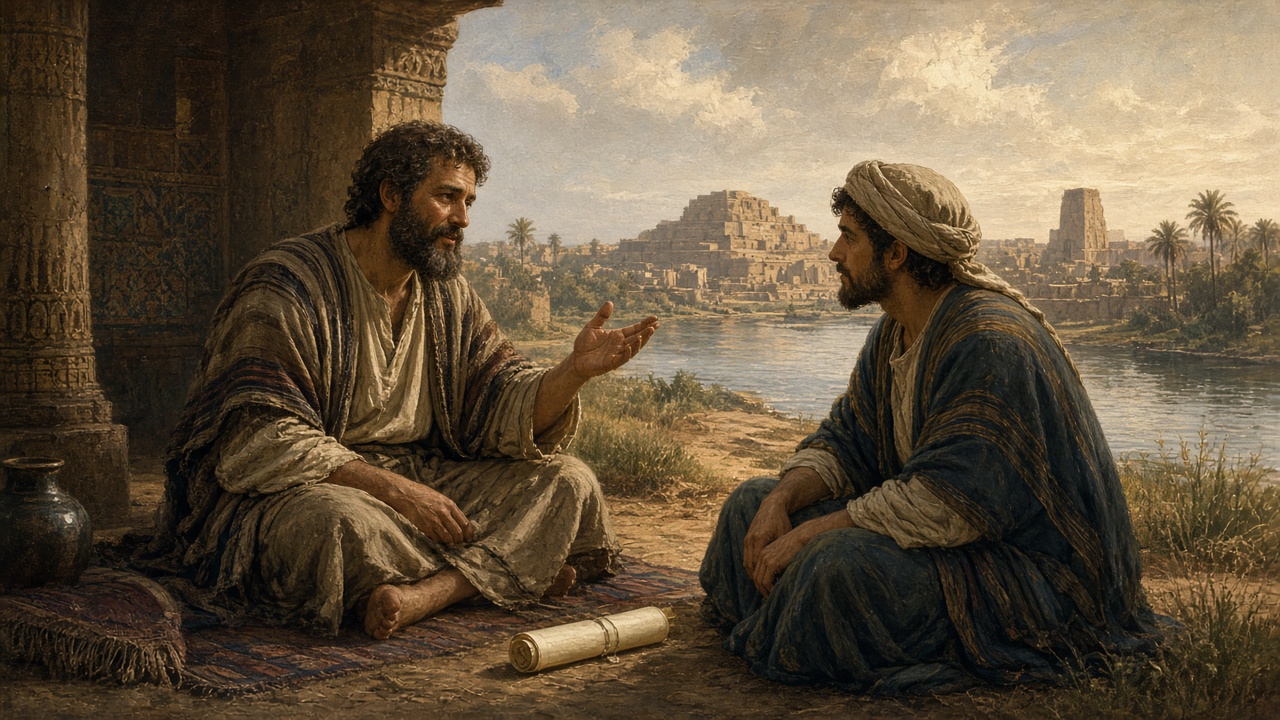
- Easton's Bible Dictionary (1897) presents 1 Peter as Peter's letter, written from Babylon on the Euphrates, then one of the chief seats of Jewish learning and a fitting centre for work among Jews. It notes that the provinces of Asia Minor named at the beginning follow an order that would come naturally to someone writing from Babylon.Sources: Easton: Peter, First Epistle of
- The letter is addressed to “the strangers scattered abroad,” whom Easton identifies as Jews of the Dispersion. Entries on Pontus, Cappadocia, and Bithynia link those provinces of Asia Minor with 1 Peter 1:1: Pontus was evidently a resort of many Dispersion Jews, Cappadocians were in Jerusalem at Pentecost, and Christian congregations in Bithynia are noted from an early time.Sources: Easton: Peter, First Epistle of · Pontus · Cappadocia · Bithynia
- Easton says the aim is to confirm readers in doctrines they had already been taught, and he records that Peter has been called “the apostle of hope” because the letter abounds in comfort and encouragement fitted to sustain a “lively hope.” He traces four lines of counsel: steadfastness and perseverance under persecution (1:1–2:10), the practical duties of a holy life (2:11–3:13), the example of Christ and other motives to patience and holiness (3:14–4:19), and advice to pastors and people (chapter 5).Sources: Easton: Peter, First Epistle of
- A notable feature Easton records is how often the letter draws on earlier Scripture: it contains about thirty-five references to the Old Testament.Sources: Easton: Peter, First Epistle of
- The close of the letter names associates known elsewhere. Silas, also called Silvanus, a prominent member of the Jerusalem church and a companion of Paul, is referred to in 1 Peter 5:12, and Peter calls John Mark, cousin of Barnabas, his “son” in 1 Peter 5:13.Sources: Silas · John Mark
Notes written with AI assistance from open sources (Theographic Bible Metadata, CC BY-SA 4.0; Easton’s Bible Dictionary, public domain) and reviewed before publishing.
A Greeting from Peter
1Peter, an apostle of Jesus Christ,
To the elect who are exiles of the Dispersion throughout Pontus, Galatia, Cappadocia, Asia, and Bithynia, chosen 2according to the foreknowledge of God the Father and sanctified by the Spirit for obedience to Jesus Christ and sprinkling by His blood:
Grace and peace be yours in abundance.
A Living Hope
3Blessed be the God and Father of our Lord Jesus Christ! By His great mercy He has given us new birth into a living hope through the resurrection of Jesus Christ from the dead, 4and into an inheritance that is imperishable, undefiled, and unfading, reserved in heaven for you, 5who through faith are shielded by God’s power for the salvation that is ready to be revealed in the last time.
6In this you greatly rejoice, though now for a little while you may have had to suffer grief in various trials 7so that the proven character of your faith—more precious than gold, which perishes even though refined by fire—may result in praise, glory, and honor at the revelation of Jesus Christ.
8Though you have not seen Him, you love Him; and though you do not see Him now, you believe in Him and rejoice with an inexpressible and glorious joy, 9now that you are receiving the goal of your faith, the salvation of your souls.
10Concerning this salvation, the prophets who foretold the grace to come to you searched and investigated carefully, 11trying to determine the time and setting to which the Spirit of Christ in them was pointing when He predicted the sufferings of Christ and the glories to follow.
12It was revealed to them that they were not serving themselves, but you, when they foretold the things now announced by those who preached the gospel to you by the Holy Spirit sent from heaven. Even angels long to look into these things.
A Call to Holiness
13Therefore prepare your minds for action. Be sober-minded. Set your hope fully on the grace to be given you at the revelation of Jesus Christ. 14As obedient children, do not conform to the passions of your former ignorance. 15But just as He who called you is holy, so be holy in all you do, 16for it is written: “Be holy, because I am holy.”
17Since you call on a Father who judges each one’s work impartially, conduct yourselves in reverent fear during your stay as foreigners. 18For you know that it was not with perishable things such as silver or gold that you were redeemed from the empty way of life you inherited from your forefathers, 19but with the precious blood of Christ, a lamb without blemish or spot. 20He was known before the foundation of the world, but was revealed in the last times for your sake.
21Through Him you believe in God, who raised Him from the dead and glorified Him; and so your faith and hope are in God.
The Enduring Word
22Since you have purified your souls by obedience to the truth so that you have a genuine love for your brothers, love one another deeply, from a pure heart. 23For you have been born again, not of perishable seed, but of imperishable, through the living and enduring word of God. 24For,
“All flesh is like grass,
and all its glory like the flowers of the field;
the grass withers and the flowers fall,
25but the word of the Lord stands forever.”
And this is the word that was proclaimed to you.
Did you know?
A Living Hope for Exiles
- The letter addresses elect exiles of the Dispersion throughout Pontus, Galatia, Cappadocia, Asia, and Bithynia. Pontus was a Roman province along the southern coast of the Euxine Sea, Bithynia lay south of the Euxine and the Propontis, and Cappadocia was the easternmost and largest province of Asia Minor.Sources: the Bible text itself · Pontus · Bithynia · Cappadocia
- Pontus was evidently a resort of many Jews of the Dispersion, and the letter addresses strangers scattered there, among other places. Strangers from Pontus and Cappadocians were in Jerusalem at Pentecost, and Aquila was a native of Pontus. Christianity reached Cappadocia very early, congregations formed early in Bithynia, and Paul was prevented by the Spirit from entering Bithynia.Sources: Pontus · Cappadocia · Bithynia · the Bible text itself
- Galatia, named in the same greeting, has been called the Gallia of the East, and Roman writers called its people Galli. They were an intermixture of Gauls and Greeks, known as Gallo-Graeci, and the country as Gallo-Graecia. Easton's Bible Dictionary traces them to a Celtic migration that invaded Macedonia about 280 B.C.; the king of Bithynia invited them into Asia Minor to help in his wars, and there they settled.Sources: Galatia · the Bible text itself
Notes written with AI assistance from open sources (Theographic Bible Metadata, CC BY-SA 4.0; Easton’s Bible Dictionary, public domain) and reviewed before publishing.
Places in this chapter
- Asia · 38.400, 28.300 · verse 1
- Bithynia · 40.500, 31.000 · verse 1
- Cappadocia · 38.671, 34.839 · verse 1
- Galatia · 39.267, 32.983 · verse 1
- Pontus · 40.680, 37.830 · verse 1
Only places identified with high confidence are shown (90% or more according to the scholarly sources compiled by OpenBible). Period map: DARE (Digital Atlas of the Roman Empire), CC BY 4.0; modern map: © OpenStreetMap contributors; places: OpenBible.info (CC BY 4.0).
Credits and license for this translation
Berean Standard Bible
The Holy Bible in English: Berean Standard Bible
Public Domain
Language: English
Contributor: BSB Publishing, LLC
2026-10-02
Source: http://ebible.org/engbsb/ · eBible.org