Gênesis 29
Nǫ̀htsı̨̨ Nı̨̨htł'è · Toque num versículo para ver as referências cruzadas.
Jacob Padan-Aram nèk'e nììtła
1Eyı tł'axǫǫ̀ Jacob k'achı̨ naèhtła, sa kàɂàa nèk'e ekǫ got'ı̨į̀ ghǫ nììtła. 2Eyı nèk'e tık'è gòɂǫǫ gà sahzǫ̀ą whehtee k'è taı gòlaa yaɂı̨, eyı tık'è gots'ǫ tı gıghàedı t'à. Eyı tık'è wets'ǫdaà kwe nechàa wheɂǫ. 3Sahzǫ̀ą hazǫǫ̀ eyı nègı̨ı̨la nı̨dè sahzǫ̀ą-k'èdìı-dǫǫ̀ eyı kwe wedanìı̨ɂǫǫ sìı ı̨ɂǫ̀ǫ̀ agele gà sahzǫ̀ą ghàtıgeedı. Eyı tł'axǫǫ̀-ı̨dè k'achı̨ kwe gıts'ǫdàèchı.
4Jacob, sahzǫ̀ą-k'èdìı-dǫǫ̀ dagoehke, “Sèot'ı̨ı̨, edı̨į̀ gots'ǫ aaht'e?” gòhdı.
“Kǫ̀ta Haran gots'ǫ ats'ı̨ı̨t'e,” gıìhdı.
5Gots'ǫ̀ hadı, “Asį̀į̀ Laban, Nahor wekwı k'èahsǫ?” gòhdı.
“Hęɂę, wek'èts'eezǫ,” gıìhdı.
6“Asį̀į̀ hotıì eda?” gòhdı dagoehke.
“Hęɂę, hotıì eda,” gıìhdı. “Yeè sahzǫ̀ą xè jǫ naetłee sìı wetì Rachel hǫt'e,” gedı.
7Jacob gots'ǫ̀ hadı, “Įłaà sa dagǫǫwà daaɂa t'à sahzǫ̀ą łą̀ą nìagııdè agıahłe-le. Sahzǫ̀ą tı gıghàahdı gà k'achı̨ dèè k'e shègezheè agıahłe,” gòhdı.
8“Hats'ele ha dìì,” gedı, “Sahzǫ̀ą-k'èdìı-dǫǫ̀ hazǫǫ̀ edesahzǫ̀ą xè jǫ nègı̨ı̨de nı̨dè zǫ tık'è wets'ǫdaà xàts'eechı hǫt'e. Eyı tł'axǫǫ̀-ı̨dè sahzǫ̀ą hazǫǫ̀ tı gıghàts'eedı hǫt'e,” gedı.
9Įłaà gots'ǫ̀ gode ekò Rachel edetà gha sahzǫ̀ą k'èdìı elı̨ı̨ sìı sahzǫ̀ą xè eyı nììtła. 10Rachel Laban wetì hǫt'e eyıts'ǫ Laban Jacob wemǫ wı̨ı̨de hǫt'e. Jacob Rachel eɂı̨ ekò yegha kwe nechàa ı̨ɂǫ̀ǫ̀ ayį̀į̀là gà weɂeh wesahzǫ̀ą ghàtını̨ı̨dì. 11Eyı tł'axǫǫ̀ Jacob, Rachel k'èts'adlı̨, sıì wınà t'à hòtł'ò xàı̨tsè. 12Jacob, Rachel ts'ǫ̀ hadı, “Netà wèot'ı̨ aht'e, eyıts'ǫ Rebekah weza aht'e,” yèhdı. Eyıt'à Rachel edetà ts'ǫ̀ hadı ha yets'ǫ̀ tı̨mǫèhza.
13Laban, Rebekah weza Jacob ghǫ godı ıìkw'o ts'ǫ̀et'ıì yets'ǫ̀ èhtła. Sıì wınà t'à edeyàdo gà yek'èts'adlı̨. Edekǫ̀ ts'ǫ̀ ayį̀į̀là tł'axǫǫ̀ Jacob wexè dàgòjàa sìı hazǫǫ̀ edeɂeh ts'ǫ̀ hadı. 14Eyı tł'axǫǫ̀ Laban yets'ǫ̀ hadı, “Ehkw'ı t'à xàè ełèot'ı̨ ats'ı̨ı̨t'e,” yèhdı.
Jacob ełedèke Leah eyıts'ǫ Rachel xè honìdza
15Jacob ı̨łè sa ts'ǫ̀ yexè nàı̨dè tł'axǫǫ̀, Laban yets'ǫ̀ hadı, “Sèot'ı̨ anet'e kò t'asìı k'èxa-le segha eghàlaı̨da ha dìì. Ayìı k'èxa segha eghàlaı̨da ha newǫǫ sìı sets'ǫ̀ haı̨dı,” yèhdı.
16Laban wetì nàke gǫ̀hłı̨ ı̨lè. Wetì ǫhdaà Leah wìyeh, eyıts'ǫ wetì nǫǫde Rachel wìyeh. 17Leah wedaà nezı̨į̀ wègaat'ı̨ hanìkò Rachel hazǫǫ̀ ts'ǫ̀ denahk'e wèdaat'ı̨. 18Jacob, Rachel ghǫneètǫ t'à Laban ts'ǫ̀ hadı, “Netì nǫǫde Rachel k'èxa łǫ̀hdı̨ xo ts'ǫ̀ negha eghàlaehda ha,” yèhdı.
19Laban hayèhdı, “Dǫ eyıì-le yìhchı nahk'e nı̨ neghàehtè ha denahk'e segha nezı̨ hǫt'e. Jǫ sexè nàądè,” yèhdı. 20Eyıt'à Jacob, Rachel ìhchı ha łǫ̀hdı̨ xo ts'ǫ̀ Laban gha eghàlaı̨dà, hanìkò sıì Rachel ghǫneètǫ t'à wegha dıì whaà-lea lanì.
21Łǫ̀hdı̨ xo k'ehǫǫwo tł'axǫǫ̀ Jacob, Laban ts'ǫ̀ hadı, “Hòt'a łǫ̀hdı̨ xo ts'ǫ̀ negha eghàlaıhdà t'à netì saı̨htè, wexè whıhtı̨ ha dehwhǫ hǫt'e,” yèhdı.
22Eyıt'à Laban yegha nàsı̨ ehtsı̨ ha t'à dǫ hazǫǫ̀ gokàwhehɂà. 23Hanìkò eyı toò k'e edetì ǫhdaà Leah èhłı̨ Jacob ghàı̨htı̨ t'à Jacob yet'àı̨tè. 24Eyıts'ǫ Laban, t'eeko Zılpah wìyeh, edetì Leah ghàı̨htı̨, yegha eghàlaedaa elı̨ gha.
25K'omǫǫ̀dǫǫ̀ agòjà ekò Leah yegà whetı̨ nǫǫ̀! Eyıt'à Jacob edeɂeh Laban ts'ǫ̀ hadı, “Dànìghǫ hanì sets'ǫ̀ eghàlaneedà? Rachel k'èxa negha eghàlaıhdà ı̨lè. Dànìghǫ seghǫyaneɂǫ?” yèhdı.
26Laban yets'ǫ̀ hadı, “Gonàowoò k'ę̀ę̀ gotì ǫhdaà wekwe gotì nǫǫde honìda ha nıìle. 27Leah honìdzaa wegha ı̨łè dzęahta ts'ǫ̀ nàsı̨ hołèe wek'ehǫǫwo ts'ǫ̀ wegà needà nı̨dè setì nǫǫde sı neghàehtè ha. Setì Rachel k'èxa k'achı̨ łǫ̀hdı̨ xo ts'ǫ̀ segha eghàlaı̨da ha,” yèhdı.
28Eyıt'à Jacob hajà. Leah xè ı̨łè dzęahta k'ehǫǫhwho, eyı tł'axǫǫ̀ Laban edetì Rachel yets'èkeè elı̨ ha yeghàı̨htı̨. 29Laban, t'eeko Bılah, wetì gha eghàlaedaa elı̨ gha yeghàı̨htı̨. 30Eyıt'à Jacob, Rachel sı t'àı̨tè. Leah nahk'e Rachel ghǫneètǫ. Rachel xè honìdza k'èxa k'achı̨ łǫ̀hdı̨ xo ts'ǫ̀ Laban gha eghàlaı̨dà.
Jacob weza gıgǫ̀hłı̨
31Gots'ǫ̀ K'àowo, Leah weghǫnehoòtǫ-le yek'èezǫ t'à chekoa wets'ǫ ayį̀į̀là, hanìkò Rachel chekoa wets'ǫ-le. 32Leah hotıeda-le ajà t'à dǫzhìa nìı̨htı̨. Ruben wìyeh ayį̀į̀là, dıı hadı t'à, “Daıhɂa t'à gots'ǫ̀ K'àowo sets'àı̨dì. Hòt'a sedǫǫ̀ seghǫneètǫǫ̀ ade ha,” hadı.
33K'achı̨ hotıeda-le ajà t'à dǫzhìa nìı̨htı̨, hadı, “Seghǫnehoòtǫ-le gots'ǫ̀ K'àowo yeghǫ ıìkw'o t'à dıı dǫzhìa seghàı̨htı̨,” hadı. Eyıt'à Sımeyon wìyeh ayį̀į̀là.
34Leah k'achı̨ hotıeda-le ajà t'à k'achı̨ dǫzhìa nìı̨htı̨, hadı, “Weza taı nìıhła t'à k'ǫǫ̀t'a sedǫǫ̀ sexè at'ı̨į̀ ade ha,” hadı. Eyıt'à dǫzhìa Levı wìyeh ayį̀į̀là.
35K'achı̨ hotıeda-le ajà t'à dǫzhìa nìı̨htı̨, hadı, “Dıì t'à gots'ǫ̀ K'àowo weghàsǫehdı ha,” hadı. Eyıt'à dǫzhìa Judah wìyeh ayį̀į̀là. Eyı tł'axǫǫ̀ chekoa nìhtè-le ajà.
Você sabia?
Os casamentos de Jacó em Harã
- Jacó fugiu para Harã, onde morava seu tio Labão, na terra do povo do Oriente. A cidade, também chamada cidade de Naor e identificada com Harran, ficava junto ao Belik, afluente do Eufrates, cerca de setenta milhas acima da junção do Belik com esse rio, na Alta Mesopotâmia. Labão era filho de Betuel e neto de Naor, irmão de Abraão; a irmã de Labão, Rebeca, era a esposa de Isaque.Fontes: Haran · Laban · Nahor (brother of Abraham) · o próprio texto bíblico
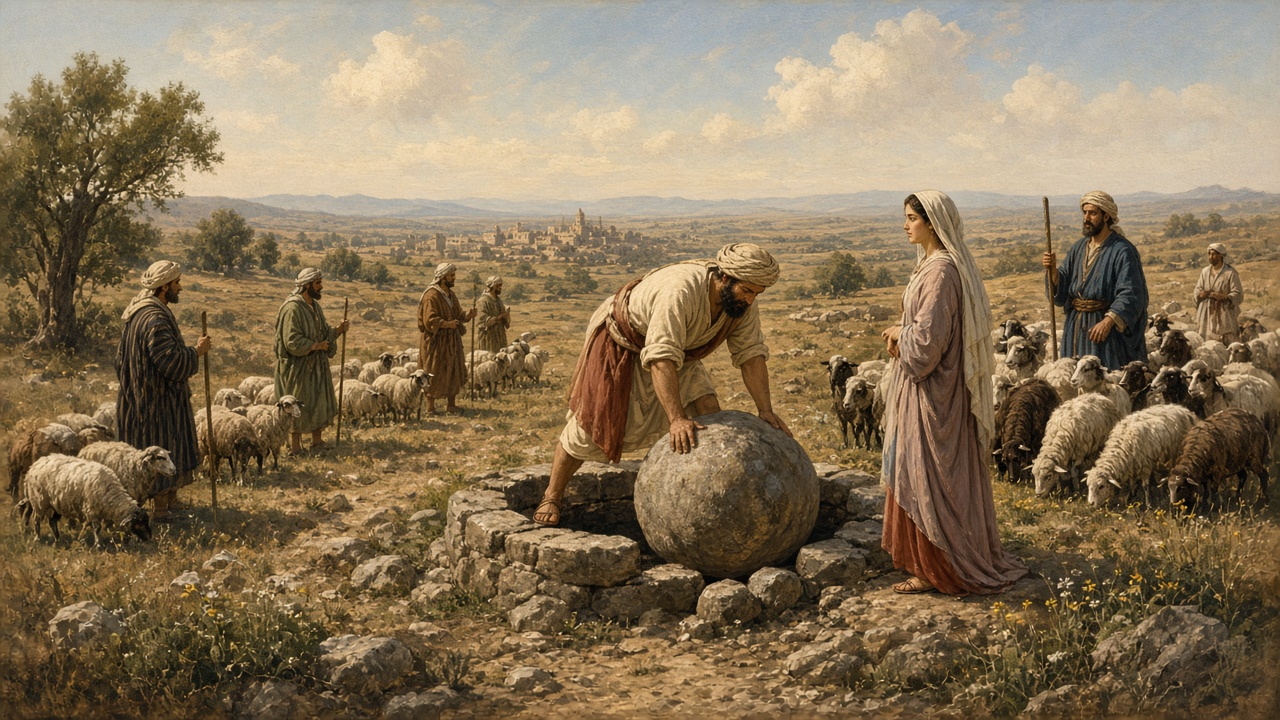
- O poço era fechado por uma grande pedra, que os pastores só rolavam para o lado depois que todos os rebanhos se reuniam, e depois recolocavam no lugar. Raquel, cujo nome é dado como “ovelha”, era pastora e trazia as ovelhas do pai; Jacó, que também vivera como pastor, removeu a pedra e deu de beber ao rebanho do tio.Fontes: Rachel · Jacob (Israel) · o próprio texto bíblico
- Lia, a irmã mais velha, é chamada “cansada”, e é descrita como de olhos fracos, ou tenros; Raquel, a mais nova, era de belo porte e formosa. Jacó serviu sete anos por Raquel, mas, no banquete da noite, Labão lhe deu Lia, dizendo que ali não era costume entregar a filha mais nova em casamento antes da mais velha, e depois lhe deu Raquel por mais sete anos — catorze ao todo. Os primeiros filhos de Lia foram Rúben, cujo nome é dado como “Eis um filho”, e depois Simeão, Levi e Judá; ao nomeá-los, ela falou de o SENHOR ver sua aflição, de ouvir que ela não era amada, de o marido se apegar a ela e de seu louvor ao SENHOR.Fontes: Leah · Rachel · Reuben · o próprio texto bíblico
Notas escritas com auxílio de IA a partir de fontes abertas (Theographic Bible Metadata, CC BY-SA 4.0; Easton’s Bible Dictionary, domínio público) e revisadas antes de publicar.
Lugares deste capítulo
- East · Hoje: region around Amman · 31.955, 35.934 · versículo 1
- Haran · Hoje: Harran · 36.864, 39.033 · versículo 4
Só aparecem lugares com identificação de alta confiança (90% ou mais segundo as fontes acadêmicas reunidas pelo OpenBible). Mapa da época: DARE (Digital Atlas of the Roman Empire), CC BY 4.0; mapa atual: © colaboradores do OpenStreetMap; lugares: OpenBible.info (CC BY 4.0).
Créditos e licença desta tradução
Nǫ̀htsı̨̨ Nı̨̨htł'è
Dogrib: Dogrib Genesis & New Testament New Testament & Portions of Old Testament
copyright © 2009 Canadian Bible Society
Language: Dogrib
Translation by: Canadian Bible Society
Tłı̨chǫ Genesis and New Testament
About Tłı̨chǫ
Tłı̨chǫ (Dogrib) is a Na-Dene (Athabaskan) language. It is spoken by the First Nations Tłı̨chǫ people in the Northwest Territories in Canada. It has the largest number of speakers of any of the Aboriginal language communities in the NWT, and is one of the official languages of the Northwest Territories.
About This Translation
This translation includes the book of Genesis and the New Testament in Tłı̨chǫ. The first edition of the Tłı̨chǫ New Testament was published in 2003. It was a historic event, as it was the first time in more than a hundred years that a complete New Testament was published for one of the Dene First Nations in the Territories. The first edition was well received and quickly sold out. In the meantime the book of Genesis had been completed. Consequently, the 2008 reprint of the Tłı̨chǫ New Testament included Genesis.
Though this translation of the New Testament and Genesis took a total of ten years, the people who worked on it built on years of labor invested by the Tłı̨chǫ people, elders, priests and missionaries, translators, educators, and linguists. The material contained in this book was checked and approved by consultants from Wycliffe Bible Translators and the Canadian Bible Society.
If you are interested in obtaining a printed copy of this Bible, please contact the Canadian Bible Society at http://www.biblescanada.com .
Copyright Information
Dogrib Genesis and New Testament © 2003, 2008 Canadian Bible Society
The text of the Bible in Tłı̨chǫ that appears in this electronic format or website is for personal use only.
Up to five hundred (500) verses of the Bible text in any form (written, visual, electronic or audio) may be quoted without permission. The quoted verses may not be more than 50% of a complete book of the Bible, or more than 25% of the total text of the work in which they are quoted. Prior written permission must be obtained for any other use of the text. Copyright acknowledgement must in all cases appear on the title or copyright page.
For more information on copyright conditions or to apply, visit http://www.biblesociety.ca/copyright .
This translation is made available to you under the terms of the
Creative Commons Attribution-Noncommercial-No Derivatives license 4.0.
You may share and redistribute this Bible translation or extracts from it in any format, provided that:
You include the above copyright and source information.
You do not sell this work for a profit.
You do not change any of the words or punctuation of the Scriptures.
Pictures included with Scriptures and other documents on this site are licensed just for use with those Scriptures and documents.
For other uses, please contact the respective copyright owners.
2014-04-22
Fonte: http://ebible.org/dgrDOGNT/ · eBible.org