Génesis 29
Nǫ̀htsı̨̨ Nı̨̨htł'è · Toca un versículo para ver sus referencias cruzadas.
Jacob Padan-Aram nèk'e nììtła
1Eyı tł'axǫǫ̀ Jacob k'achı̨ naèhtła, sa kàɂàa nèk'e ekǫ got'ı̨į̀ ghǫ nììtła. 2Eyı nèk'e tık'è gòɂǫǫ gà sahzǫ̀ą whehtee k'è taı gòlaa yaɂı̨, eyı tık'è gots'ǫ tı gıghàedı t'à. Eyı tık'è wets'ǫdaà kwe nechàa wheɂǫ. 3Sahzǫ̀ą hazǫǫ̀ eyı nègı̨ı̨la nı̨dè sahzǫ̀ą-k'èdìı-dǫǫ̀ eyı kwe wedanìı̨ɂǫǫ sìı ı̨ɂǫ̀ǫ̀ agele gà sahzǫ̀ą ghàtıgeedı. Eyı tł'axǫǫ̀-ı̨dè k'achı̨ kwe gıts'ǫdàèchı.
4Jacob, sahzǫ̀ą-k'èdìı-dǫǫ̀ dagoehke, “Sèot'ı̨ı̨, edı̨į̀ gots'ǫ aaht'e?” gòhdı.
“Kǫ̀ta Haran gots'ǫ ats'ı̨ı̨t'e,” gıìhdı.
5Gots'ǫ̀ hadı, “Asį̀į̀ Laban, Nahor wekwı k'èahsǫ?” gòhdı.
“Hęɂę, wek'èts'eezǫ,” gıìhdı.
6“Asį̀į̀ hotıì eda?” gòhdı dagoehke.
“Hęɂę, hotıì eda,” gıìhdı. “Yeè sahzǫ̀ą xè jǫ naetłee sìı wetì Rachel hǫt'e,” gedı.
7Jacob gots'ǫ̀ hadı, “Įłaà sa dagǫǫwà daaɂa t'à sahzǫ̀ą łą̀ą nìagııdè agıahłe-le. Sahzǫ̀ą tı gıghàahdı gà k'achı̨ dèè k'e shègezheè agıahłe,” gòhdı.
8“Hats'ele ha dìì,” gedı, “Sahzǫ̀ą-k'èdìı-dǫǫ̀ hazǫǫ̀ edesahzǫ̀ą xè jǫ nègı̨ı̨de nı̨dè zǫ tık'è wets'ǫdaà xàts'eechı hǫt'e. Eyı tł'axǫǫ̀-ı̨dè sahzǫ̀ą hazǫǫ̀ tı gıghàts'eedı hǫt'e,” gedı.
9Įłaà gots'ǫ̀ gode ekò Rachel edetà gha sahzǫ̀ą k'èdìı elı̨ı̨ sìı sahzǫ̀ą xè eyı nììtła. 10Rachel Laban wetì hǫt'e eyıts'ǫ Laban Jacob wemǫ wı̨ı̨de hǫt'e. Jacob Rachel eɂı̨ ekò yegha kwe nechàa ı̨ɂǫ̀ǫ̀ ayį̀į̀là gà weɂeh wesahzǫ̀ą ghàtını̨ı̨dì. 11Eyı tł'axǫǫ̀ Jacob, Rachel k'èts'adlı̨, sıì wınà t'à hòtł'ò xàı̨tsè. 12Jacob, Rachel ts'ǫ̀ hadı, “Netà wèot'ı̨ aht'e, eyıts'ǫ Rebekah weza aht'e,” yèhdı. Eyıt'à Rachel edetà ts'ǫ̀ hadı ha yets'ǫ̀ tı̨mǫèhza.
13Laban, Rebekah weza Jacob ghǫ godı ıìkw'o ts'ǫ̀et'ıì yets'ǫ̀ èhtła. Sıì wınà t'à edeyàdo gà yek'èts'adlı̨. Edekǫ̀ ts'ǫ̀ ayį̀į̀là tł'axǫǫ̀ Jacob wexè dàgòjàa sìı hazǫǫ̀ edeɂeh ts'ǫ̀ hadı. 14Eyı tł'axǫǫ̀ Laban yets'ǫ̀ hadı, “Ehkw'ı t'à xàè ełèot'ı̨ ats'ı̨ı̨t'e,” yèhdı.
Jacob ełedèke Leah eyıts'ǫ Rachel xè honìdza
15Jacob ı̨łè sa ts'ǫ̀ yexè nàı̨dè tł'axǫǫ̀, Laban yets'ǫ̀ hadı, “Sèot'ı̨ anet'e kò t'asìı k'èxa-le segha eghàlaı̨da ha dìì. Ayìı k'èxa segha eghàlaı̨da ha newǫǫ sìı sets'ǫ̀ haı̨dı,” yèhdı.
16Laban wetì nàke gǫ̀hłı̨ ı̨lè. Wetì ǫhdaà Leah wìyeh, eyıts'ǫ wetì nǫǫde Rachel wìyeh. 17Leah wedaà nezı̨į̀ wègaat'ı̨ hanìkò Rachel hazǫǫ̀ ts'ǫ̀ denahk'e wèdaat'ı̨. 18Jacob, Rachel ghǫneètǫ t'à Laban ts'ǫ̀ hadı, “Netì nǫǫde Rachel k'èxa łǫ̀hdı̨ xo ts'ǫ̀ negha eghàlaehda ha,” yèhdı.
19Laban hayèhdı, “Dǫ eyıì-le yìhchı nahk'e nı̨ neghàehtè ha denahk'e segha nezı̨ hǫt'e. Jǫ sexè nàądè,” yèhdı. 20Eyıt'à Jacob, Rachel ìhchı ha łǫ̀hdı̨ xo ts'ǫ̀ Laban gha eghàlaı̨dà, hanìkò sıì Rachel ghǫneètǫ t'à wegha dıì whaà-lea lanì.
21Łǫ̀hdı̨ xo k'ehǫǫwo tł'axǫǫ̀ Jacob, Laban ts'ǫ̀ hadı, “Hòt'a łǫ̀hdı̨ xo ts'ǫ̀ negha eghàlaıhdà t'à netì saı̨htè, wexè whıhtı̨ ha dehwhǫ hǫt'e,” yèhdı.
22Eyıt'à Laban yegha nàsı̨ ehtsı̨ ha t'à dǫ hazǫǫ̀ gokàwhehɂà. 23Hanìkò eyı toò k'e edetì ǫhdaà Leah èhłı̨ Jacob ghàı̨htı̨ t'à Jacob yet'àı̨tè. 24Eyıts'ǫ Laban, t'eeko Zılpah wìyeh, edetì Leah ghàı̨htı̨, yegha eghàlaedaa elı̨ gha.
25K'omǫǫ̀dǫǫ̀ agòjà ekò Leah yegà whetı̨ nǫǫ̀! Eyıt'à Jacob edeɂeh Laban ts'ǫ̀ hadı, “Dànìghǫ hanì sets'ǫ̀ eghàlaneedà? Rachel k'èxa negha eghàlaıhdà ı̨lè. Dànìghǫ seghǫyaneɂǫ?” yèhdı.
26Laban yets'ǫ̀ hadı, “Gonàowoò k'ę̀ę̀ gotì ǫhdaà wekwe gotì nǫǫde honìda ha nıìle. 27Leah honìdzaa wegha ı̨łè dzęahta ts'ǫ̀ nàsı̨ hołèe wek'ehǫǫwo ts'ǫ̀ wegà needà nı̨dè setì nǫǫde sı neghàehtè ha. Setì Rachel k'èxa k'achı̨ łǫ̀hdı̨ xo ts'ǫ̀ segha eghàlaı̨da ha,” yèhdı.
28Eyıt'à Jacob hajà. Leah xè ı̨łè dzęahta k'ehǫǫhwho, eyı tł'axǫǫ̀ Laban edetì Rachel yets'èkeè elı̨ ha yeghàı̨htı̨. 29Laban, t'eeko Bılah, wetì gha eghàlaedaa elı̨ gha yeghàı̨htı̨. 30Eyıt'à Jacob, Rachel sı t'àı̨tè. Leah nahk'e Rachel ghǫneètǫ. Rachel xè honìdza k'èxa k'achı̨ łǫ̀hdı̨ xo ts'ǫ̀ Laban gha eghàlaı̨dà.
Jacob weza gıgǫ̀hłı̨
31Gots'ǫ̀ K'àowo, Leah weghǫnehoòtǫ-le yek'èezǫ t'à chekoa wets'ǫ ayį̀į̀là, hanìkò Rachel chekoa wets'ǫ-le. 32Leah hotıeda-le ajà t'à dǫzhìa nìı̨htı̨. Ruben wìyeh ayį̀į̀là, dıı hadı t'à, “Daıhɂa t'à gots'ǫ̀ K'àowo sets'àı̨dì. Hòt'a sedǫǫ̀ seghǫneètǫǫ̀ ade ha,” hadı.
33K'achı̨ hotıeda-le ajà t'à dǫzhìa nìı̨htı̨, hadı, “Seghǫnehoòtǫ-le gots'ǫ̀ K'àowo yeghǫ ıìkw'o t'à dıı dǫzhìa seghàı̨htı̨,” hadı. Eyıt'à Sımeyon wìyeh ayį̀į̀là.
34Leah k'achı̨ hotıeda-le ajà t'à k'achı̨ dǫzhìa nìı̨htı̨, hadı, “Weza taı nìıhła t'à k'ǫǫ̀t'a sedǫǫ̀ sexè at'ı̨į̀ ade ha,” hadı. Eyıt'à dǫzhìa Levı wìyeh ayį̀į̀là.
35K'achı̨ hotıeda-le ajà t'à dǫzhìa nìı̨htı̨, hadı, “Dıì t'à gots'ǫ̀ K'àowo weghàsǫehdı ha,” hadı. Eyıt'à dǫzhìa Judah wìyeh ayį̀į̀là. Eyı tł'axǫǫ̀ chekoa nìhtè-le ajà.
¿Sabías que…?
Los matrimonios de Jacob en Harán
- Jacob huyó a Harán, donde vivía su tío Labán, en la tierra de la gente del oriente. La ciudad, también llamada ciudad de Nacor e identificada con Harran, estaba junto al Belik, afluente del Éufrates, unas setenta millas arriba de la unión del Belik con ese río, en la Alta Mesopotamia. Labán era hijo de Betuel y nieto de Nacor, hermano de Abraham; la hermana de Labán, Rebeca, era la esposa de Isaac.Fuentes: Haran · Laban · Nahor (brother of Abraham) · el propio texto bíblico
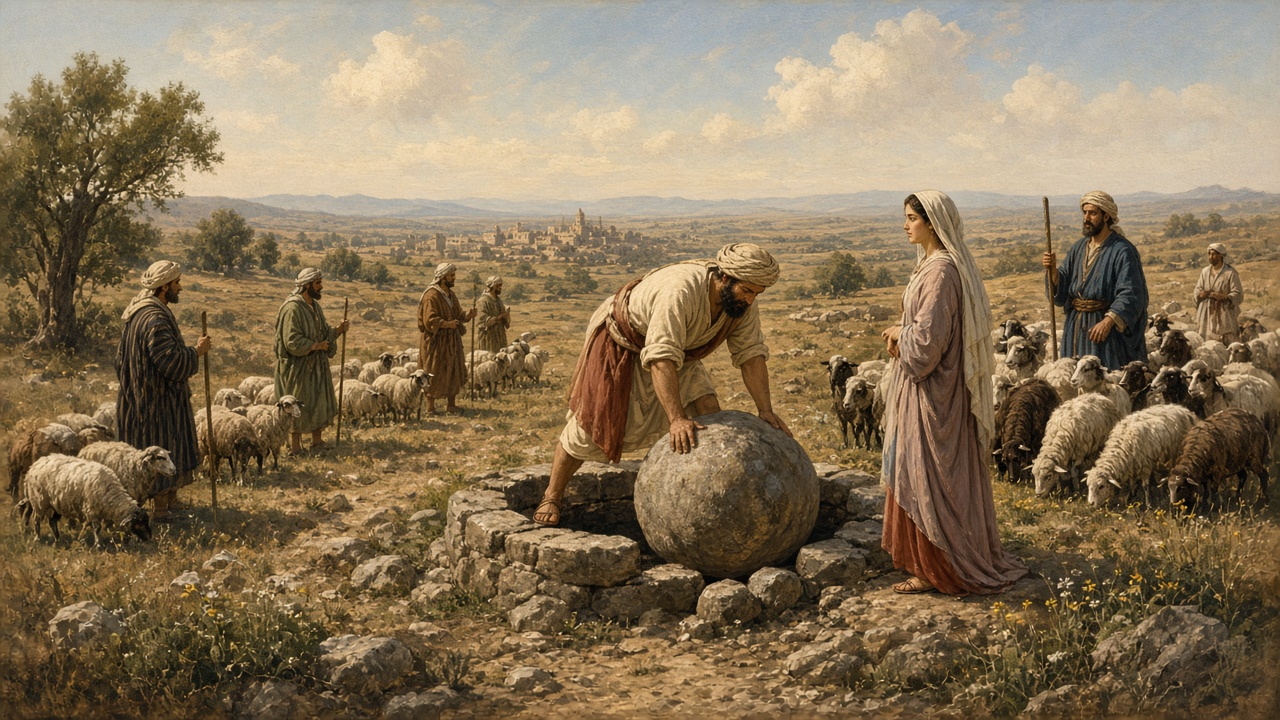
- El pozo estaba cerrado por una gran piedra, que los pastores apartaban solo después de que se habían reunido todos los rebaños, y luego volvían a colocar en su lugar. Raquel, cuyo nombre se da como “oveja”, era pastora y traía las ovejas de su padre; Jacob, que también había vivido como pastor, apartó la piedra y dio de beber al rebaño de su tío.Fuentes: Rachel · Jacob (Israel) · el propio texto bíblico
- Lea, la hermana mayor, es llamada “cansada”, y se la describe como de ojos débiles, o tiernos; Raquel, la menor, era bien formada y hermosa. Jacob sirvió siete años por Raquel, pero en el banquete de la noche Labán le dio a Lea, diciendo que allí no era costumbre entregar en matrimonio a la hija menor antes que a la mayor, y luego le dio a Raquel por otros siete años: catorce en total. Los primeros hijos de Lea fueron Rubén, cuyo nombre se da como “He aquí un hijo”, y después Simeón, Leví y Judá; al nombrarlos, habló de que el SEÑOR veía su aflicción, de que oía que ella no era amada, de que su esposo se apegaría a ella y de su alabanza al SEÑOR.Fuentes: Leah · Rachel · Reuben · el propio texto bíblico
Notas escritas con ayuda de IA a partir de fuentes abiertas (Theographic Bible Metadata, CC BY-SA 4.0; Easton’s Bible Dictionary, dominio público) y revisadas antes de publicarse.
Lugares de este capítulo
- East · Hoy: region around Amman · 31.955, 35.934 · versículo 1
- Haran · Hoy: Harran · 36.864, 39.033 · versículo 4
Solo aparecen lugares identificados con alta confianza (90 % o más según las fuentes académicas reunidas por OpenBible). Mapa de la época: DARE (Digital Atlas of the Roman Empire), CC BY 4.0; mapa actual: © colaboradores de OpenStreetMap; lugares: OpenBible.info (CC BY 4.0).
Créditos y licencia de esta traducción
Nǫ̀htsı̨̨ Nı̨̨htł'è
Dogrib: Dogrib Genesis & New Testament New Testament & Portions of Old Testament
copyright © 2009 Canadian Bible Society
Language: Dogrib
Translation by: Canadian Bible Society
Tłı̨chǫ Genesis and New Testament
About Tłı̨chǫ
Tłı̨chǫ (Dogrib) is a Na-Dene (Athabaskan) language. It is spoken by the First Nations Tłı̨chǫ people in the Northwest Territories in Canada. It has the largest number of speakers of any of the Aboriginal language communities in the NWT, and is one of the official languages of the Northwest Territories.
About This Translation
This translation includes the book of Genesis and the New Testament in Tłı̨chǫ. The first edition of the Tłı̨chǫ New Testament was published in 2003. It was a historic event, as it was the first time in more than a hundred years that a complete New Testament was published for one of the Dene First Nations in the Territories. The first edition was well received and quickly sold out. In the meantime the book of Genesis had been completed. Consequently, the 2008 reprint of the Tłı̨chǫ New Testament included Genesis.
Though this translation of the New Testament and Genesis took a total of ten years, the people who worked on it built on years of labor invested by the Tłı̨chǫ people, elders, priests and missionaries, translators, educators, and linguists. The material contained in this book was checked and approved by consultants from Wycliffe Bible Translators and the Canadian Bible Society.
If you are interested in obtaining a printed copy of this Bible, please contact the Canadian Bible Society at http://www.biblescanada.com .
Copyright Information
Dogrib Genesis and New Testament © 2003, 2008 Canadian Bible Society
The text of the Bible in Tłı̨chǫ that appears in this electronic format or website is for personal use only.
Up to five hundred (500) verses of the Bible text in any form (written, visual, electronic or audio) may be quoted without permission. The quoted verses may not be more than 50% of a complete book of the Bible, or more than 25% of the total text of the work in which they are quoted. Prior written permission must be obtained for any other use of the text. Copyright acknowledgement must in all cases appear on the title or copyright page.
For more information on copyright conditions or to apply, visit http://www.biblesociety.ca/copyright .
This translation is made available to you under the terms of the
Creative Commons Attribution-Noncommercial-No Derivatives license 4.0.
You may share and redistribute this Bible translation or extracts from it in any format, provided that:
You include the above copyright and source information.
You do not sell this work for a profit.
You do not change any of the words or punctuation of the Scriptures.
Pictures included with Scriptures and other documents on this site are licensed just for use with those Scriptures and documents.
For other uses, please contact the respective copyright owners.
2014-04-22
Fuente: http://ebible.org/dgrDOGNT/ · eBible.org