Isaías 64
Buk Baibel long Anuki · Toque num versículo para ver as referências cruzadas.
Pari God yana wiinuwanuwaghana kiiravine
4Naghove, naghove waghata
getana iiyabo iyawaiyana da God tana meme tam naboni,
bo wawaya getana God tam naboni iyakita towoyina!
Iiyabo yiwiita da iiyawogha siyitumaghanem na kiiravidiye.
5Raghanina wawaya nuwamiimiiseye bera miisedi saberabera,
bi yam keda rotomanidi sakivikivina, na kwiiwiitedi.
Tam nuwanuwam ipughu toumii biiyadi,
bi gegha da toumii patana raghani gurina bera berona kaya berabera.
Metagha wawaya toumii naboni, rubana kuniyawiimii?
6Yama tamumu saberaberamii da tam matamve na toumii dadabumii.
Bagune raghanina kiimatipo da bera miisedi kayabera,
bi gegha da matam kamone na nokodi bera na
ware gara dadabudi tamogosigosiridi naboni.
Bi yama tamumu kiiravine na toumii kakanakana,
ware rugurugu mekodi sipokina naboni
da yama tamumu sakabitavemii ware yanunu rugurugu yatapi karuvedi sanaghotaveyana naboni.
7Bi getana iiyabo tam biidi iyarurupari,
bo iyapiipiika tam biidi wiiwiita kiiravine iyibabana,
basuna tam kumiiri kubutemii,
na kubera da yama tamumu siviberomii.
8Bi gegha da Yawe God tamna tamamiinaki.
Toumii na ware nau kana dobodobo naboni,
bi tam na berabera wawayim.
Tam imamma toumii tupamii kuberamii.
9Na genuwanuwam inapughu kirakii toumii biiyadi,
bi gegha yama tamumu kunanoghota wiikarukaruvenina.
Kita! Toumii tupamii na tam yam wawaya,
na kinuwanuwaghanemii.
Você sabia?
Uma Oração por Misericórdia em Meio às Ruínas
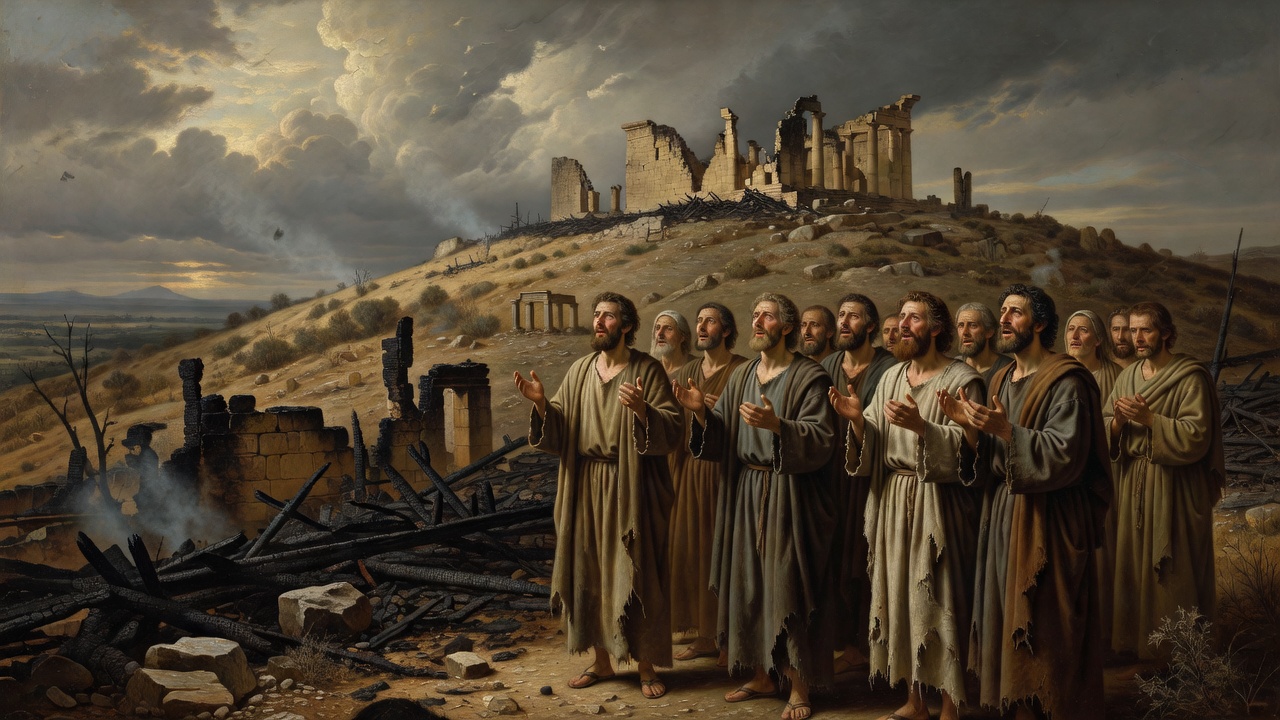
- A passagem começa com uma súplica para que Deus fenda os céus e desça com poder abalador, como fogo que acende a lenha. Contudo, contrasta esse desejo pela presença de Deus com uma confissão da indignidade humana, comparando as pessoas a folhas secas levadas por suas próprias iniquidades.Fontes: o próprio texto bíblico
- Em Isaías 64, a comunidade apela a Deus como Pai e artesão, declarando: "nós somos o barro, e tu és o nosso oleiro". Essa metáfora enfatiza a fragilidade humana e a total dependência de Deus, suplicando por misericórdia divina apesar do reconhecimento de suas culpas.Fontes: o próprio texto bíblico
- O capítulo lamenta a destruição dos espaços sagrados, descrevendo Sião e Jerusalém como desertos e desolações. O texto lamenta especificamente o incêndio e a ruína do templo sagrado onde as gerações passadas haviam prestado louvor.Fontes: o próprio texto bíblico · Zion · Jerusalem
Notas escritas com auxílio de IA a partir de fontes abertas (Theographic Bible Metadata, CC BY-SA 4.0; Easton’s Bible Dictionary, domínio público) e revisadas antes de publicar.
Lugares deste capítulo
Só aparecem lugares com identificação de alta confiança (90% ou mais segundo as fontes acadêmicas reunidas pelo OpenBible). Mapa da época: DARE (Digital Atlas of the Roman Empire), CC BY 4.0; mapa atual: © colaboradores do OpenStreetMap; lugares: OpenBible.info (CC BY 4.0).
Créditos e licença desta tradução
Buk Baibel long Anuki
Portions of the Holy Bible in the Anuki language of Papua New Guinea
Buk Baibel long tokples Anuki long Niugini
copyright © 2010-2016 Wycliffe Bible Translators, Inc.
Language: Anuki
Translation by: Wycliffe Bible Translators
This translation is made available to you under the terms of the
Creative Commons Attribution-Noncommercial-No Derivatives license 4.0.
You may share and redistribute this Bible translation or extracts from it in any format, provided that:
You include the above copyright and source information.
You do not sell this work for a profit.
You do not change any of the words or punctuation of the Scriptures.
Pictures included with Scriptures and other documents on this site are licensed just for use with those Scriptures and documents.
For other uses, please contact the respective copyright owners.
2014-06-02
Fonte: http://png.bible/aui/ · eBible.org